
Just like humans may curl into a fetal position for comfort, some animals roll into a ball for survival purposes that go beyond distress. For many species, it serves as a defense mechanism, shielding vulnerable parts of the body while presenting predators with a hard or spiny exterior. In some cases, it aids in movement—hedgehogs, for example, may curl up to cushion a fall when climbing down. Rolling into a ball can also help with preservation, allowing certain animals to conserve energy and protect themselves from harsh seasonal conditions when migration isn’t possible.
This post was updated on September 30, 2025 to clarify the type of ball-rolling armadillo, hedgehog behavior, chiton shell description, the armadillo girdled lizard’s ring shape defense, how golden spiders roll (but don’t curl into a ball), and terrestrial vs marine isopods.
1. Armadillo
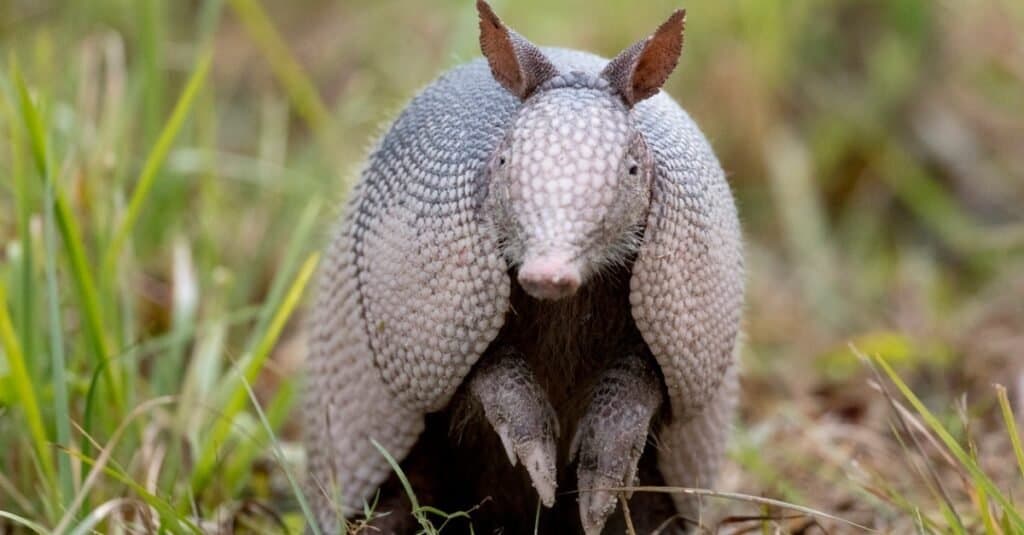
Armadillos are easily identified by their tough shell.
©iStock.com/6381380
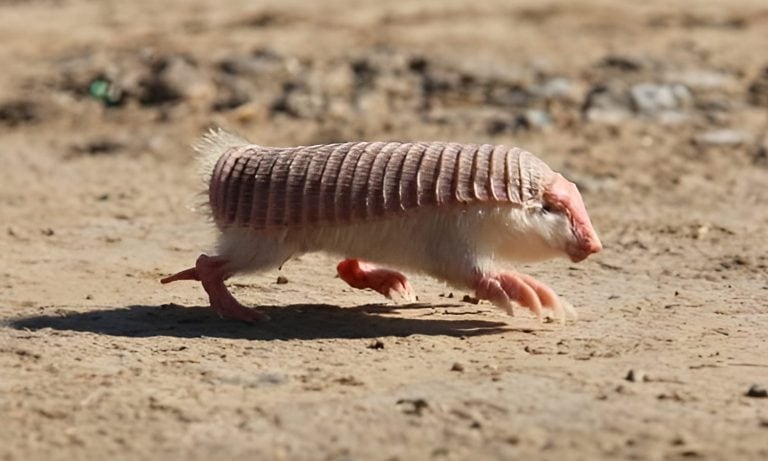
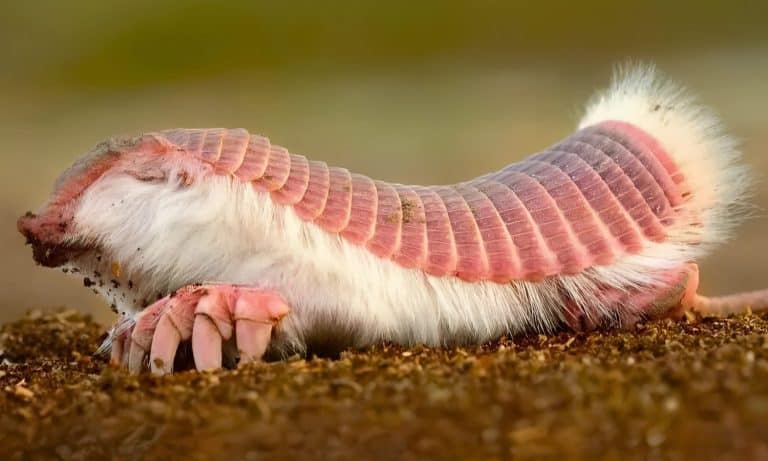
Armadillos are natives of the Southern United States. They are easily identified by their tough shell, for which they are named. Across their several species, some are very big, like the giant armadillo, and some are quite small, like the aptly named pink fairy armadillo. But only the three-banded armadillo (genus Tolypeutes) is capable of rolling into a ball. They do so whenever they feel threatened. Armadillos love to eat insects, grubs, and other non-vertebrates. They have very poor eyesight, but their keen sense of smell makes up for this defect.
2. Pangolin
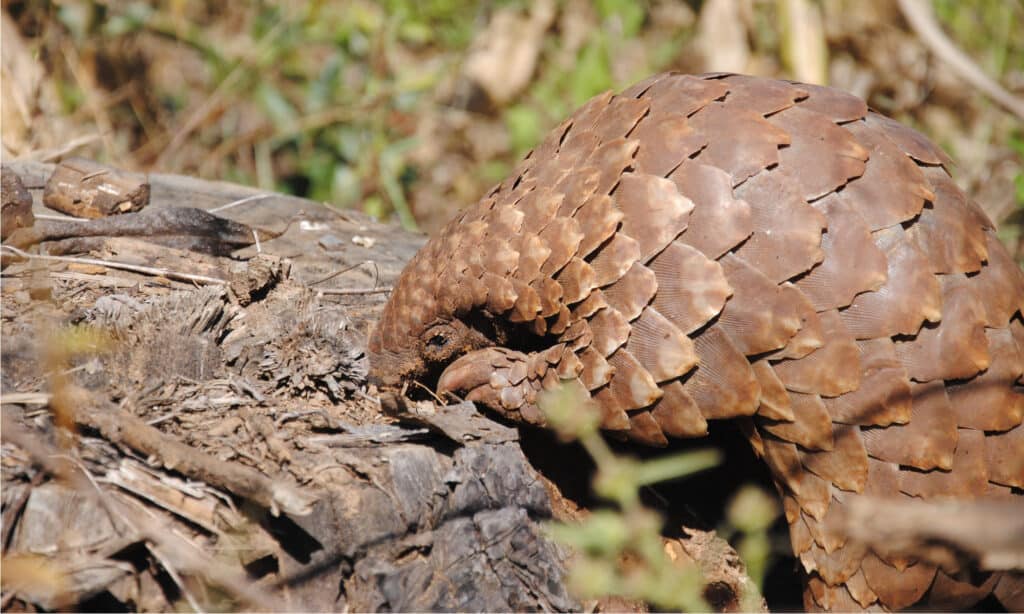
Pangolins are found mostly in Asia and parts of sub-Saharan Africa.
©Gemma Campling/Shutterstock.com
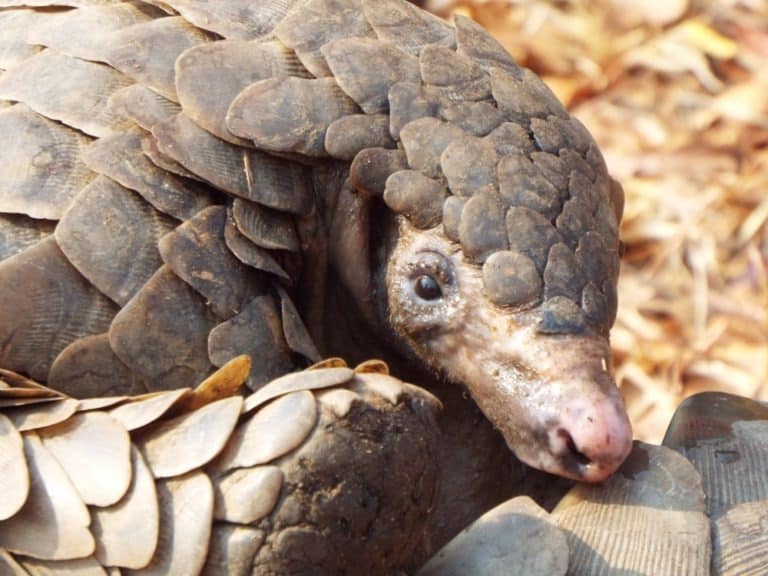
Sometimes referred to as scaly anteaters, pangolins are found mostly in Asia and parts of sub-Saharan Africa. These shy creatures eat ants and termites and hunt for them with their tongues. They are the most trafficked mammals because of the high demand on the black market. This demand is linked to the features that make them one of the most unique mammals: their scales. The scales are made of keratin, the same material that makes up human nails. When the pangolin turns into a ball, the scales add an extra layer of defense because of how sharp they are. Sadly, some species have been hunted to extinction while others have been red listed.
3. Hedgehog
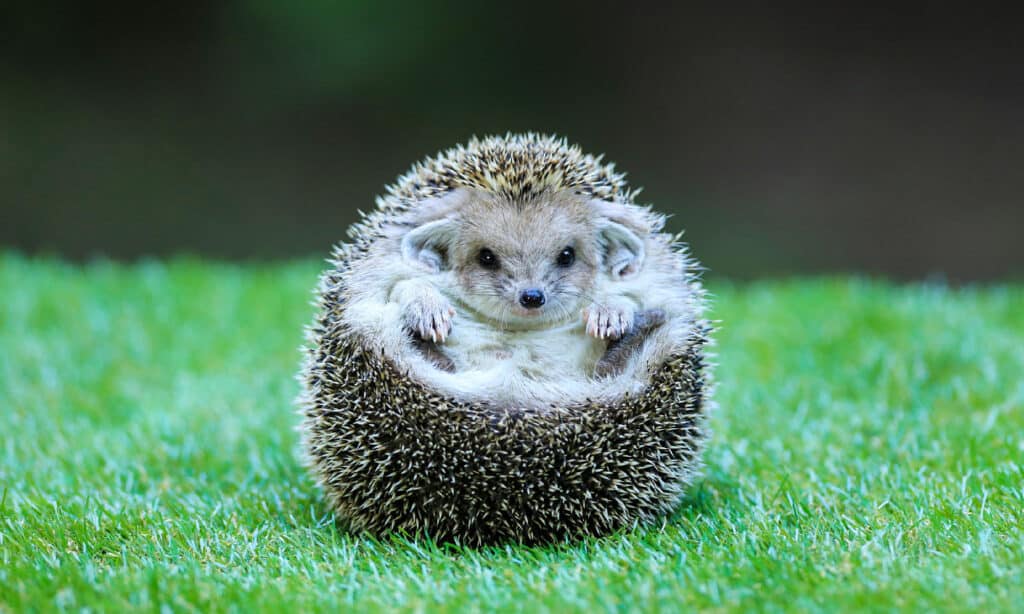
Hedgehogs are found in parts of Africa, Europe, and Asia.
©iStock.com/serikbaib
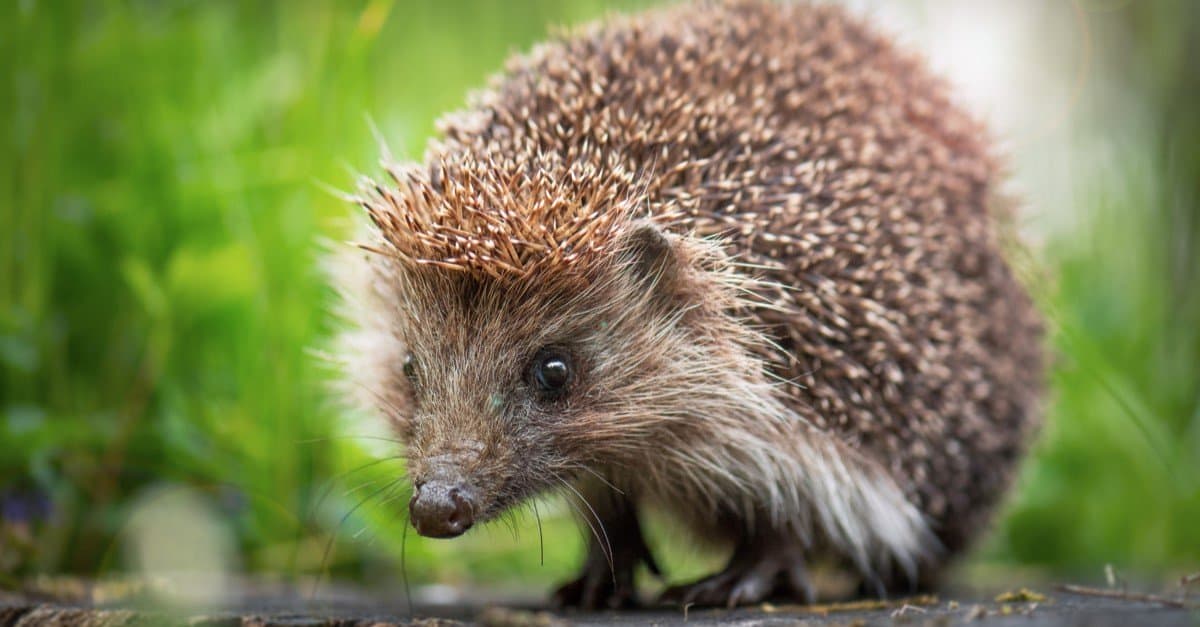
Hedgehogs are found in parts of Africa, Europe, and Asia. These cute mammals, with their beady little eyes, are tricksters. Their tactics for evading their predators include something called “anointing,” where they smear scents in their environment via their quills to evade detection. But the common form of defense we know of is their ability to curl into a tight ball, so predators face a wall of spines. Like the pangolin, the quills on the back of the hedgehog are made from keratin, and the sharp pointy ends make predators wary. Their diet consists of insects, worms, and the occasional baby rodent or bird.
4. Chiton
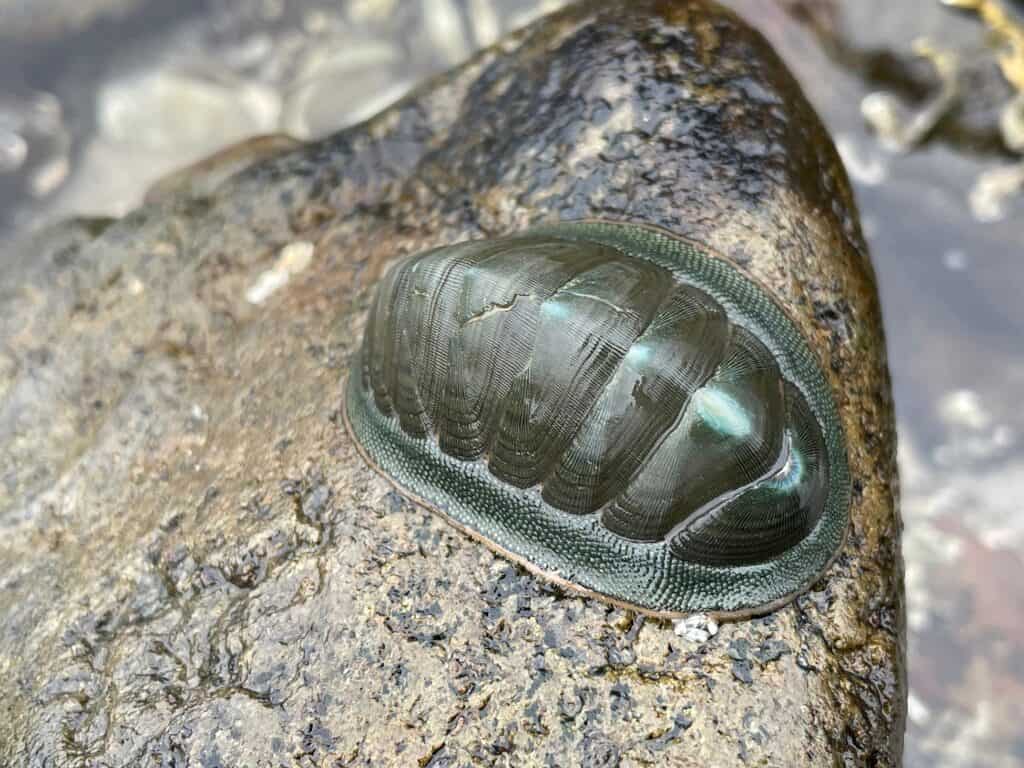
Chitons have an outer shell that is divided into eight shell plates.
©Haireena/Shutterstock.com
Chitons are mollusks that are found worldwide. Although they live in water, chitons are found around the rocky parts of the sea. They feed on algae as well as bacteria in the water. Chitons have an outer shell divided into eight dorsal plates in a straight line down the back. The plates allow flexibility for clamping to rocks or occasionally rolling, but not all chitons roll into balls. Humans, crabs, and fish are some common predators that hunt chitons. When a chiton dies, its shell disintegrates as the muscle that holds it also dies.
5. Armadillo Girdled Lizard
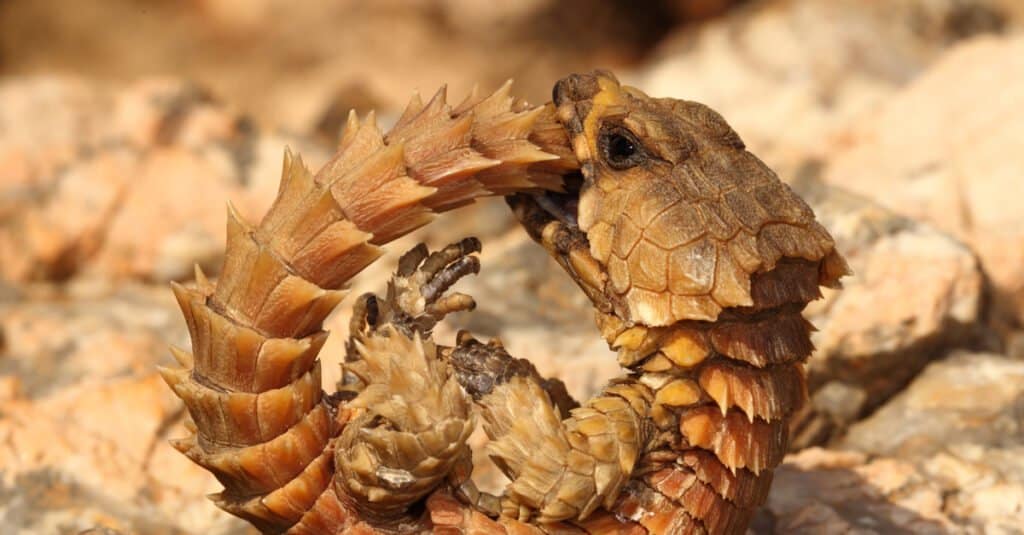
Armadillo girdled lizards love to live in rocky places, especially on the slopes of mountains.
©NickEvansKZN/Shutterstock.com
Native to South Africa, armadillo-girdled lizards love to live in rocky places, especially on the slopes of mountains. You will find them mostly in desert areas, where they feast on spiders and other insects. Occasionally, they would eat specific plants. They have a thick, scaly back that acts as a shield. They don’t roll into a smooth “ball” the way armadillos do. Instead, they form a spiny ring that deters predators. Unlike the other animals listed here, they put their tail in their mouths to create their characteristic defensive posture. They are not exactly formidable, but when they are curled up, predators can’t harm or eat them.
6. Golden Wheel Spider
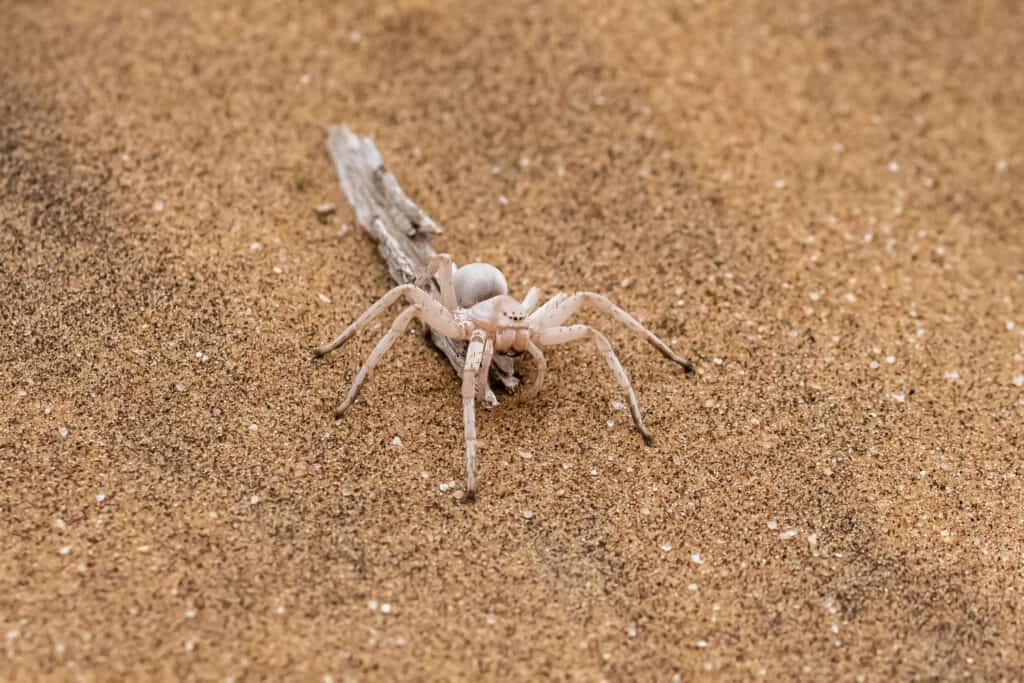
The golden wheel spider is mildly venomous but not harmful to humans.
©iStock.com/Wirestock
This is another native South African inhabitant. It is mildly venomous but not harmful to humans. The golden wheel spider earns its name from its method of defense. Instead of balling-up like many animals on this list, it engages in a form of rolling locomotion. They essentially cartwheel sideways down sand dunes in the Namib dessert to escape predators. Like some of the other animals here, it is nocturnal. It comes out at night to feed on other insects. An interesting fact about the wheel spider, as it is sometimes called, is that it does not produce webs. And while it has a lot of predators, pompilid wasps are its worst enemy. They paralyze the spider with a sting and lay their eggs inside the poor arachnid!
7. Isopods
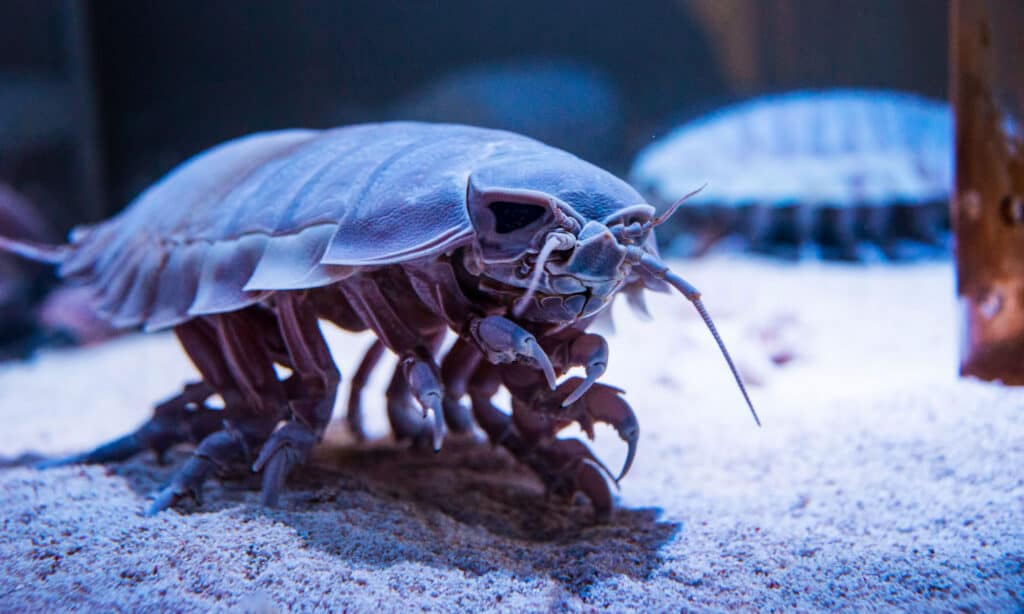
Isopods feed on plants and dead animals.
©kikujungboy CC/Shutterstock.com
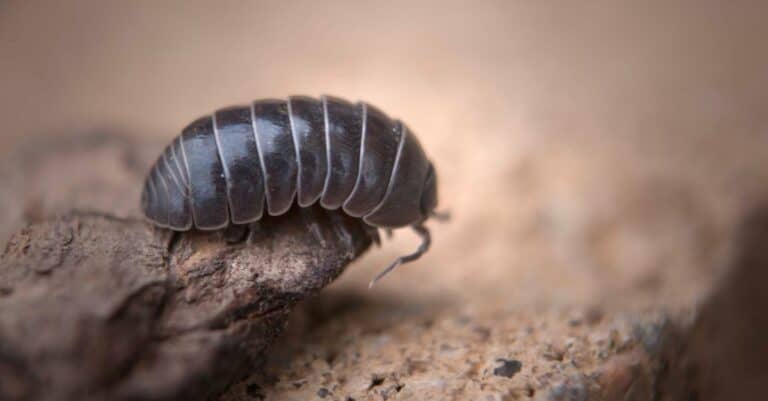
There are over 10,000 species of this unique creature. Some of them live in the sea or in fresh water. But terrestrial species are the ones that roll into balls (marine/freshwater ones cannot). Isopods are crustaceans; even on land, they tend to live in moist places, feeding on plants and dead animals. When under attack, they roll into a ball for preservation. They also do this whenever water is scarce.
Summary of 7 Animals That Roll Into a Ball
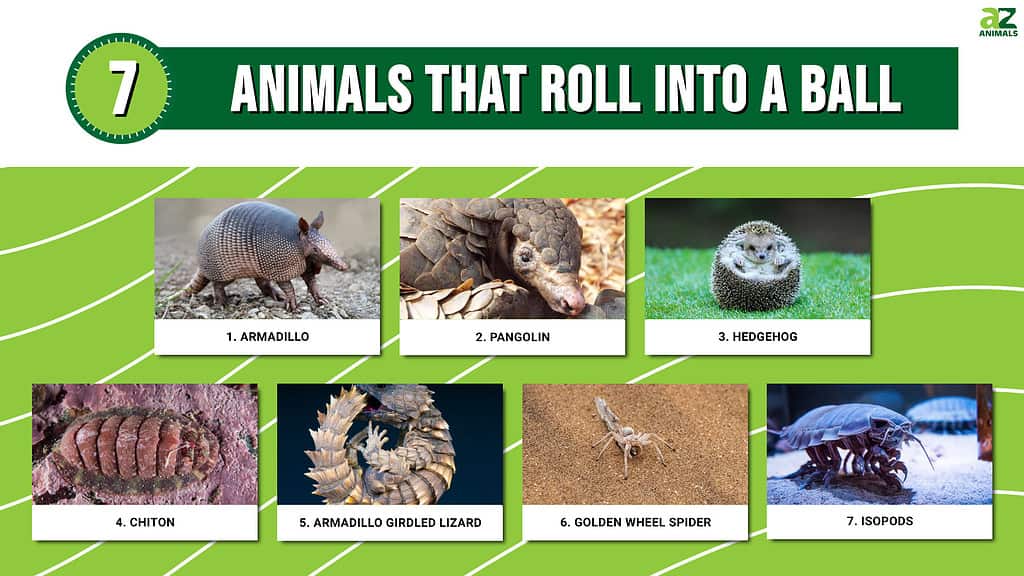
| # | Animal | Location |
|---|---|---|
| 1 | Armadillo | South America |
| 2 | Pangolin | Asia, Africa |
| 3 | Hedgehog | Africa, Europe, Asia |
| 4 | Chiton | Worldwide |
| 5 | Armadillo Girdled Lizard | South Africa |
| 6 | Golden Wheel Spider | South Africa |
| 7 | Isopods | Worldwide |