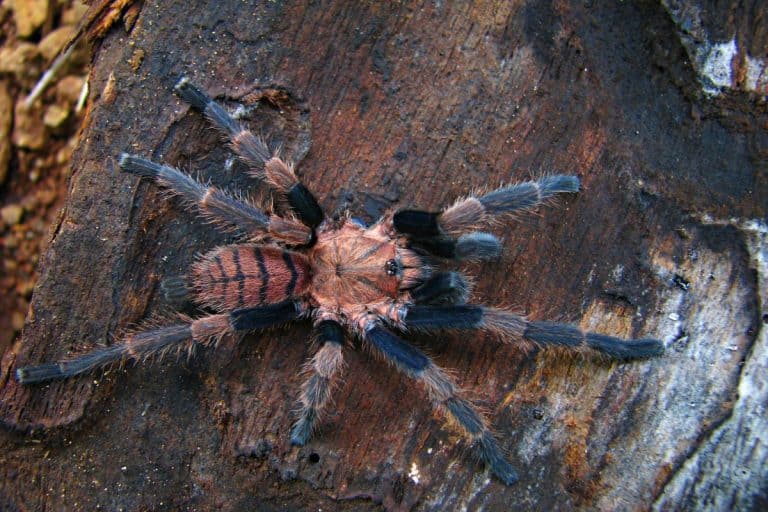
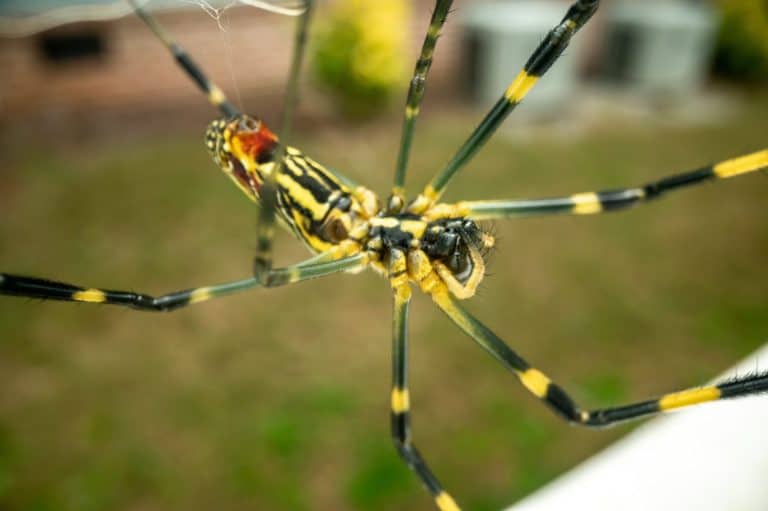
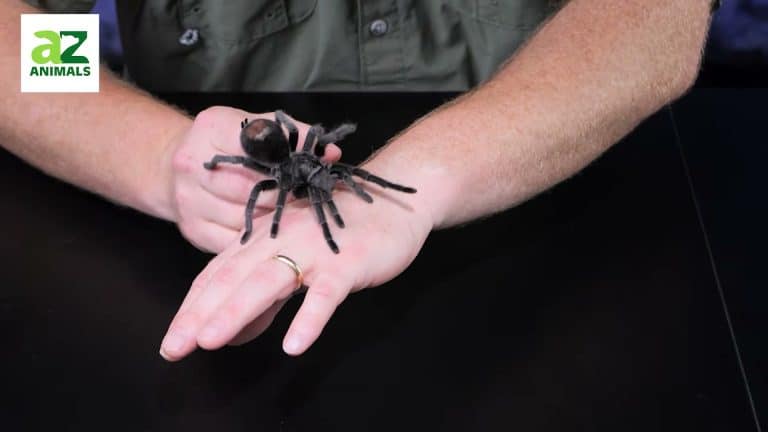
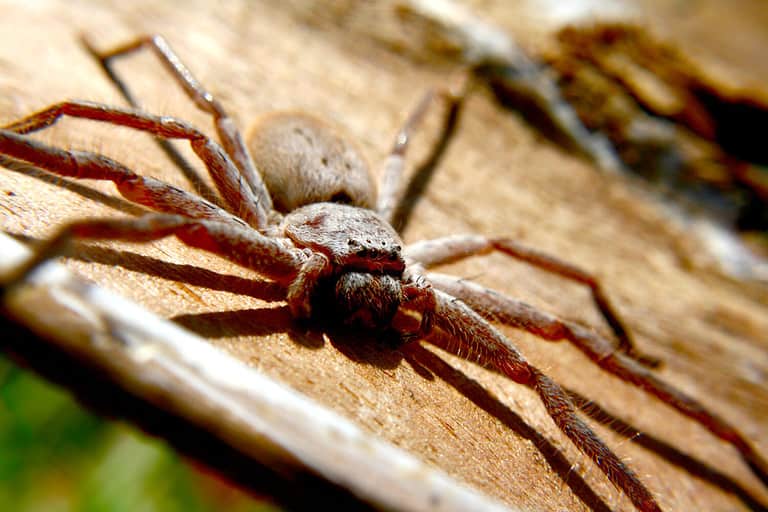
Spiders are incredibly diverse and fascinating creatures. Without spiders, our world would be overrun with biting flies, buzzing mosquitoes, and other annoying pests. Although they sometimes get unfairly lumped together in the category of creepy crawly insects, spiders aren’t insects at all. They are arachnids, a class of arthropods, and there are over 45,000 different species. Although some have a body size as small as 0.014 inches, like Columbia’s tiny Patu digua, others have leg spans the size of dinner plates. Check out some of the world’s biggest spiders.
10. Indian Ornamental Tree Spider (Poecilotheria regalis)
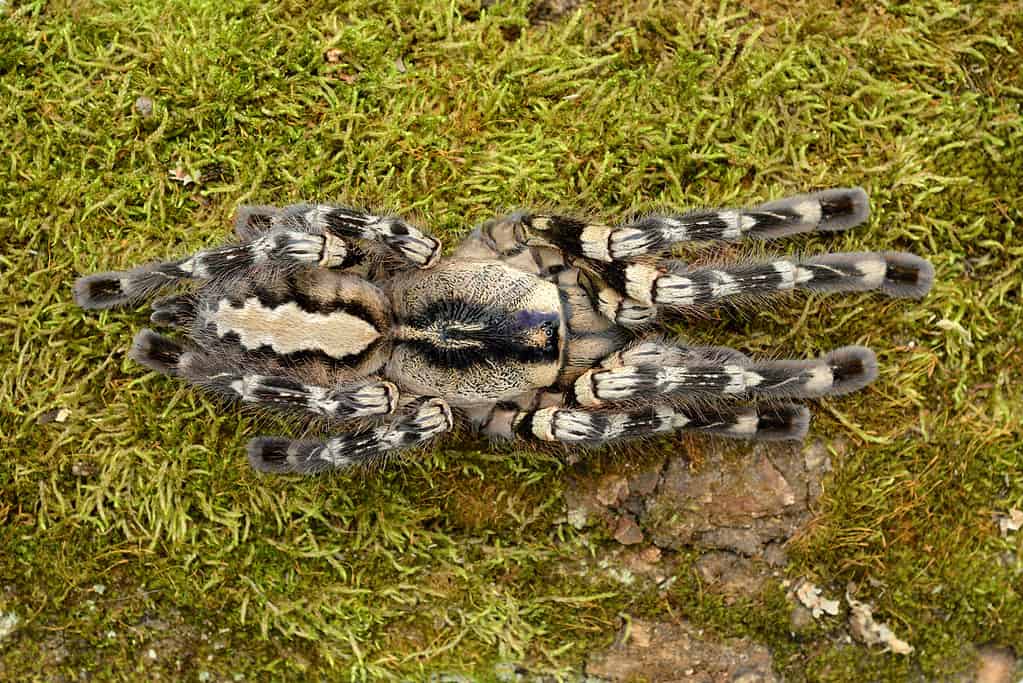
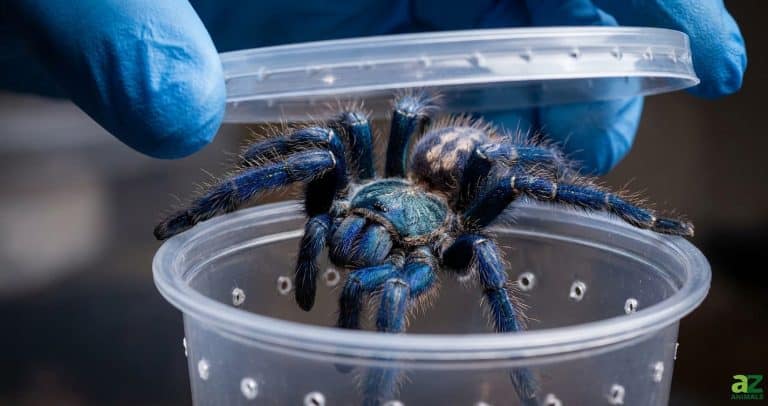
Indian ornamental tree spiders are known for their distinctive black and grey patterns.
©D. Kucharski K. Kucharska/Shutterstock.com
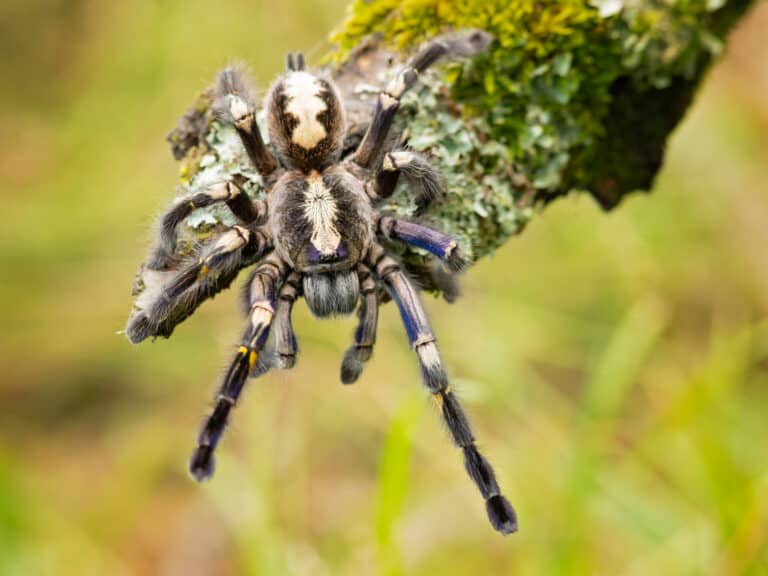
First on our list is a tree-dwelling tarantula that is native to India. The Indian Ornamental Tree Spider (Poecilotheria regalis) is an Old World spider with a massive leg span of 7 inches. To put that into perspective, the standard pencil is about 7 inches long. This spider lives in tree tops where it spins funnel-shaped webs. There, it hides and waits to ambush flying insects.
Like all spiders, its bite is venomous to its prey, but it’s not enough to be fatal to a person. However, a bite from an Indian ornamental is said to be very painful. Despite the painful bite, tarantula hobbyists enjoy keeping this striking spider for its beautiful black and gray patterns. Recommended only for experts, Indian ornamental tree spiders are known for their speed and defensiveness.
9. Colombian Giant Redleg (Megaphobema robustum)
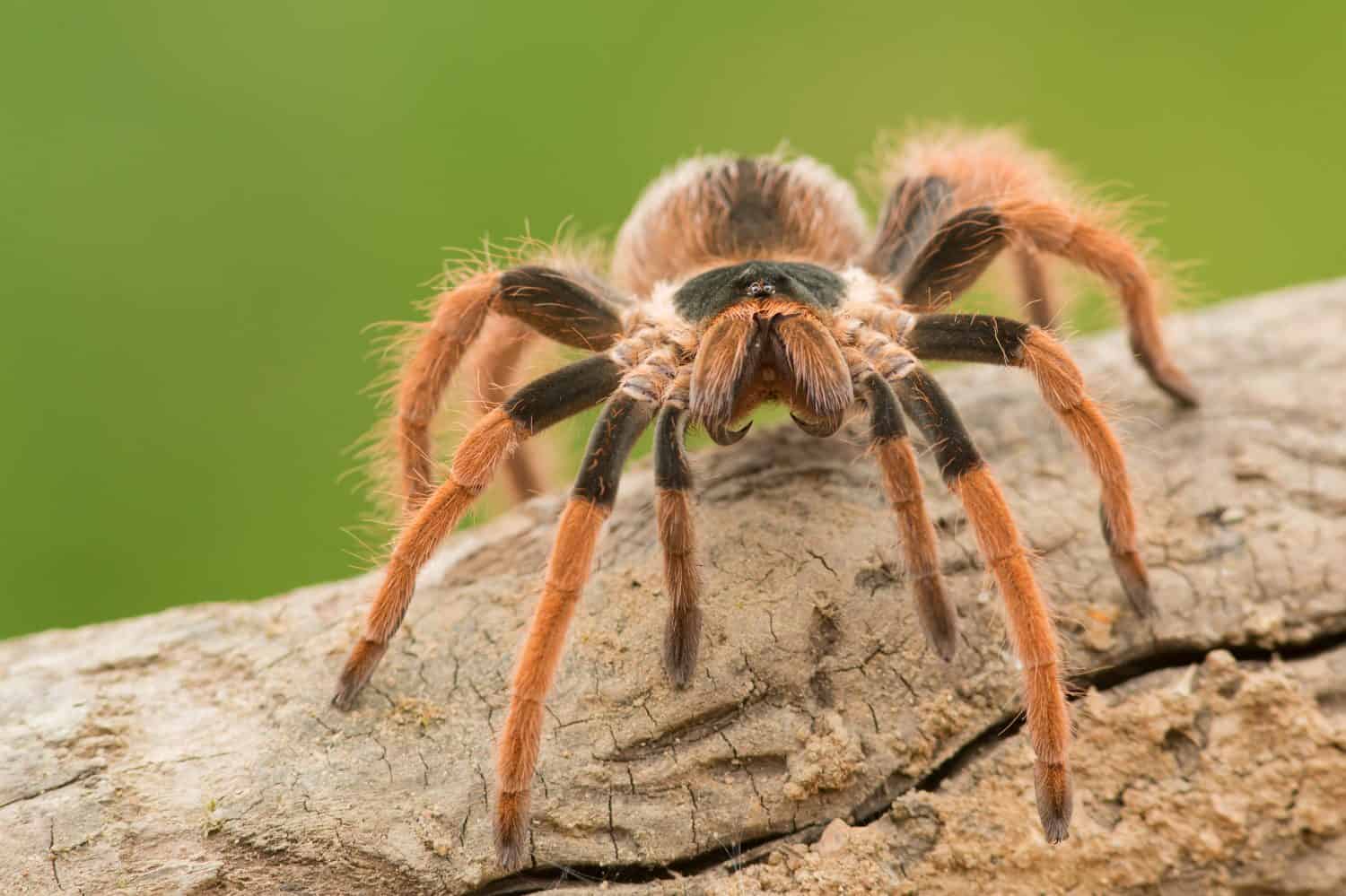
The Colombian giant redleg has an 8-inch leg span and bright orange-red legs.
©Milan Zygmunt/Shutterstock.com
Native to Colombia and northern Brazil, the Colombian giant redleg (Megaphobema robustum) is a big tarantula with an 8-inch leg span. That’s about the same size as the diagonal measurement of an iPad mini. Despite its frightening size, this colorful tarantula is known as a docile spider. They are popularly kept as pets, although care needs to be given to be sure they are kept in enclosures with the proper level of humidity.
The Colombian redleg is known by tarantula enthusiasts for having a unique threat posture where it kicks its back legs and twirls in a circle, which is sometimes called the “cartwheel of death.” They eat a diet of other spiders, insects, and small lizards. Its predators include tarantula hawks, snakes, and other reptiles.
8. Cameroon Red Baboon Tarantula (Hysterocrates gigas)
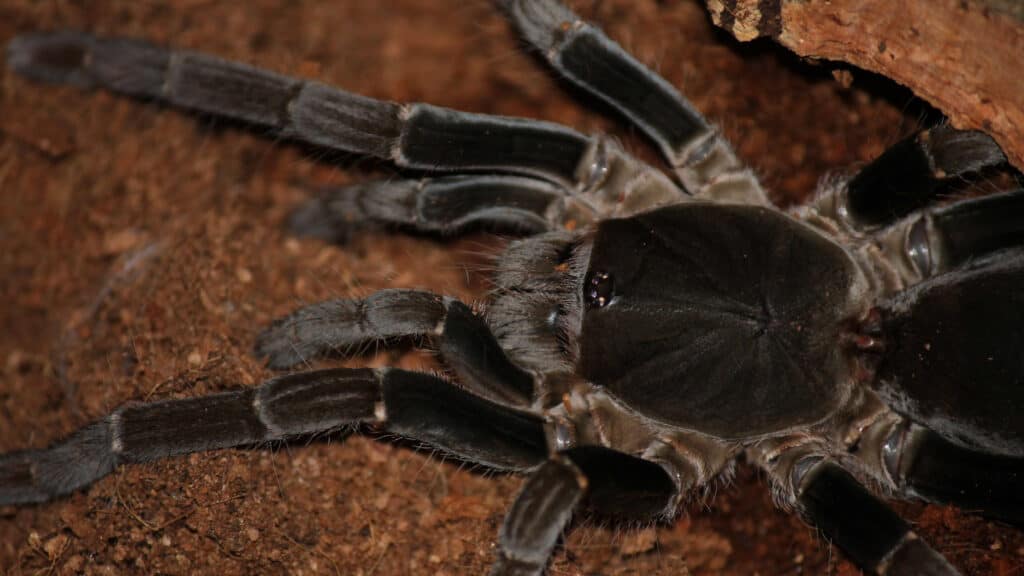
The Cameroon red baboon tarantula is one of the few tarantulas that can swim and catch small fish as prey.
©Jordon Njie/Shutterstock.com
The Cameroon red baboon tarantula (Hysterocrates gigas) has a nearly 8-inch leg span. Native to West Africa, the Cameroon red baboon tarantula lives in burrows across Africa’s savannas and forests. It builds tunnels deep in the ground and prefers to live near bodies of water such as rivers and swamps.
Unlike most tarantulas, this massive species is at home near the water. It can swim, submerge itself underwater, and is even known to ambush small fish and amphibians in the water. The Cameroon red baboon is sometimes kept as a pet, but it’s not recommended for beginners. These are Old World tarantulas, known for their defensiveness and speed.
7. African Hercules Baboon Spiders (Hysterocrates hercules)
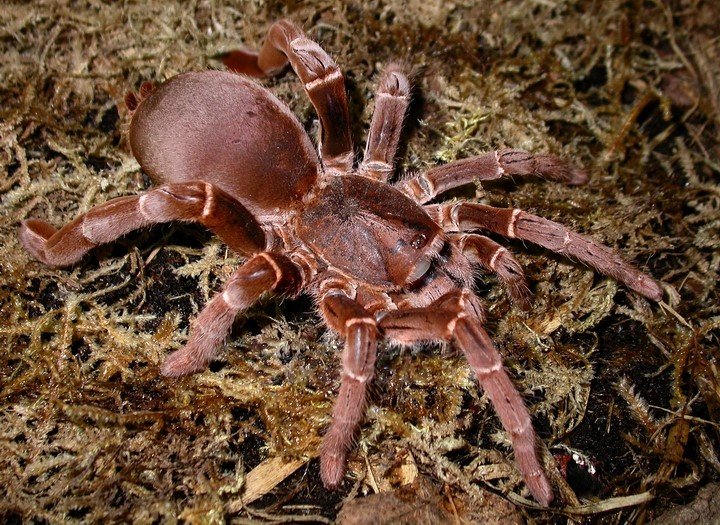
The Hercules baboon spider is an elusive spider, hiding out in underground burrows.
©Www.universoaracnido.com / CC BY-SA 2.5 – Original / License
Found only in Africa, the African hercules baboon spider (Hysterocrates hercules) is one of the largest spiders in the world. There isn’t a lot of information out there regarding this giant tarantula. Although unverified, its leg span is said to be nearly 8 inches. The only known specimen in the world is in the United Kingdom’s Natural History Museum.
The African Hercules baboon spider is an elusive spider, thought to hide out in burrows, not letting itself be detected often. Because it’s such a secretive tarantula living in harsh conditions, there is much we don’t know about this fascinating species.
6. Sri Lankan Tarantula (Poecilotheria rajaei)
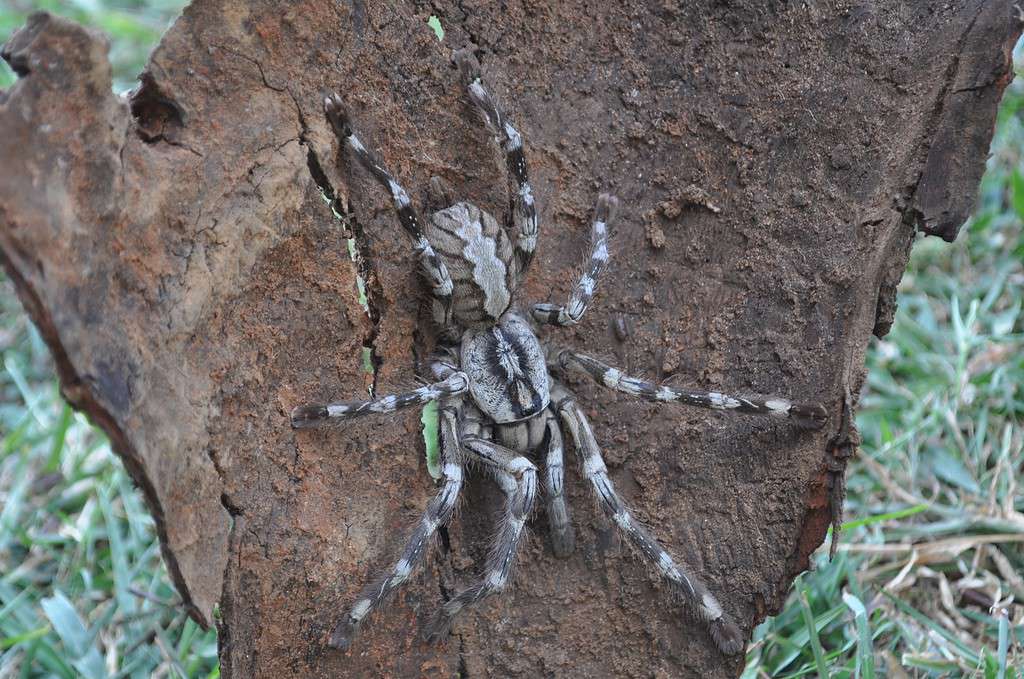
The Sri Lankan tarantula is a tree-dwelling spider only found in Sri Lanka.
©Ranil Nanayakkara / British Tarantula Society / CC BY 3.0 – Original / License
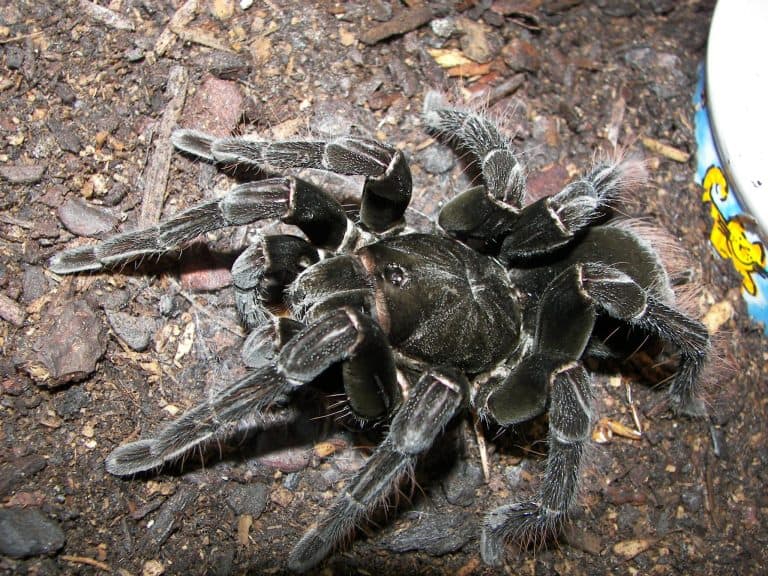
Sri Lankan tarantulas (Poecilotheria rajaei) were discovered in 2009. They are sometimes called face-sized tarantulas, due to their leg span, which is about 8 inches and larger than the average-sized person’s face. The giant tarantula is in the Poecilotheria, which is commonly known as “Pokies.” Pokies are easily identified by their striking black and white striped patterns across their abdomens.
Poecilotheria spiders are native to India and Sri Lanka, but the Sri Lankan tarantula has only been found in northern Sri Lanka. The Sri Lankan tarantula is a tree-dweller and is known to be fast and venomous. Sadly, as soon as they were discovered, it was already thought that they may be endangered due to habitat loss.
5. Chaco Golden-Knee Tarantula (Grammostola pulchripes)
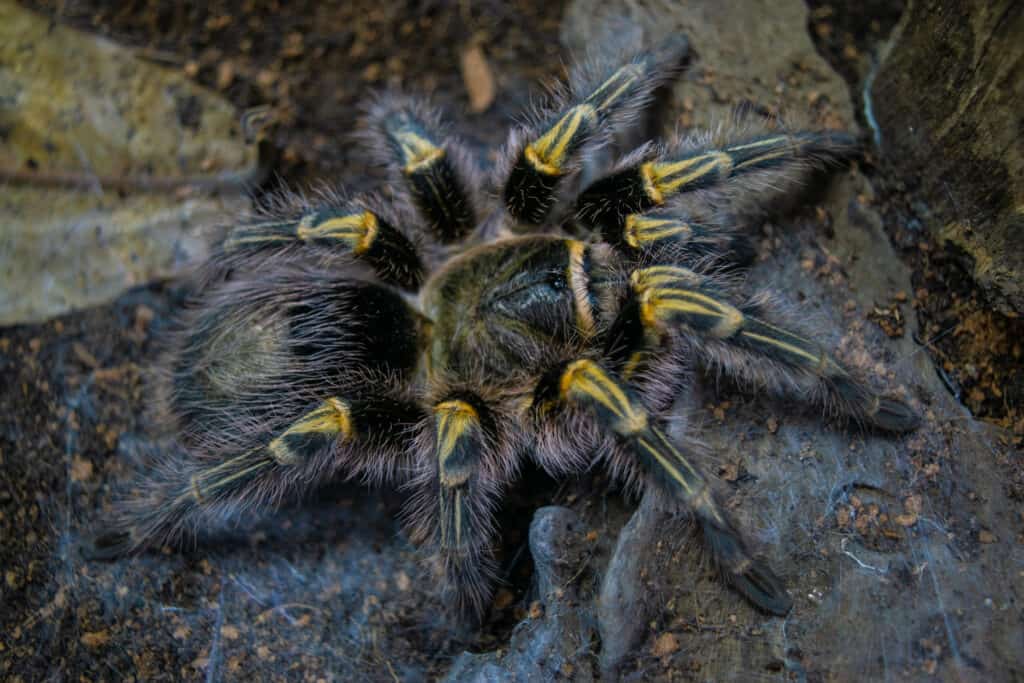
The Chaco golden knee tarantula can be identified by the striking band of gold around its dark legs.
©NATTHAWAT101/Shutterstock.com
Chaco golden-kneed tarantulas are New World tarantulas native to South America. They are named after the region they live in, the Gran Chaco, where they can be found in the arid grasslands. They are also named for the bands of golden color that wrap around their leg joints. These giant tarantulas have leg spans of up to 8 inches. That’s a little under the width of standard-sized paper. Like other tarantula species, the females have longer life spans than the males. Females may live up to 25 years, while males can live up to 10 years.
This tarantula species is a favorite of pet owners because of its strikingly beautiful golden knees, giant size, and docile nature. In the wild, they are known to live in abandoned burrows of other small animals or inside hollow logs. They hide in their burrows waiting to ambush their prey, which is a variety of insects and small reptiles. Their predators include animals larger than themselves, such as snakes and large reptiles.
4. Brazilian Giant Tawny Red Tarantula (Grammostola anthracina)
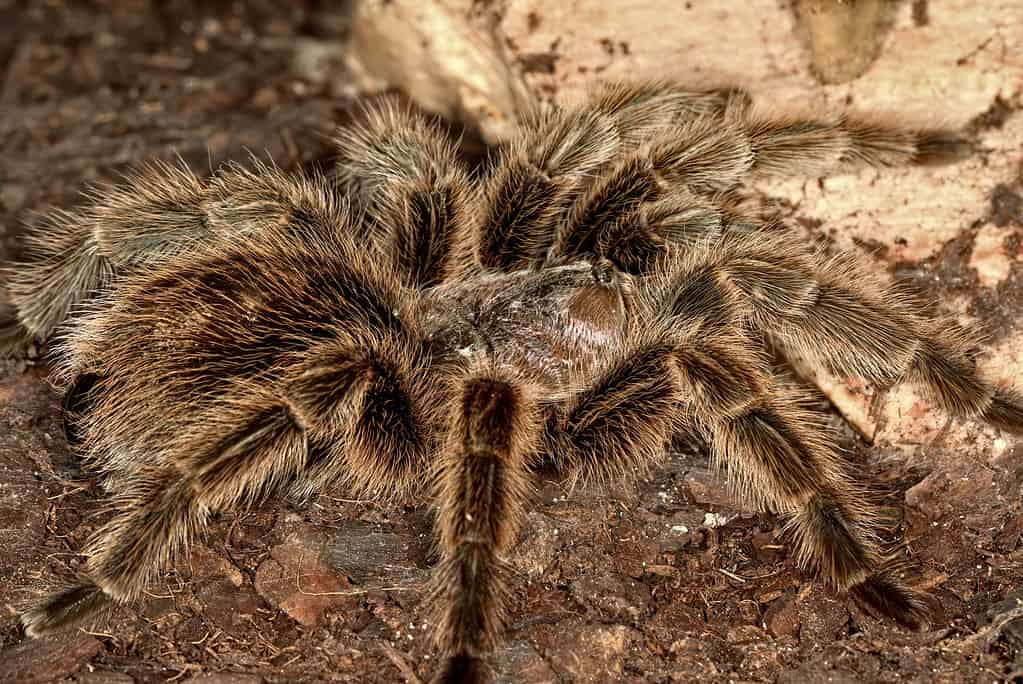
The Brazilian giant tawny red tarantula is a docile tarantula, despite its giant size.
©Russell Marshall/Shutterstock.com
The Brazilian giant tawny red tarantula (Grammostola anthracina) has a leg span of around 9.1 inches. Not only is it one of the largest spiders in the world, it’s also one of the longest-lived. Brazilian giant tawny reds have been known to have a lifespan of up to 30 years in captivity. They are popular as pets due to their long lifespan, impressive size, and docile nature. Although they would rather flee than attack, if threatened, these tarantulas are known to bite or kick urticating hairs. Urticating hairs are tiny, barbed hairs that most New World tarantulas have developed as a defense mechanism.
Native to South America, they are found living in forests where they mainly stay in burrows, waiting to ambush their prey. In the wild, they primarily eat insects and other spiders. In captivity, they can be fed roaches, crickets, and even small rodents and reptiles. Though they are large, Brazilian giant tawny red tarantulas still have natural predators, including reptiles such as snakes and lizards.
3. Brazilian Salmon Pink Bird-Eating Tarantula (Lasiodora parahybana)
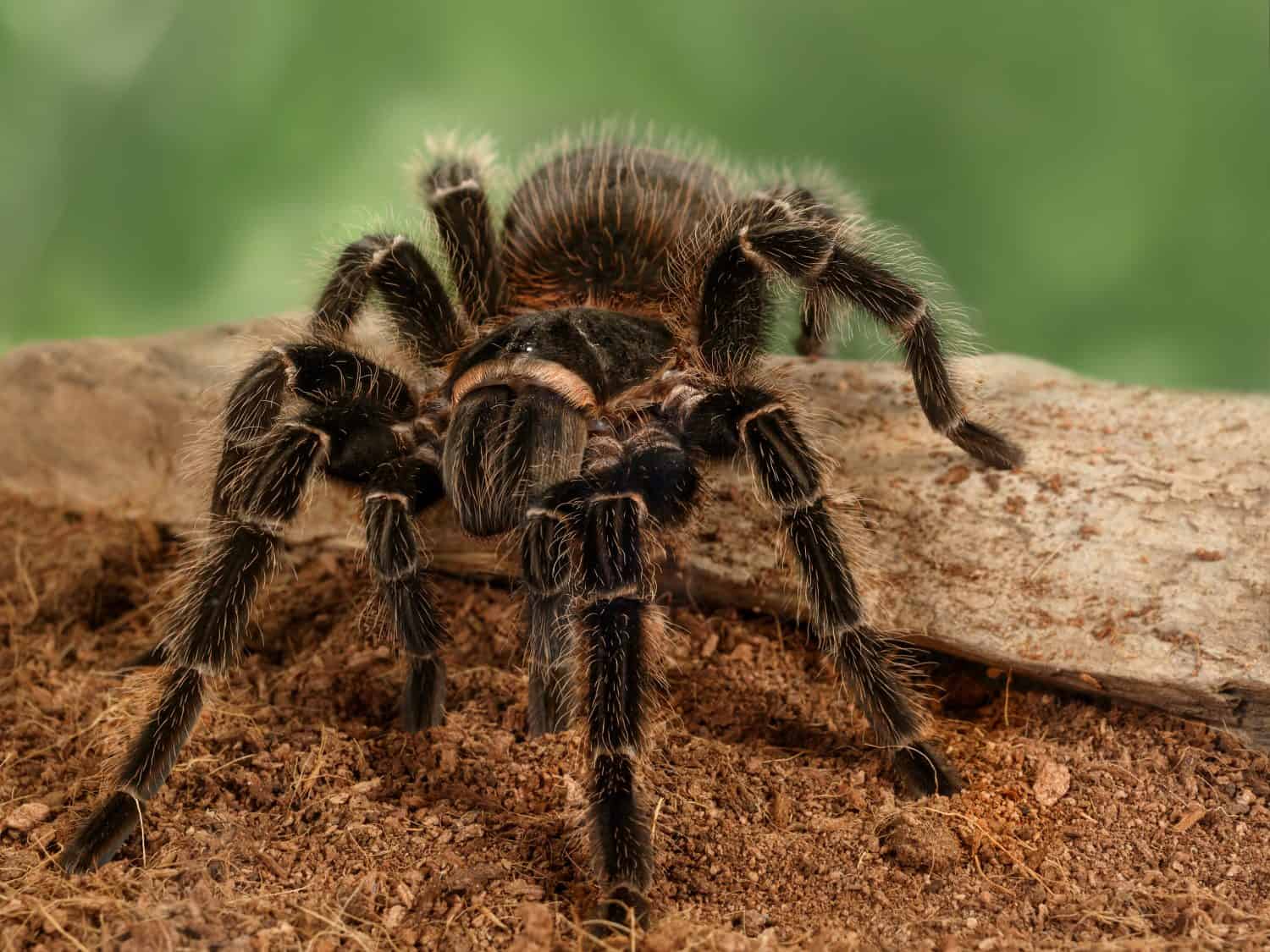
The Brazilian salmon pink birdeater is a large tarantula native to Brazil.
©torook/Shutterstock.com
Coming in third on our biggest spider list is the Brazilian salmon pink bird-eating tarantula (Lasiodora parahybana) with a legspan of 11 inches. Like most spider species, females are larger than the males and can weigh over 3.5 ounces. These are popular spiders to keep as pets for those in the tarantula hobby, where owners enjoy their rapid growth and impressive size. They do have urticating hairs, which they will readily kick in defense, and can be quite irritating if they hit a person’s skin.
Brazilian salmon pink bird-eating tarantulas are native to Brazil, where they live in a variety of habitats, including tropical forests, grasslands, and scrublands. Like all tarantulas, they are ambush predators and will strike their prey rather than catching their food in their webs. They eat mainly invertebrates, but because they are so large, they can also prey on small lizards and frogs.
2. Goliath Bird-Eating Tarantula (Theraphosa blondi)
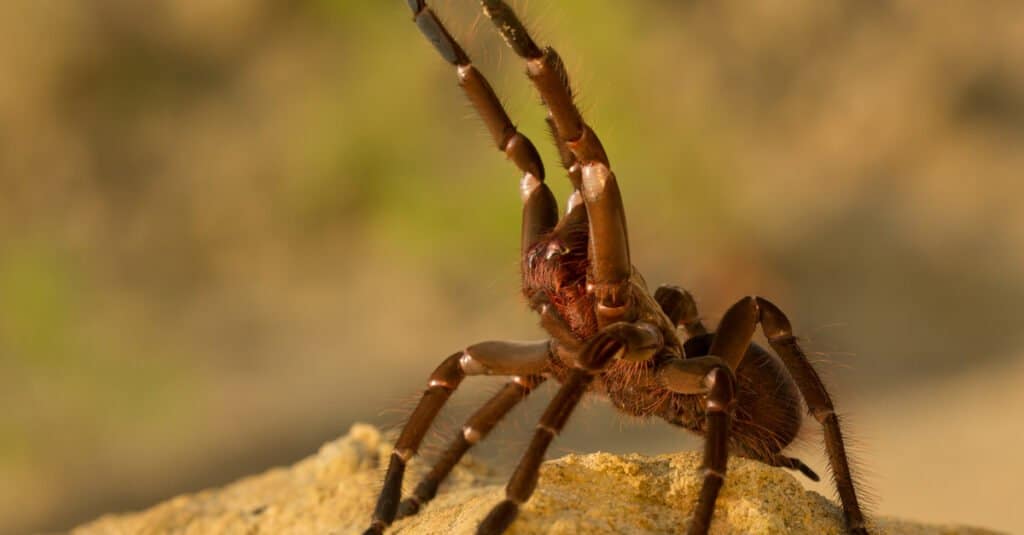
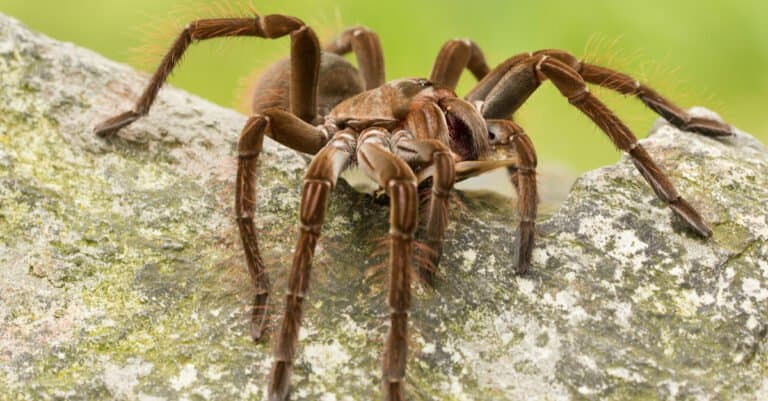
The Goliath bird-eating tarantula may be huge, but its bite won’t kill a human. Their bite is said to feel similar to a wasp sting.
©Milan Zygmunt/Shutterstock.com
The Goliath bird-eating tarantula (Theraphosa blondi) doesn’t have the largest leg span, but if you ranked it by weight, it would be the largest spider in the world. These massive spiders have 5.1-inch bodies, 11-inch leg spans, and can weigh up to 6.17 ounces. Goliath bird-eating tarantulas live deep in the rainforests of northern South America, where they make their homes inside silk-lined burrows.
They may have the name “bird-eater,” but birds are not this tarantula’s main menu. It preys on invertebrates, small mice, lizards, and frogs. It is capable of eating a bird’s egg or a hatchling that has fallen to the forest floor, but this tarantula sticks to the ground for its food. Experts believe it got its name from a piece of art that showed a different species of tarantula eating a hummingbird. The name was then given to the entire Theraphosa genus.
Like other tarantulas, bird-eaters have terrible eyesight. They hunt by feeling the vibration of their prey walking by. Despite their size, Goliath bird-eaters are preyed upon by mammals that root them out of their burrows, and also by tarantula hawk wasps.
1. Giant Huntsman Spider (Heteropoda maxima)
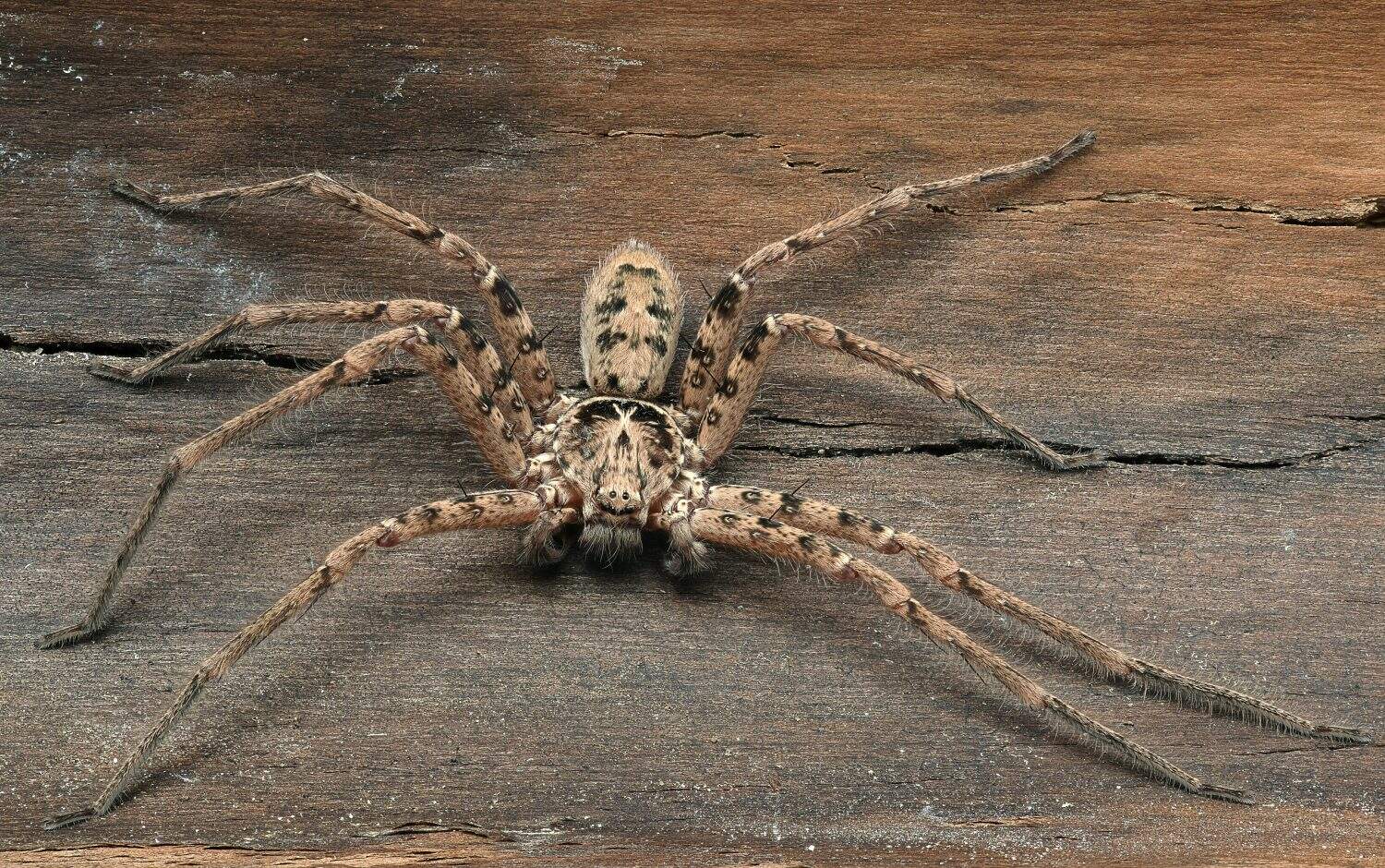
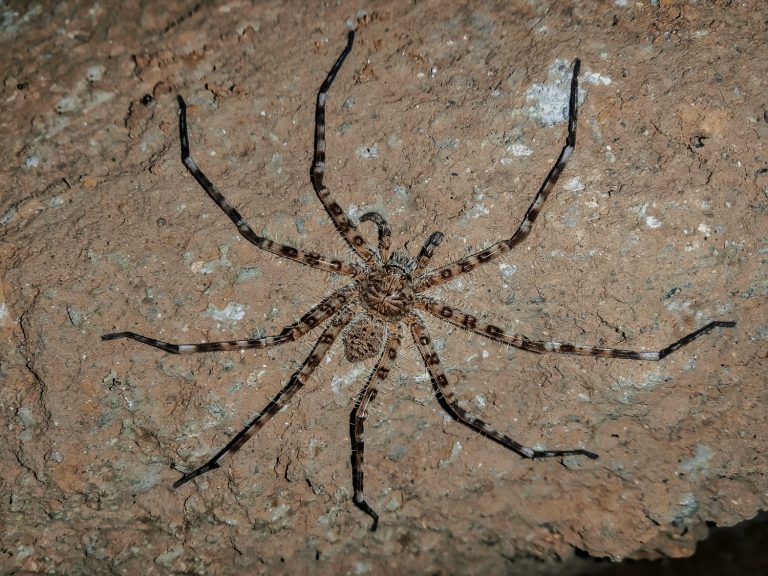
Researchers discovered the giant huntsman spider in Laos in 2001.
©iSKYDANCER/Shutterstock.com
There are over 1,300 different species of huntsman spiders, and the giant huntsman (Heteropoda maxima) is the largest of them all. If you’re going by leg span alone, the giant huntsman wins the day. At the size of a dinner plate (11.8 inches, 30 cm), this massive spider in the family Sparassidae has the largest leg span of any spider in the world. The legs are long, but the spider’s body is only around 1.8 inches long. Although this gangly spider is the largest, it’s not the biggest if we were ranking by weight. The giant huntsman weighs around 5.9 ounces, which is slightly less than our number two entry, the goliath bird-eater at 6.17 ounces.
We’ve only known about the giant huntsman since its discovery in a cave in Laos in 2001. It may seem surprising that such a large spider was unknown until the past two decades, but giant huntsman spiders are elusive, preferring to hide in tight crevices out of sight. The giant huntsman is native to Asia. Other huntsman species live in Africa, Australia, South America, and even some southern U.S. states. They aren’t native to the U.S., but likely arrived from other countries.
Like all spiders, huntsmen are venomous, but their bite won’t kill a human. Although it’s enough to kill its prey, a bite to a human may cause swelling and pain. Huntsmen spiders are ambush predators and eat a wide variety of other invertebrates, which helps keep pest populations in control. Thanks to its size, the giant huntsman doesn’t have many predators. However, juveniles are often eaten by lizards and birds.