Quick Take
- One insect on this list doesn't sting or bite humans at all, and yet it's considered the most dangerous of the bunch. Meet the budworm →
- Getting stung once by a particular Canadian wasp can make every future sting dramatically more dangerous. German yellow jacket stings →
- Canada hosts a tick that can permanently change what you're able to eat, yet most people have never heard of it. Lone Star tick risks →
- Some of Canada's most dangerous insects aren't native, and stopping their spread may already be out of reach. Invasive hornets in Canada →
Warmer areas of the Earth have significantly more insect species, supporting more than 80% of the world’s insect diversity. While Canada is home to tens of thousands of species, its overall species diversity is much lower than in warmer, tropical regions. Even so, Canada is home to a handful of insects that present a danger to humans. Continue reading to discover six insects in Canada that pose a threat to your health, habitat, and happiness.

Canada is home to insects that pose dangers to people, pets, and the environment.
©Light and Vision/Shutterstock.com
Mosquito
Canada has three types of mosquitoes (Anopheles, Culex, and Aedes) that its residents and tourists must contend with.
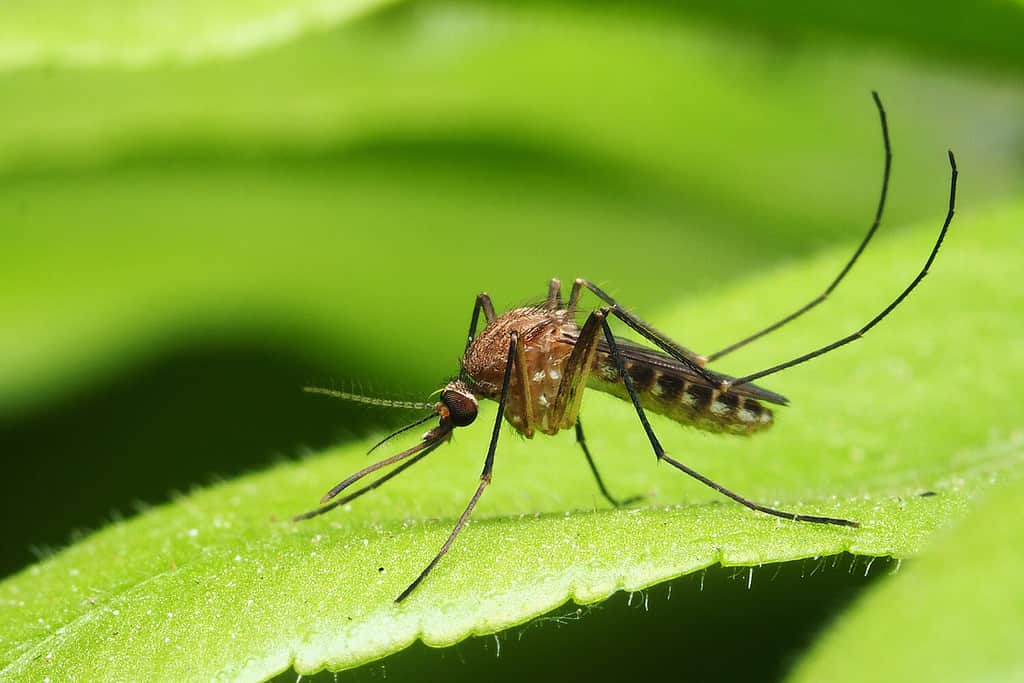
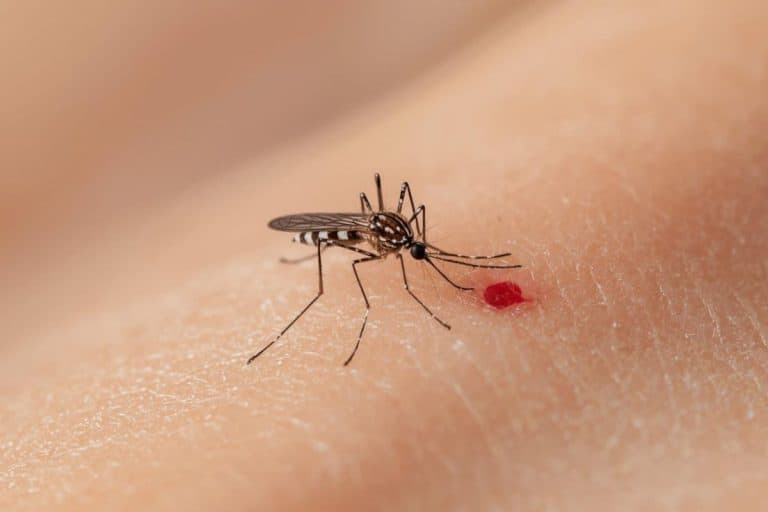
Mosquitoes rank among Canada’s most dangerous insects.
©jiade/Shutterstock.com
The Aedes species carries a variety of diseases, including (but not limited to): dog heartworm, yellow fever, Zika virus, and dengue fever.
Anopheles, as elsewhere, carries malaria, and Culex carries encephalitis and West Nile virus.
Each of these types of mosquitoes makes its home somewhere different in Canada. Anopheles and Culex mosquitoes reproduce in or near standing water and are found in Nova Scotia, Southern Ontario, Saskatchewan, New Brunswick, and Quebec. Aedes are found in Ontario and other northern regions.
What should you do if you’re bitten by a mosquito in Canada? Wash the bite with soap and water, and watch for symptoms. Seek medical care if you experience a severe allergic reaction, symptoms of a mosquito-borne virus (like West Nile), or signs of a secondary bacterial infection.
German Yellow Jacket
The German yellow jacket (Vespula germanica) is a medium-sized wasp with a sting that has long-lasting effects. These yellow jackets are not as aggressive as the other stinging insects on this list, but they are still considered aggressive and dangerous, capable of delivering multiple stings.
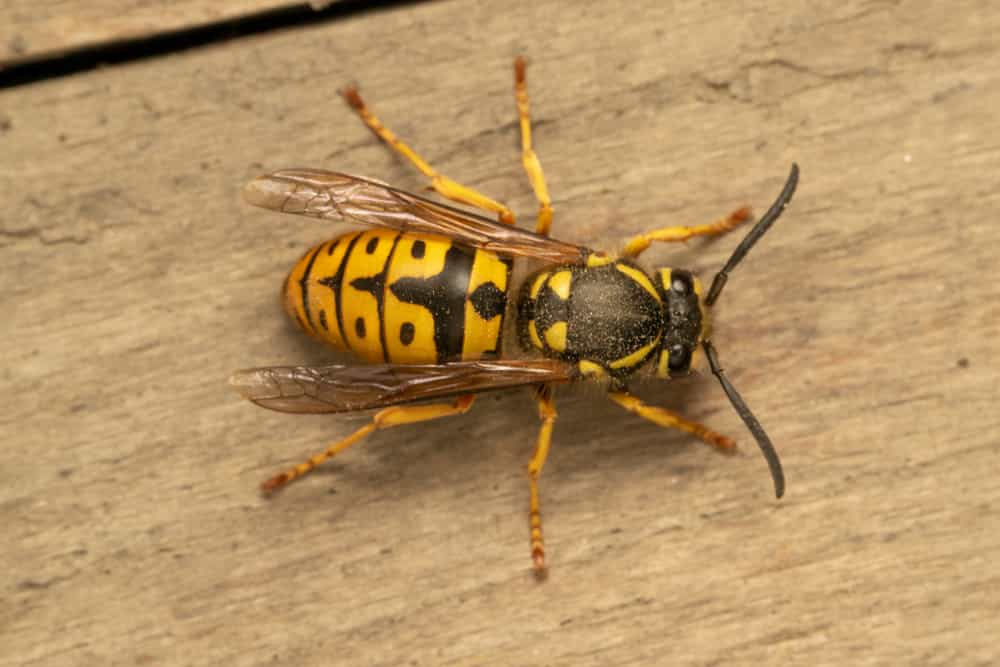
These wasps can give you a hypersensitivity to stings.
©tasnenad/Shutterstock.com
When stung by a German yellow jacket, some people have severe allergic reactions. This hypersensitivity develops after the first sting and may trigger a severe, life-threatening allergic reaction upon subsequent stings.
What should you do if you’re stung by a German yellow jacket? First, remove the stinger from your skin. Be sure to clean the wound with soap and water. Then hold a cold compress or ice pack to it to slow the spread of venom, just as you would for a hornet or wasp sting. Seek immediate medical care if you experience any signs of a severe systemic allergic reaction (anaphylaxis).
Asian Giant Hornet
Canada is home to Asian giant hornets (Vespa mandarinia), also known as murder hornets. This invasive insect species has a particularly aggressive way of protecting itself and its nests.
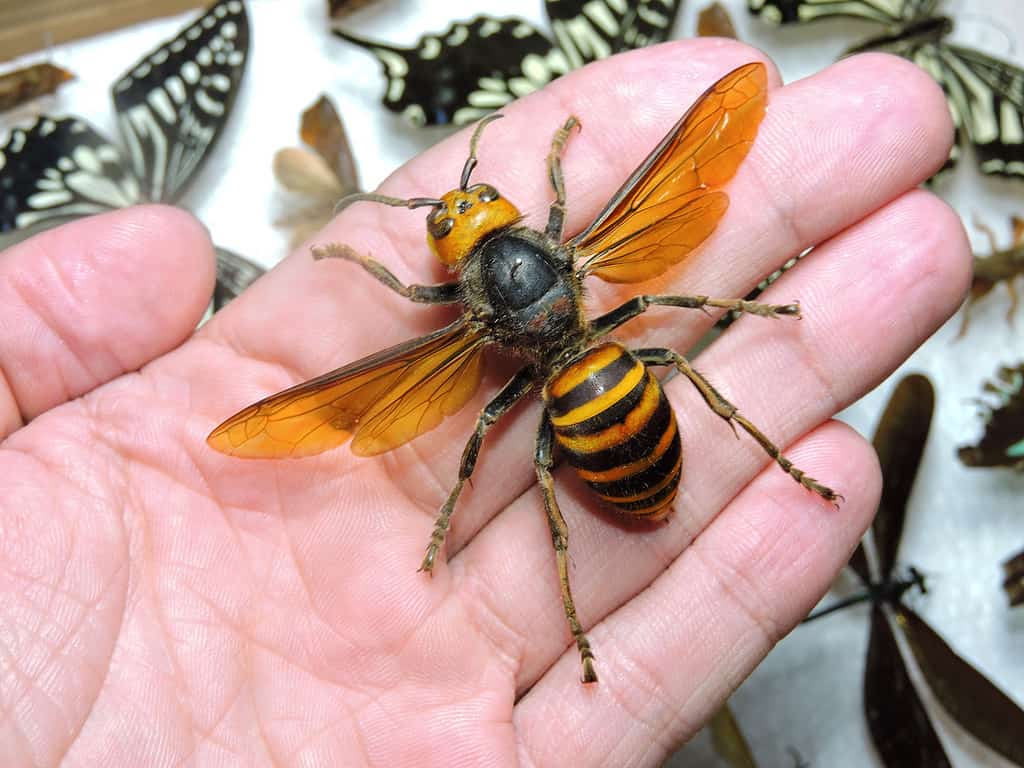
Asian giant hornets are massive.
©iStock.com/Bruno Uehara
Asian giant hornets are the largest hornets on Earth, measuring between 1.5 and 2 inches in length.
When British Columbians found an Asian giant hornet nest on Vancouver Island, the nest was destroyed to halt the spread of the species. Still, the threat of these hornets remains in Canada, and agencies request that residents not attempt to kill or remove a nest on their own. Instead, it’s best to photograph and report the sighting, then leave the job to the professionals.
What should you do if you’re stung by an Asian giant hornet? Treat the sting like you would a bee sting. Wash the site with soap and water, and then apply a cold compress or ice pack to slow the release and spread of venom. Seek immediate medical attention if you are allergic to bee stings, feel dizzy, or lose feeling in any extremity.
European Fire Ants
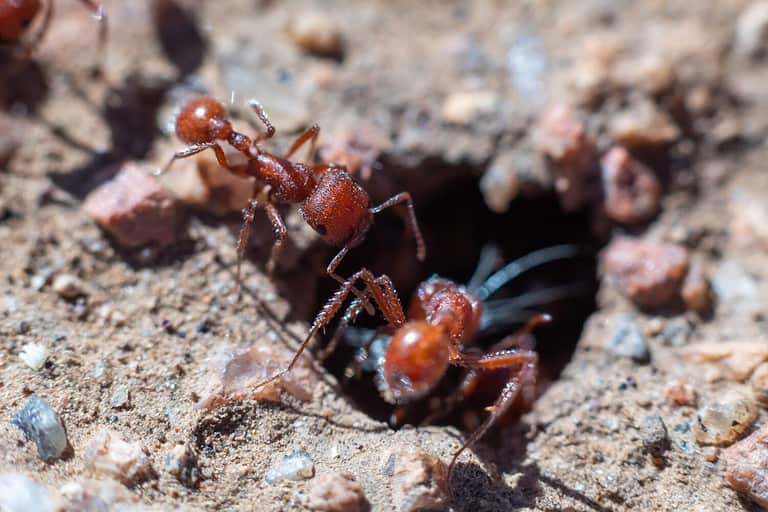
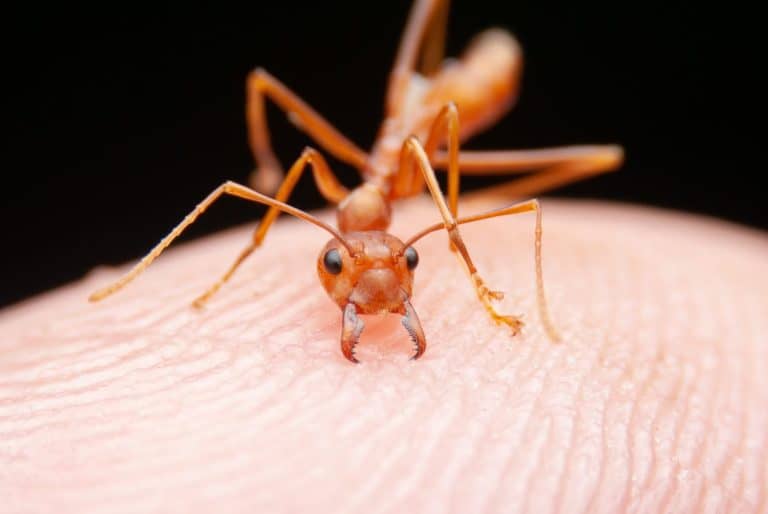
Although they prefer warmer climates, European fire ants (Myrmica rubra) have found their way to Canada. These ants are aggressive and will both bite and sting victims if they feel threatened or are approached.
European fire ant bites won’t necessarily debilitate a human, but some people may have a significant allergic reaction to the alkaloids in the ant’s venom. Most alarmingly, these ants do not fear humans and will attack unprovoked.

European Fire Ant bites create a pustule after a few hours.
©Lukas Jonaitis/Shutterstock.com
What should you do if you’re bitten by a European fire ant? Fire ant stings result in a pustule, or blister, that fills with pus and fluid a few hours to a day after a sting. If you know you’re not allergic to European fire ant venom, treat the bite as you would any other insect bite and allow the pustule to heal naturally. If you begin to feel dizzy, nauseous, or weak, seek medical attention immediately.
Tick
Canada is home to over 40 different types of ticks (order Ixodida). However, the vast majority of these are specialized wildlife ticks that live primarily in the nests, burrows, and dens of their wild hosts, and do not typically bite humans. There are two established genera (Dermacentor, Ixodes) and two intermittent genera (Amblyomma, Rhipicephalus) of human-biting ticks that are responsible for transmitting diseases such as Lyme disease, Alpha-gal syndrome, and Rocky Mountain spotted fever.
- Deer tick (Ixodes scapularis). These bites often result in itching and a bullseye-like rash around the bite site. Deer ticks often carry Lyme disease, but not always. The tick must be on you for 36 to 48 hours to fully transfer the disease to you.
- American dog tick (Dermacentor variabilis). This species carries dangerous diseases, including tularemia and Rocky Mountain spotted fever. Its bite symptoms range from mild fever and rashes to tick paralysis.
- Rocky Mountain wood tick (D. andersoni). These ticks will latch onto humans, dogs, and cats and have the ability to transmit Colorado tick fever virus, as well as tularemia and Rocky Mountain spotted fever. Their bright red, tear-shaped body makes them easy to identify.
Non-resident Ticks
- Brown dog tick (Rhipicephalus sanguineus). Aptly named, the brown dog tick tends to carry canine diseases like ehrlichiosis and babesiosis that can infect and deteriorate a dog’s health. These ticks often choose dogs over humans, but ticks from a severely infested dog may jump to a nearby human. Canada’s winter climate is too harsh for this species to colonize outside. However, there are breeding populations found in indoor spaces across the country.
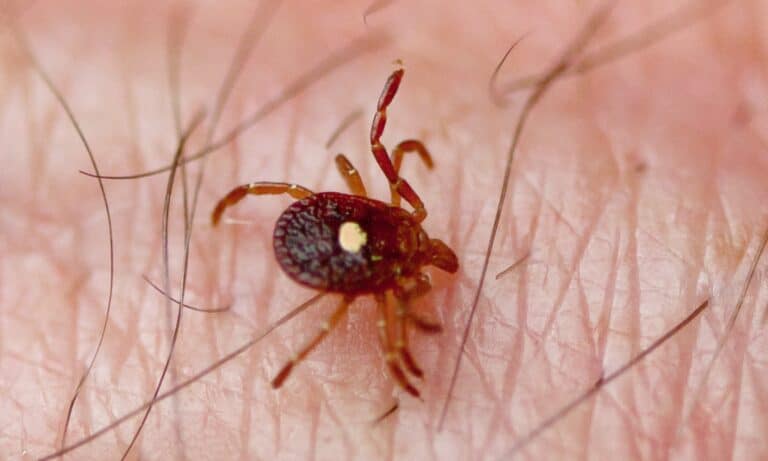
- Lone Star tick (Amblyomma americanum). These ticks are found most often during the spring and summer months, with a peak in sightings between May and July, which coincides with the northward migration of host birds. Because these ticks do not maintain reproducing populations in the Canadian wild, their occasional appearance from spring through early fall is tied entirely to migratory bird carriers. Any encounter is rare but significant, as they can transmit alpha-gal syndrome, a serious red meat allergy.
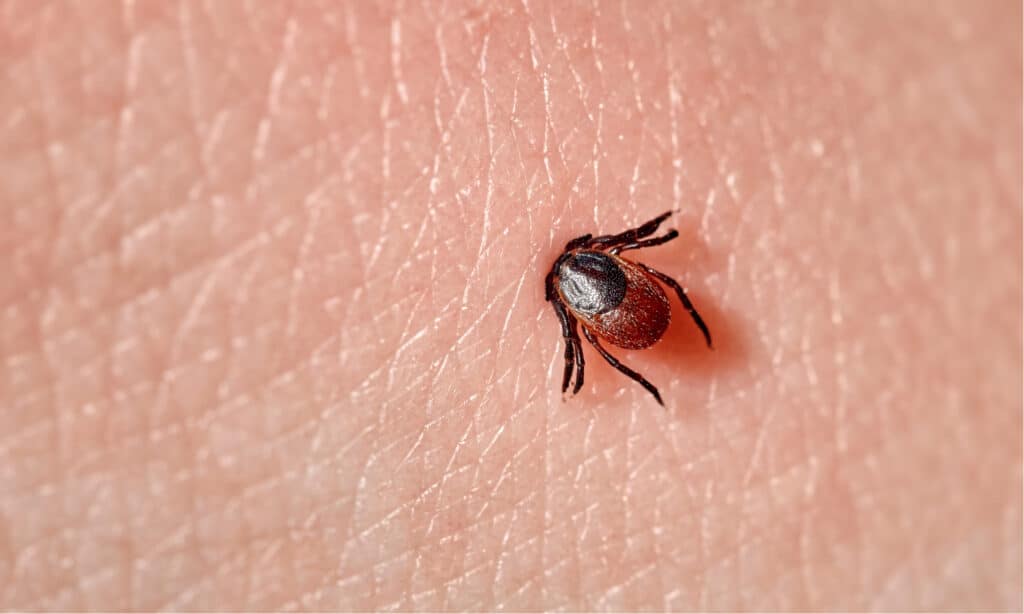
Deer ticks can survive in the winter and burrow into the skin to suck blood.
©Evgeniyqw/Shutterstock.com
What should you do if you’re bitten by a tick in Canada? Remove the tick and save it for identification purposes. Wash the affected area with soap and water, apply antiseptic cream, and watch for symptoms such as fever, chills, headaches, extreme fatigue, muscle and joint aches, and distinctive skin rashes — any of which may necessitate medical attention.
Eastern Spruce Budworm
The outbreak cycles of the Eastern spruce budworm (Choristoneura fumiferana) occur every 32 to 40 years and can persist for several years. The Eastern spruce budworm is considered the most destructive forest insect in North America, including across Canada’s boreal zones.
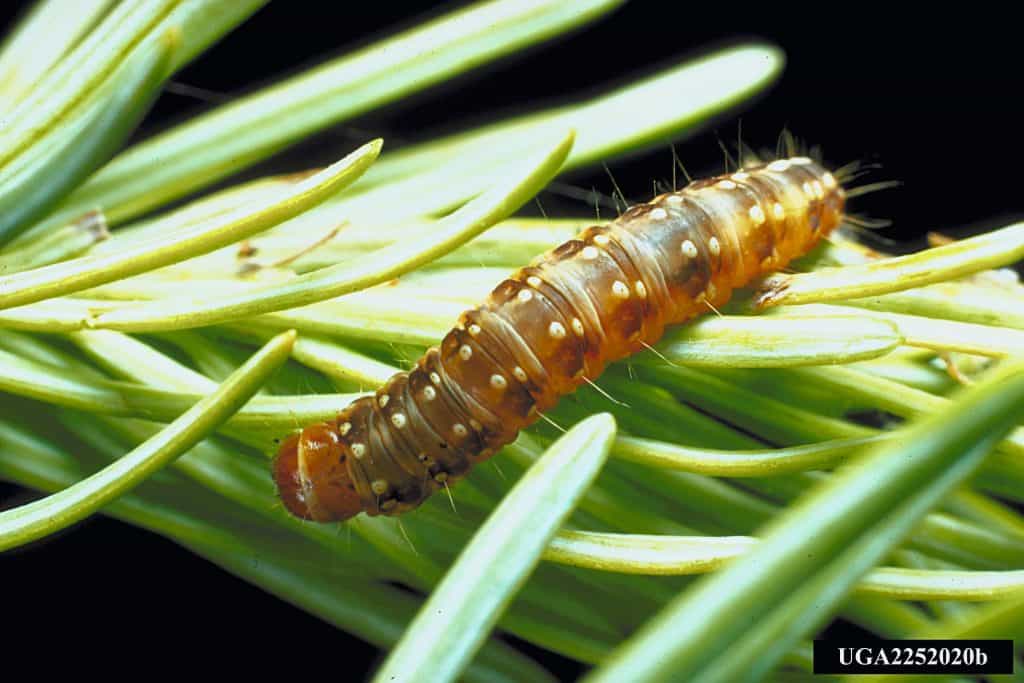
The larval (caterpillar) stage of the spruce budworm is entirely responsible for the devastating defoliation and destruction of spruce and fir forests.
The most recent outbreak, beginning in 2006, has resulted in significant deforestation caused by the spruce budworm. Experts estimate that in the years between 2006 and 2019, almost 10 million hectares of Quebec’s forests suffered moderate to severe defoliation.

In its adult form, the Eastern spruce budworm moth is not a threat.
©Paul Reeves Photography/Shutterstock.com
Defoliation has a significant negative effect on Canada’s forests. Not only does it destroy vital animal ecosystems, but it also causes significant timber loss — timber being one of Canada’s major exports. Canadian agencies have pest management systems in place but continue to struggle to control or eradicate outbreaks without disrupting the broader ecosystem.