
Quick Take
- Roseate spoonbills are bright pink birds that live in the southern United States.
- They get their bright pink feathers from a mix of genetics and diet, similar to flamingos.
- A deep pink coloring indicates a good diet, while a pale color suggests the opposite.
Flamingos need to watch out because they’re not the only bright pink birds out there. The roseate spoonbill, a lesser-known pink bird species, is becoming popular online thanks to its bright complexion. As the name suggests, these truly beautiful birds have a soft rose color. This Instagram post by @mejwildlife shows a picture of two babies up close, and it’s an adorable sight. Read on to learn more about the roseate spoonbill and why it is pink.
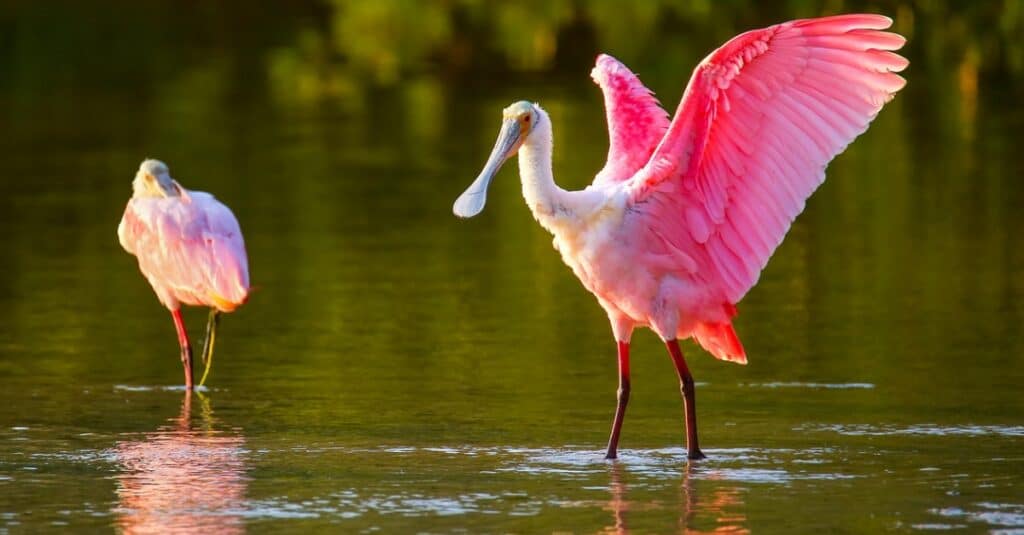
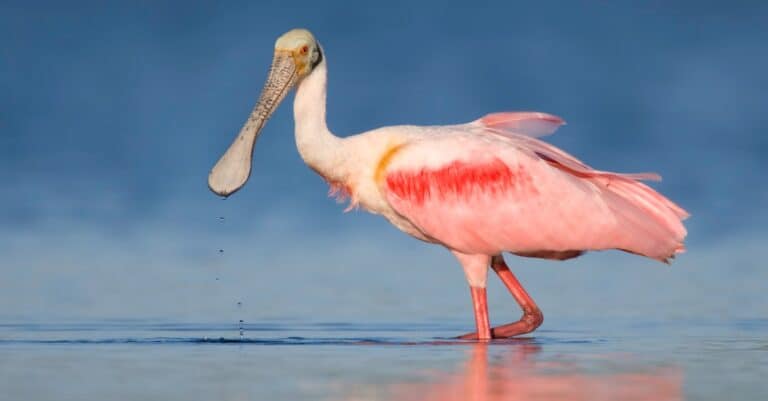
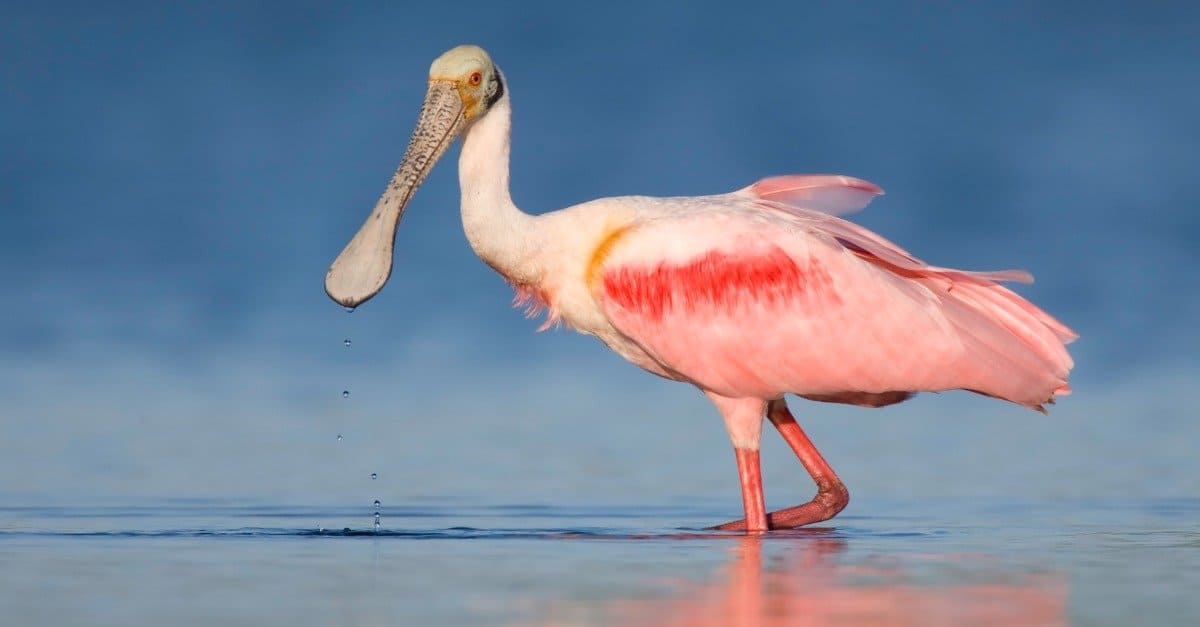
Roseate spoonbills names are reflective of their pink fathers and spoon shaped bill.
©iStock.com/Donyanedomam
About the Roseate Spoonbill
The roseate spoonbill is a species of spoonbill that inhabits North, Central, and South America. Within the United States, they can be found in southern states along the Gulf Coast, ranging from Florida to Texas. They inhabit a few different environments, like wetlands, mangroves, and lagoons, typically anywhere with warm and shallow water. This species grows to roughly two and a half to three feet tall, with a four-foot wingspan. Just like flamingos, they have bright pink feathers throughout their bodies and a greenish head. They have long legs for wading through water and a spoon-shaped bill, hence the name. In their habitats, they feed on small fish, shrimp, and other aquatic animals and insects.
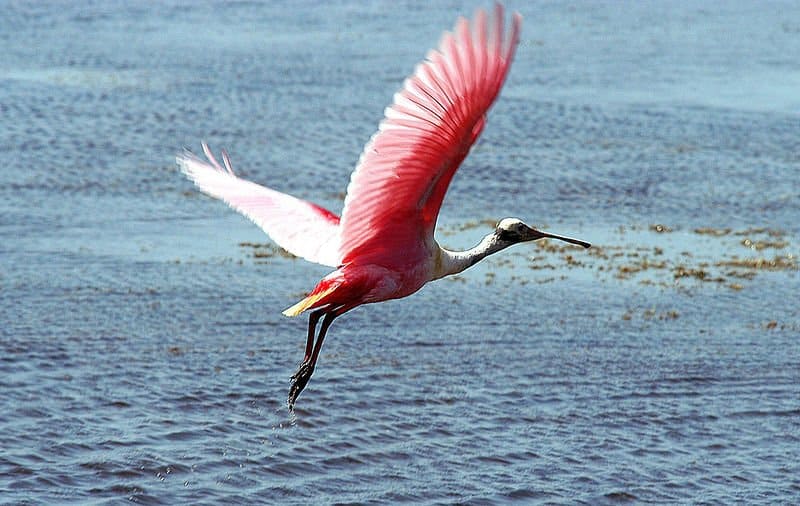
Roseate spoonbills have a large, four foot wingspan.
©Solipsist – Public Domain
Why Are They Pink?
In the post above, the chicks are a bright pink color throughout their bodies. So, are they born with bright pink feathers? Roseate spoonbill chicks are born with white or grayish down feathers at hatching. Their pink coloration develops gradually as they mature and begin to consume a carotenoid-rich diet. The pink comes as they get older, partly from their genetics and partly from their diet. Juveniles are often pale in shade, growing to a deeper pink by the time they are adults. Since a large part of their diet consists of crustaceans like shrimp, the carotenoid pigments in these foods tint their feathers pink, similar to how flamingos develop their color. This means their feather color is a simple way to gauge their nutrition, with a richer color indicating the bird is well-fed.
The timeline from egg to adulthood is relatively quick. Females lay around one to five eggs per clutch and incubate them for about 25 days. After hatching, the chicks rely on their parents for protection and feeding. This growth stage is a vulnerable time for the babies. After about five weeks, they are able to leave the nest with their parents. At around eight weeks, they become fully independent, but they do not begin breeding or start their own families until they are at least two to three years old. As chicks, they are born with a short bill, which grows into the characteristic spoon shape after about a month. They use this special bill to sweep through the water and catch prey.