
Birds are remarkable creatures. Each species has its own coloration that ranges from the ordinary to the impressive. These colorations are all related to camouflage, the sex of the bird, and environmental factors that have modified their appearance over generations. However, one species of bird is not satisfied with the coloration Mother Nature provided. Instead, it periodically gives itself a ‘dye job.’ Sometimes, the application of color is imperfect, earning the bird the nickname ‘beauty school dropout.’
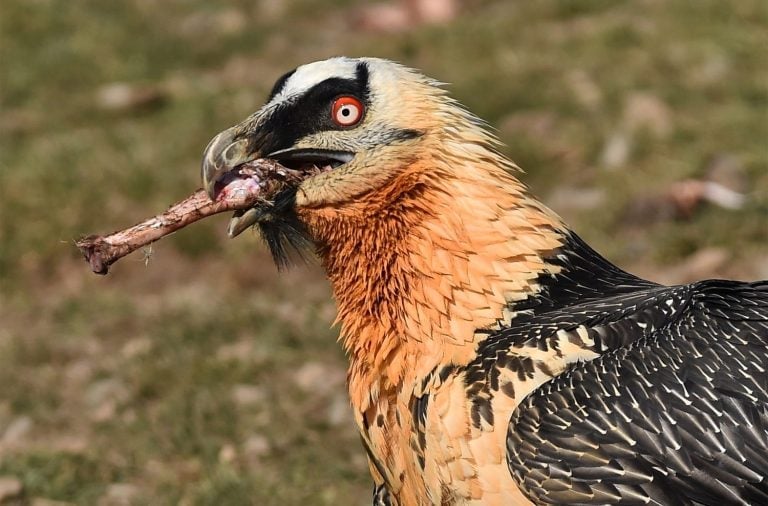
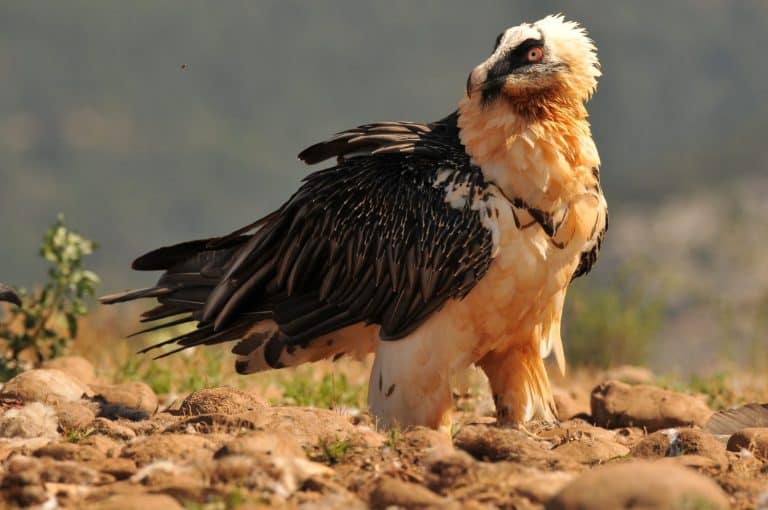
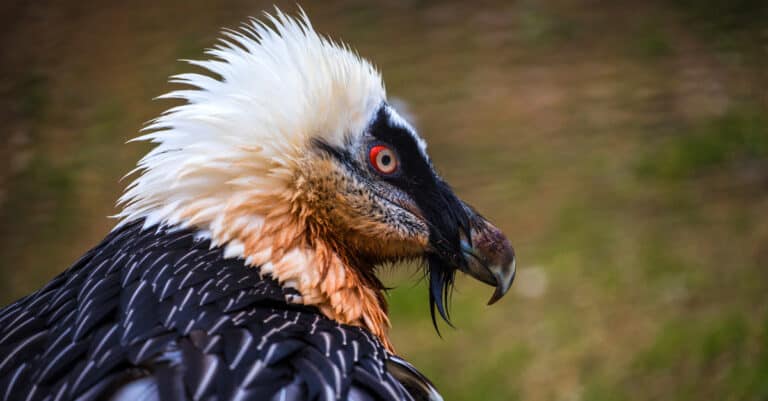
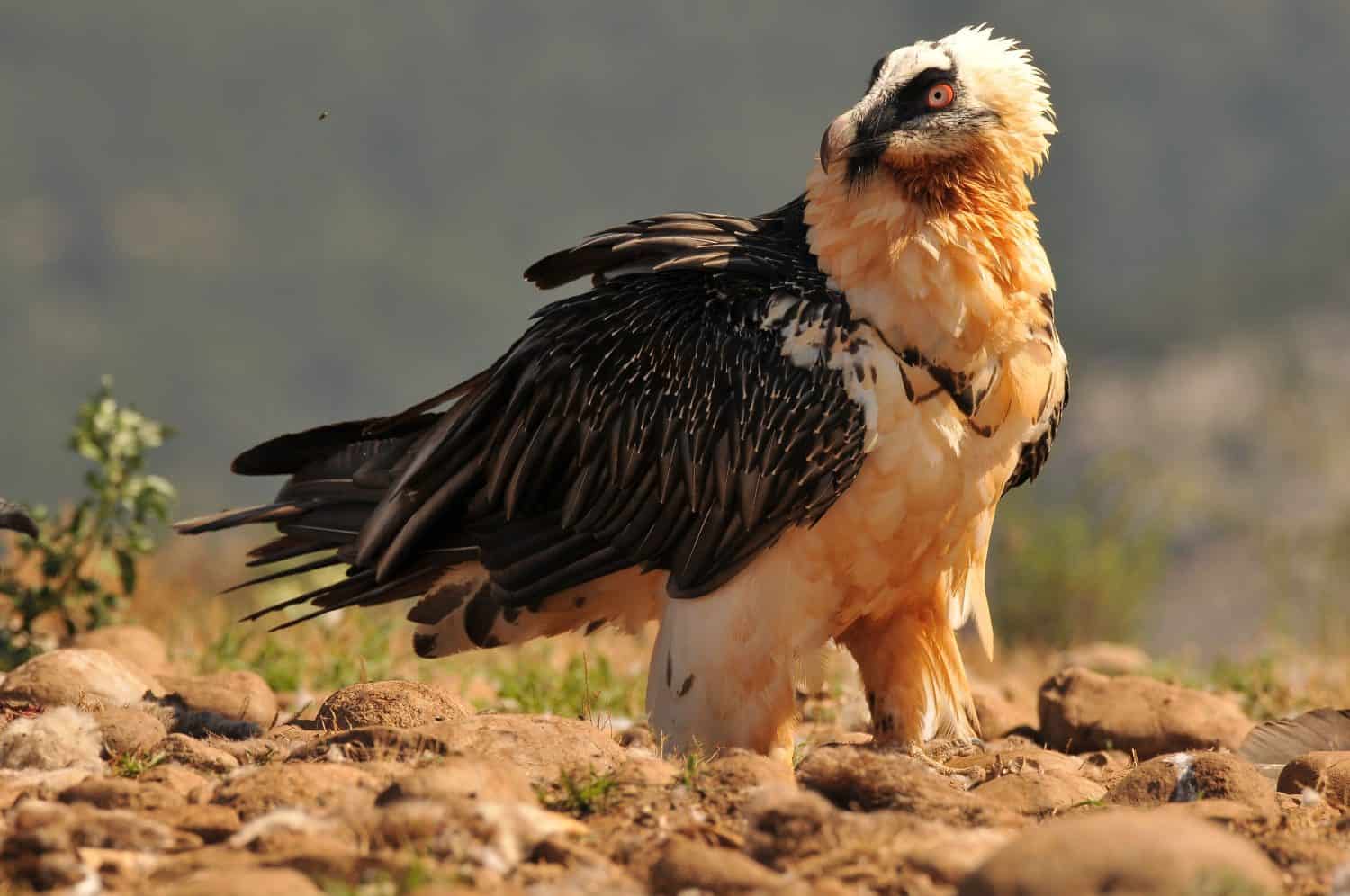
The bearded vulture is one of the largest birds of prey. With a wingspan of nine feet and a body length that can reach up to four feet, the vulture is a formidable bird. With plumage of deep browns and bright whites, it would make sense to compare its looks to those of a bald eagle. However, where the bald eagle prefers its white feathers, the bearded vulture does not. Therefore, thanks to a bit of natural dye, bearded vultures typically sport more orange than white feathers at different times throughout the year.
The Dye Process of Bearded Vultures
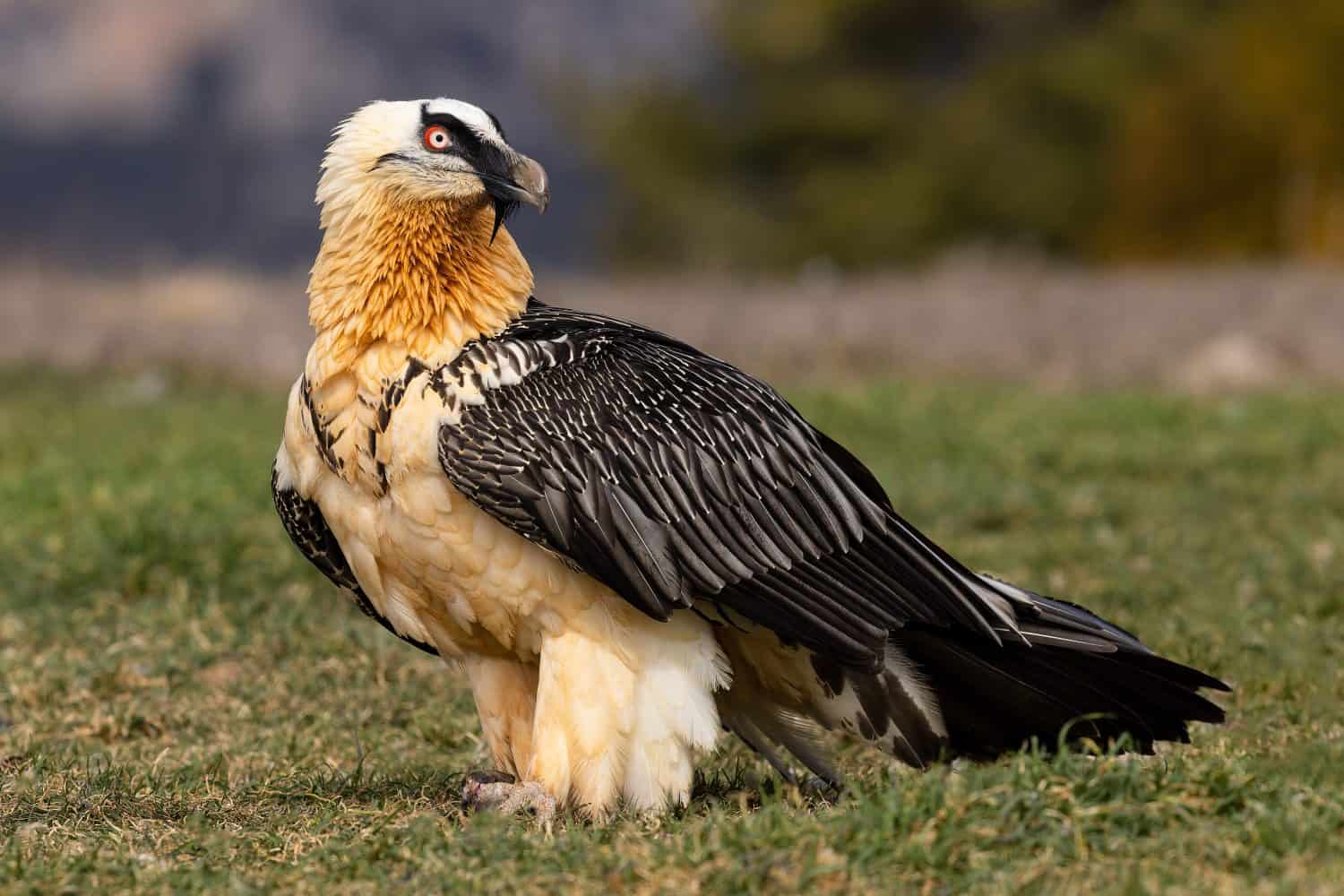
Bearded vultures use a method called cosmetic coloration to change their feathers from white to a terracotta color.
©Wirestock Creators/Shutterstock.com
Bearded vultures are a species of vulture that have feathers on their heads, which is unusual since most vultures lack head feathers to avoid contamination from consuming parasite-laden carrion. However, because bearded vultures have a different diet, having head feathers does not expose them to pathogens or soil their plumage, so their white feathers remain vibrant.
However, bearded vultures do not want to flaunt white plumage. Instead, according to a 2019 study published in PeerJ, they prefer to color their feathers via a method called cosmetic coloration, turning their white feathers to terracotta feathers instead.
The process by which the bearded vultures dye their feathers is fascinating. The vultures need to find ferruginous springs to color their feathers. This is because the springs contain high levels of iron oxides. The bearded vultures bathe themselves in the ferruginous springs until their white plumage is orange to red-orange.
Bearded vultures do not constantly participate in cosmetic coloration. Instead, the process happens several times per year. While most of the ferruginous springs are located near breeding grounds, it has been hypothesized over the years that the coloration is related to the mating process. However, given the remote locations in which the bearded vultures live, as well as the fact that locations where ferruginous springs are not present do not allow the birds to dye themselves, proving this or any other theory has been difficult to do.
Why Does the Bearded Vulture Dye Its Feathers?
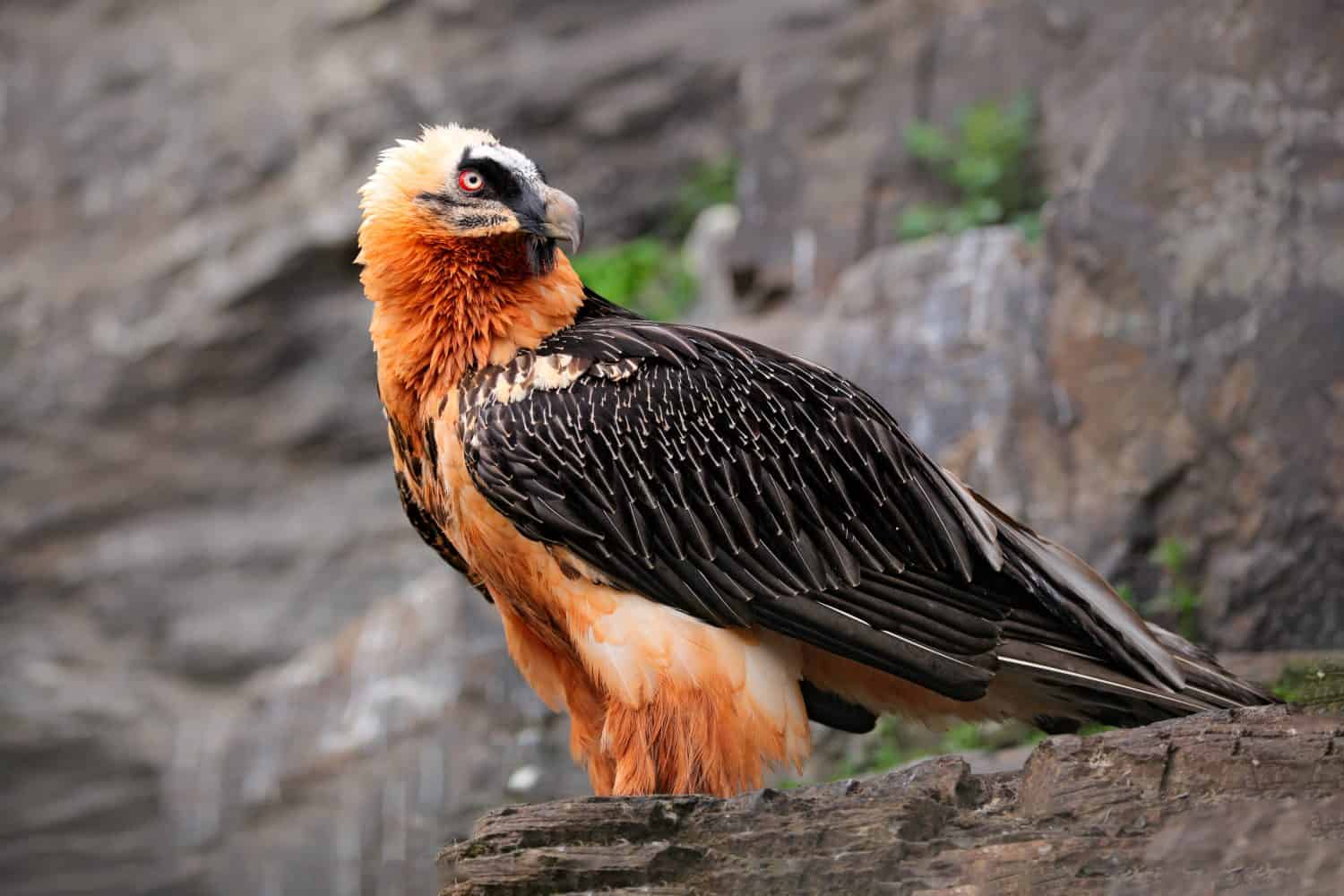
It has yet to be determined why bearded vultures change their feathers from white to reddish-orange.
©Ondrej Prosicky/Shutterstock.com
Bearded vultures are birds that would prefer to remain secretive from the world. This is well achieved, given how high up in the remote mountainous areas they live. But it also makes it difficult to get answers regarding the behavior of dyeing their feathers.
According to a 2023 study published in Animals, scientists have some hypotheses as to why bearded vultures dye their feathers. However, none have been proven. The hypotheses that scientists have come up with to date include:
- Protecting the feathers from getting damaged
- Coloration displaying the status of a dominant bird
- Coloration provides an antibacterial or antiseptic barrier against parasites
- Iron found on the feathers is transferred through the eggshell to the embryo inside
- Less dominant birds cover themselves with coloration to disguise any feather imperfections
Both protecting the feathers from damage and providing a barrier against parasites have been tested in a laboratory setting, and both hypotheses have been disproven. The most widely accepted of the hypotheses is that the birds are displaying dominance. They are covering themselves in the iron-rich reddish-orange coloration to distinguish themselves from others in the area. Both sexes participate in cosmetic coloration, which would make the most dominant male and female bearded vultures easily known to one another. But, because there still is no proof that this is why the bearded vultures color themselves with sediment multiple times per year, any of the untested hypotheses remain contenders.
Other Birds That Dye Their Feathers
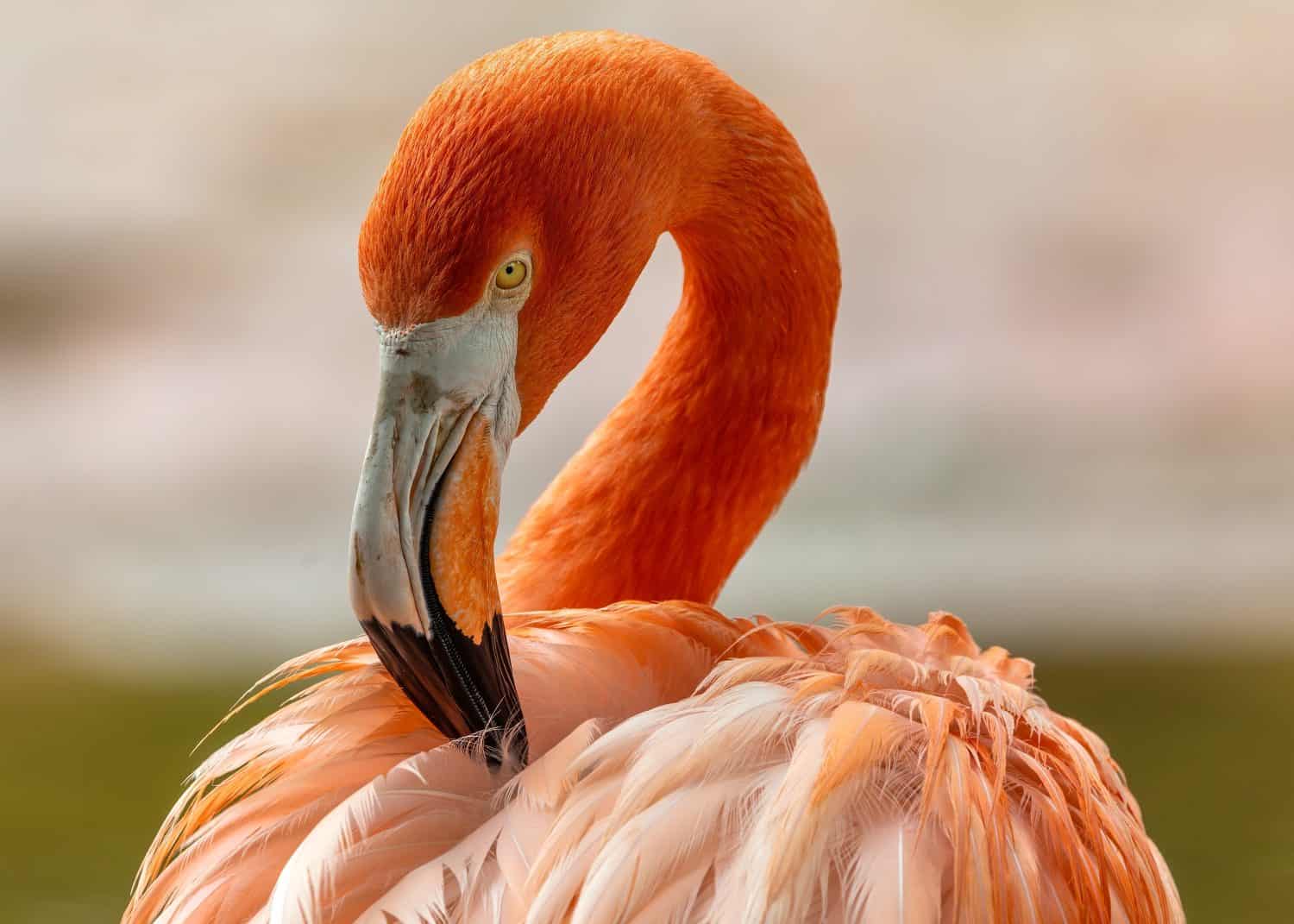
Flamingos participate in coloring their feathers after the sun bleaches them of color.
©fluffandshutter/Shutterstock.com
Bearded vultures are just one species of bird known to dye its feathers. Another well-known bird also dyes its feathers to maintain vibrant color in the sun, but it produces its own dye rather than using external sources.
Flamingos are known for having orangish-pink to pink feathers. This coloration comes from their diet of crustaceans as well as different types of algae. The vibrant colors tend to fade in the sun, however. Especially during mating season, this is not acceptable to the birds. Consequently, they dye their feathers to make the color appealing to the opposite sex.
Flamingos cover their necks with a colored ‘serum’ produced near their tails. This fluid matches the color of their feathers. They apply the serum to the feathers that need to be recolored, repeating the process until the feathers regain their vibrant hue.
Why Bearded Vultures Have Feathers On Their Heads
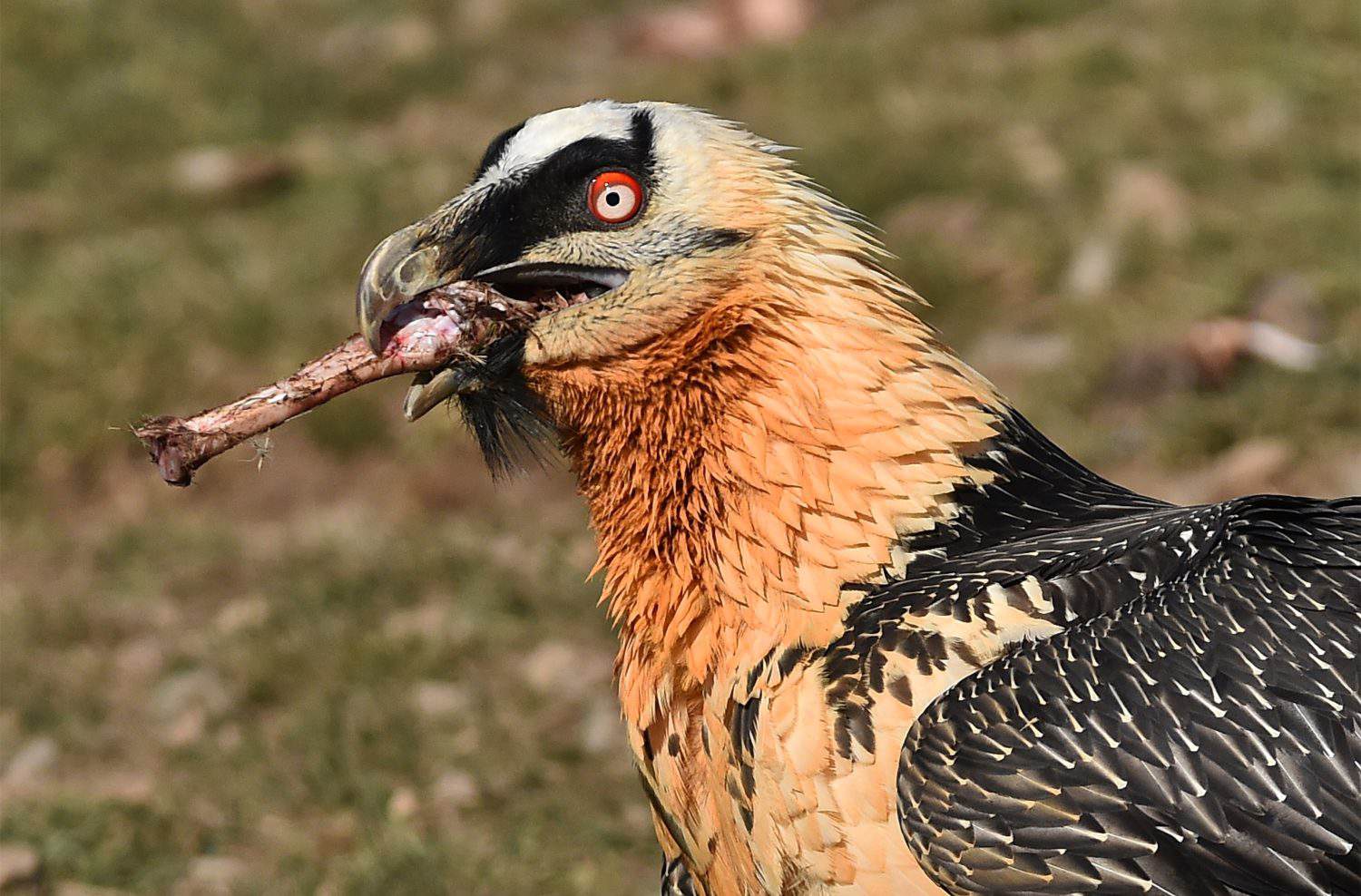
Bearded vultures have feathers on their heads due to their diet consisting of the bones of other animals, versus carrion.
©alberto clemares exposito/Shutterstock.com
Vultures are known for not having any feathers on their heads due to their scavenging nature. But, unlike most vultures that consume animals after they have died, bearded vultures eat a part of the animals that no other vertebrate creature is known to do. Bearded vultures’ diets are comprised of 90% of the bones of other animals. Because they are not putting their heads into the flesh of deceased animals, there is no need for their heads to be devoid of feathers. The vultures take the bones from the dead, fly high into the sky, and drop them so that the bones become bite-sized pieces. These pieces are swallowed whole.
The only reason bearded vultures can live off the bones of other animals has to do with the pH of their stomach acid. Unlike humans, who have a pH of 2, bearded vultures, and other vultures, for that matter, have stomach acid with a pH close to 1. This means that once the bones enter their stomachs, they are digested within 24 hours. Bearded vultures are unique among birds of prey for thriving on a diet primarily composed of bones.
Very Little Is Known About the Bearded Vulture
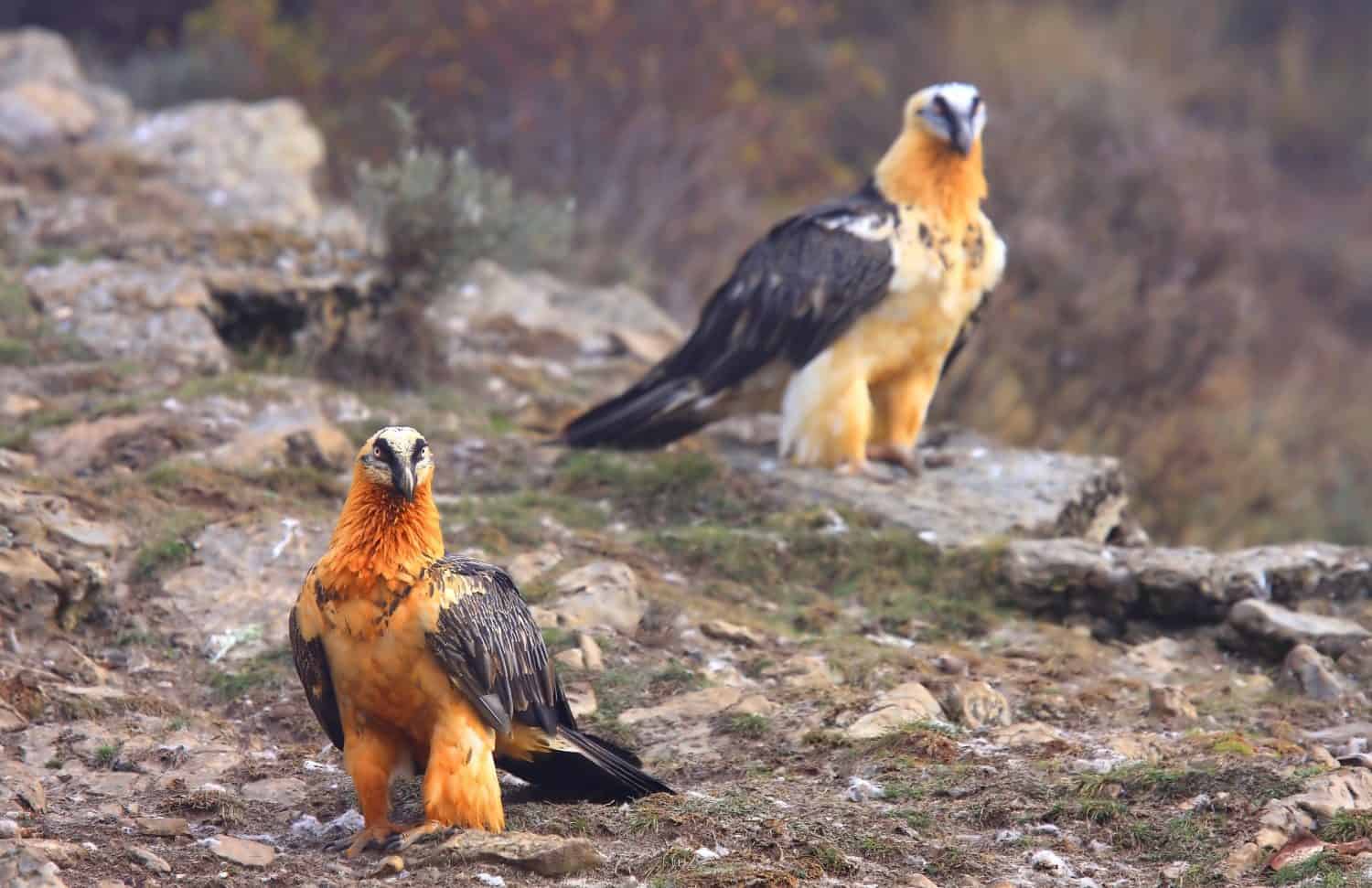
Given the remote locations where bearded vultures live and their declining population, very little is known about the bird of prey.
©ESCOCIA/Shutterstock.com
Unlike other vulture species, very little is known about the bearded vulture. This has to do with both the size of the species and the region where they live. The bearded vulture lives in the mountainous regions of the Middle East, East Africa, and Eurasia. Given their preference for remote regions, it may take some rigorous hiking to reach the locations these birds of prey are known to frequent.
Additionally, the bearded vulture is a “near threatened species,” according to the IUCN. Over the last two centuries, the birds were hunted to near extinction after rumors spread that the bearded vultures preyed on both livestock and children. Despite these myths being false, in some portions of Europe, the birds did eventually go extinct. It was not until the 1970s that the birds began to be reintroduced to mountain ranges in Europe, with the biggest distribution being in the Alps. Unfortunately, even with the bearded vultures being a protected species as of 2009, their population continues to decline, with places like Turkey, Nepal, India, and Yemen experiencing the most recent loss of the vultures.
With an estimated 1,675 to 6,700 bearded vultures left in the world, according to IUCN, conservationists have recommended that the ferruginous springs frequented by the vultures become protected as well. Without these springs, the bearded vultures are unable to change their feathers from white to terracotta red, which could further negatively affect the species. Conservationists say that protecting these resources, along with preserving the bearded vultures’ habitat, is essential for the species’ survival.