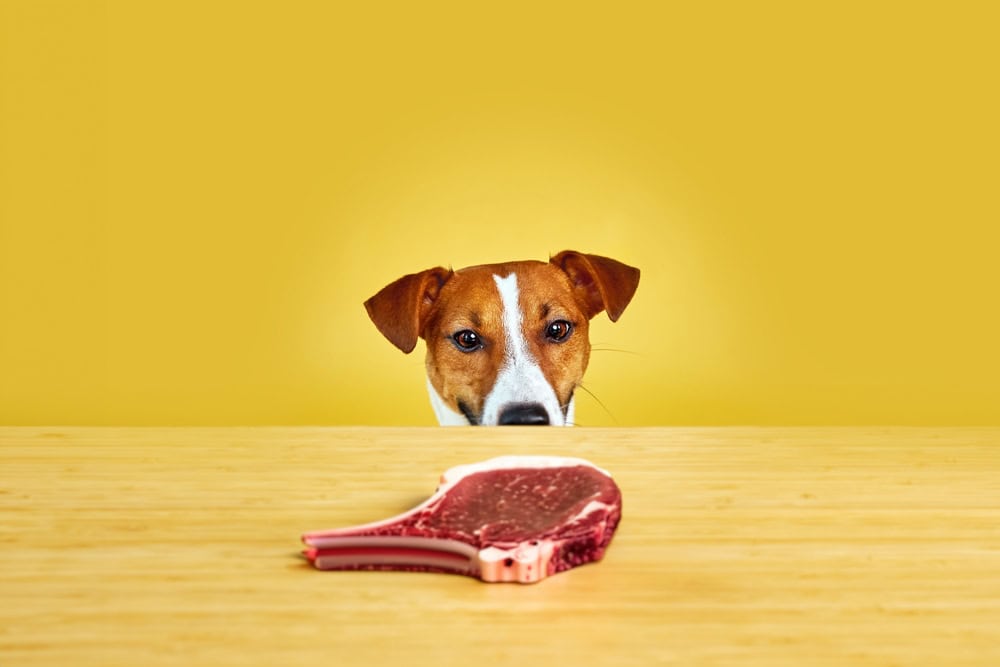

At first, this may seem like a ridiculous question. After all, when dogs lived in the wild, they would hardly have cooked their meat, would they? But when you stop to consider the lifestyles adopted by our domestic dogs, and take into account how different they are from their wild ancestors, you may want to reconsider. Here we will examine the arguments for and against feeding your dog raw meat so that you can make an informed decision for your own pet.
Dogs as Descendants of Wolves
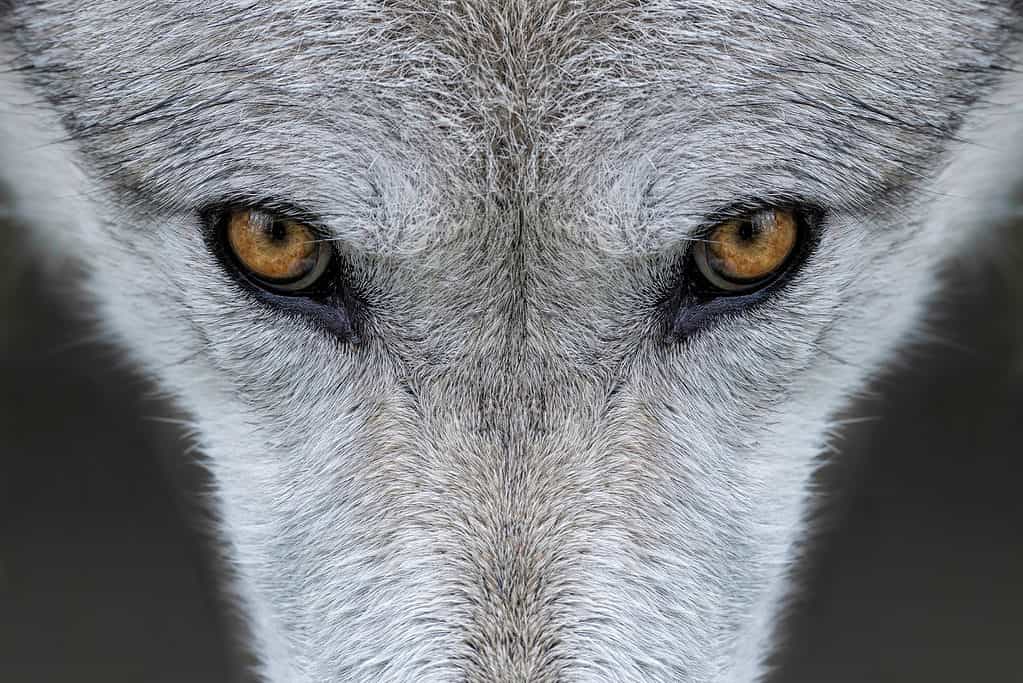
Domestic dogs descend from gray wolves.
©iStock.com/gnagel
There is plenty of research indicating that our domestic dogs descended from gray wolves (Canis lupus). This species once roamed most of the Northern Hemisphere. It is likely that our ancestors were able to persuade some of the more docile wolves to join them and soon realized how useful they could be for helping with guarding, hunting, and companionship.
So, let’s take a look at the gray wolf’s diet. They are carnivores and hunt prey, which they locate partly by scent. Working as a pack, they will take down larger animals such as moose, elk, and reindeer. Wolves are also scavengers and will happily eat carrion. Importantly, they will consume most of the carcass, including some bones and hair.
But that is not the whole story. Studies have also revealed that wolves eat fruit, including berries, apples, and melons. Also, given the opportunity, wolves will scavenge in human garbage and landfill, where they will inevitably end up eating cooked meat.
Domestic Dogs
It is important to remember that domestic dogs are not wolves. They have experienced thousands of years of selective breeding, and their lifestyles have intertwined with those of humans. This includes the human ability to cook meat. As omnivorous and carnivorous scavengers, dogs are physiologically adapted to efficiently digest many different food types. This includes raw meat, but also includes cooked meat, grains, vegetables, and even rotten food. As many dog owners know, dogs often like to roll in it first!
Dogs have adapted to eat a variety of plant and animal material to fit in with their human masters. There are significant differences between wolf and domestic dog DNA, and some of these changes relate to the ability to digest starch and fat.
This has resulted in a range of options for a domestic dog’s diet. Pet dogs can and do live long and healthy lives on any of the following diets:
- Commercial dry or canned dog food contains heat-treated meat and meat products, along with varying proportions of carbohydrates, vegetables, colors, flavors, and preservatives.
- Commercial raw meat diets.
- Home-prepared cooked meat diets with vegetables/fruits.
- Home-prepared raw meat diets with vegetables/fruits.
- Any combination of the above.
- Some human foods as treats, e.g., sausages, eggs, and vegetables.
Therefore, the choice of diet for your dog is yours to make. However, your vet will be able to advise you on the best diet for your pet, given their age, breed, lifestyle, and overall health. Just because your dog can eat raw meat does not mean that they should or that they have to. Having taken veterinary advice, you can weigh up the advantages and disadvantages of a raw meat diet. Unfortunately, there is a lack of good data from high-quality studies on the advantages and disadvantages of introducing raw meat into a dog’s diet. Nevertheless, the most commonly recognized arguments for both sides are considered here.
Advantages of a Raw Meat Diet
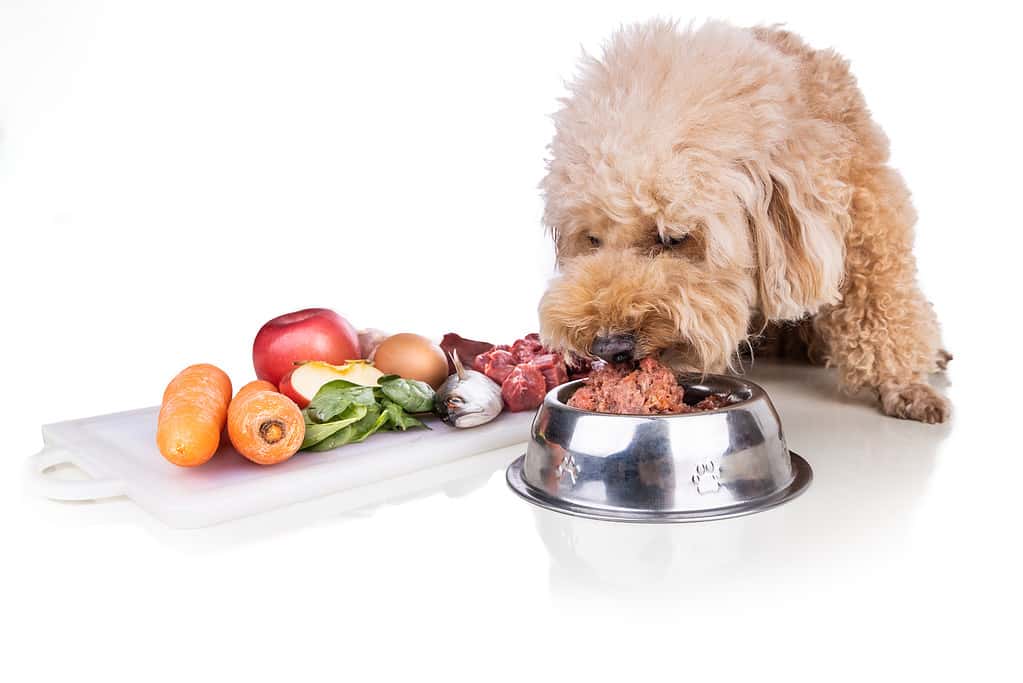
Raw meat diets can help dogs maintain a healthy weight.
©ThamKC/iStock via Getty Images
Several decades ago, most dogs were fed commercial cooked foods. However, in recent years, the popularity of raw meat-based diets has increased. Now, surveys suggest that between 15 and 20 percent of dogs are fed some raw meat. Here are some of the reasons why.
- Owners believe their dogs are healthier. Despite the lack of rigorous, scientific proof, proponents of raw meat diets for dogs believe that their pet is healthier on this diet. For example, owners believe that their dog has a shinier coat, has more energy, has fresher breath, and has cleaner teeth.
- Owners believe it is more natural. Over-processed foods are often considered less healthy. Owners like to think that a raw food diet is closer to the diet that a wild dog would eat.
- Nutrient content. Some nutrients can be destroyed by heat. For example, some proponents claim that raw diets are higher in antioxidants such as vitamin C, vitamin E, and some flavonoids. Also, heating food can result in the formation of toxins such as acrylamides and nitrosamines. The health effects of this in dogs are not yet known.
- Immune function. Immune function is influenced by what goes on in an animal’s digestive system. A raw diet may help immunity, but this has not been proven scientifically.
- Healthy weight. Anecdotal reports suggest that dogs fed a raw meat diet are less likely to be obese, and this is likely due to the high protein, low carbohydrate content.
- Allergies. Raw meat diets containing specific animal proteins only are an effective way of avoiding specific meat proteins if your dog has an allergy. Heat-treated food is more likely to have a mixture of several meat proteins.
Disadvantages of a Raw Meat Diet
Statements from the American Veterinary Medical Association and some other animal health organizations discourage the feeding of raw or undercooked animal-sourced protein to dogs. There are risks to both dog and human health associated with these diets.
Risks to Dog Health
Studies have shown that home-prepared and even commercial raw meat-based diets can have nutritional imbalances. In particular, some have an inappropriate calcium-to-phosphorus ratio and inadequate vitamin A and E concentrations.
Raw meat diets are, by definition, a raw product. They do not go through a process that will remove harmful pathogens that can naturally occur in raw products. Bacteria from hides, feathers, and intestines can end up on the raw meat. A leading example is the bacteria called Salmonella. Studies have shown that between 20 and 48 percent of raw meat dog foods can contain Salmonella, but this varies by region and product. However, this is not the whole story. Raw meat can also contain Escherichia coli, Clostridium spp, Campylobacter jejuni, and Toxoplasma gondii, to name just a few. All of these are capable of causing illness in dogs, although not all dogs will become ill. It is also true that thanks to the acidity of a dog’s stomach being able to destroy these bugs, many of them do not develop infections after ingesting the pathogens. However, some dogs do, and dogs with an impaired immune function are especially vulnerable.
Some raw meat intended for dogs contains bones. These can both fracture teeth and cause gastrointestinal injury. Bones have been known to cause obstruction or perforation of the esophagus, stomach, small intestine, or colon in dogs.
Risks to Human Health
The risks presented by harmful microbes in raw meat, detailed above, also apply to humans. While human owners are clearly not eating the raw meat, it is present in their homes. Raw dog meat can get into human food through cross-contamination via refrigerators, utensils, work surfaces, and human hands. The human intestine is not capable of dealing with pathogens such as Salmonella in the same way as a dog’s can, and very serious illness can result. In some individuals, such as those who are immunocompromised, these pathogens can be fatal.
Furthermore, there is an argument that dogs fed on a raw meat diet are more likely to have these pathogens living in their gut, and that means they will come out in their poop. Dogs will not necessarily show any clinical signs of a Salmonella infection, for example, yet they will shed it in their feces. This puts their owner at further risk, especially if they are vulnerable due to their age or an existing health condition. For some owners, the risks associated with feeding their dog raw meat will be too high.
Cost and Time
Raw meat diets are not the cheapest option when it comes to dog food. This puts them beyond the budget of some dog owners. They are also not the most convenient. They take more time to serve, even if you buy a commercial product. You will need freezer or refrigerator space to store it. What’s more, it can make traveling with your pet logistically more difficult.
How to Feed Your Dog Raw Meat
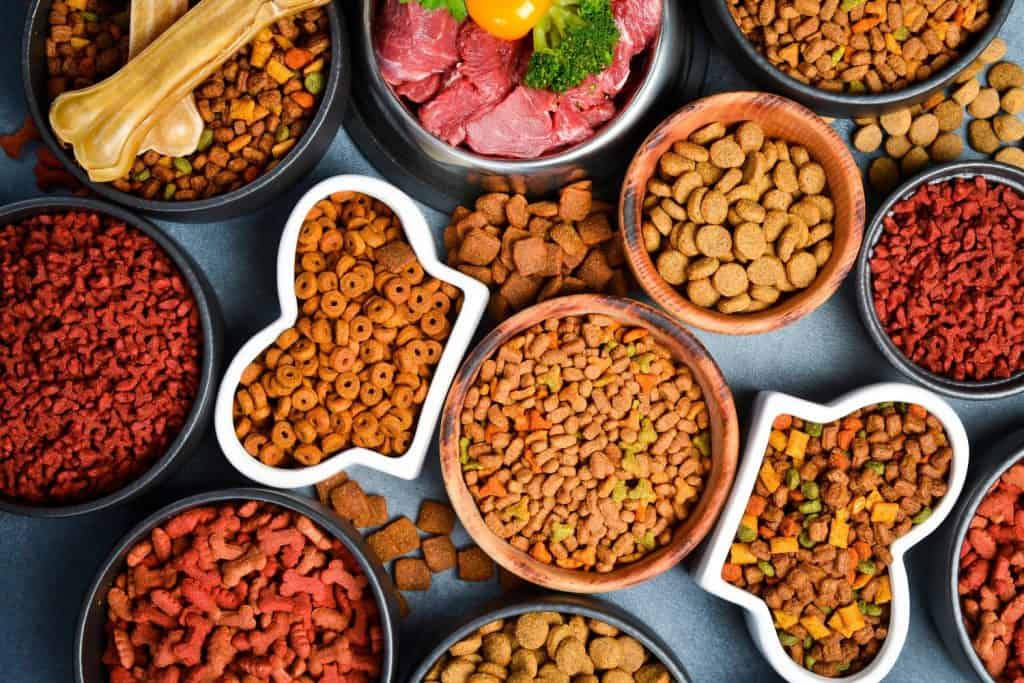
The huge range of dog food can be confusing.
©YARUNIV Studio/Shutterstock.com
So what exactly is a raw meat-based diet for dogs, and how do you feed your dog raw meat? It is a lot more complex than simply tossing them a beef steak or a chicken thigh. There are so many options that it is not surprising that owners get overwhelmed and confused. If you are thinking about transitioning your dog onto a raw meat diet, you should thoroughly research the topic and get specific advice from a vet or a qualified dog nutritionist.
From a scientific perspective, a raw meat-based diet is defined as one that includes “uncooked ingredients derived from domesticated or wild-caught food animal species”. What’s more, raw meat is not just animal muscle. It includes internal organs, connective tissue, and bones.
The option that probably requires the highest level of expertise in dog nutrition is a home-prepared raw meat-based dog diet. In addition to meat, fruit, vegetables, and possibly some grains, these diets also require precise amounts of micronutrient supplements. If you don’t have a high level of knowledge about canine nutrition, these are probably best avoided.
There are commercial options available. You can buy commercial raw frozen, freeze-dried, or dehydrated meat diets, but these are not complete and balanced. You will need to add bones, vitamins, minerals, fruit, and vegetables, so these also require a high level of expertise.
Commercial raw frozen complete and balanced diets are also available, containing a variety of protein sources such as beef or chicken. Freeze-dried complete and balanced products are frozen under vacuum to remove nearly all moisture.
If you are looking for a more highly processed product, you could opt for a commercial dehydrated complete and balanced product. These have been heated slowly to remove nearly all the moisture, but are not considered cooked. Another option is a commercial high-pressure pasteurized (HPP) complete and balanced food, which is subjected to high pressure (43,500 to 87,000 psi) without heating.
The Bottom Line
The bottom line is that owners love their dogs and want to express that love by giving them the best diet. At the same time, their lives are subject to certain constraints, including money, time, and even their own health.
There is no doubt that many dogs can eat raw meat. Some can thrive on a diet that is raw meat-based. However, for some dogs and owners, a raw meat-based diet is not just inappropriate; it may actually be dangerous for the dog, the owner, or both. This is why some leading organizations advise against it. However, decisions relating to your dog’s diet are up to you to make, provided you have sought the necessary advice from professionals. If you do decide to feed your dog raw meat, it is essential that you gain the knowledge needed to keep both you and your dog safe and take the necessary hygienic precautions.