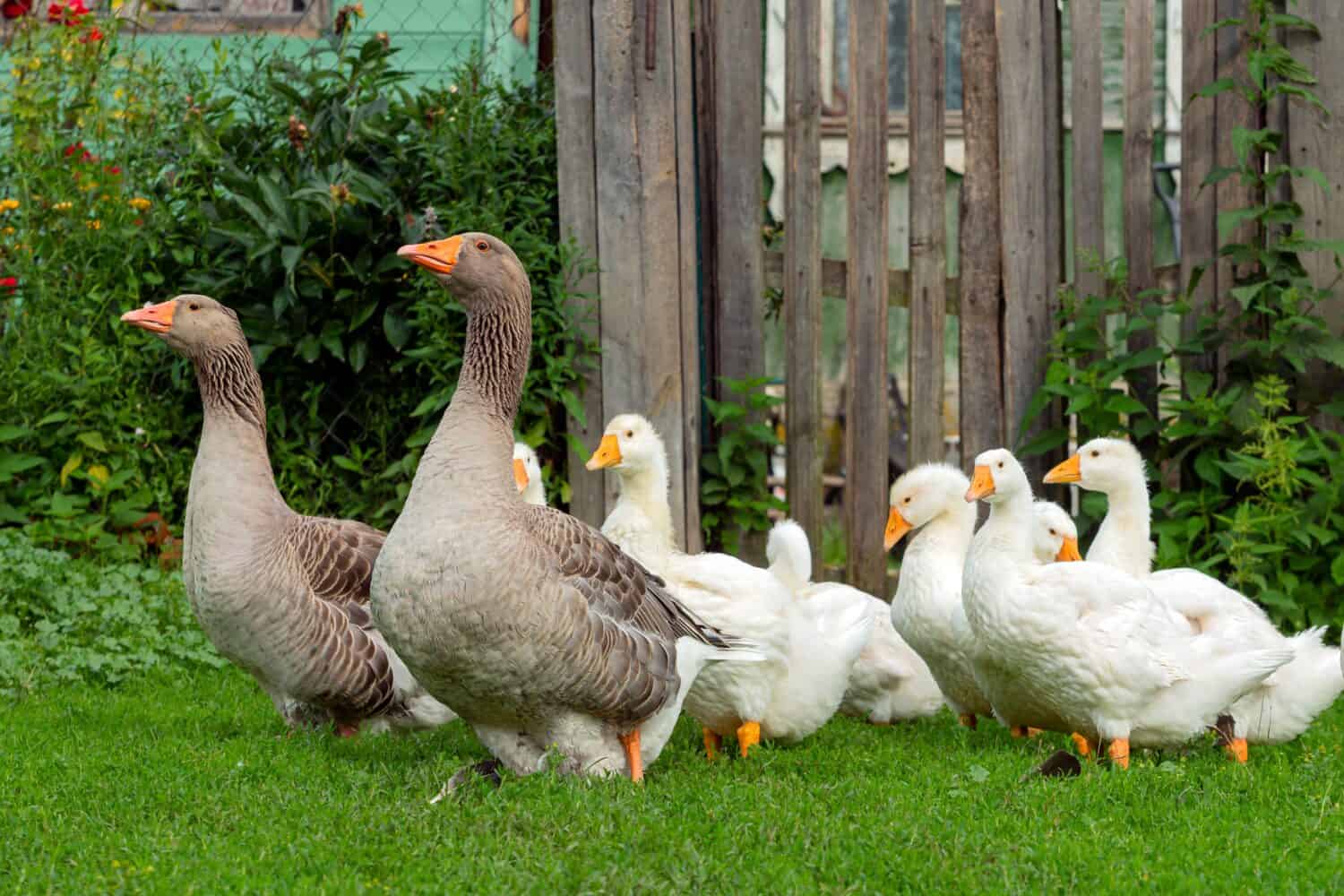

While most people think of dogs when it comes to guarding animals, geese are surprisingly effective protectors. Loud, alert, loyal, and tough, these reliable, feathered sentries are essentially nature’s own security system. These vigilant birds have a long history as guardians and sentinels dating all the way back to Ancient Rome. Geese have historically been used as guard animals in parts of Southeast Asia, the high Andes, and Europe, and they continue to be used for this purpose in some areas today.
What Makes Geese Great Guard Animals?
Sharp Senses and Constant Vigilance
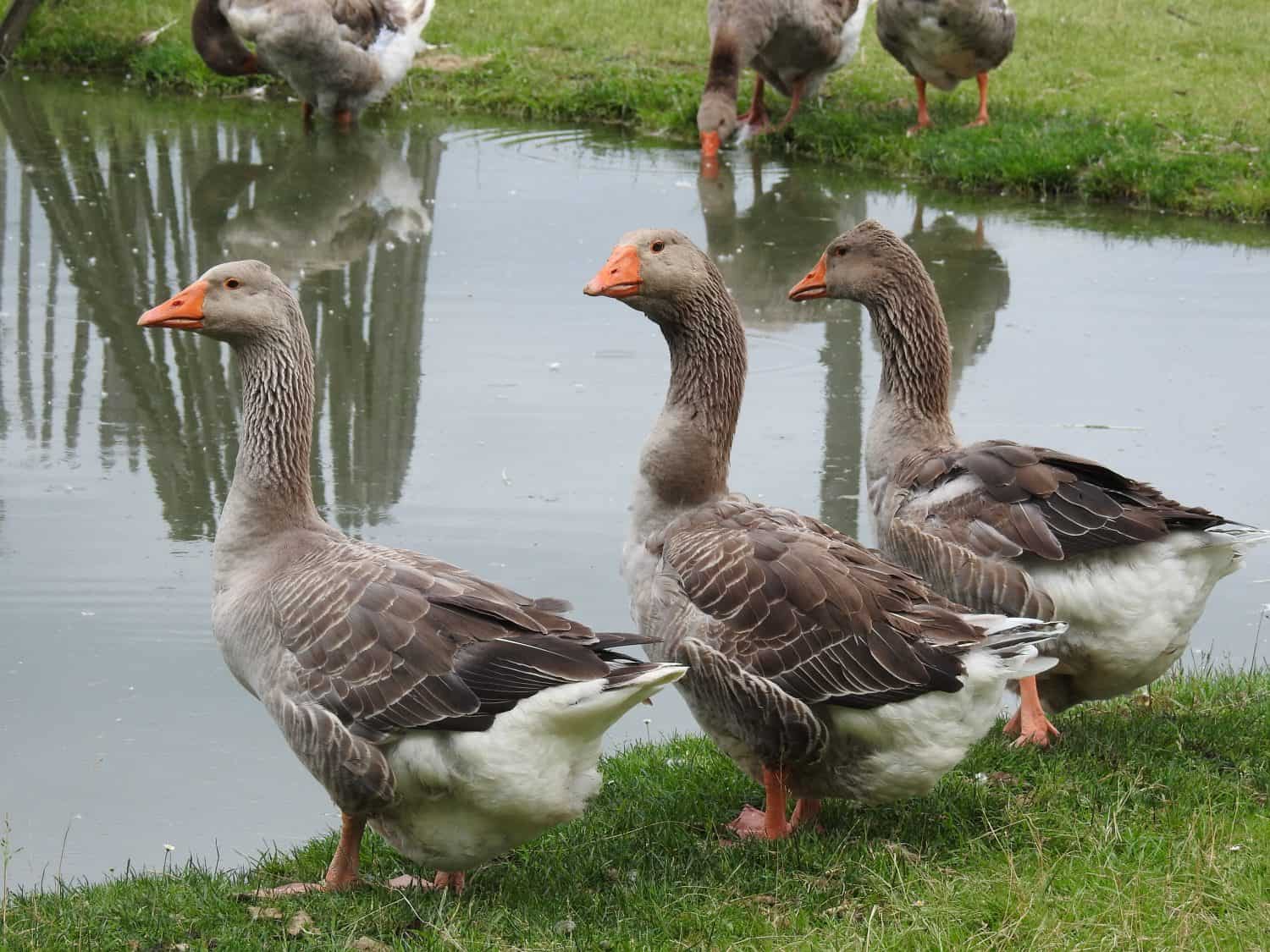
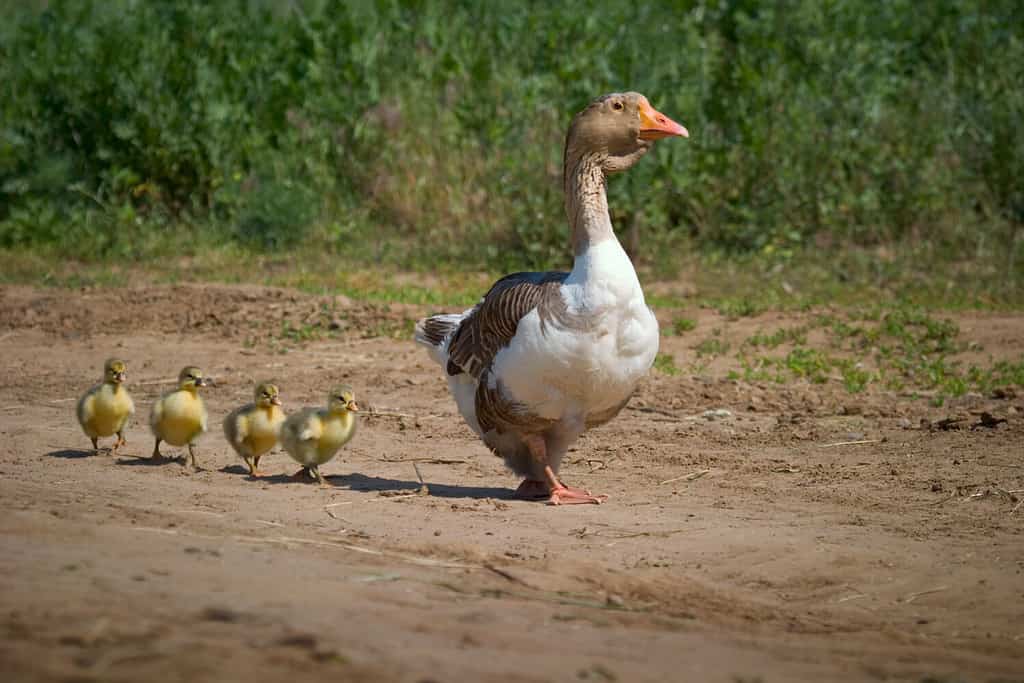
Toulouse geese can be gentle to people they know, but their large size and loud honking make them excellent guardians.
©Dan Shachar/Shutterstock.com
Geese are incredibly watchful animals, making them excellent natural guardians. They have exceptional eyesight and can see ultraviolet light and finer detail than many mammals. They can even move each eye independently, giving them an almost 360-degree field of vision that allows them to spot threats from nearly any direction. Their long necks also act like periscopes, and their acute hearing further enhances their ability to stay vigilant. Even while sleeping, geese remain on guard. They sleep with half of their brain active and often keep one eye open, allowing them to remain aware of their surroundings in a way that few other animals can match.
A Honk You Can’t Ignore
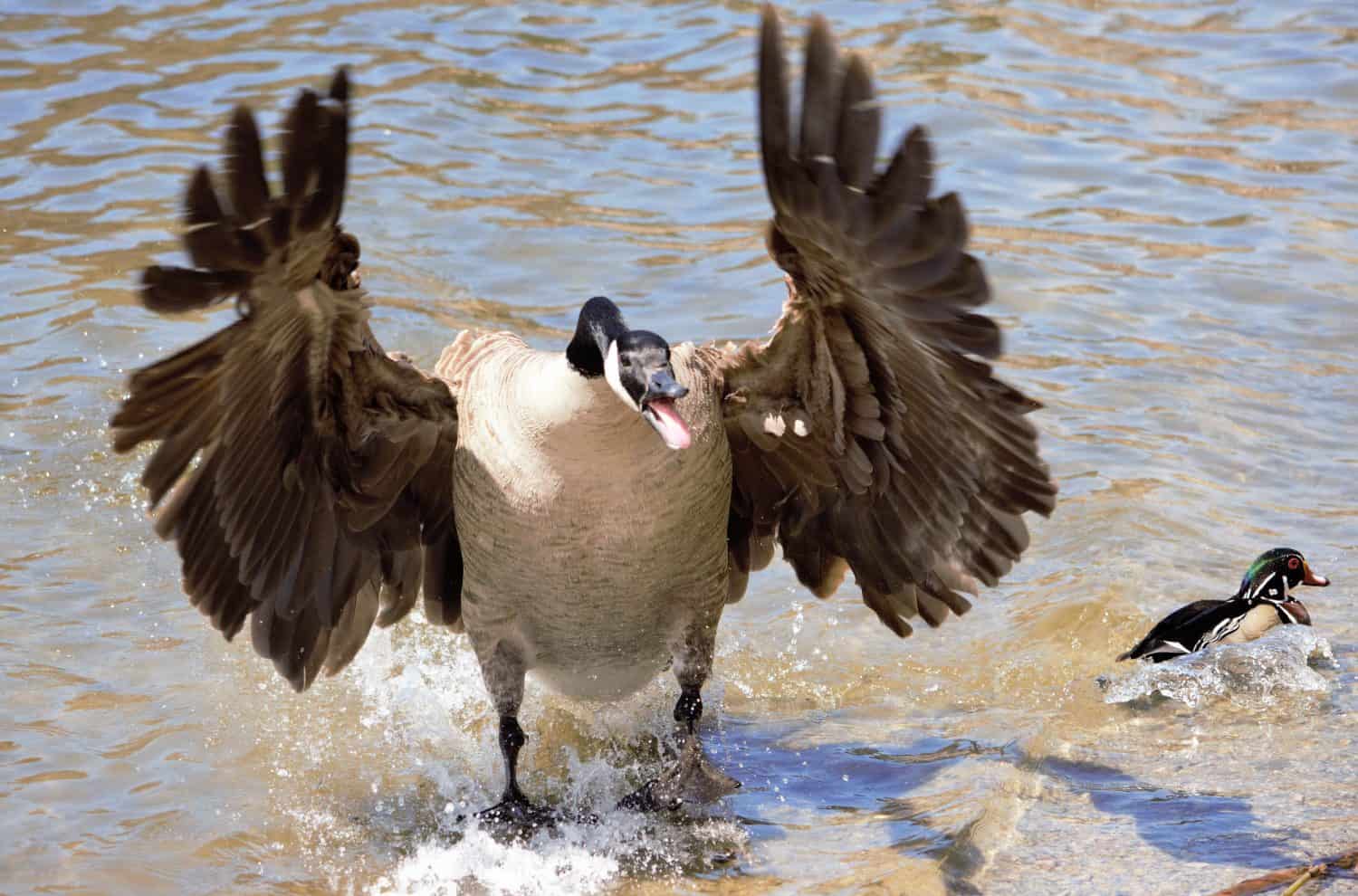
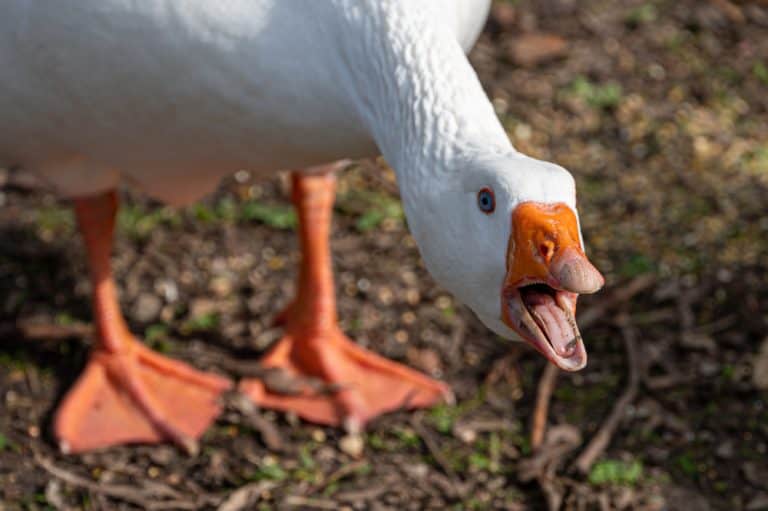
Honking is one of the primary ways geese communicate.
©Eric Amoah/Shutterstock.com
Geese are excellent natural alarms. When they sense danger, they do more than just make noise; they unleash a loud, unmistakable honk that is almost impossible to ignore. They also flap their large wings and make a menacing hissing sound to scare off threats. Unlike dogs, geese cannot be easily distracted or “bribed” with food. Their naturally aggressive behavior and piercing calls make them highly effective for alerting people to intruders or disturbances.
Loyal, Discerning, and Territorial
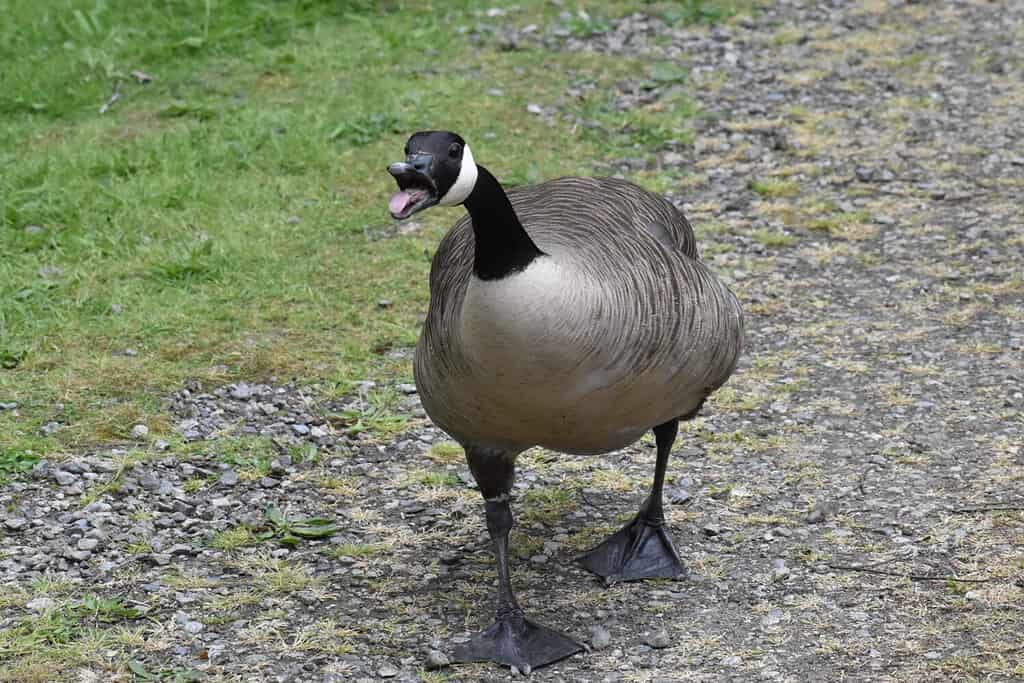
Experts believe geese were first domesticated around 3000 BCE.
©TheBirdyStore/Shutterstock.com
Geese are surprisingly perceptive animals and can recognize familiar faces, whether those belong to people, other animals, or even vehicles. They are also loyal and have long memories, especially when it comes to anyone or anything that has threatened or harmed them. Geese are also naturally territorial, especially around their nests and goslings. Even a lone adult goose will diligently guard its space, aggressively using its powerful bill and wings to fend off threats.
Low-Maintenance and Affordable
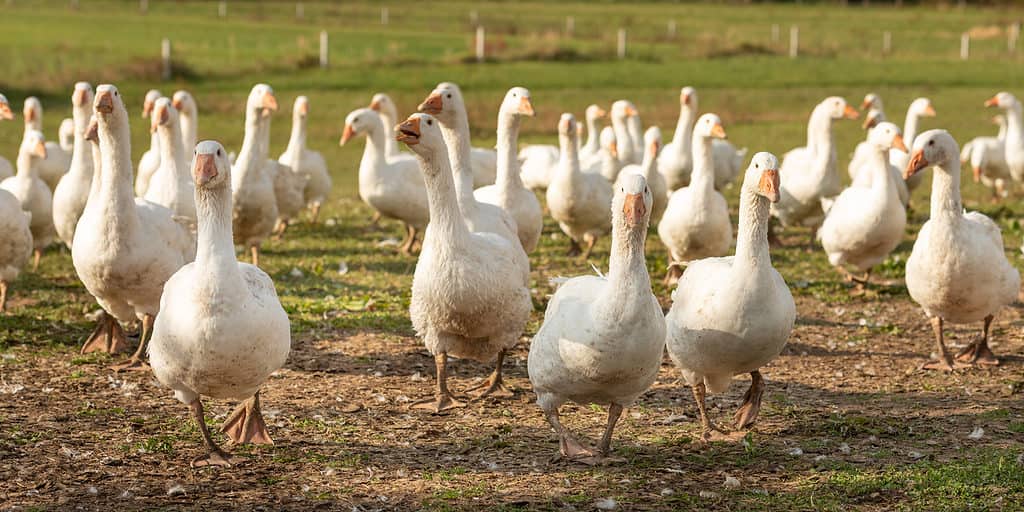
A group of geese is often called a “gaggle.”
©Serhii Hrebeniuk/Shutterstock.com
Geese are incredibly cost-effective. Unlike trained guard dogs, geese require little to no specialized training and, in most climates, do not even need housing. As natural grazers and foragers, they can often find much of their own food, especially in pastures or wetlands where they eat grasses, aquatic plants, roots, bulbs, and small aquatic animals. Geese are also durable animals and can thrive in various climates with minimal care.
A History of Guard Geese in Action
Ancient Rome’s Honking Heroes
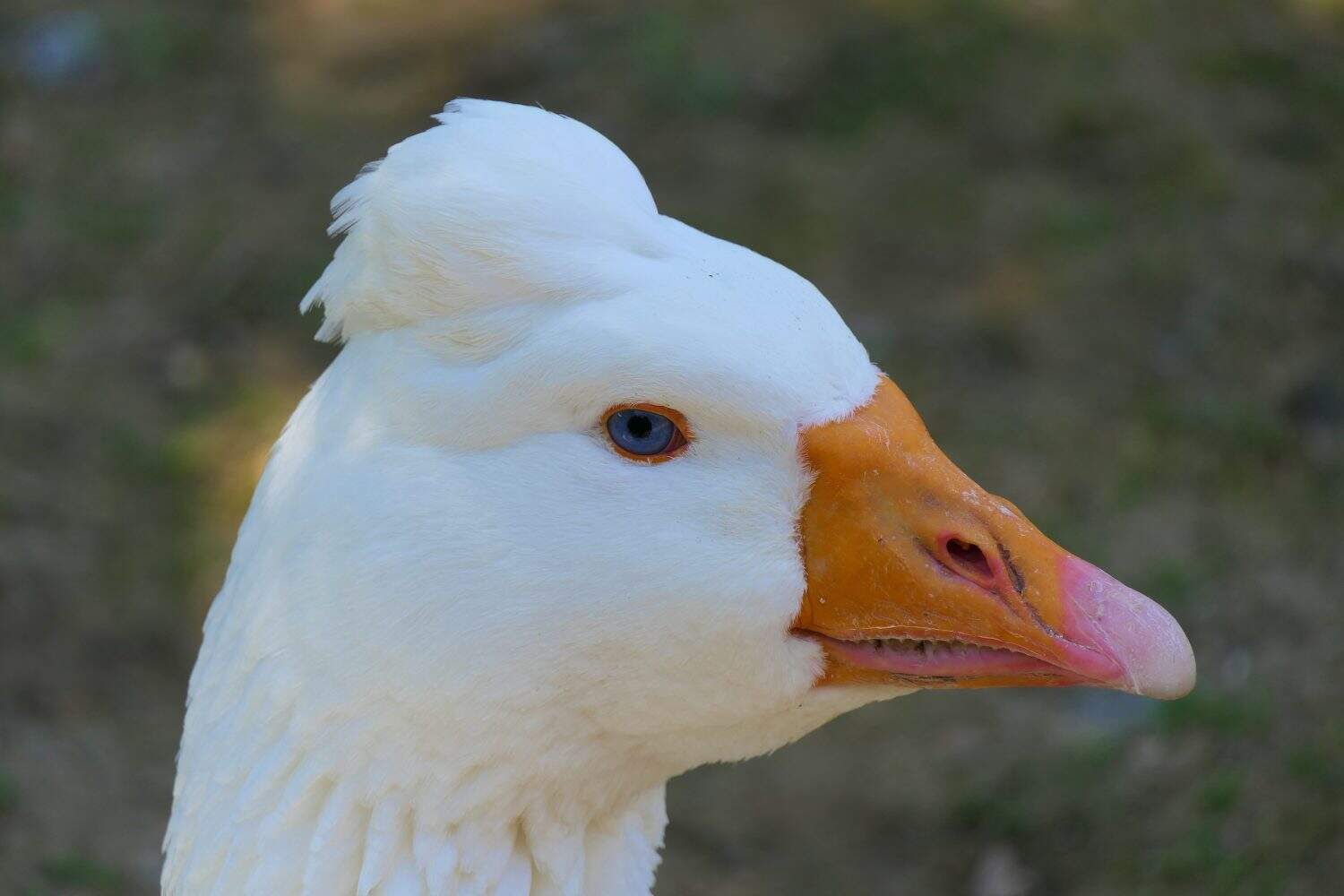
The Roman goose is believed to be one of the oldest breeds.
©Milo the eye/Shutterstock.com
During the Battle of Allia in 390 BCE, the Ancient Romans found themselves in a difficult situation against the Gauls. The Romans thought they were safe on the Capitoline Hill, holding the advantage of higher ground. However, under the cover of night, the Gauls secretly scaled the hill. They were so incredibly quiet that not even the Romans’ guard dogs — known for their keen senses — noticed a thing.
Fortunately for the Romans, the Temple of Juno was home to a gaggle of geese, animals considered sacred to the goddess. According to the Ancient Roman historian Livy, these birds suddenly erupted in such a loud clamor that it woke one of the Roman soldiers, Marcus Manlius. Manlius quickly roused the others, and they successfully forced the Gauls to retreat.
Scotland’s Whisky Watch
Ballantine’s geese also provided lawn trimming and eggs while at the Dumbarton warehouse.
©iStock.com/K_Thalhofer
In 1959, Ballantine’s, a Scottish whisky brand, began using geese to protect its whisky warehouses near Glasgow. Famously known as “The Scotch Watch,” the special flock initially included five female geese and one male gander named Mr. Ballantine. Over the next 50 years, this small flock grew considerably, eventually including more than 100 Chinese white geese and Roman geese. These birds stood sentry at the company’s Dumbarton site for over 50 years.
The warehouse once held a large amount of maturing whisky, valued at hundreds of thousands of pounds. For over 50 years, any would-be thieves had to contend with The Scotch Watch geese, which at one point numbered 120 birds. The last seven guard geese of The Scotch Watch were retired in 2012 and assimilated into a local flock of geese.
Cold War Sentinels in Germany
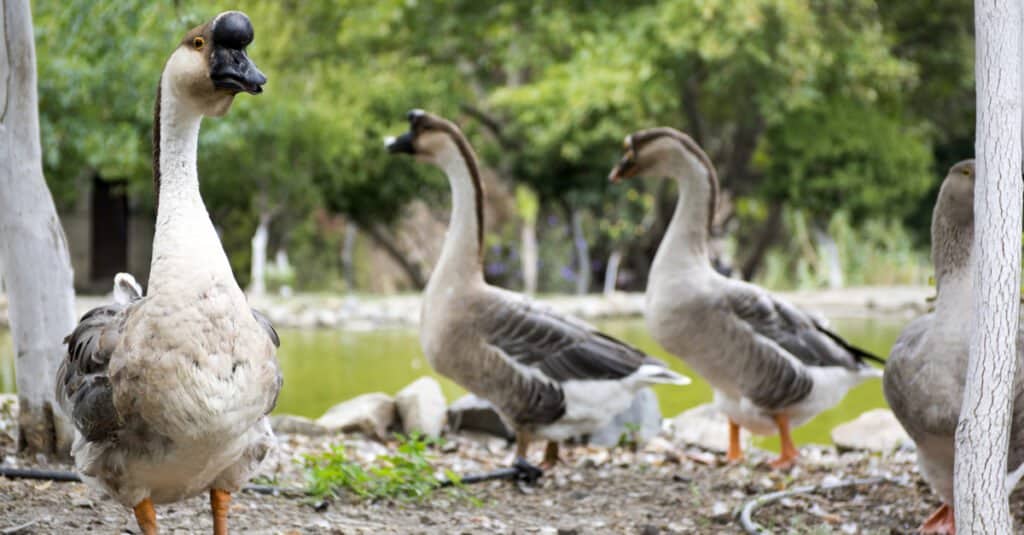
The Chinese goose is a popular guarding breed due to its aggressive behavior and loud, high-pitched honk.
©Iva Vagnerova/Shutterstock.com
During the Cold War, in 1986, the United States military deployed a security force of geese across its European bases. Nine hundred geese were sent to various stations, including a platoon tasked with guarding the 32nd Air Defense Command in West Germany. Their mission was to prevent Soviet spies from accessing critical anti-aircraft weapons, radar systems, and communication equipment. This unique security strategy was inspired by a soldier who had seen the effectiveness of Ballantine’s geese in Scotland.
China’s Feathered Police Force
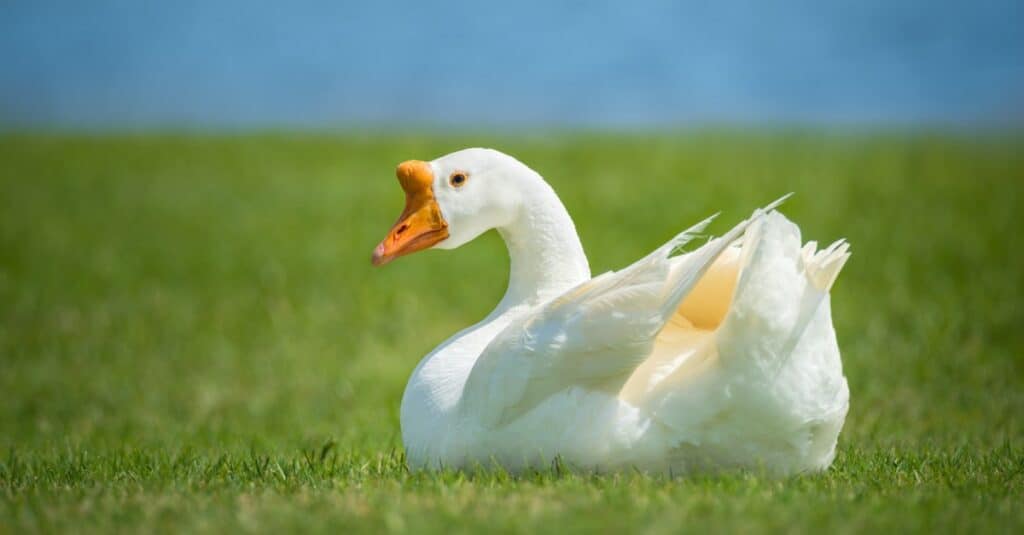
The Chinese goose is often referred to as the “swan goose” due to its long neck.
©iStock.com/leekris
In 2013, Chinese police in the Xinjiang Province began using geese to guard police stations at night. This practice wasn’t entirely new, however, as geese have long been employed as guard animals for farmland in rural areas of China due to their vigilance and loud honking.
The use of geese for security purposes expanded during the COVID-19 pandemic. Approximately 500 geese were deployed to patrol China’s southern border with Vietnam to prevent any unauthorized crossings. In Chongzuo, a city near the Vietnamese border, the geese worked alongside dogs and human patrols to help contain the spread of the virus. The geese proved particularly effective in the region’s rugged and hilly terrain, as the area’s mountains, plains, and rivers made traditional patrolling methods difficult.
Brazil’s Unique Prison Security
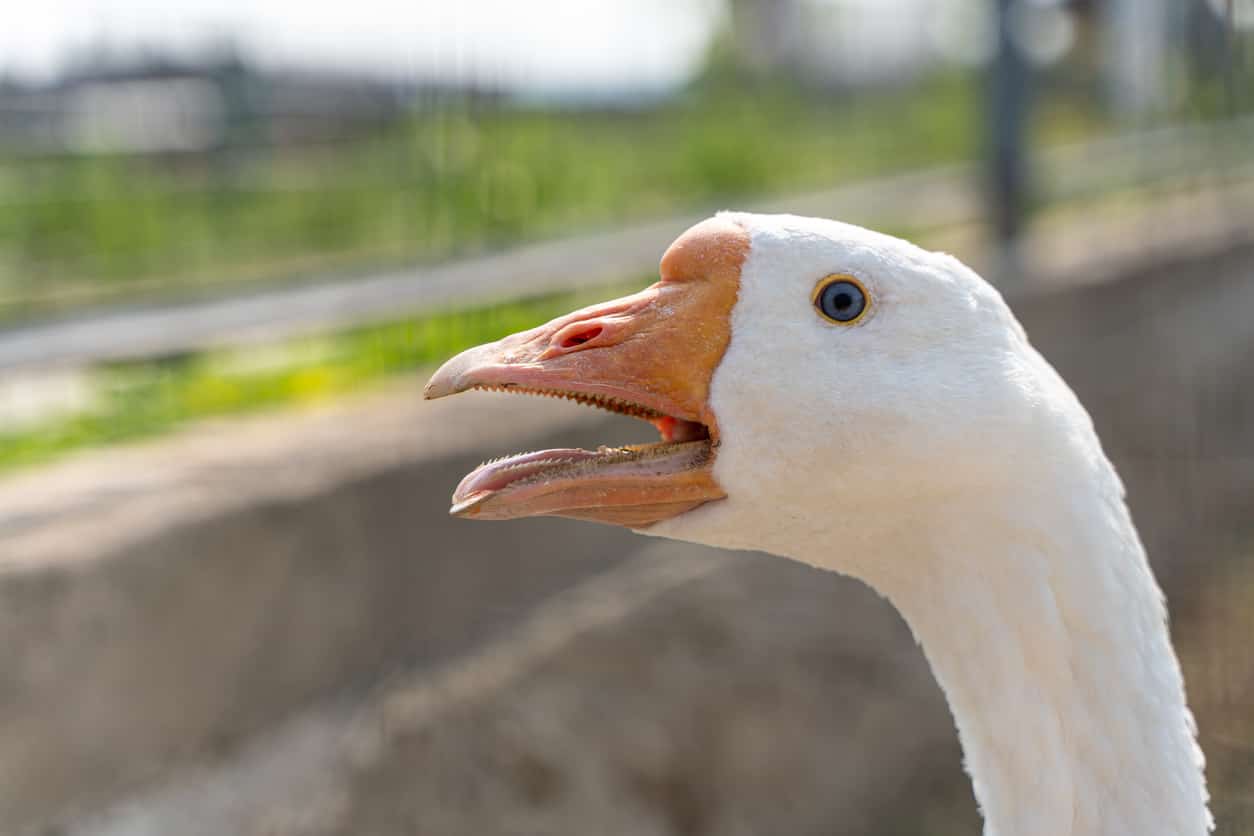
Geese are very loyal and even express mourning behaviors when they lose a mate.
©iStock.com/Olga Evtushkova
Brazil’s São Pedro de Alcântara Penitentiary currently uses a squad of geese to patrol the area between the inner fence and the prison’s outer wall, complementing human, canine, and electronic surveillance. The geese’s patrol area is grassy and includes a pond, helping the feathered sentinels feel right at home while on duty. Prison staff have noted that Piu-Piu, the lead gander of the group, has a distinct honk that makes it immediately clear when something is wrong, providing an effective early warning system. The prison’s “geese agents” are always alert. While human guards have shifts, and cameras can have blind spots, the geese provide continuous, 24/7 surveillance.
South Korea’s Guard Geese
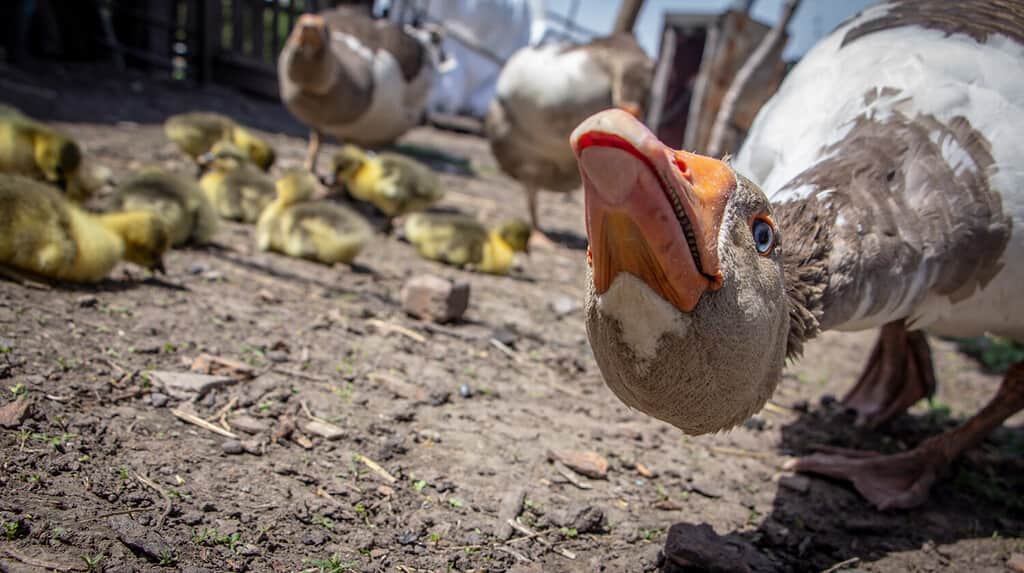
Geese are incredibly protective and will often help sick or injured members in their group.
©mykhailo pavlenko/Shutterstock.com
South Korean farms and factories, especially in rural areas, are increasingly swapping guard dogs for geese. Traditionally, Jindo dogs — a Korean breed known for their ferocity and loyalty — were the go-to choice for security in these areas. However, these dogs can be quite expensive to purchase and manage. Geese, on the other hand, are more affordable and easier to manage. So far, guard geese in South Korea have proven highly effective, particularly in deterring trespassers. While they are mainly used on farms, an increasing number of industrial facilities are also employing guard geese.