There are approximately 3.34 million Canada geese in the United States. This is about half the world’s population, estimated to be around 6 million. Needless to say, Canada geese are nowhere near endangered. However, that doesn’t mean there aren’t laws governing their protection.
People and Canada geese often interact because they enjoy the same areas, such as lake shores, beaches, and parks. Like any wild animal, Canada geese can become aggressive when threatened. They are very dedicated parents who do not hesitate to protect their nests or goslings.
So how can people coexist with geese? First, let’s look at the laws governing how we can interact with them and whether or not Canada geese are protected.
Are Canada Geese Protected?
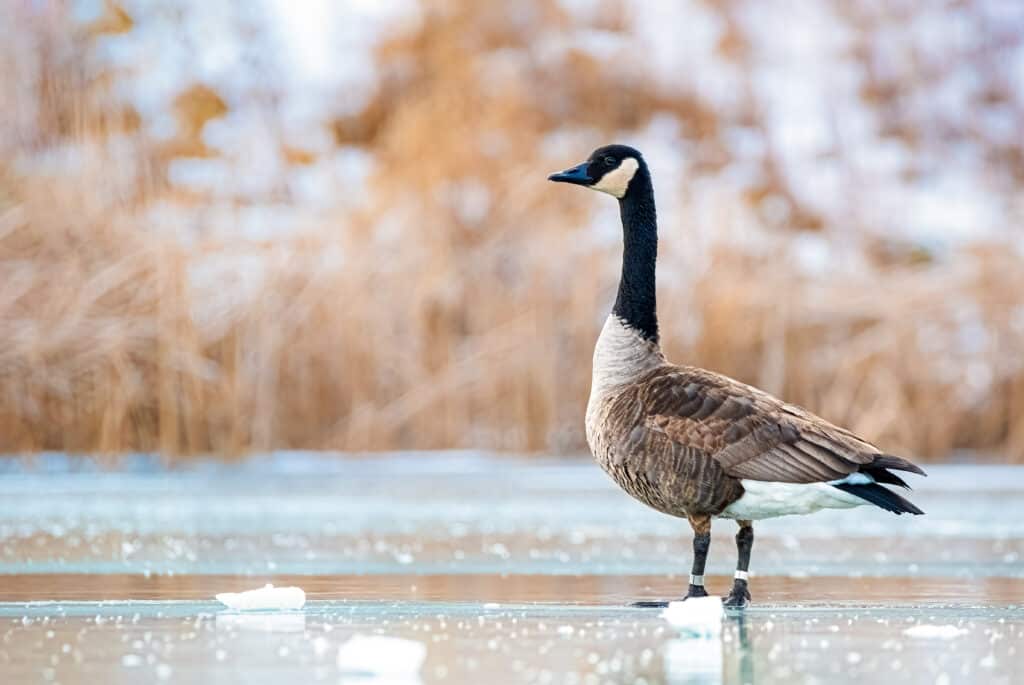
Canada geese mate for life and co-parent the goslings.
©Rogney Piedra Arencibia/Shutterstock.com
While many people see Canada geese as a nuisance, you have to be careful about how you deal with them. As much as they may annoy you by pooping on your driveway or making noise in your neighborhood, several laws prevent the harming of Canada geese.
Canada geese are generally migratory and go south in the winter and north in the summer (although if there is sufficient food in an area to support them throughout the year, they may not migrate). They are considered a migratory species despite this. This puts them under several levels of protection, on the federal and state level.
The Federal Migratory Bird Treaty Act
The Migratory Bird Treaty Act was signed into federal law in 1918. This law was designed to protect migratory bird species native to the United States or U.S. territories. It prohibits the killing, selling, trading, capturing, or transporting of the protected species without permission from the U.S. Fish and Wildlife Service. It is also a federal offense to disturb or destroy a nest with eggs. This means even if a Canada goose nests in an inconvenient place, you cannot move or tamper with the nest once eggs have been laid.
Breaking this law can result in some steep penalties. Depending on the violation, it can be charged as either a misdemeanor or a felony. Misdemeanor charges are punishable by up to a $15,000 fine and/or six months in prison. People facing felony charges can receive up to two years imprisonment and/or a $100,000 fine.
State Regulations
Many states also have rules around harming or hunting Canada geese. Regulations vary by state, but hunting season restrictions are in place to protect the birds from being culled too severely.
Can You Hunt Canada Geese?
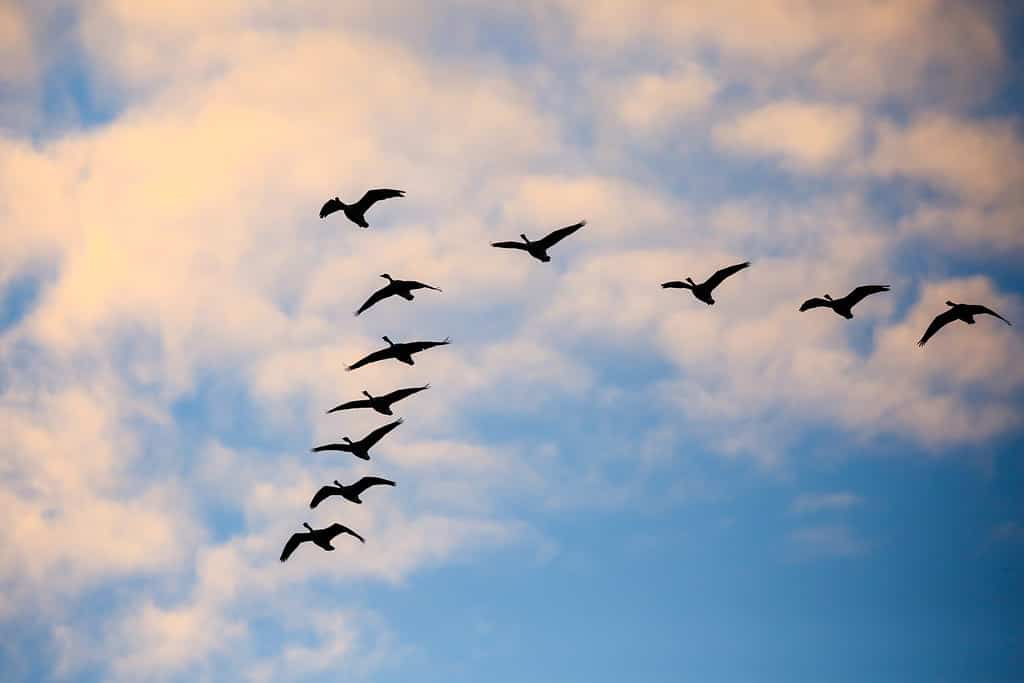
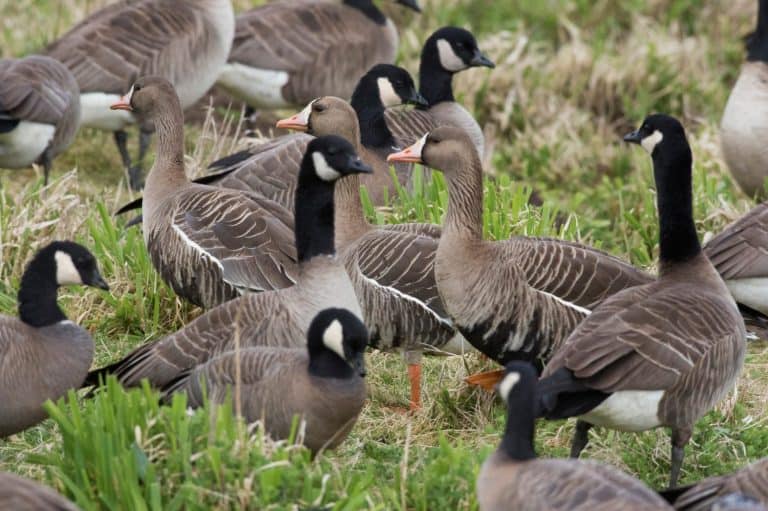
Geese migrate in flocks.
©Michael Tatman/Shutterstock.com
Although Canada geese are protected under the Federal Migratory Bird Treaty Act, it is legal to hunt them at certain times. Hunting seasons are set times throughout the years when hunting geese is allowed. Regulations vary by state, but hunting season is generally in the fall (though in California it can run into January).
Hunting geese outside of hunting season can result in steep fines — particularly if you harm a goose during nesting season.
What to Do to Deter Geese
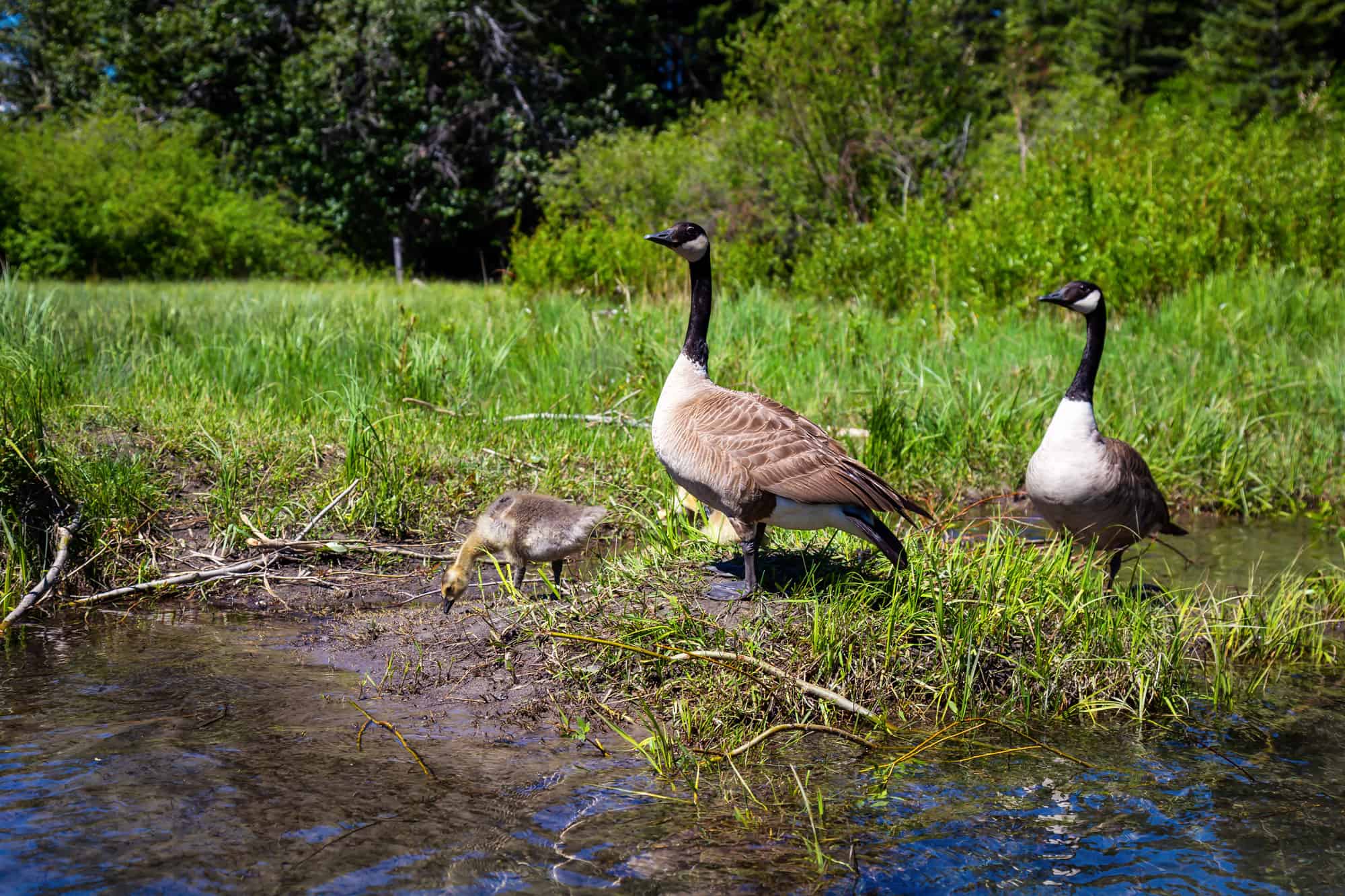
Canada geese clutches contain 2-9 eggs on average.
©iStock.com/edb3_16
If you don’t want geese on your property, there are several non-harmful actions to take to deter them. First, ensure no one is feeding the geese. Canada geese stick close to easy food sources, so there is no incentive for them to leave if they have access to a free meal. In addition to food, geese need a good habitat. Geese need access to open water year-round. If you have a pond or lake on your property, let it freeze over completely in winter instead of aerating it. This makes your land less attractive to geese.
Harassment is also an effective tool. You can scare the birds away by chasing them. Loud noises or dogs can scare geese away. However, if the dog harms a goose, the owner is responsible for the penalties.
You can use these tactics until eggs are laid, at which point you can no longer try to evict the geese under federal law. The best way to deal with Canada geese is to learn how to coexist with this charismatic migratory bird.