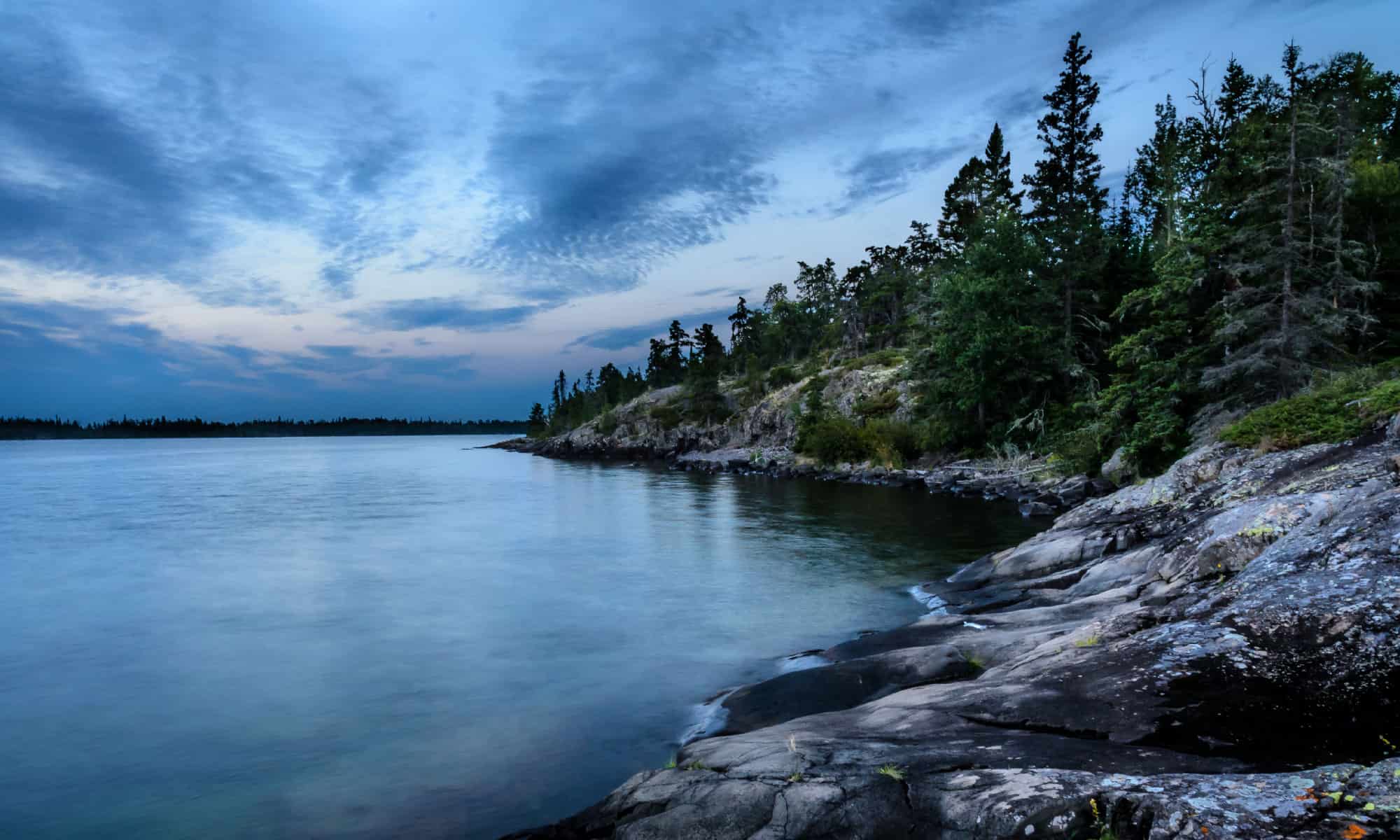

Isle Royale National Park in Lake Superior is one of the nation’s more remote national parks. The archipelago island chain is made up of the main Isle Royale, which is about 50 miles long and nine miles wide, plus more than 400 smaller islands. It is about 15 miles from the Minnesota mainland at its closest point, making the park accessible only by boat or floatplane. The park is closed to visitors between November 1 and April 15 due to harsh weather conditions. Visitors will find a variety of wildlife, plus 165 miles of hiking trails and 36 campgrounds.
Moose
©Happy Vector/Shutterstock.com
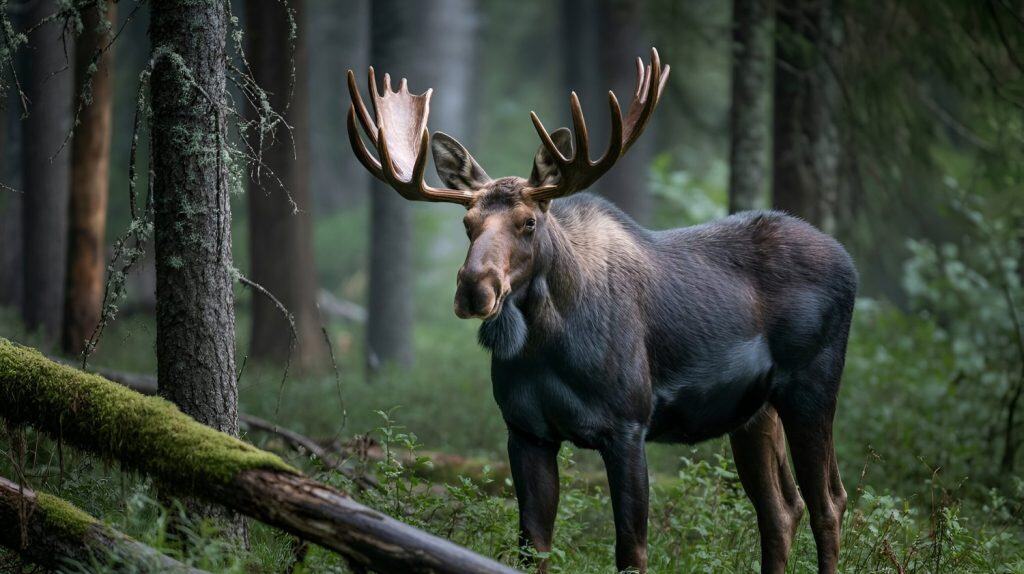
Moose arrived on Isle Royale in the early 1900s, either by swimming from the mainland or crossing a temporary ice bridge. Scientists can’t be sure, but moose are excellent swimmers, so the swimming theory is more likely. Today, moose are the most iconic of all park animals. Standing over six feet tall and weighing more than 1,000 pounds, moose dine on island vegetation. You’ll most likely find them near inland lakes and ponds, where aquatic plant life is abundant.
Gray Wolf
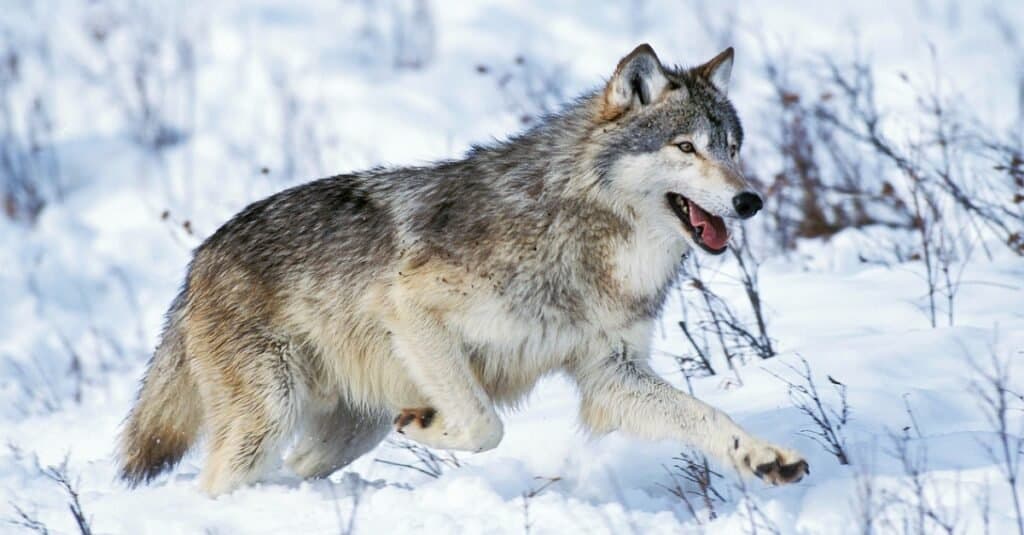
Gray wolves are an important part of the park’s ecosystem, helping to keep moose populations under control.
©iStock.com/slowmotiongli
Gray wolves arrived in the park in the late 1940s when they crossed a temporary ice bridge between Isle Royale and the Canadian mainland in winter 1948. Wolf populations have fluctuated from as many as 50 animals in 1980 to just two between 2016 and 2018. Today, there are about 30 wolves in the park. Their diet consists of moose, snowshoe hare, and beaver. Adult wolves are about five to six feet long, with males weighing 70 to 110 pounds and females between 50 and 85 pounds.
Red Fox
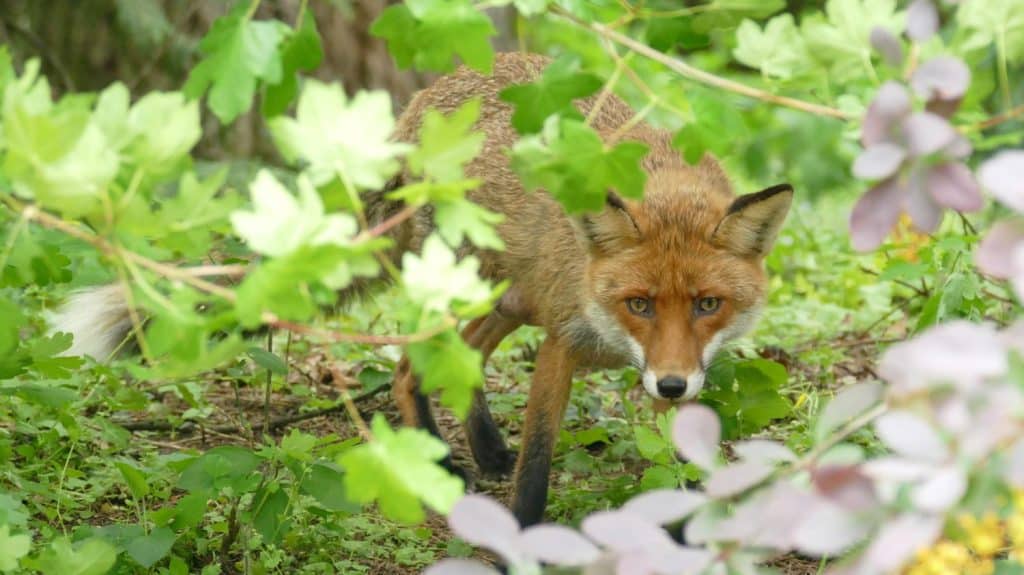
Female foxes are called vixens.
©Zoltan Tarlacz/Shutterstock.com
Red foxes are believed to have been introduced to the park after escaping or being released from an island fur farm around 1925. Genetic data supports this theory. Foxes are frequently seen by park visitors, often on trails and near campgrounds. Foxes primarily eat small mammals, but they are opportunistic feeders and will easily forage for food at campsites. An adult red fox is around 14 to 20 inches tall and 18 to 35 inches long. Their tails are often half as long as their body.
North American River Otter

North American River Otters are playful and curious.
©Ian Peter Morton/Shutterstock.com
Otters are exceptional swimmers, using their webbed feet, powerful tails, and streamlined bodies to propel themselves like rockets through the water. They can swim up to 15 miles per hour. They also have the ability to close their nostrils and ears when in the water. This helps them make sustained dives to hunt for the crayfish, turtles, and fish they love to eat. In the park, you’ll most likely find otters along the shorelines of Lake Superior and the inland lakes. Usually, they will be seen sunning themselves on rocks.
American Marten
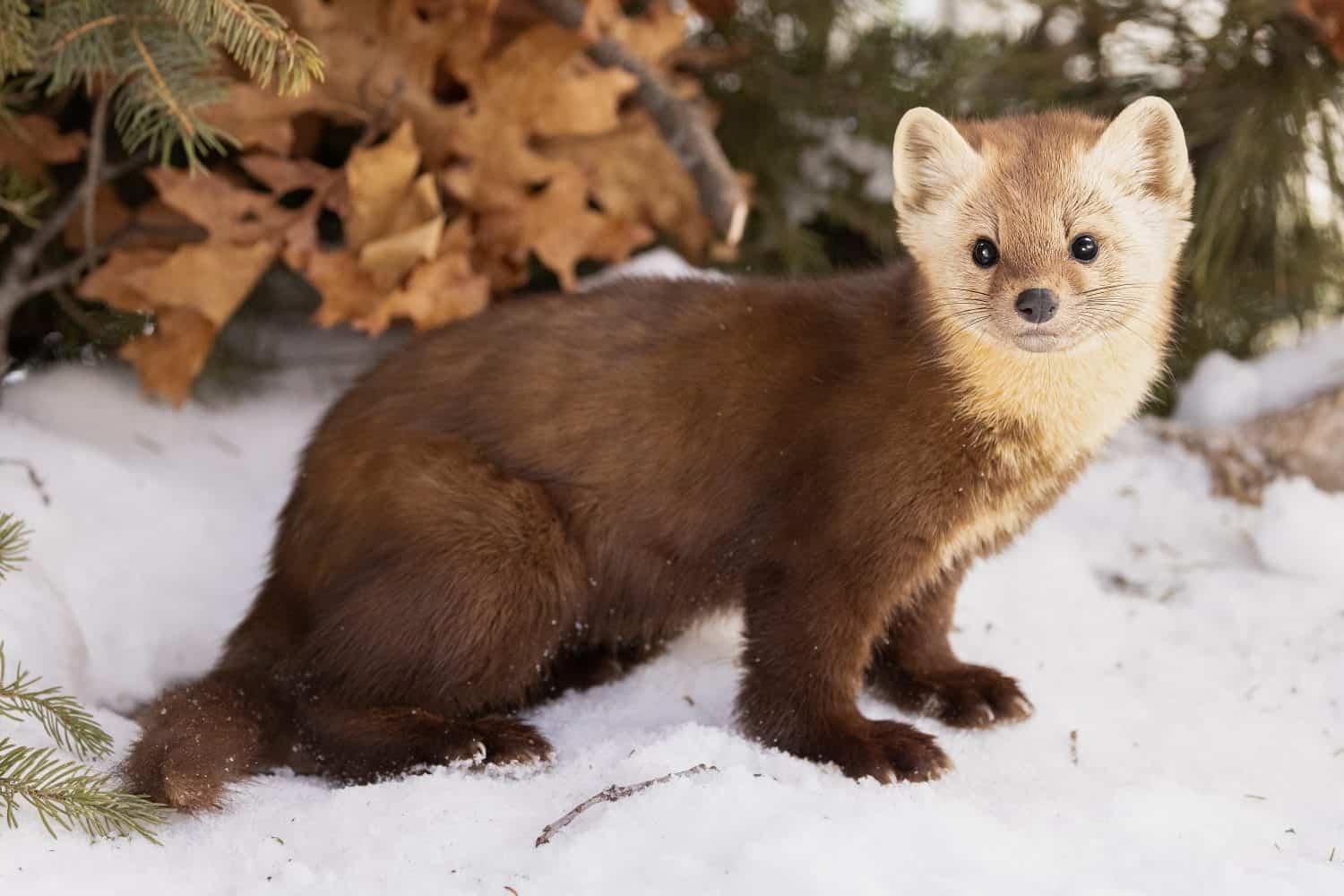
The American marten, also known as pine marten, is one of the most reclusive animals in the park.
©Agnieszka Bacal/Shutterstock.com
Martens are members of the weasel family. They are small, with adults reaching 18 to 26 inches long and weighing between one to three pounds. They have low-slung bodies, short legs, and thick, silky fur. Martens have scent glands, like skunks and minks. But unlike them, martens use theirs to mark territory. Their sharp claws help them climb and move through the treetops. They hunt for deer mice, squirrels, and snowshoe hares in the park, most often at dawn and dusk and usually near conifer trees.
Mink
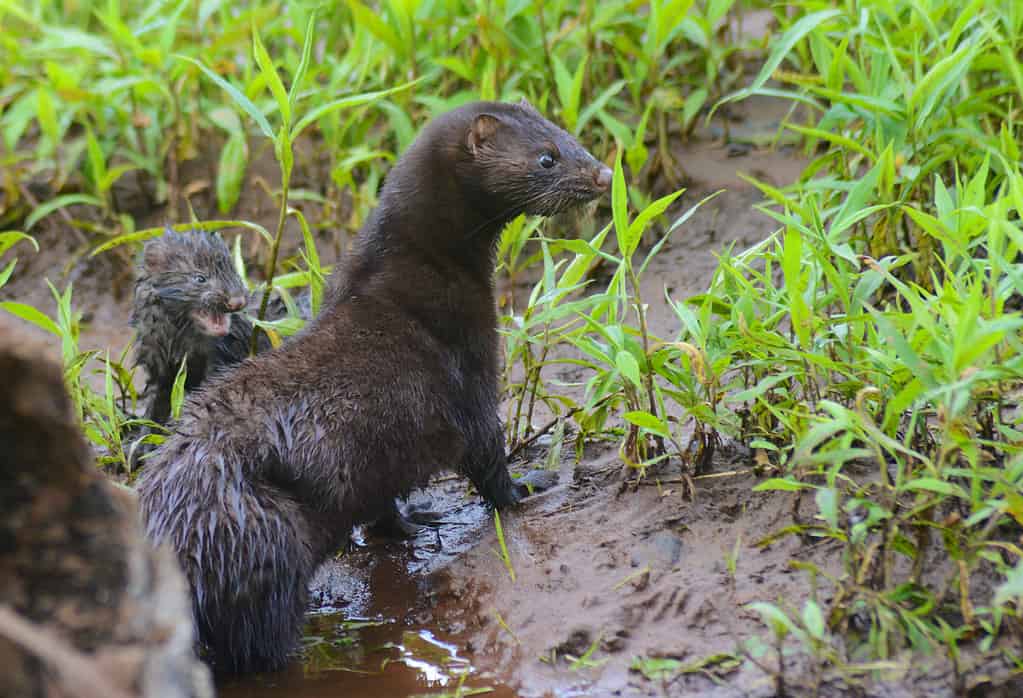
Semi-aquatic and solitary, American mink are present but a rare sighting in the park.
©Betty4240/iStock via Getty Images
The American mink spends much of its time in the water, where its semi-webbed feet help it swiftly navigate to find fish, crayfish, and frogs. With sharp claws on each of its five toes, it’s also adept at moving on land and climbing trees in search of small mammals, birds, and eggs. Mink are most active at dawn, dusk, and night, and you’ll most likely find them at water’s edge, where their dens are nearby. An adult mink weighs less than three pounds and is between 16 to 28 inches long.
Snowshoe Hare
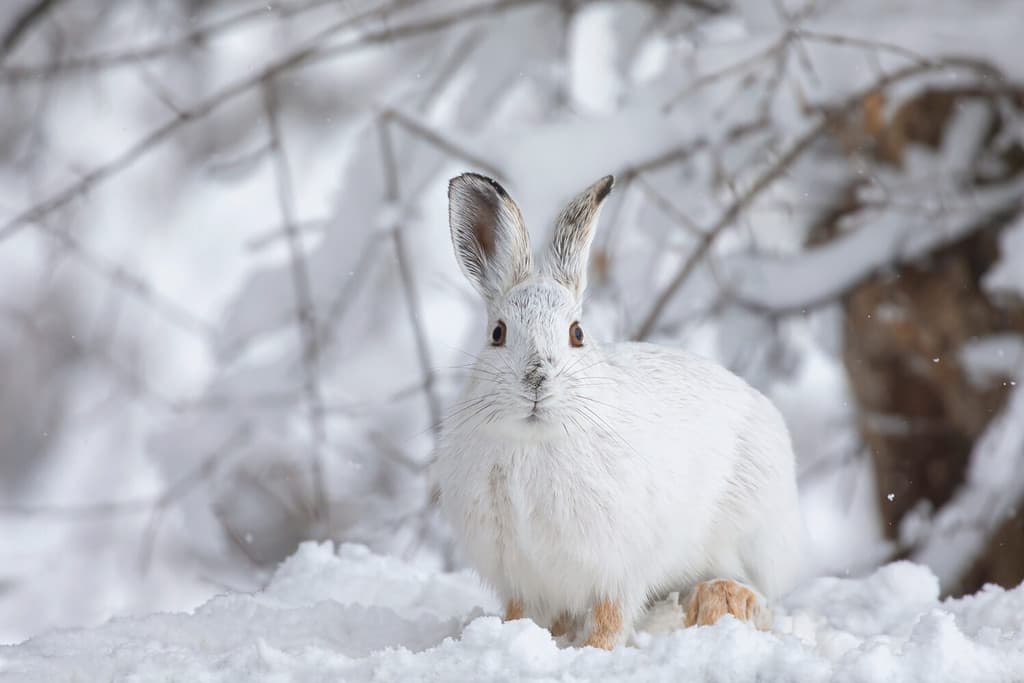
The snowshoe hare takes its name from its oversized, furry feet.
©Jim Cumming/Shutterstock.com
Snowshoe hares are one of the most adaptable mammals in the park. Their oversized feet act like snowshoes to help them move easily over deep snow. Their large ears help them detect predators long before one is seen. But most impressive is their ability to change colors to match the landscape. They turn nearly pure white in winter and a darker gray and black after the snow is gone. This seasonal camouflage helps keep snowshoe hares safe from island predators like the gray wolf.
North American Beaver
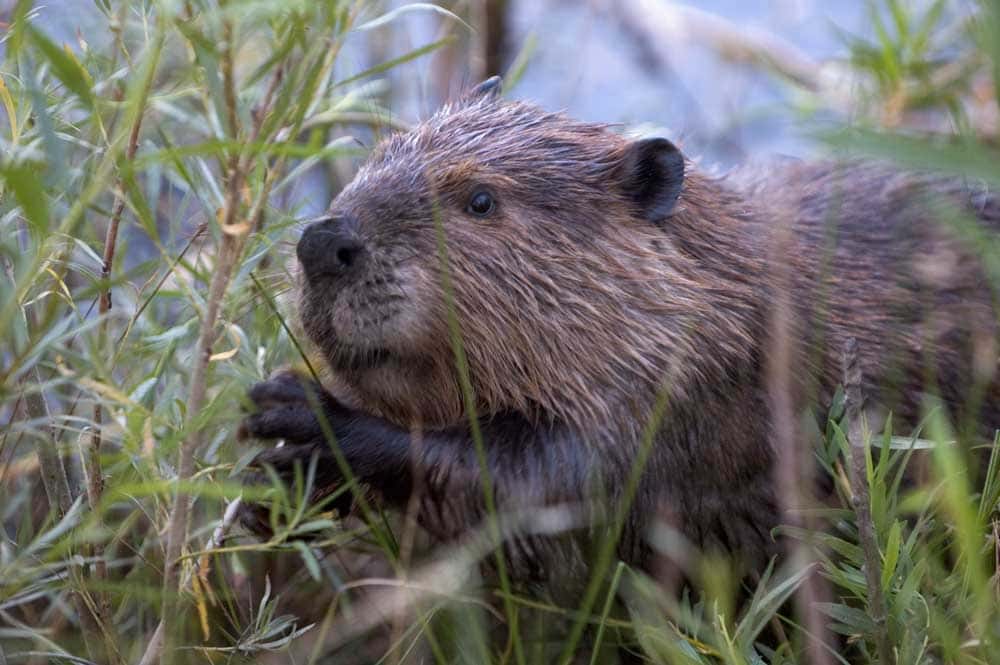
You’ll find hundreds of beaver ponds throughout Isle Royale National Park.
©No machine-readable author provided. Cszmurlo assumed (based on copyright claims), CC BY-SA 3.0, via Wikimedia Commons – Original / License
The American beaver is an industrious soul, often referred to as “nature’s engineer” due to their diligent environment-shaping capabilities. They construct intricate lodges using harvested tree trunks and branches, fortified with mud and leaves. The lodge, with its underwater entrance, is a safe space to hide from predators and raise their young. But beavers don’t chew trees just for fun. With front teeth that never stop growing, beavers must constantly chew to keep them a manageable length.
Muskrat
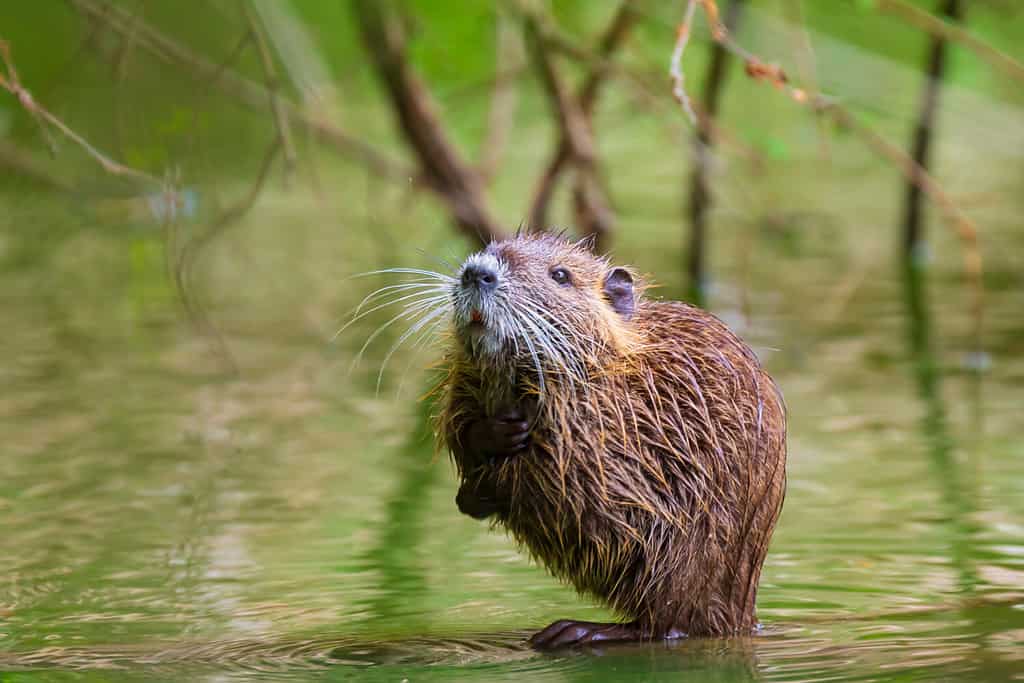
Muskrats can hold their breath for up to 20 minutes underwater and swim up to three miles per hour.
©SanderMeertinsPhotography/Shutterstock.com
Muskrats spend a lot of time in the water searching for aquatic plants, which are the mainstay of their diet. Their dense fur is a great insulator and also provides buoyancy during their aquatic adventures. Like beavers, muskrats live in lodges along the water’s edge and have protruding front teeth. However, unlike beavers, muskrats use these teeth to gnaw on plants while keeping their mouths closed to avoid taking in water. Muskrats live about three to four years in the wild.
Western Painted Turtle
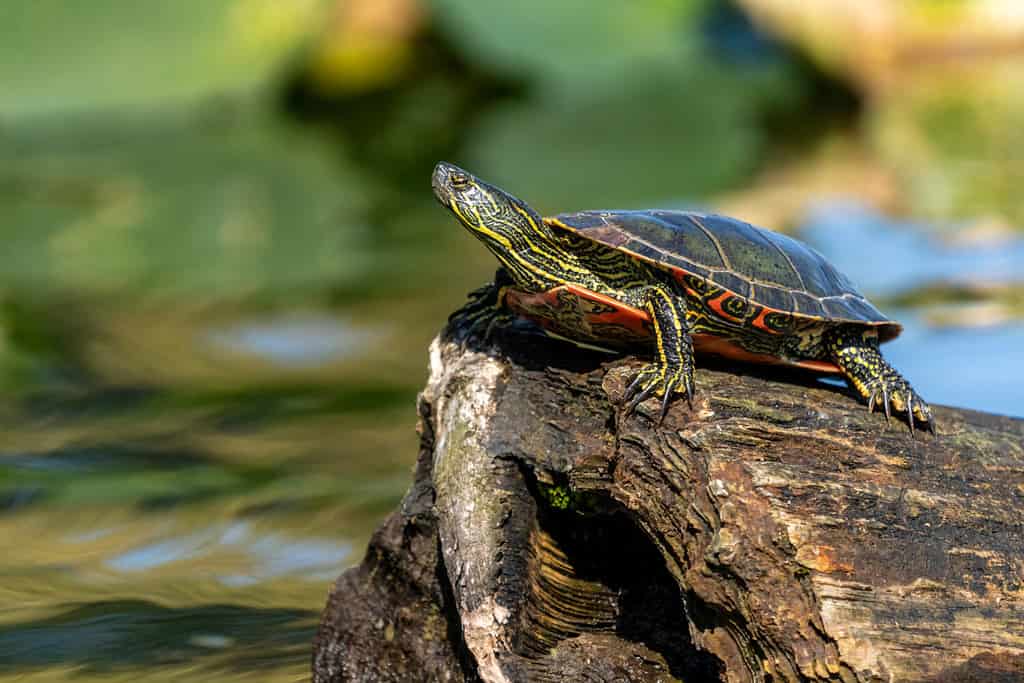
The western painted turtle is the only turtle species found in the park.
©Danita Delimont/Shutterstock.com
If you spend any time around the lakes and ponds in the park, you’ll likely see western painted turtles sunning themselves on logs. During the winter, though, they retreat to the muddy bottoms where they hibernate until warmer weather returns. This turtle is easy to spot with its yellow and red markings on the head, legs, and lower shell. Their sex of these turtles is determined by the surrounding temperature during incubation. Cooler temperatures result in males, and warmer temperatures produce females.
Northern Red-Bellied Snake
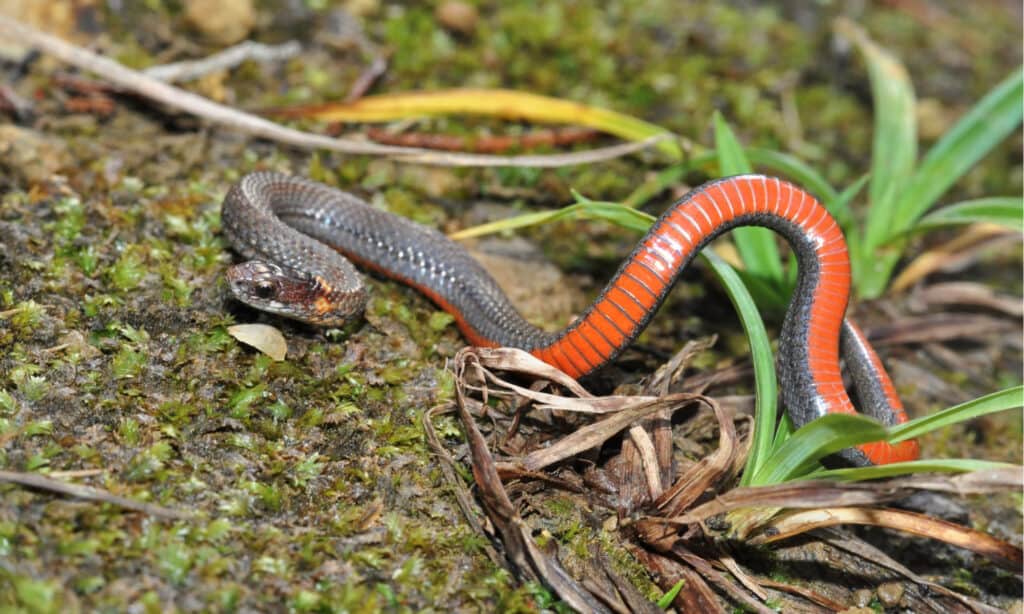
Red-bellied snakes are usually brown to black on their dorsal sides.
©Mike Wilhelm/Shutterstock.com
Red-bellied snakes are one of only two snake species found on the island. The other is the common garter snake. Both are harmless, and of the two, red-bellied snakes are the least likely to be spotted. These snakes grow to between eight and 16 inches long and have a bright orange, pink, or red belly. They are usually brown or gray on their backs. They eat mostly slugs, beetle larvae, and worms. If you’re lucky enough to see one, it will usually be in the park’s woodlands and meadows.
Common Garter Snake
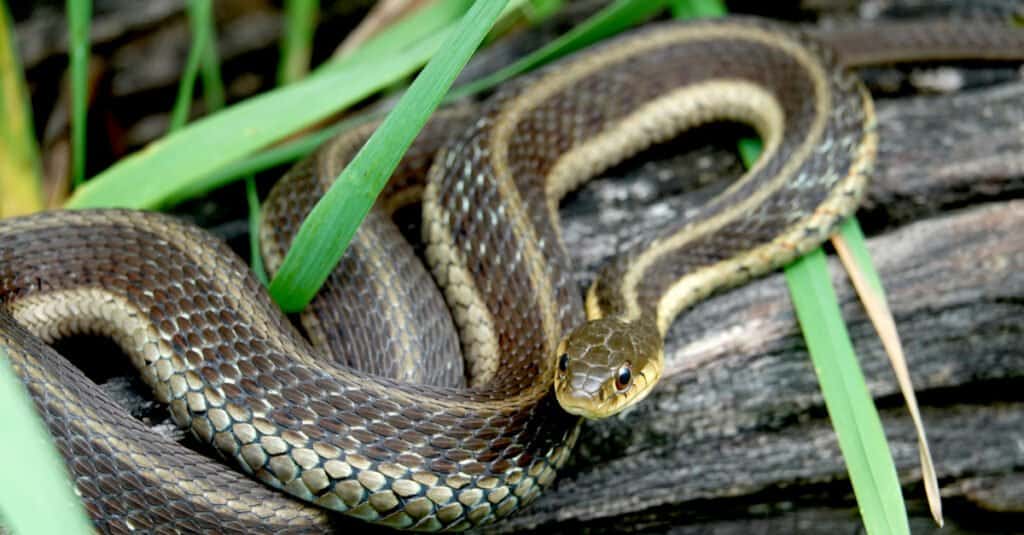
The common garter snake eats frogs, toads, rodents, small fish, earthworms, and slugs.
©Erik Agar/Shutterstock.com
If you spot a snake in the park, it is likely the harmless common garter snake. These snakes come in a variety of colors and grow to 18-26 inches long. Markings are muted browns and tans, but some sport orange-red stripes or spots, and others are nearly black. They’re most often spotted near bodies of water but are also seen in meadows and fields. As temperatures rise during the summer months, these snakes become more nocturnal. During winter, they enter a form of hibernation to survive the extreme temperatures.
Eastern American Toad
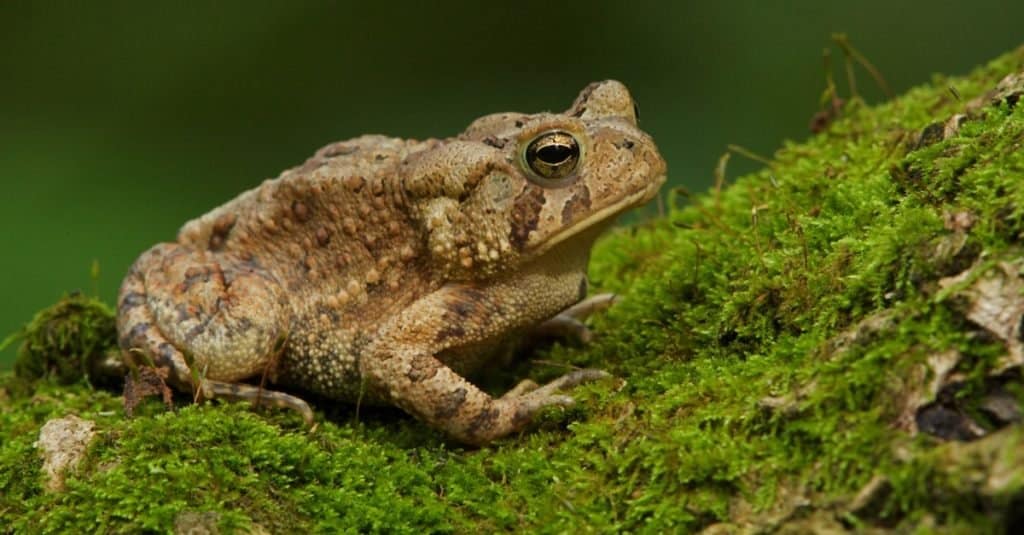
Unlike frogs, the Eastern American toad prefers to live away from water sources.
©Tom Reichner/Shutterstock.com
If you have trouble distinguishing toads from frogs, just look at their skin. Toads have dry, warty skin, unlike frogs, whose skin is smooth and slick. Also, toads have two large parotid glands behind their eyes. These glands aren’t just for show. They help the toad produce a poisonous liquid that renders their skin toxic. Their eyes are used for more than seeing, too. When they blink, it helps the toad swallow food by rolling the eye into the roof of the toad’s mouth to help push the food down its throat.
Northern Spring Peeper
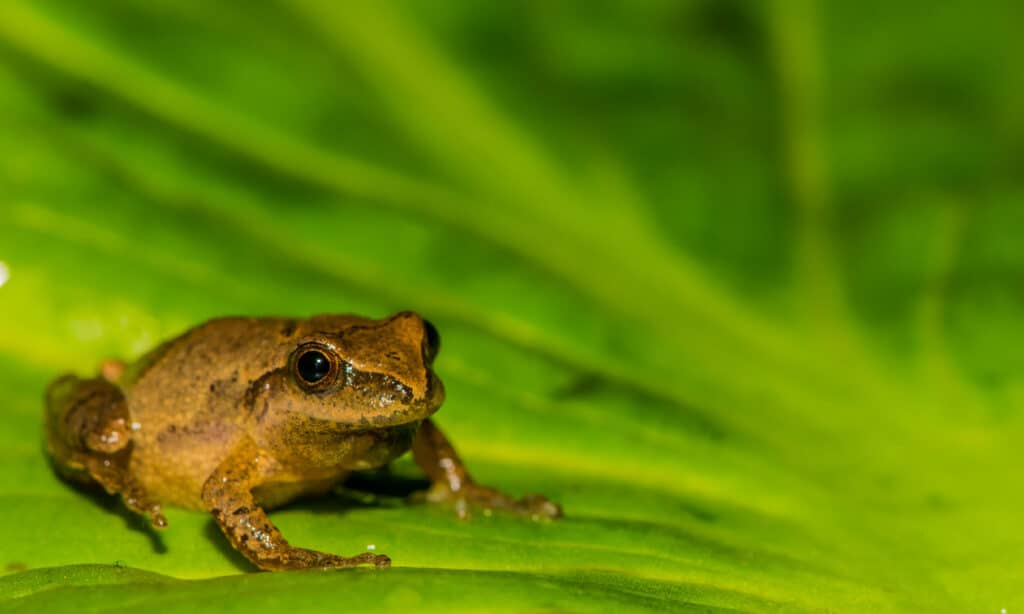
The northern spring peeper is the most abundant frog species in the park.
©Jay Ondreicka/Shutterstock.com
These frogs are tiny, growing to just one and one-half inches long. But what they lack in size, they make up for in numbers. Northern spring peepers are found throughout the park, and if you can’t see them, you can surely hear them. These frogs emit a loud, high-pitched peeping sound to attract mates. Peepers spend much of their time in or near water, but can also climb with ease. They can change color to blend in with their surroundings.
Blue-Spotted Salamander
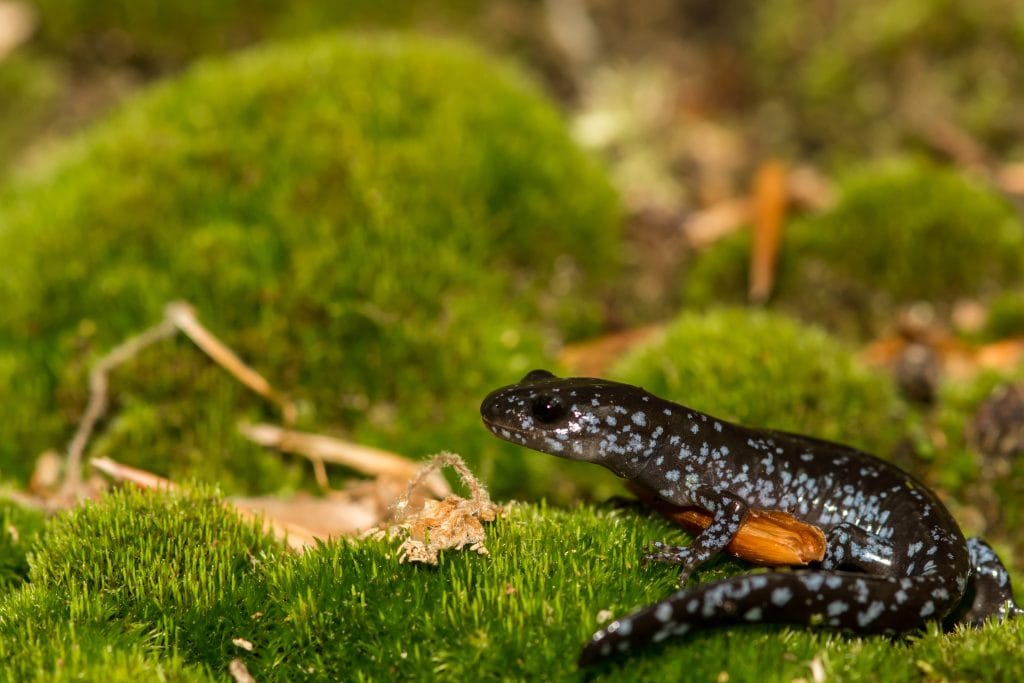
Blue-spotted salamanders are secretive park residents, spending much of their lives hiding away.
©Jay Ondreicka/Shutterstock.com
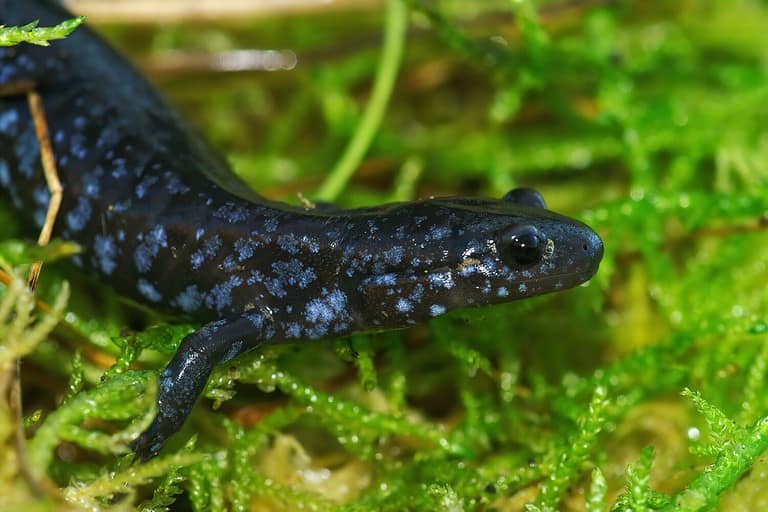
You’re most likely to find a blue-spotted salamander late in the day or at night, moving through the woody underbrush of the park’s forests, swamps, and marshes. Growing to no more than five inches long, they have dark blue to black skin with lighter blue specks. Their primary diet includes insects, earthworms, spiders, slugs, and snails. In the early spring, they migrate to fish-free pools of water to breed. Females lay between one and 30 eggs that take about one month to hatch.
Canada Goose
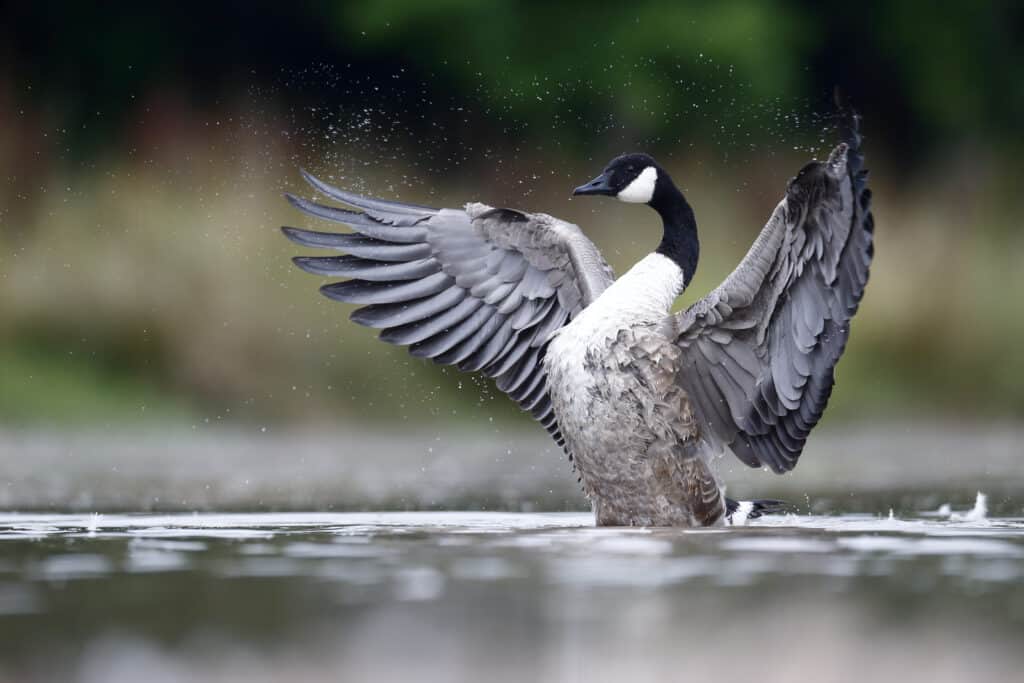
Geese often flap their wings as a sign of aggression.
©Erni/Shutterstock.com
Canada geese in the park are easy to identify by their distinctive black head and neck and contrasting white chinstrap. They’re also the largest birds you’ll see up close, weighing nearly 15 pounds when fully grown. Their wingspan can stretch up to six feet, and they have a loud honk they use to communicate with each other and warn away threats. If their honk doesn’t suffice, these geese aren’t afraid to charge in a show of dominance. Flapping wings and surprising ground speed add to the dominant performance.
Broad-Winged Hawk
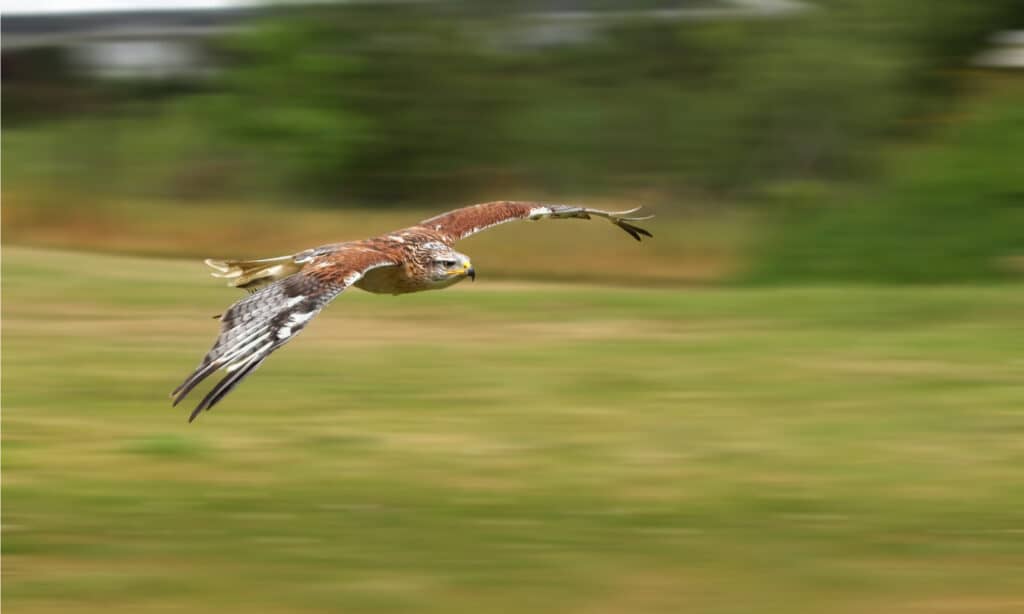
Broad-winged hawks migrate to the park for the summer breeding season.
©pr2is/Shutterstock.com
These hawks are usually found in the park’s tree canopy in heavily forested areas. They come to the park to breed and raise chicks in the summer, then depart for warmer climates in the fall. During migration, they travel in groups called “kettles.” Broad-winged hawks eat mice, rodents, frogs, toads, and insects. They are notable for their short, wide, pointed wings and white-striped chest and belly. Their tails are dark gray or black, with distinct white bands.
Common Loon
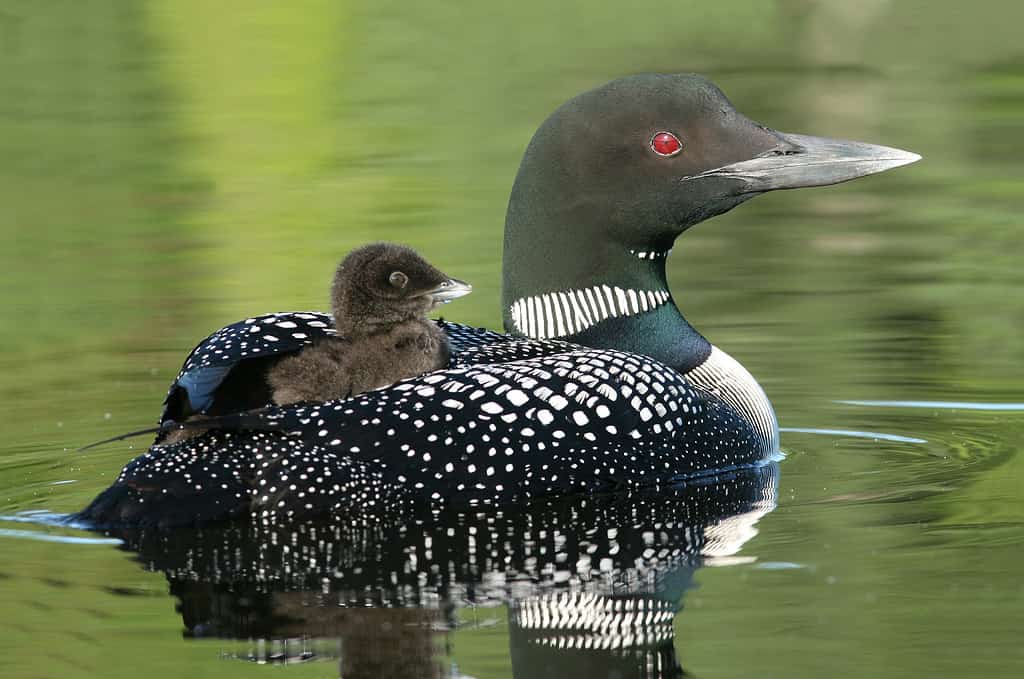
Loons are migratory visitors to the park, returning each spring from their winter on the Atlantic Ocean.
©BRIAN LASENBY/iStock via Getty Images
Common loons are some of the most iconic birds that call the park home. Distinctive with their striking black and white checked plumage, their coloration is about more than standing out. It actually helps camouflage them when they rest on the surface of a sparkling lake. Their bright red eyes improve their underwater vision, aiding them while they fish. The loon’s wingspan is nearly five feet across and, unlike other birds, its bones are solid. This added weight that helps them dive over 100 feet when fishing.
Bald Eagle
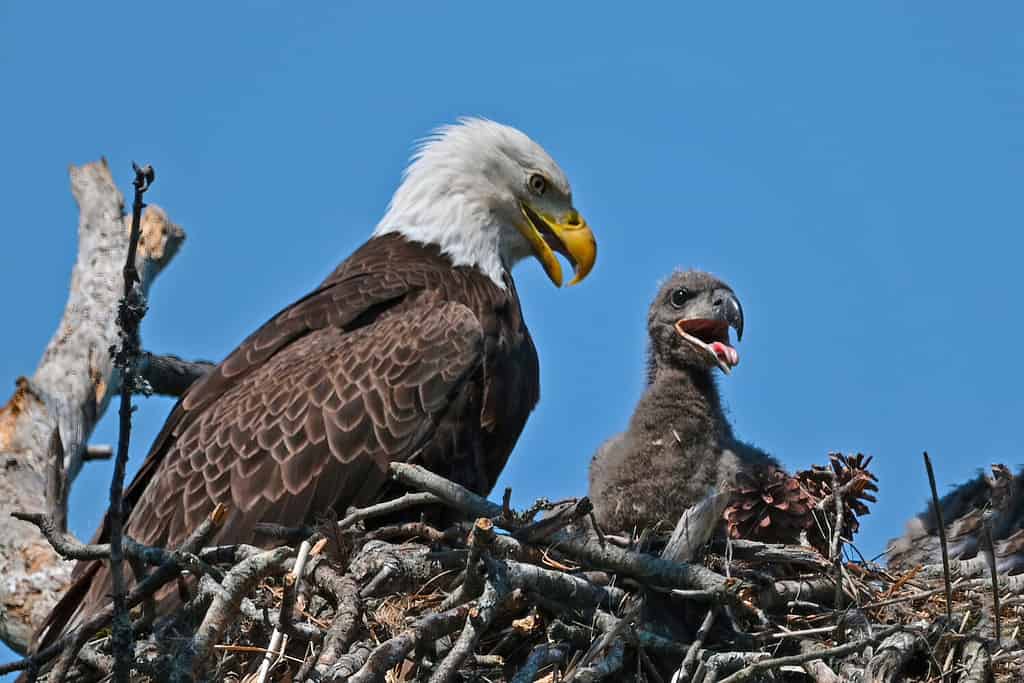
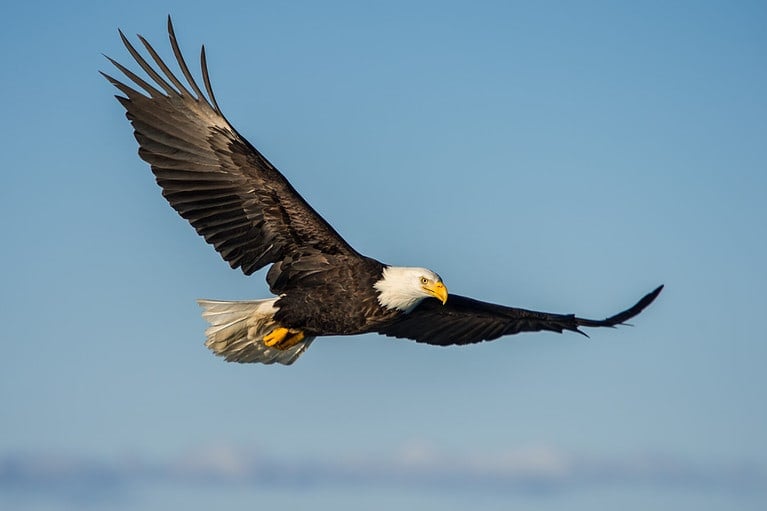
An adult bald eagle shares its nest with its eaglet.
©Brian E Kushner/Shutterstock.com
The park’s forested landscape, surrounded by water, is the ideal habitat for bald eagles. They nest in tall trees, using the vantage point and their excellent eyesight to fish for their next meal. Bald eagles don’t get their distinctive snow-white head and tail until they are about four to five years old. Until then, they have a mottled brown-and-white appearance. Their wingspan can reach up to eight feet, and their talons crush with a force of 400 psi, among the strongest of all birds. They can also use their wings to swim!