
“What’s good for the goose is good for the gander.” This familiar idiom argues that what is fair and acceptable for one individual should also be fair and acceptable for another. It is often used to highlight double standards between genders. However, the phrase is fitting when discussing geese, because both the female (goose) and male (gander) share critical roles in reproduction, defense, and survival. Unlike many bird species where males and females have clearly divided or unequal roles, geese exemplify partnership and cooperation, making them a critical case study in avian behavior.
In this article, we will explore the key differences between male and female geese. While at first glance they may look very similar, there are several physical, behavioral, and biological traits that help distinguish the two. We’ll look at variations in size, plumage, calls, and temperament, as well as how their roles differ during mating, nesting, and raising young.
An Overview
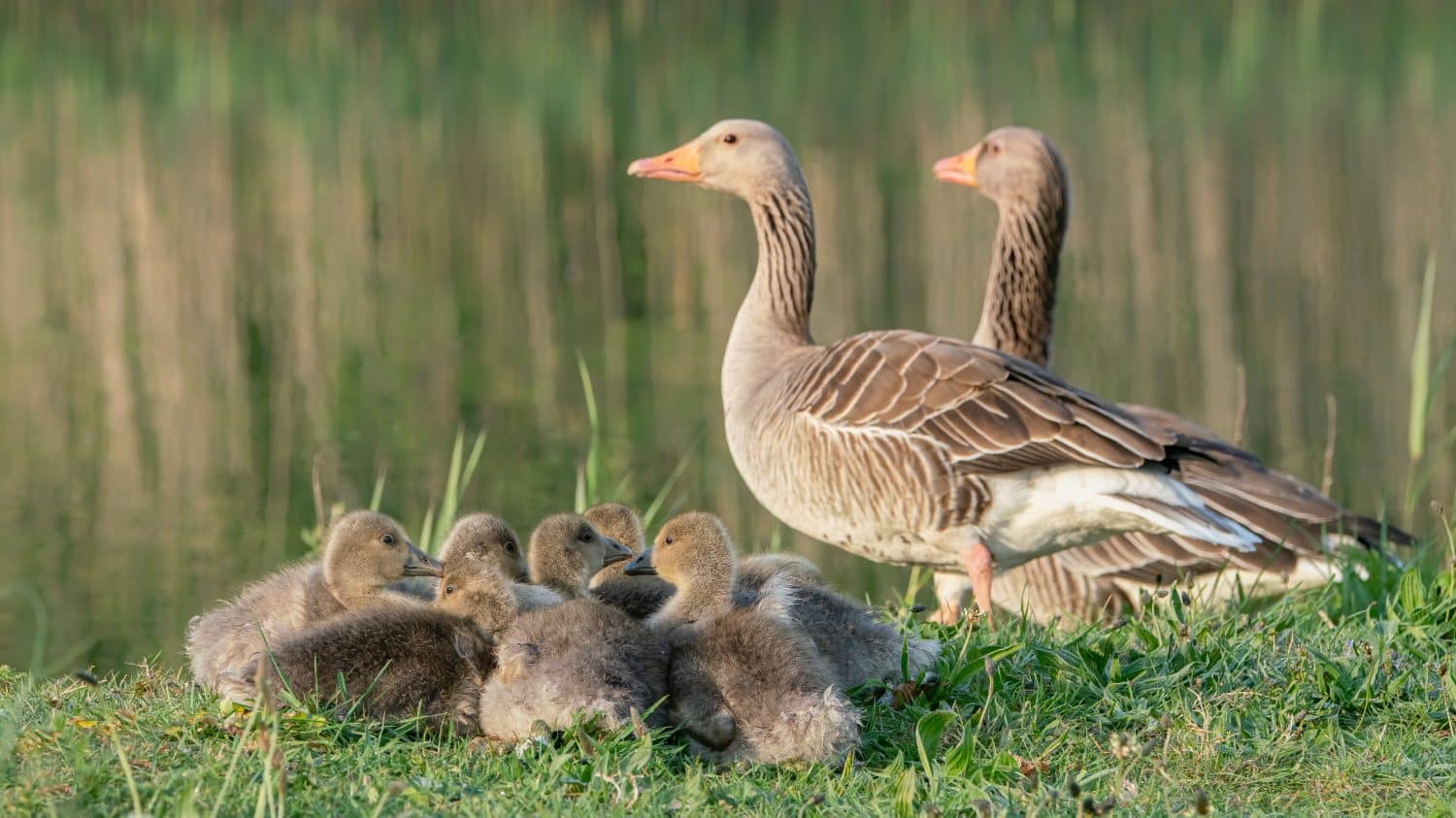
Parenting and lifelong pair bonds are prominent in geese and swans, setting them apart from many other members of the Anatidae family, such as most ducks
©AlexandrinaZ/Shutterstock.com
Geese belong to the family Anatidae, which also includes ducks and swans. This family contains more than 170 species worldwide and is characterized by broad bills adapted for grazing or dabbling, webbed feet for efficient swimming, and strong migratory instincts. Members of Anatidae are found on every continent except Antarctica, thriving in habitats ranging from Arctic tundra to temperate wetlands and grasslands.
While ducks (also members of Anatidae) tend to be smaller, more aquatic, and more varied in appearance, geese generally have longer necks, heavier bodies, and are more terrestrial, primarily grazing on land. Swans, on the other hand, are larger than geese, with longer necks and a more graceful appearance. Still, they share many behaviors such as monogamy, long-term pair bonding, and cooperative parenting.
One defining feature that sets geese apart within the Anatidae family is their emphasis on biparental care and lifelong pair bonds. Unlike many ducks, where males often leave after mating, both the male gander and female goose remain involved in raising young, making geese among the more cooperative members of the family, though some duck species also exhibit biparental care.
Some well-known species of geese include:
- Canada Goose (Branta canadensis) – Widely distributed in North America, famous for its migratory V-formations.
- Greylag Goose (Anser anser) – The ancestor of most domesticated geese, native to Europe and Asia.
- Snow Goose (Anser caerulescens) – Notable for its striking white plumage and extensive flocks.
- Barnacle Goose (Branta leucopsis) – Known for its Arctic breeding grounds and long migrations.
Physical Differences Between a Goose and a Gander
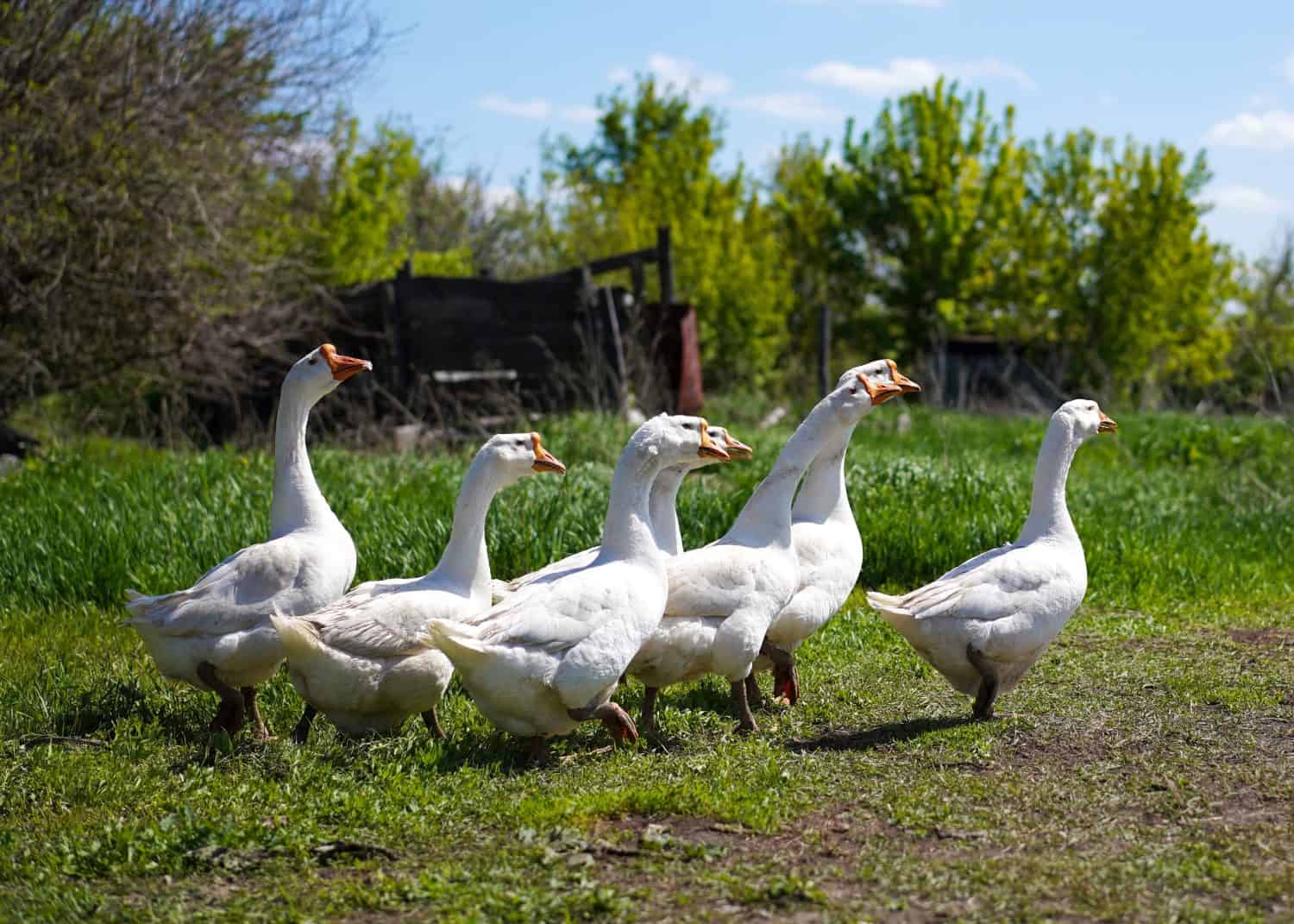
Habitats and appearances vary, but the roles of males and females are consistent across species.
©Ger Bosma Photos/Shutterstock.com
In most goose species, males and females are monomorphic, which means they look nearly identical to the casual observer. Unlike species such as ducks, where plumage differences between sexes are obvious, geese require closer observation to distinguish between males and females. However, scientific studies and field observations highlight subtle but consistent differences.
Body size– Ganders are typically 10–15% larger than females, a form of sexual size dimorphism. This difference can be seen in their overall mass, wingspan, and the thickness of their legs and feet. While this may not be immediately obvious in a single bird, it becomes clearer when comparing a pair side by side.
Neck and head shape– Males often have slightly thicker necks and broader skulls, giving them a more robust appearance. This subtle structural difference contributes to their role in defense and territorial displays, where a stronger physical presence is advantageous.
Vocalizations– Acoustic research has shown that ganders usually produce lower-pitched, slower calls, while females tend to vocalize with higher-pitched and more rapid honks. These vocal distinctions are especially important during family communication, helping goslings differentiate between parental calls and follow the correct parent in moments of alarm or migration.
Behavioral cues– The most reliable indicators of sex come from behavior, particularly during the breeding season. Females are the sole incubators, devoting weeks to warming the eggs, while males are more often seen standing guard, patrolling the territory, and aggressively confronting potential threats. Outside of breeding, males still exhibit heightened vigilance, often positioning themselves between the flock and potential danger.
Because these physical and behavioral differences are so subtle, ornithologists and wildlife biologists often use more precise methods to determine sex. Cloacal examination, though invasive, allows researchers to confirm sex based on reproductive anatomy. DNA testing from feathers or blood samples provides a highly accurate and non-invasive alternative. These methods are especially important in ecological studies, captive breeding programs, and wildlife management, where sex ratios affect population dynamics and long-term species conservation.
Goose: The Female’s Role
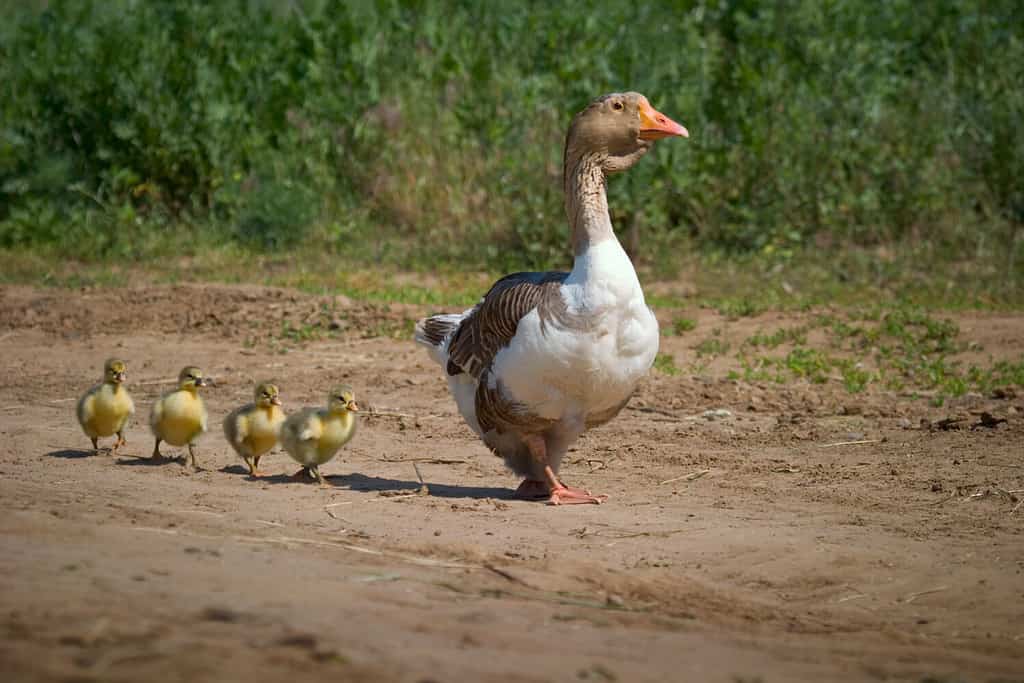
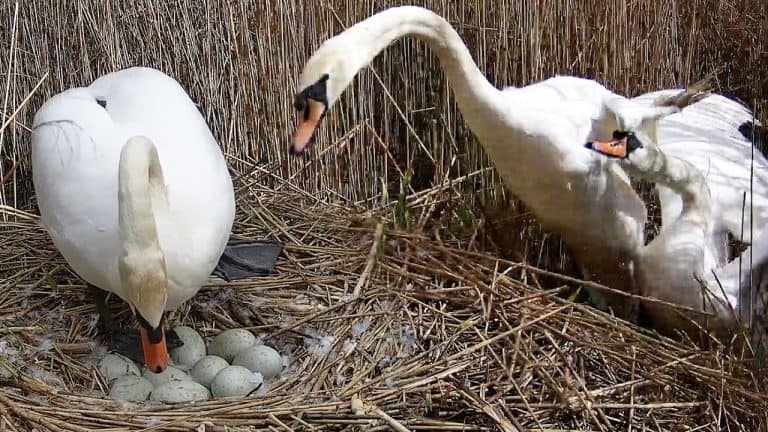
The female goose is the primary incubator and nest-builder.
©Serhii Hrebeniuk/Shutterstock.com
Geese typically select nesting sites near water, often favoring elevated ground that provides clear visibility of the surrounding area. Research has shown that females demonstrate a strong tendency to return to the same nesting locations year after year, a behavior known as natal philopatry. Going to the same place helps ensure familiarity with local resources and reduces unknown predator risks.
The number of eggs, or clutch size, varies by species. In general, geese lay between three and seven eggs per breeding season. Canada Geese, for example, usually produce four to six eggs, while smaller species such as the Cackling Goose may lay fewer. Once the eggs are laid, the female assumes full responsibility for incubation, which lasts between 25 and 30 days. During this period, she devotes herself entirely to warming the eggs and rarely leaves the nest, often losing significant body mass due to fasting.
Female geese are highly protective during nesting. Studies have documented their willingness to deter potential threats through dramatic displays such as spreading their wings, hissing loudly, and even physically striking intruders. This aggressive behavior is critical for defending vulnerable eggs from predators.
After the eggs hatch, the goose transitions into her role as the primary caregiver for the goslings. She leads them to water within the first day, where they quickly learn to swim, and begins teaching them how to forage for food. This combination of vigilance, defense, and guidance underscores the central role of the female in ensuring the survival of the next generation.
Gander: The Male’s Role
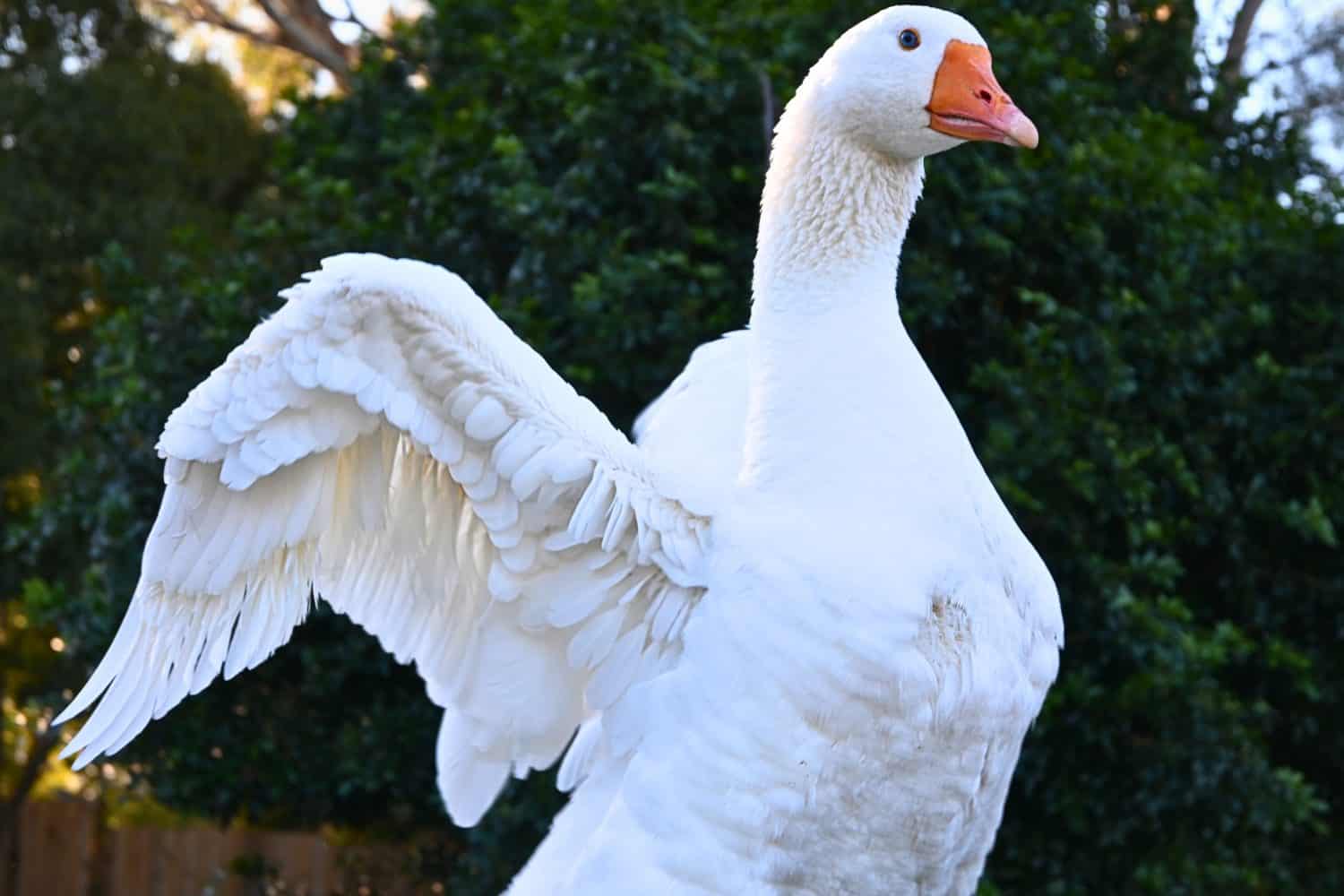
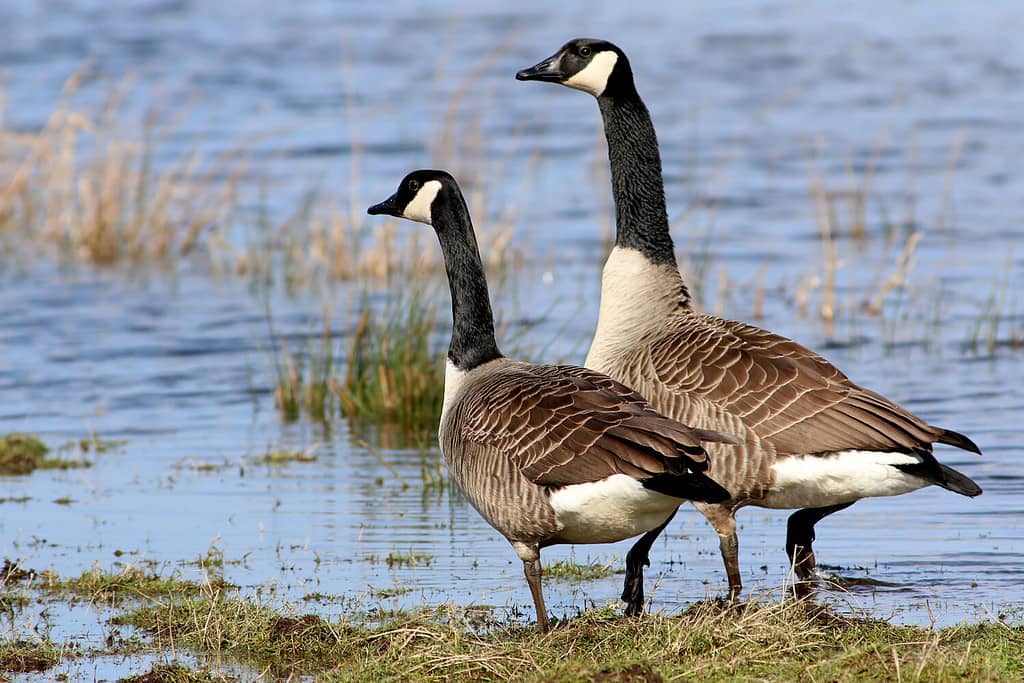
The gander takes on the dual role of protector and teacher within the family unit.
©K.M.Tomkinson/Shutterstock.com
The gander plays an equally important but distinct role in the reproductive cycle. Once his mate begins incubating the eggs, he takes on the responsibility of guarding the nest and surrounding territory. Ganders are highly territorial during this period and will patrol constantly, watching for potential threats. If an intruder approaches, the gander becomes aggressive and will start honking loudly, spreading his wings, and charging forward to drive the threat away. His vigilance ensures the female can remain on the nest without interruption.
After the eggs hatch, the gander continues his protective role, shifting his attention to the goslings. He often positions himself at the edge of the brood, keeping a barrier between the young and any danger. When the family travels, the gander may lead or flank the group, scanning for predators while the goose guides the goslings in foraging and movement.
He also acts as a teacher, using alarm calls and defensive behaviors to show the young how to recognize threats and respond appropriately. His presence significantly increases the chances of survival for the brood, as studies have shown goslings raised by both parents have higher survival rates than those cared for by only one.
The gander’s role extends into migration as well. Like the goose, he takes turns leading the flock in the iconic V-formation, breaking wind resistance for those behind him before rotating to the back to conserve energy. This cooperative flying strategy not only strengthens the flock’s success but also demonstrates the importance of both sexes working together throughout the life cycle.
Shared Roles in Family and Flock Life
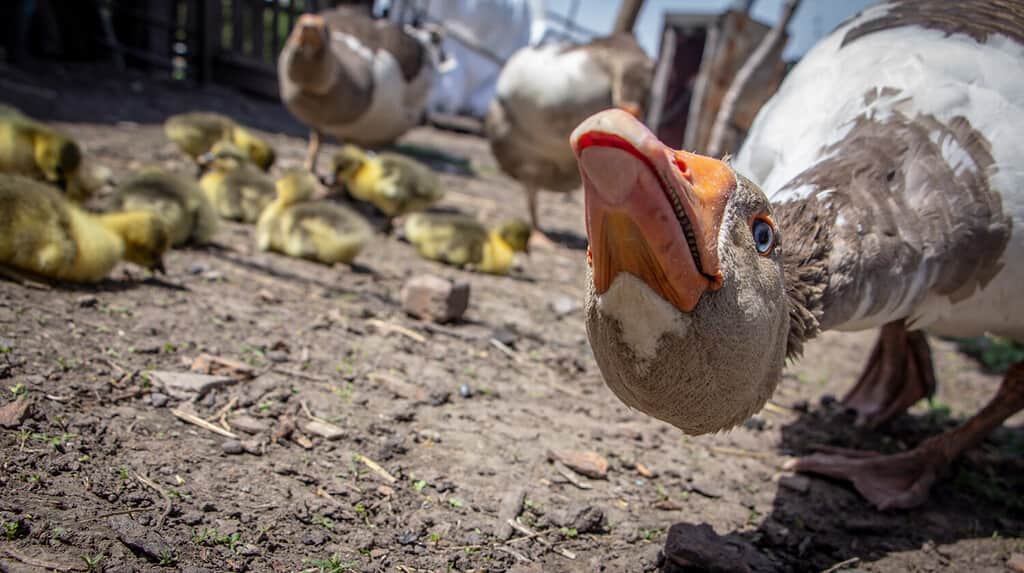
Geese parent together in a way that is relatively rare among birds and sets them apart.
©mykhailo pavlenko/Shutterstock.com
Unlike many bird species where parental investment is unequal, geese are remarkable models of biparental care. Within just 24 hours of hatching, goslings undergo a process known as filial imprinting, during which they learn to recognize and follow both of their parents. Both the goose and the gander become central figures in this process, ensuring the young remain safe and guided as they explore their environment.
Communication is also essential to family cohesion. Geese possess a repertoire of more than a dozen distinct vocalizations, with alarm calls differing subtly in pitch between males and females. These differences allow goslings to distinguish between their parents’ calls, helping them respond to danger and follow the correct parent during movement.
As the breeding season ends, families often merge into larger flocks, forming extended social units that provide safety and efficiency during migration. The stability of lifelong pair bonds and strong family ties not only strengthens the survival of individual broods but also underpins the broader social structure and migratory success of geese as a species.
Ecological Roles
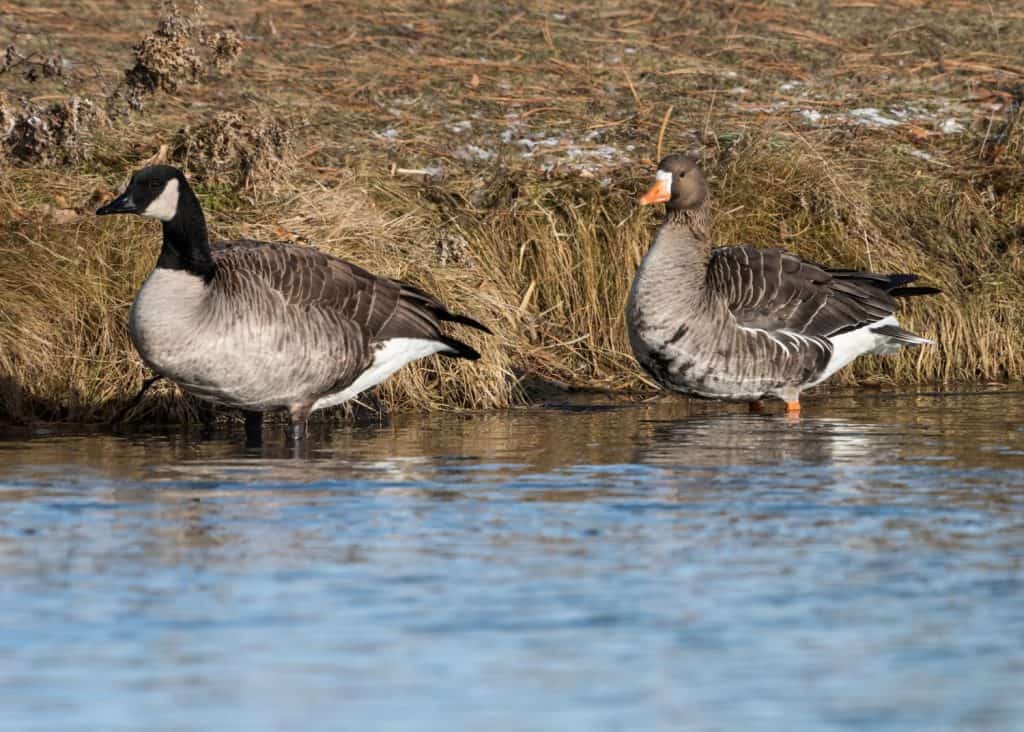
Geese impact ecosystems in several measurable ways.
©FotoRequest/Shutterstock.com
Male and female geese also play an important role in ecosystems through their grazing and nutrient cycling. By feeding on grasses and aquatic plants, they help regulate plant communities while returning nutrients to soil and water systems through their droppings. They produce a significant amount of droppings, which further contribute to nutrient cycling. They also contribute to seed dispersal, as seeds consumed during grazing are later excreted over long distances, promoting plant growth across wetlands and grasslands.
In addition, geese are a key part of the food cycle, with their eggs and goslings serving as prey for many predators, thus linking them to broader trophic dynamics. Research on Arctic geese populations has shown that their grazing behavior can significantly influence tundra ecosystems, sometimes positively by maintaining open habitats, but also negatively when overgrazing occurs due to rising populations.
When goose populations increase beyond natural limits, overgrazing can degrade plant communities, reduce soil stability, and negatively impact other species that depend on the same habitat. Thus, geese exemplify the dual ecological role of many species: they can serve as ecosystem engineers that sustain habitats under balanced conditions, but also as potential stressors when population dynamics shift due to climate change, habitat alteration, or reduced predation pressures.
Conclusion

The differences between male and female geese vary in both physical and behavioral ways.
©Danita Delimont/Shutterstock.com
Geese offer a wonderful example of shared responsibility and cooperation between mates. The goose contributes through incubation and nurturing, while the gander provides vigilance, defense, and support. Together, they raise goslings successfully and maintain the strength of their flock. The dynamics of their partnership illustrate a well-orchestrated division of labor crucial for the survival and success of their young.
Beyond reproduction, their cooperative strategies extend into nearly every aspect of life: migration, flock cohesion, predator avoidance, and even ecosystem impacts. The goose and gander function not as isolated individuals, but as integral parts of a coordinated system in which each role complements and reinforces the other. This synergy not only ensures the safety of their immediate family but also strengthens the social fabric of the larger flock, which relies on collective action to thrive during migration and seasonal changes.
Seen through the lens of science, the old idiom rings true: “What is good for the goose is good for the gander.” But in geese, this isn’t merely about fairness or cultural ideals of equality; instead, it is about evolutionary necessity. Their shared roles highlight how cooperation and partnership are not luxuries but essential strategies for survival.