
Quick Take
- Hedgehogs curl into a tight ball using specialized muscles that hide their soft parts and present thousands of sharp spines outward.
- The spines cause immediate pain during an attack, discouraging predators without needing detachable quills or counterattacks.
- This low-energy defense shapes how hedgehogs behave, allowing them to forage confidently but also making them vulnerable to modern threats like cars.
This harrowing video shows a poor hedgehog that’s fallen into a swimming pool and is trying desperately to get out. On contact with the human, the hedgehog immediately goes into its instinctual defense pose—it curls up into a tight ball of spines. This is an effective defense against a predator, but unfortunately, a little counterintuitive when submerged in water, as the creator of the reel points out in the on-screen caption: “Imagine you’re drowning and your instinct to curl up kicks in when there’s a sign of danger and it makes you drown even more.”
Fortunately, the Samaritan in the video, who’s unable to help the poor creature with her bare hands because of the spines, was quick on her feet and found a solution, scooping the coiled critter out of the pool with a plastic shovel. Everything turned out fine, and that brave hedgehog will hopefully live to curl up into many more spiny balls.
While that defense didn’t do the little guy a lot of good in a swimming pool, in just about every other scenario it’s actually a remarkably effective defense mechanism. While it might appear cowardly or odd, this behavior is actually highly effective and well-adapted. Curling into a ball is the result of millions of years of evolution, a finely tuned response that turns a small, slow mammal into something most predators would rather not mess with.
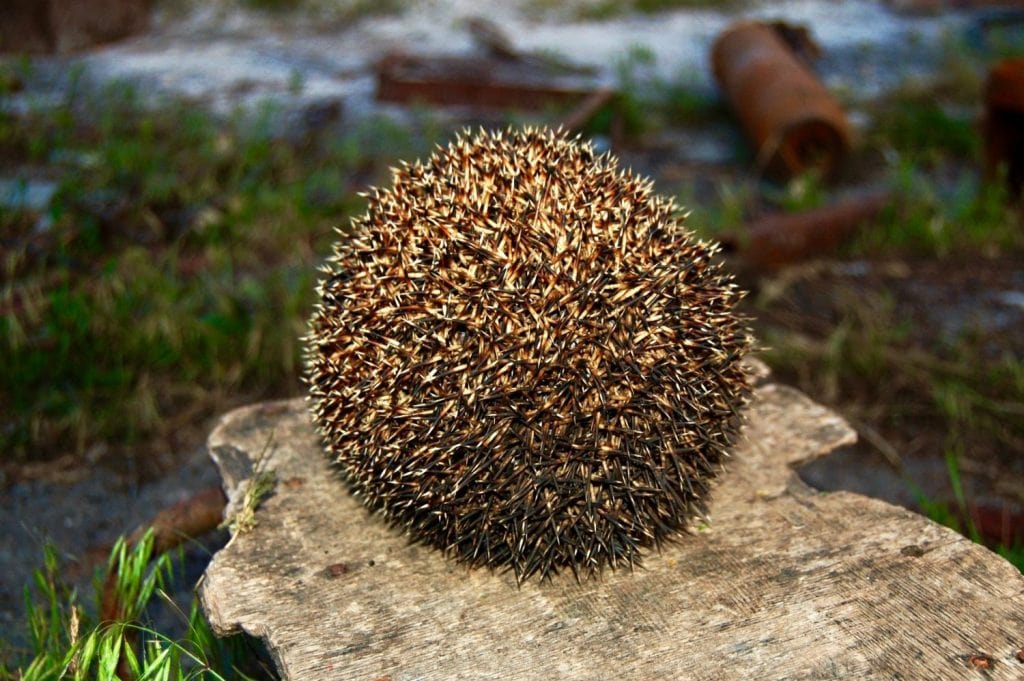
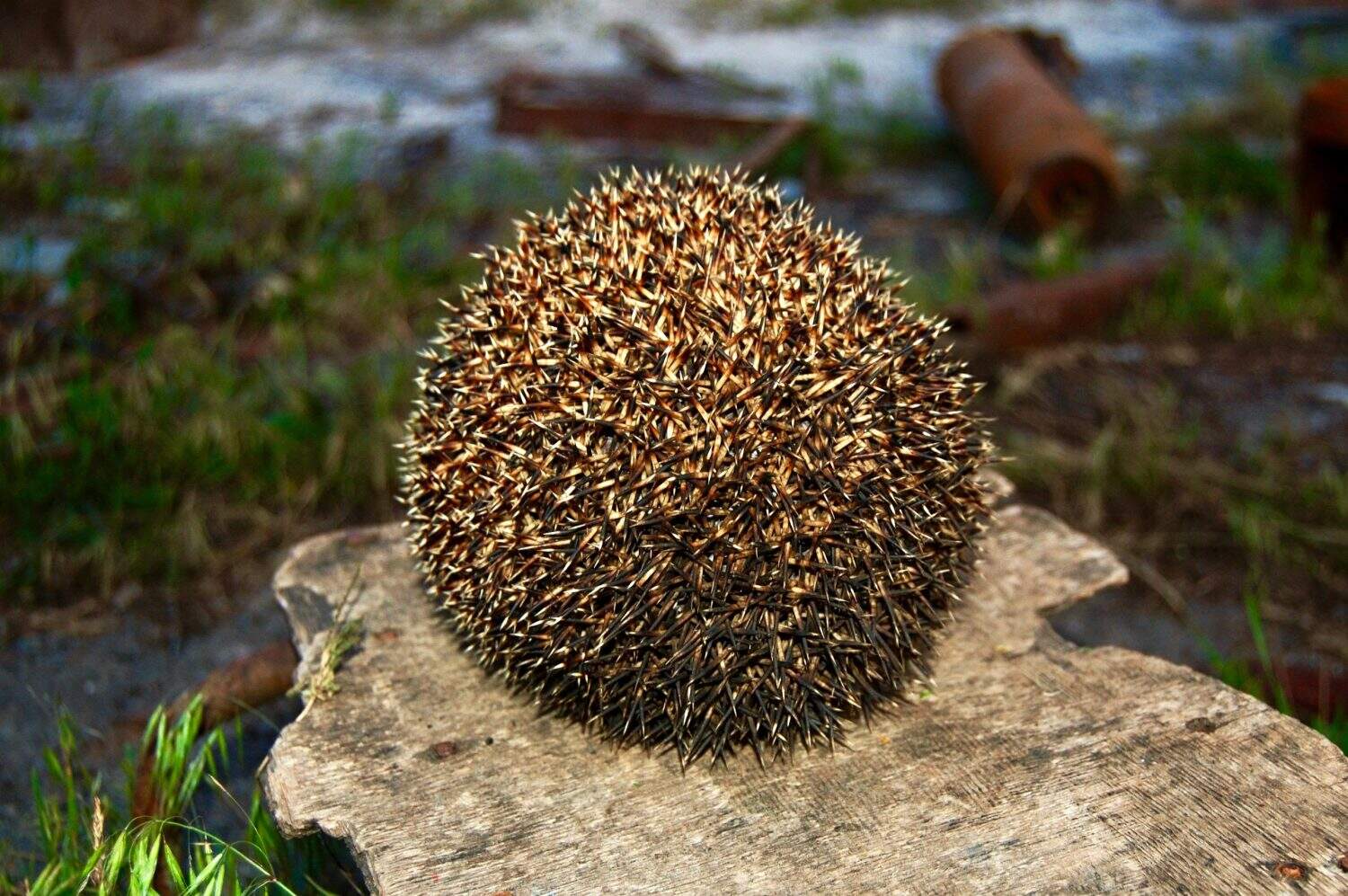
Yes, this spiny ball is actually a hedgehog.
©moryachka7/Shutterstock.com
Why Curling Up Works So Well
Despite what a popular video game character might suggest, hedgehogs aren’t fast. They can’t outrun foxes, dogs, or large birds of prey. They also don’t have sharp teeth or claws meant for fighting. What they do have is a body designed around passive defense. Instead of fleeing or attacking, hedgehogs rely on making themselves extremely unpleasant to bite or grab.
When threatened, a hedgehog contracts a specialized muscle called the panniculus carnosus, which acts like a drawstring around the body. As it tightens, the hedgehog’s head, legs, and belly are pulled inward, and its spines rotate outward. In a fully defensive posture, the animal’s soft parts are almost completely hidden. From the outside, it looks like a prickly ball with no obvious weak spots.
While not fast on its feet, a healthy hedgehog can curl up like this in a fraction of a second. That speed matters. Predators often rely on surprise, and being able to transform so quickly flips the surprise back on the predator. Imagine picking up a slice of pizza, and before it reaches your mouth, it transforms itself into a ball of spikes. That’s exactly what a predator experiences when it attacks a hedgehog.
Do the Spines Actually Hurt Predators?
Yes, they do. Hedgehog spines aren’t hollow or flexible like porcupine quills. They’re stiff, sharp hairs made primarily of keratin, the same material found in human fingernails and hair. An adult hedgehog can have between 5,000 and 7,000 spines covering its back and sides, each one tapering to a sharp point. When a predator bites down, the force is concentrated into those tiny tips. That pressure can easily puncture sensitive tissue like gums, lips, and the inside of a mouth—even in thick-skinned predators.
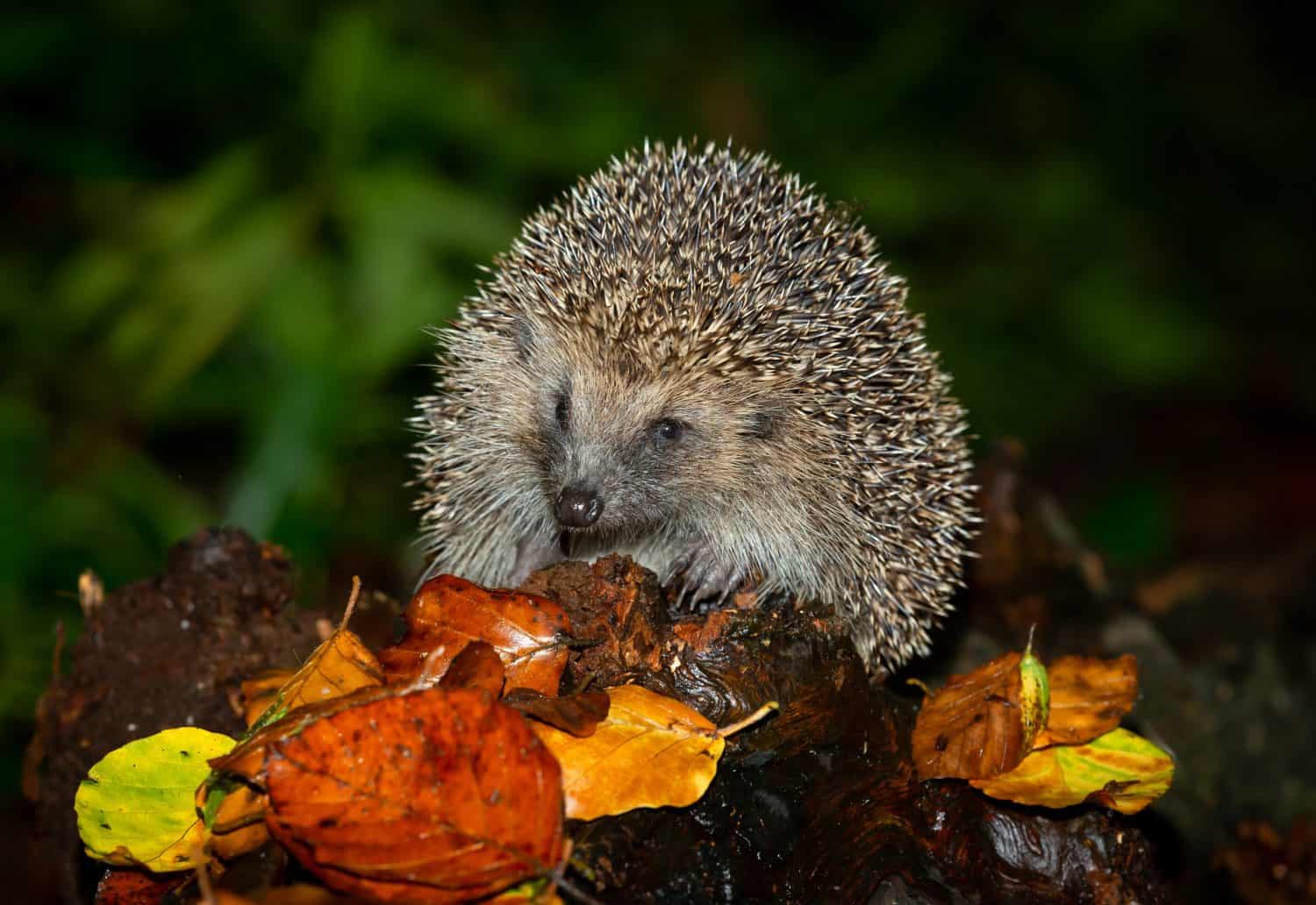
An adult hedgehog carries up to 7,000 stiff, keratin-based spines, each sharp enough to make a single bite a painful mistake.
©Serenity Images23/Shutterstock.com
Unlike porcupines, hedgehog spines don’t detach easily. Leaving quills behind isn’t part of the defense. Because the spines don’t detach, a predator gets an immediate, concentrated burst of pain during the attack rather than a delayed injury afterward, making the attempt itself strongly discouraging. To keep attacking, it would have to push harder and risk more injury. Many predators learn very quickly that hedgehogs aren’t worth the trouble. A fox that gets a mouthful of spines once will think twice before ever attacking another hedgehog.
Hedgehog spines aren’t just sharp. They’re surprisingly tough. Each one has internal support struts that make it resistant to bending and breaking. When pressure is applied, the spine flexes slightly instead of snapping, allowing it to absorb force without failing. Beneath the spines is a thick layer of muscle and connective tissue. When the hedgehog curls up, this layer tightens, further stabilizing the spines and making them harder to push aside.
That said, hedgehogs aren’t invincible. Very large predators with powerful jaws can sometimes kill them, especially if the animal is young, sick, or unable to curl up fully. Cars, lawn equipment, and habitat loss are also major threats. The defensive ball is extremely effective, but it’s not impervious.
Inside the Ball
When fully curled, a hedgehog’s heart rate and breathing may change. Some species can even lower their metabolic rate slightly, conserving energy while waiting out the threat. This makes sense for an animal that may need to stay still for minutes or even hours. It may also be a factor in why the hedgehog in the video didn’t drown in the time it took the woman to go and get the shovel.
The spines themselves are angled in such a way that any attempt to pry the ball open causes the spines to dig in deeper. The harder a predator pushes, the more uncomfortable the experience becomes. This design also explains why the woman in the video couldn’t simply pick the hedgehog up. There’s no safe grip point. Any pressure from a bare hand would mean dozens of spines pressing into skin at once.
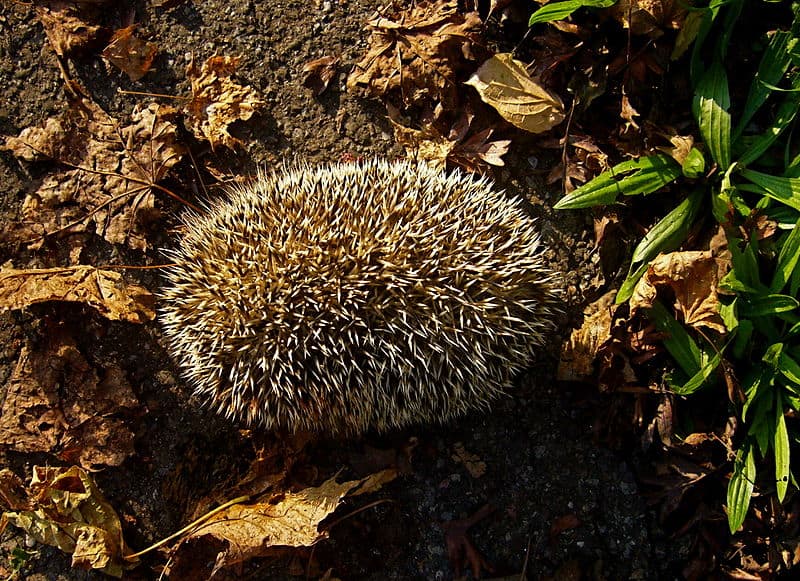
When fully curled, a hedgehog can remain motionless for minutes or longer, relying on sound and scent to decide when it’s safe to uncurl.
©Abderitestatos, CC BY 3.0, via Wikimedia Commons – Original / License
Like in the video, hedgehogs will usually remain tightly coiled for a little while even after the danger has passed. From a hedgehog’s perspective, it can’t be sure the threat has truly ended. They wait, listen, and smell the air. Only when it decides the risk has passed does it slowly uncurl. Hedgehogs rely heavily on scent and sound, and they need a moment to reassess what’s around them.
Hedgehogs rely on scent and sound not only after a threat has passed, but also to avoid danger before it occurs. In fact, curling up is actually the last line of defense, not the first. They’ll often hiss, puff up their spines, or change direction before fully committing to the ball. These warning signs give predators a chance to back off without contact.
Why Curling Beats Fighting or Running
Curling into a ball is a low-energy defense. Fighting requires strength and speed. Running requires stamina and open space. Curling requires neither. Once the muscle contracts, the hedgehog can remain protected without much effort.
This strategy is especially effective at night, when hedgehogs are most active. Many predators hunt by smell or sound in low light. When a hedgehog freezes and curls up, it becomes a silent, stationary object that doesn’t give away its position.
Over time, few predators focus on hedgehogs as a regular food source. Most generalist predators quickly learn that hedgehogs require more effort and risk than they’re worth, and they choose easier, less painful prey instead.
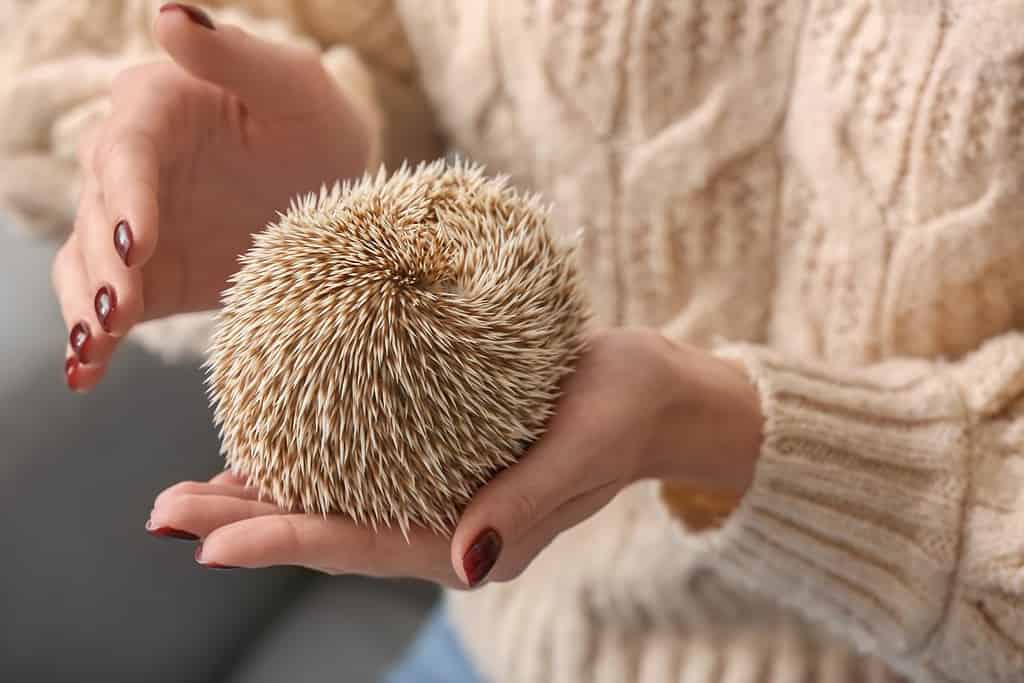
Curling into a ball requires far less energy than fleeing or fighting, making it an ideal defense for a small, slow-moving mammal.
©Pixel-Shot/Shutterstock.com
Effective in Nature, Less So in the Human World
The ability to curl up affects how hedgehogs live their entire lives. They can forage in relatively open areas without constantly sprinting for cover. They can investigate unfamiliar objects, knowing they have a reliable fallback if something goes wrong.
It also explains why hedgehogs sometimes seem fearless around humans. They aren’t fearless. They’re confident in their armor. When approached, they don’t need to flee immediately; they know they can simply curl up at any time.
Unfortunately, this can sometimes put them at risk, especially around roads or in urban environments where threats don’t behave like natural predators. They don’t understand that a car isn’t going to be discouraged by spines.
The swimming pool video highlights both the effectiveness and the limitations of this unique defense strategy. Against natural predators, the spiny ball is remarkably effective. Against swimming pools, cars, and other modern hazards, it’s not enough. Sometimes the biggest danger to a well-adapted animal isn’t nature at all, but the world we’ve built around it.