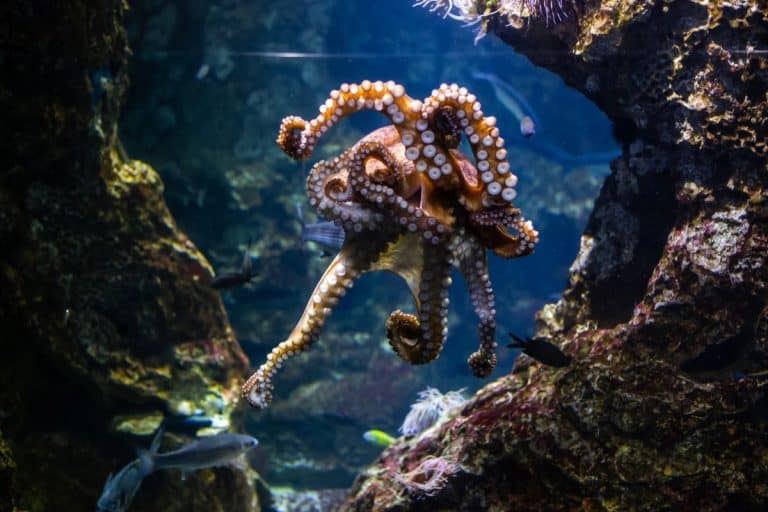

Octopuses are rather bizarre creatures, often appearing more alien than other animals on our planet. They have a highly developed brain and astounding intelligence, the power to instantly alter their color and texture, three hearts, blue blood, a jet propulsion system, and an otherworldly appearance. Altogether, these traits make octopuses seem like our planet’s very own resident aliens. But one species pushes these strange boundaries even further. As this YouTube video shows, the algae octopus can actually travel on land!
Meet the Algae Octopus
Algae octopuses live along the coasts of Northern Australia, the Philippines, and Indonesia.
©YouTube/BBC Earth – Original
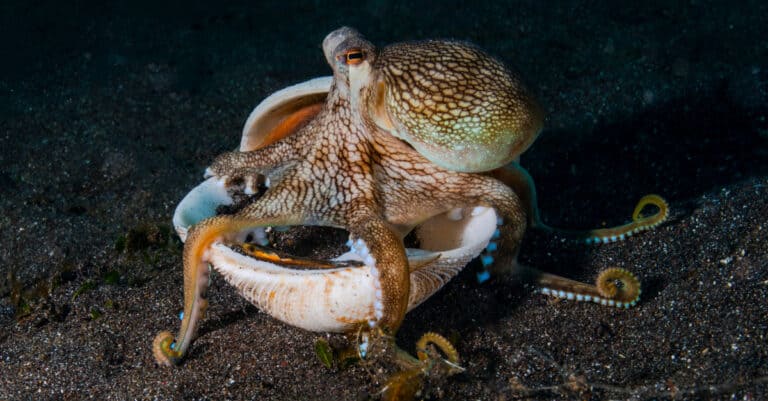
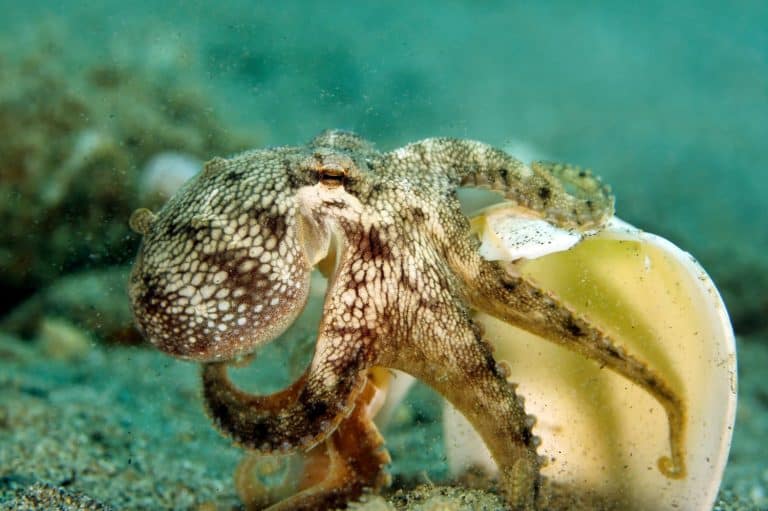
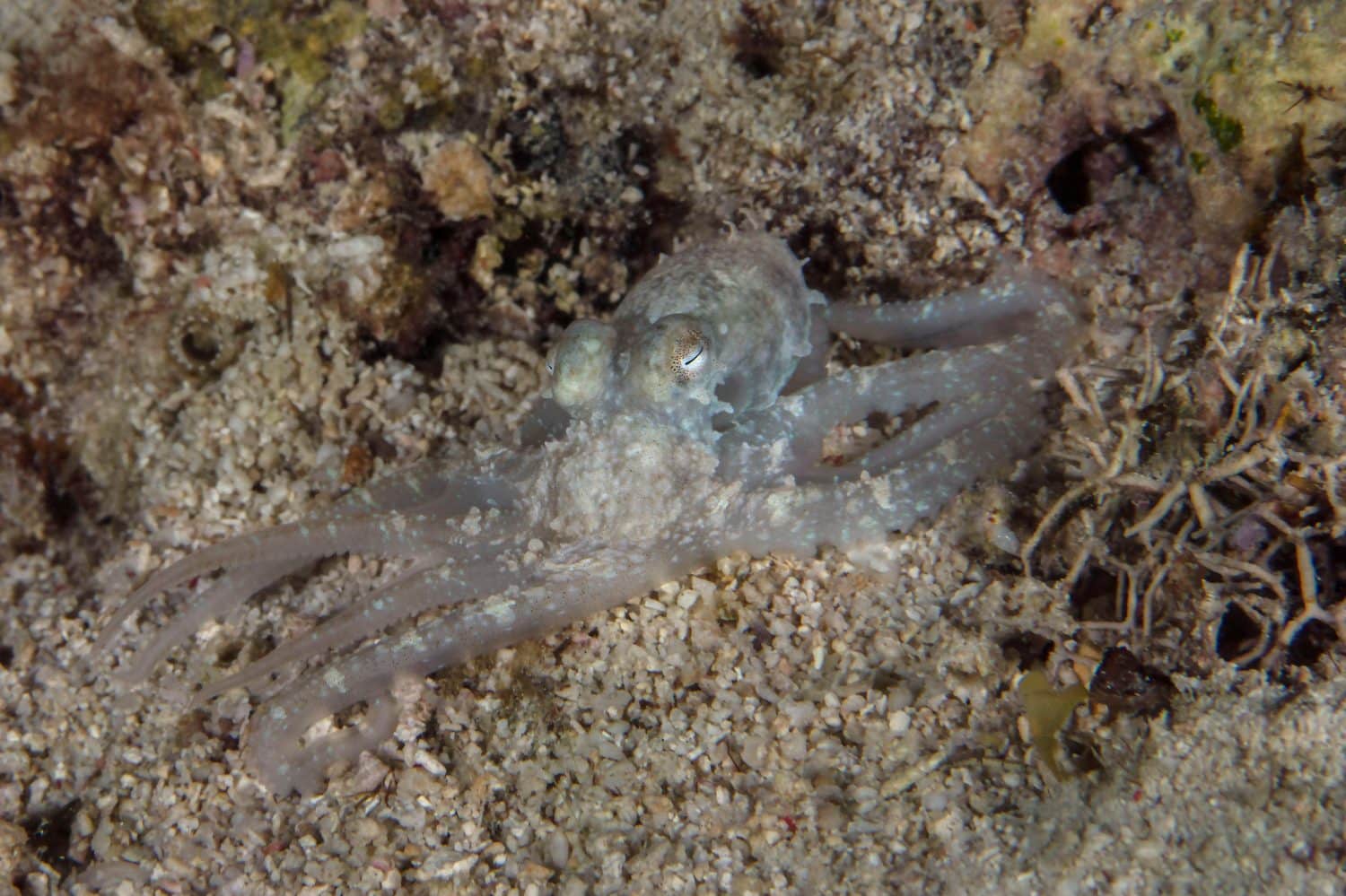
The algae octopus (Abdopus aculeatus), also called the prickly octopus, lives in the Indo-West Pacific. Despite its modest size — its mantle (main body) is only 3 inches long with arms stretching up to 10 inches — this octopus is incredibly intelligent and adaptable, with some truly unique traits.
Like all octopuses, the algae octopus lives and breathes underwater. It has three hearts, with two dedicated to pumping blood to its gills. This allows the octopus to extract the maximum amount of oxygen from the water, enabling it to breathe effectively.
The algae octopus is also a master of disguise. Its skin can dramatically change both color and texture. It usually displays mottled patterns of browns, grays, and ochre tones, mimicking the appearance of algae growing on shells or rocks. The algae octopus lives in areas with lots of seagrass and constructs its den on the sandy ocean floor. It meticulously lines its home with small pebbles and is known for collecting various interesting items to keep in its den.
In addition to their impressive camouflage, algae octopuses can “run” on two arms, moving in a way that almost resembles a human walking underwater. It achieves this by lifting six of its eight arms above its body and walking backward on the remaining two. Using this unusual bipedal locomotion, the octopus can continue to look like algae even while it is moving.
The World’s Only “Land Octopus”
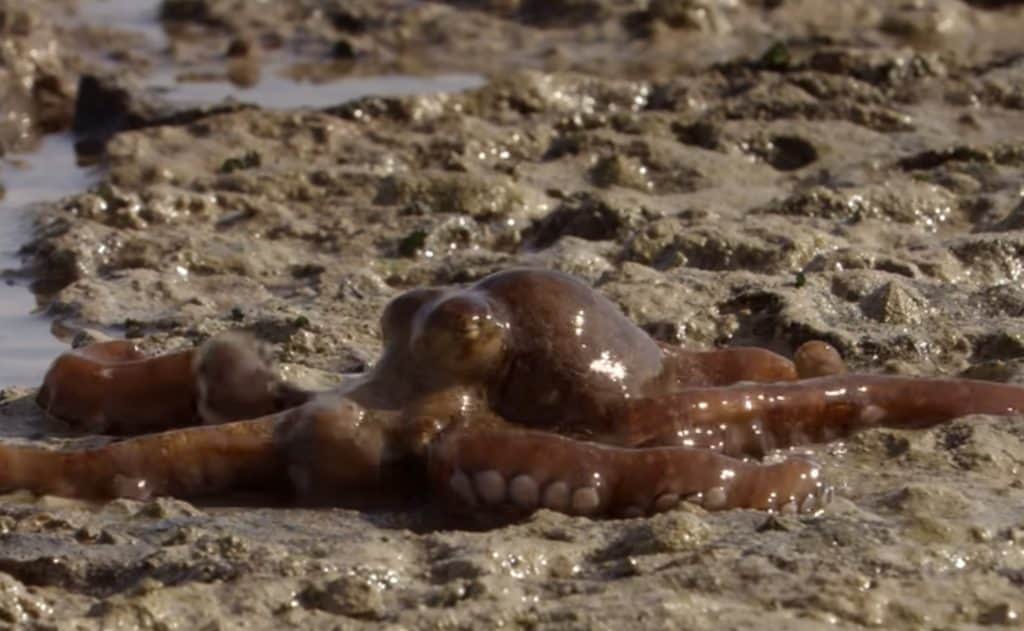
Algae octopuses are mostly active during the day.
©YouTube/BBC Earth – Original
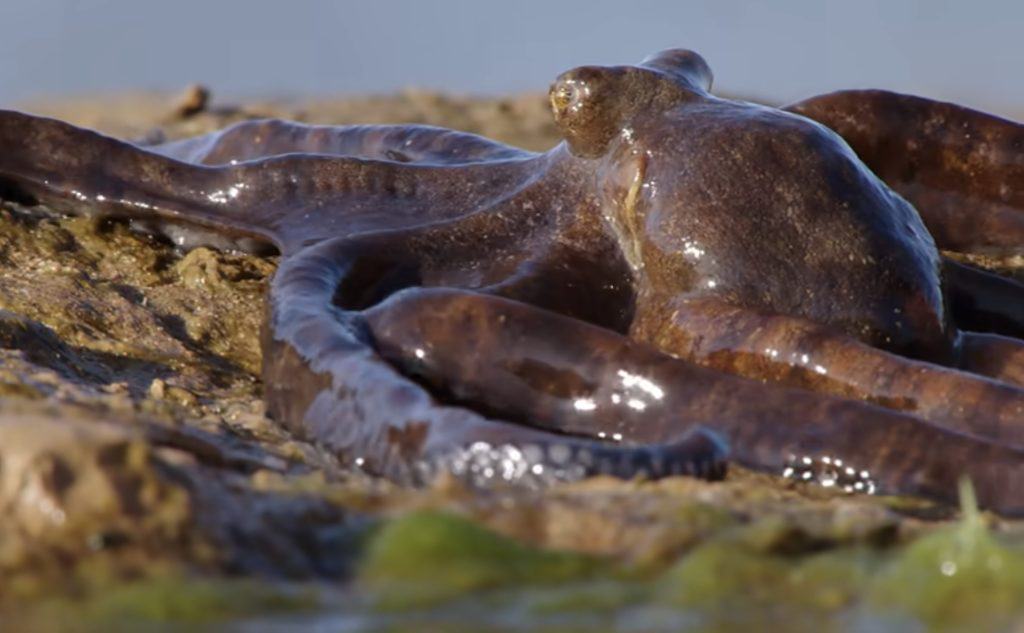
One of the algae octopus’s most extraordinary abilities is its capacity to survive on land for short periods. While other octopuses might occasionally venture onto land, the algae octopus is the only species that does so regularly, earning it the distinction of being the only known “land octopus.” This incredible trait gives the octopus prime access to crabs in tidal pools during low tide.
Tidal pools offer an ideal dining opportunity for the algae octopus, as the crabs trapped inside have limited escape routes. The water in these pools is also much clearer as it lacks significant movement or wave action, making it harder for crabs to hide. In the ocean, crabs often seek refuge in crevices on large reefs, but these small tide pools offer very few places to hide. Even if they do manage to stay out of sight, the octopus’s dexterous arms, lined with sensitive suckers, are perfect for exploring the tide pool’s hidden nooks and crannies and capturing crabs in tight spaces.
When the tide recedes, the algae octopus begins its hunt for tasty crabs. As seen in the YouTube video, it pulls itself out of the water with its strong, sucker-lined arms and stealthily moves across the dry ground from one tidal pool to the next. When it reaches a new tidal pool, the octopus slips in silently and uses its sensitive suckers to carefully feel around or dig into the sand for unsuspecting prey. After catching a crab, the octopus uses its sharp, beak-like mouth to pierce the crab’s tough outer shell and reach the muscle inside.
Adaptations for Air Exposure
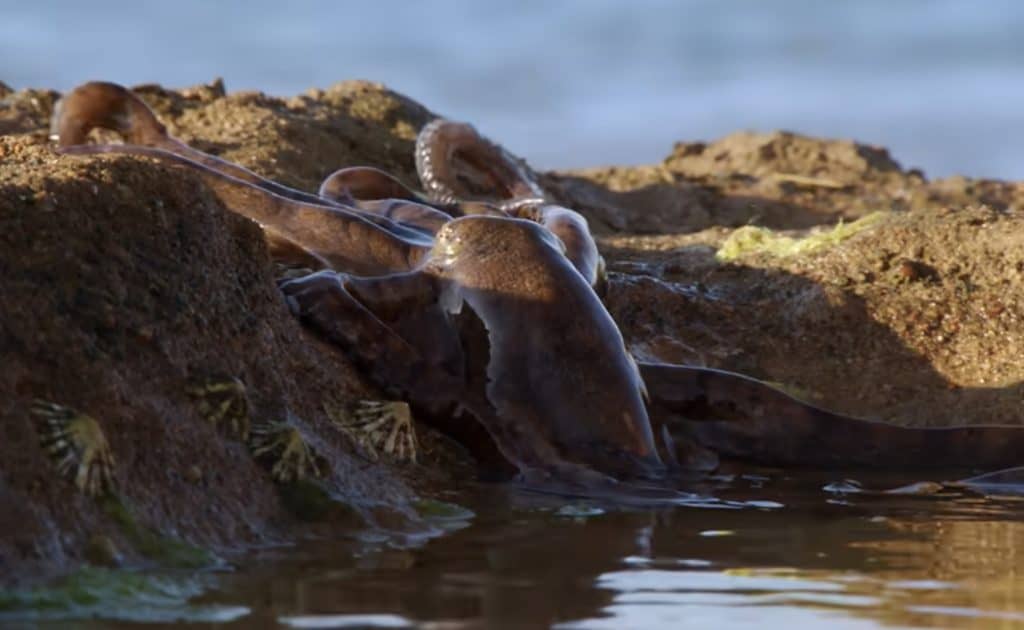
It takes a lot of energy to move across land, but the rewards are well worth the effort.
©YouTube/BBC Earth – Original
Crawling on land is awkward compared to gliding through the ocean’s waves. It’s also much more risky for a creature that usually lives entirely underwater. Predators like herons, gulls, and even raccoons are always on the lookout for a quick snack. If an octopus misjudges the tide’s distance or timing, it could quickly become stranded on land.
One of the biggest dangers for an octopus on land is drying out, as they need water to breathe. Their gills are essential for underwater breathing, but on land, they simply collapse without water to support them. However, algae octopuses have an intriguing trick for their short stints on land: their skin.
These octopuses can absorb oxygen directly through their skin by means of a process called passive gas exchange. Because they are smaller, they have a larger surface-to-volume ratio compared to their bigger relatives. This means their outer skin surface is proportionally larger compared to their internal body mass, which is key to absorbing oxygen through their skin — as long as it stays moist. They can crawl on land for a time, but they must move from one pool to the next to avoid drying out!