
Quick Take
- One creature on this list looks so harmless that beachgoers instinctively want to pick it up. That very instinct is exactly what makes it dangerous. See the deceptive cone snail →
- Some of the deadliest beach animals don't swim toward you. They wait for you to come to them, hidden somewhere you'd never think to look. Meet the camouflaged stonefish →
- A glowing warning signal flashes across one animal's body before it strikes, and most people who see it are drawn closer rather than away. See the glowing warning rings →
- The beach creature most likely to ruin your vacation isn't a shark, and one of them can still sting you after it's washed ashore and appears dead. Beware the washed-up stinger →
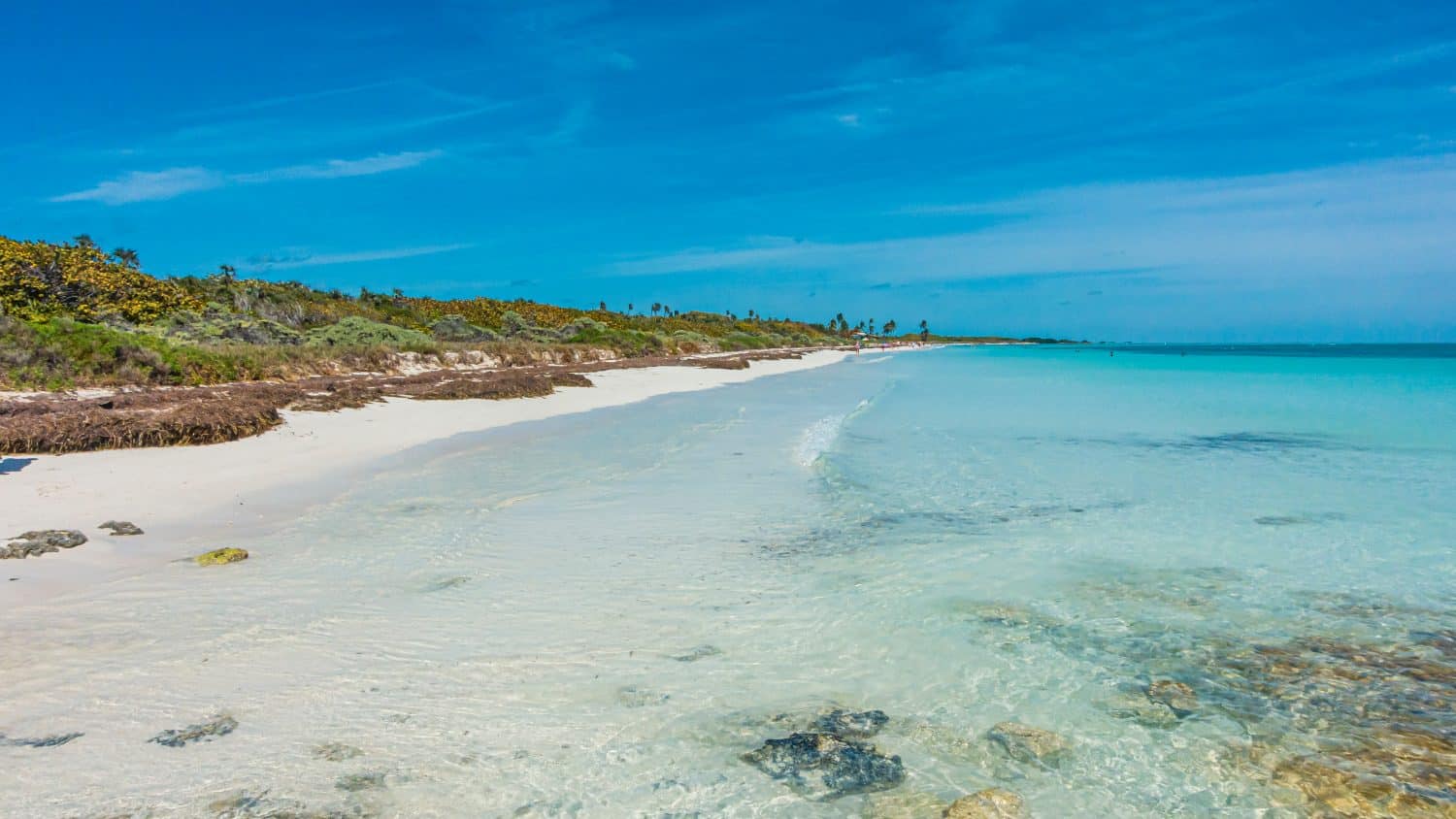
The beach is peaceful and relaxing, but many coastlines are filled with creatures burrowed beneath the sand or hiding just below the water’s surface. Some of these animals are capable of causing painful stings, venomous bites, or dangerous attacks. While some of these ocean animals only react due to perceived threats, others drift gently through the water waiting for accidental contact. Most beach animals are not aggressive toward humans, but stepping on or disturbing them can result in a bad situation. Check out these potentially dangerous creatures you might encounter at the beach.
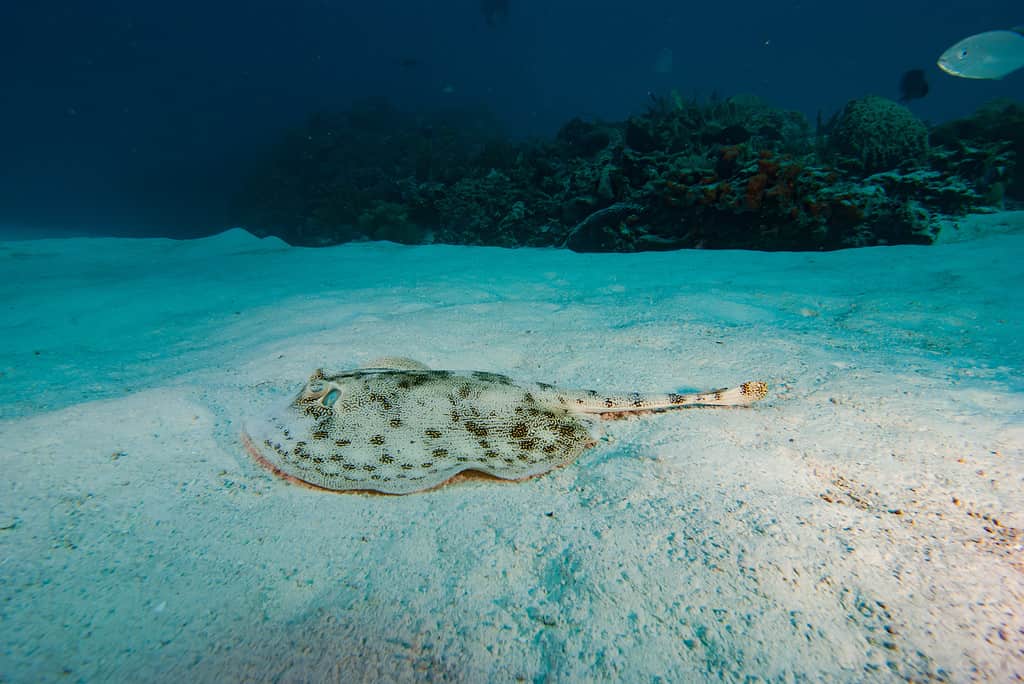
Stingray
©Francesco Ricciardi/iStock via Getty Images
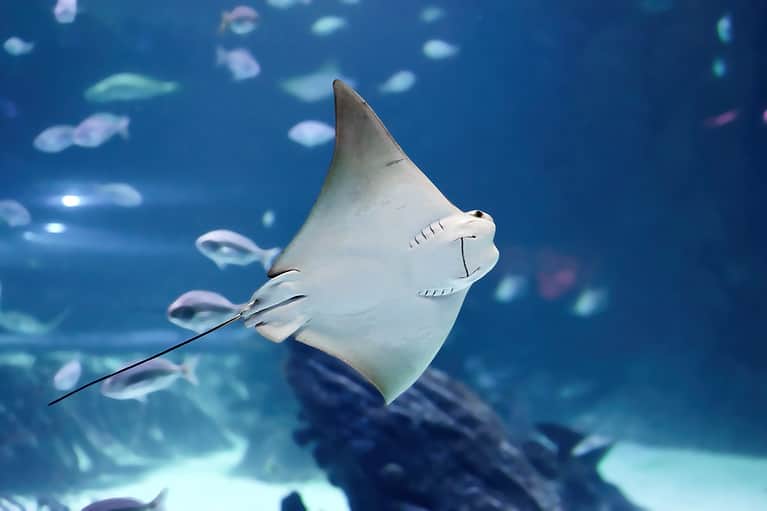
Stingrays bury themselves directly beneath the sand where they can’t easily be detected. Beachgoers wading into shallow water can easily step on them accidentally, which they interpret as a threat. In defense, stingrays whip their venomous tail upward causing a puncture wound. And this wound can be surprisingly severe for an animal that looks so angelic gliding through open seas. The pain is significant enough that beachgoers even developed the well-known “stingray shuffle” to avoid surprising them.
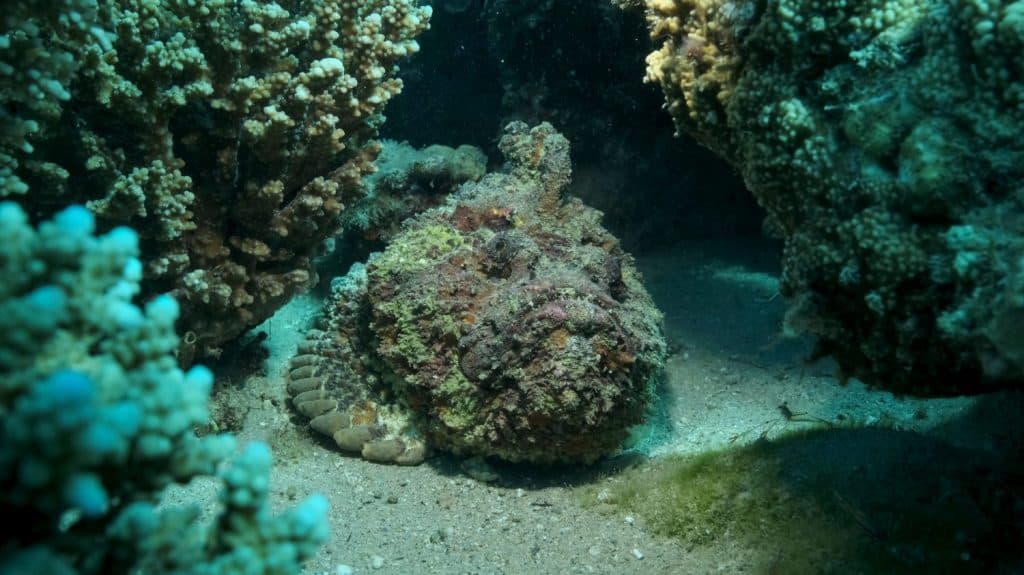
Stonefish
©Andriy Nekrasov/Shutterstock.com
Stonefish are masters of camouflage and often resemble underwater rocks or coral. Because they blend in so perfectly, swimmers and children playing in coastal waters likely won’t notice them at all. Unfortunately, these well-hidden creatures have highly venomous spines, making them something of a living, underwater landmine. Stepping on one can be excruciating and lead to a medical emergency.
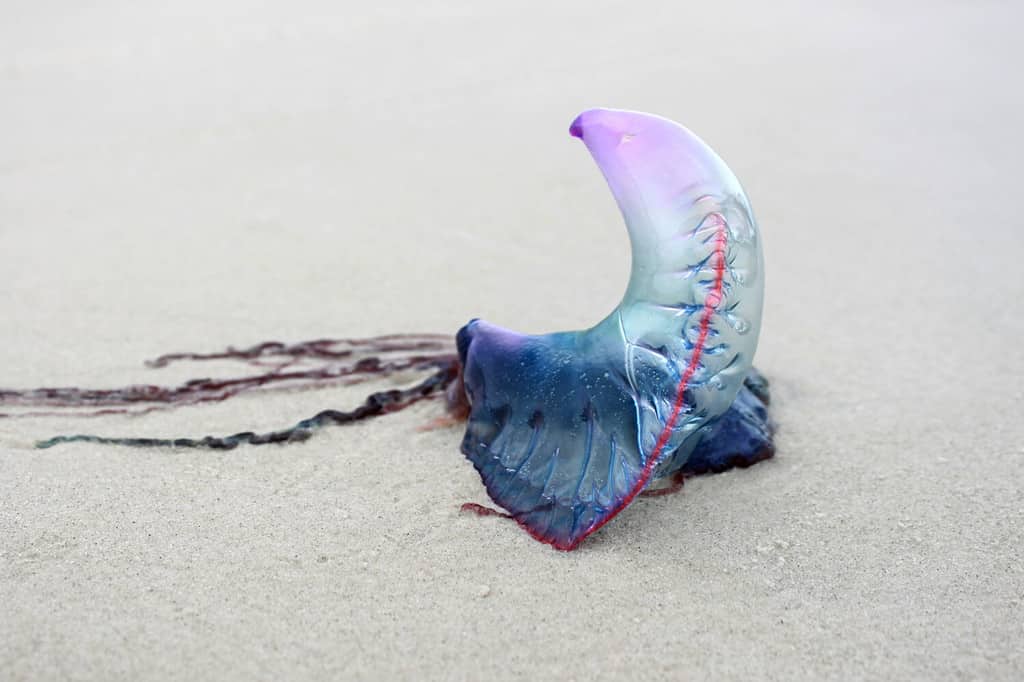
Portuguese Man o’ War
©Pedro Sales Prado/Shutterstock.com
The Portuguese man o’ war looks deceptively beautiful drifting on the ocean surface. However, they aren’t as innocent as their graceful appearance indicates. They have long trailing tentacles that contain venomous stinging cells. Contact can leave painful welts and trigger severe reactions in certain people. Their tentacles can still sting even after washing onto shore, so it’s never safe to approach them.
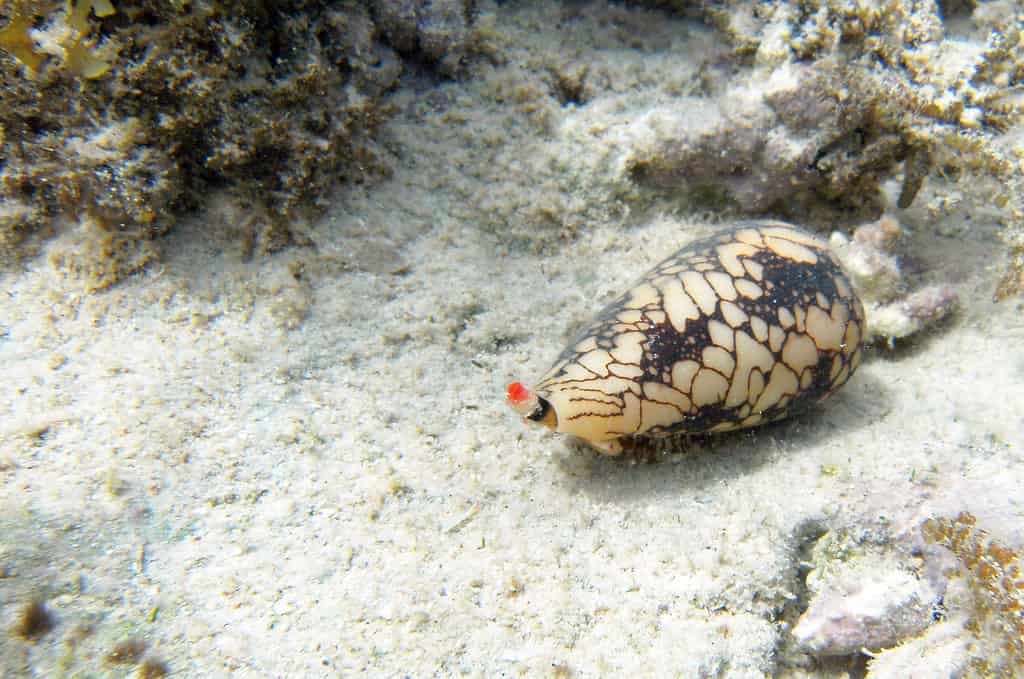
Cone Snail
©O'KHAEN/Shutterstock.com
Cone snails have pretty patterned shells, essentially inviting vacationers to inspect them up close. However, some species contain venom powerful enough to seriously injure humans. These snails use a harpoon-like tooth to inject venom into prey. Curious shellers, distracted by their beauty, pick them up without realizing the danger. It is a good reminder that even seemingly harmless animals may pose danger.
Blue-Ringed Octopus
©K.Pock Pics/Shutterstock.com
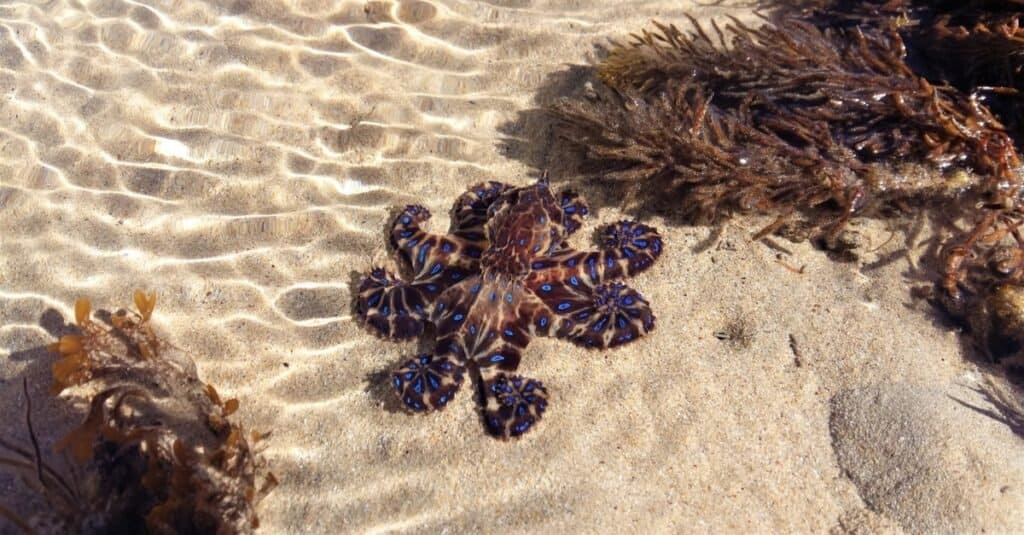
The blue-ringed octopus is a tiny fantastical looking creature. But don’t let it fool you; this ocean-dweller is incredibly dangerous. When threatened, glowing blue rings appear across its body as a warning signal. Those who don’t heed the warning will pay the price. Its venom can cause paralysis and potentially fatal breathing problems, especially for unsuspecting swimmers who don’t even realize they’ve been stung. Because the octopus is stunning, especially when lit up with its colorful warning rings, people may even try to touch it. Few creatures better embody the phrase “small but deadly”.
Sea Urchin
©JGA/Shutterstock.com
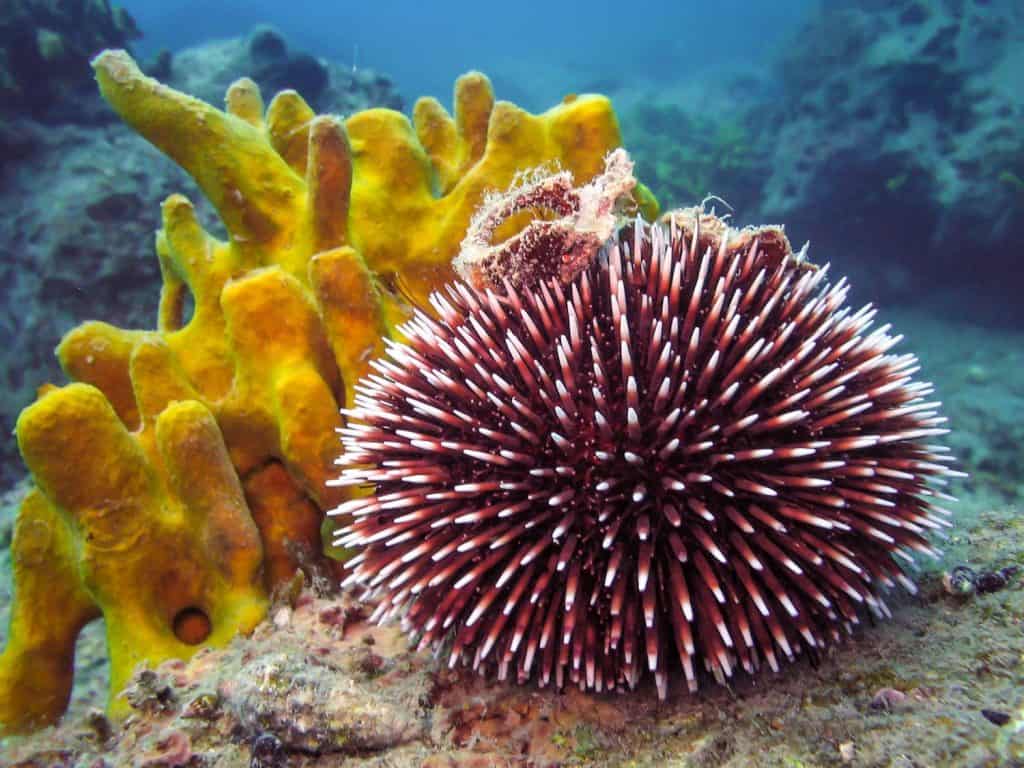
Like so many of the animals on this list, sea urchins often hide. They seamlessly blend into rocks, tide pools, and shallow reef areas. If touched accidentally, their sharp spines can easily puncture skin. This can happen when a beachgoer gets too curious, or by stepping on one accidentally. Beyond the puncture wound they inflict, some species also have venom. Though it is mild, it is designed to worsen the pain of the injury. These spines can also break off and remain stuck in the victim; removing them can be difficult and unpleasant. A relaxing barefoot beach walk can suddenly become much less relaxing.
Saltwater Crocodile
©Willyam Bradberry/Shutterstock.com
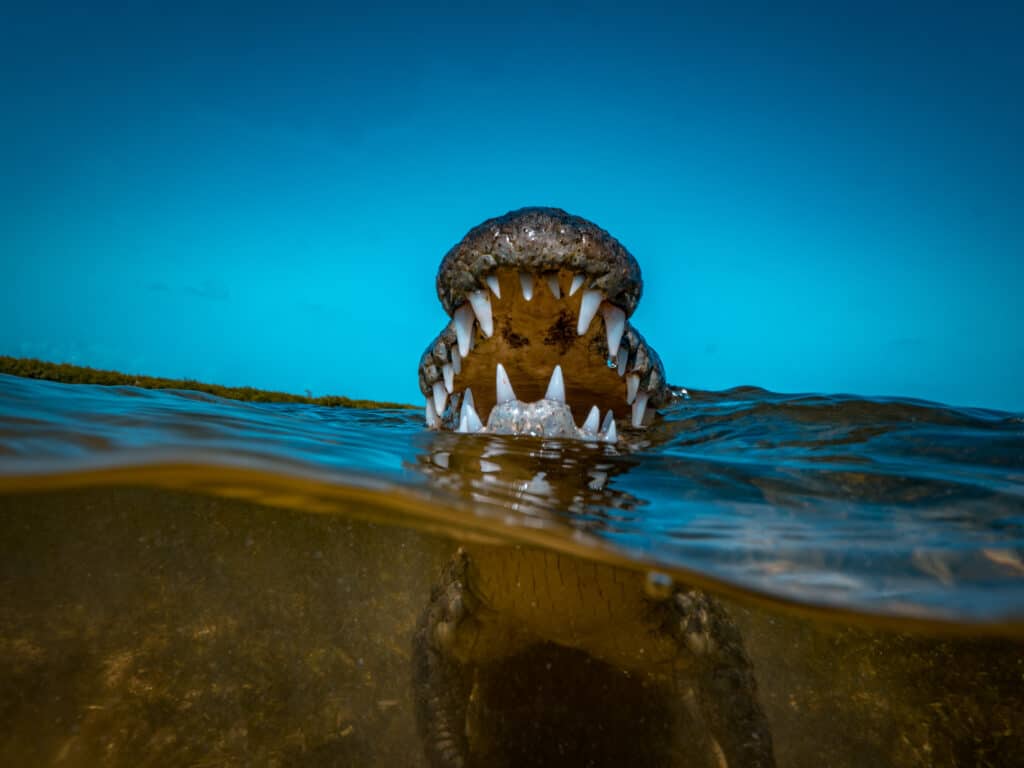
In some tropical regions, beautiful beaches overlap with saltwater crocodile habitat. Though some northern Australia beaches are undeniably gorgeous, they encompass saltwater croc territory. These hidden predators can weigh over 1,000 pounds and are capable of ambushing prey with shocking strength. Salties, as they are locally called, sometimes travel through estuaries, mangroves, and coastal waters surprisingly close to human activity. While other animals on this list may cause a bit of temporary pain, these enormous predators can easily end your life.
Jellyfish
©Anna LoFi/Shutterstock.com
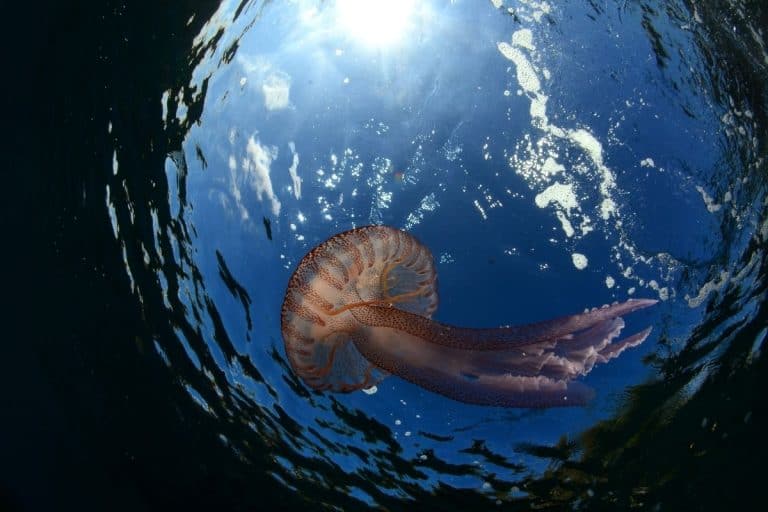
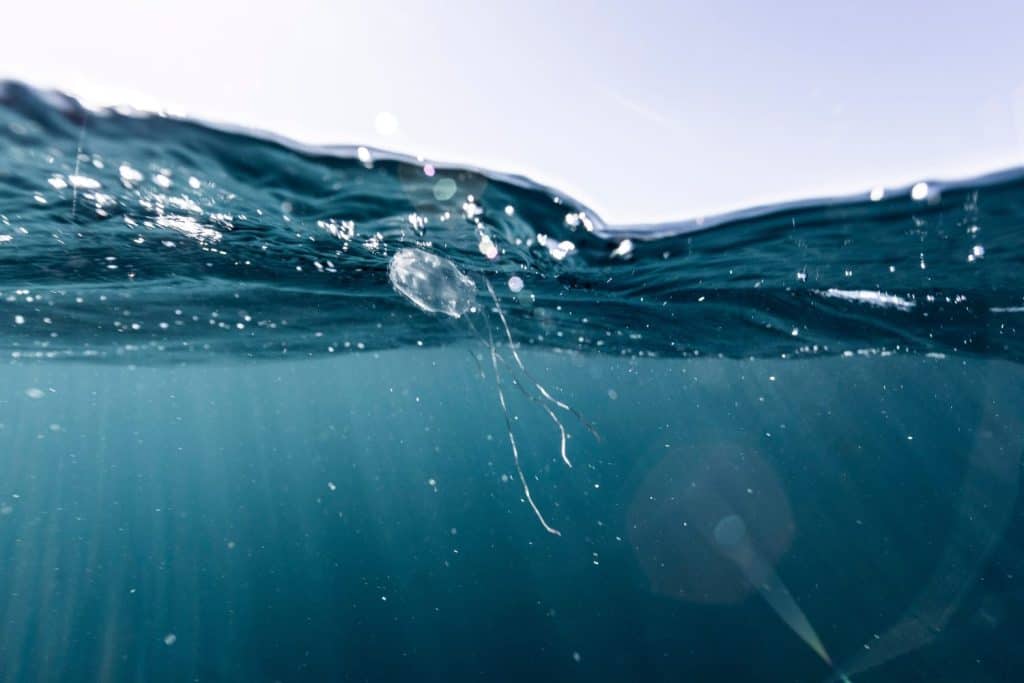
Jellyfish navigate coastal waters almost invisibly. They look so peaceful drifting aimlessly through the sea, but many species have stings that cause pain. Some lead to mild irritation, while others can cause intense pain or dangerous reactions. Due to these animals’ transparent nature, swimmers often do not realize a jellyfish is nearby until they swim directly into stinging tentacles. Unfortunately for ocean goers, wind and currents may suddenly push large numbers of jellyfish toward shore. A cool dip can make beachgoers wish they’d stayed under their umbrella.
Fireworm
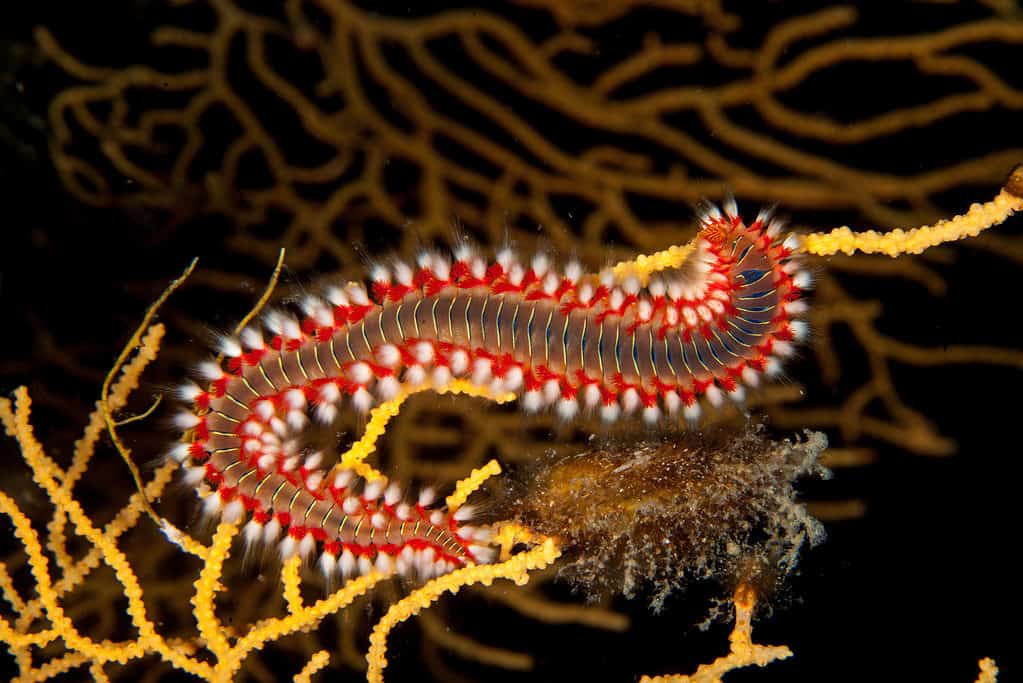
©Gerald Robert Fischer/Shutterstock.com
With a name like fireworm, you can probably guess the burning sting these tiny animals inflict. These colorful marine worms are covered in venomous bristles. Touching one feels akin to a painful burn and causes skin irritation. Because they prefer to hide in shallow areas, casual swimmers are likely to encounter them. When spotted, their bright appearance may even tempt some people to handle them. But remember, nature frequently hides painful surprises inside the most colorful creatures!