
Quick Take
- Tako the octopus learned to play a 15-key underwater piano after six months of training and a custom pulley-driven vending system.
- The piano used lever-like keys that the octopus could grab, with underwater vibrations helping compensate for hearing.
- After four months, Tako learned the themes from Jaws and Baby Shark, and jam sessions with Krantz continue every other day.
Swedish YouTuber Mattias Krantz is known for his unconventional musical projects, but his latest feat takes things to a whole new level. He spent six months investigating whether an octopus — a highly intelligent and incredibly dexterous creature — could be taught to play the piano. By combining custom engineering with behavioral science, Krantz’s experiment challenges everything we thought we knew about animal intelligence and what it means to give a musical “performance,” as seen in this incredible YouTube video.
Meeting Takoyaki
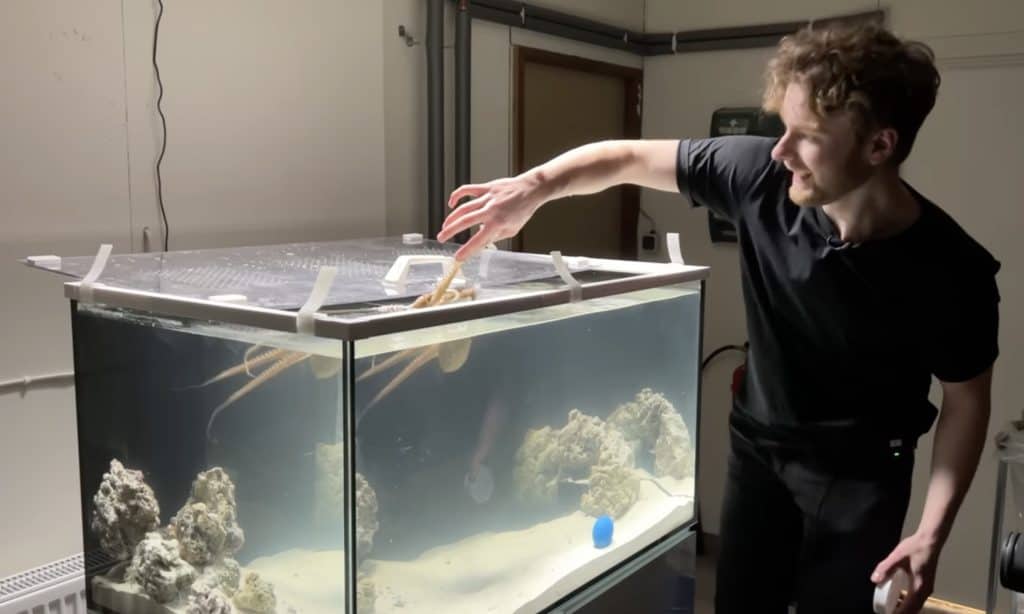
Krantz purchased Tako from a Portuguese fish market.
©YouTube/Mattias Krantz – Original
Krantz’s project began when he rescued an octopus from a Portuguese fish market, narrowly saving the creature from becoming someone’s dinner. He named the octopus Takoyaki (an ironic Japanese term for “grilled octopus”) — “Tako” for short — and decided to include him in a one-of-a-kind experiment. Krantz knew that if any animal could learn the piano, it would be an octopus, given its remarkable problem-solving skills and ability to control eight arms independently.
Engineering an Underwater Piano
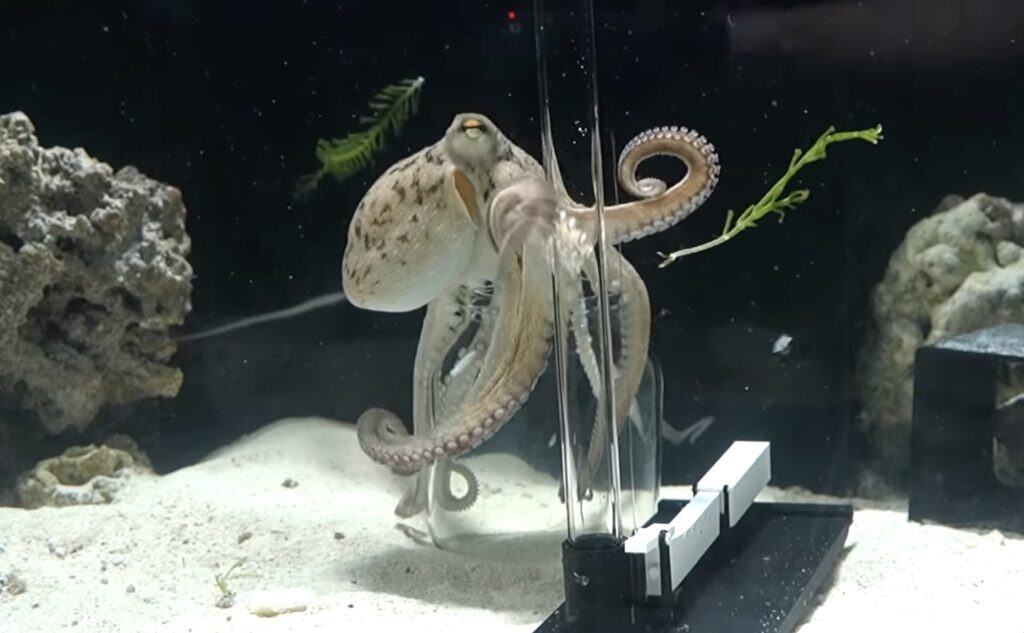
Krantz first introduced Tako to a single piano key.
©YouTube/Mattias Krantz – Original
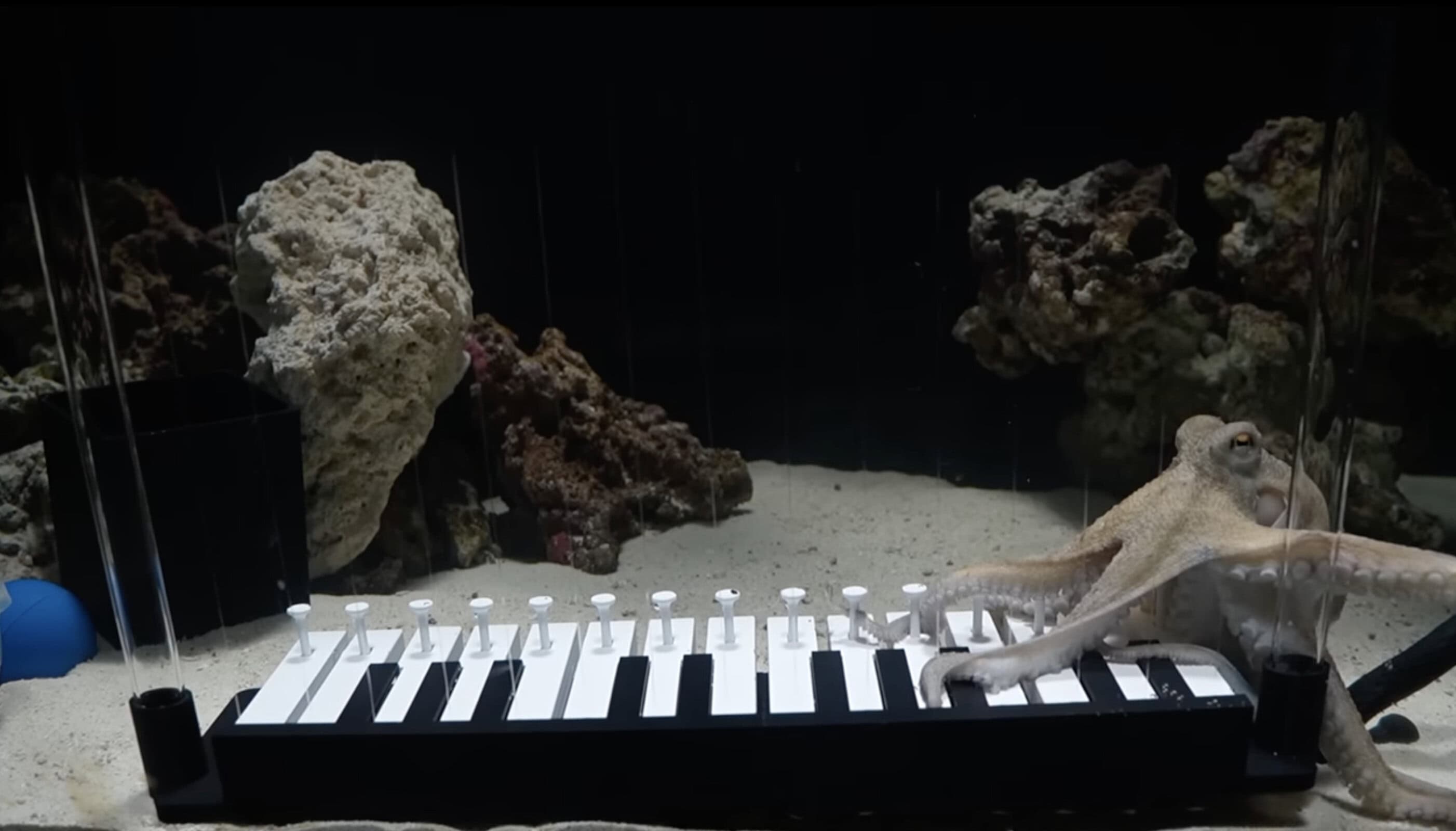
Since octopuses naturally prefer to pull rather than push, Krantz had to rethink piano mechanics. He 3D-printed a 15-key underwater instrument where the piano “keys” were actually levers Tako could grab and tug on. Because octopuses have very poor hearing, Krantz also installed underwater speakers to create strong vibrations. This allowed Tako to “feel” the music through the water, effectively turning the water into a tactile medium so the octopus could sense the notes he was playing.
The Musical Vending Machine
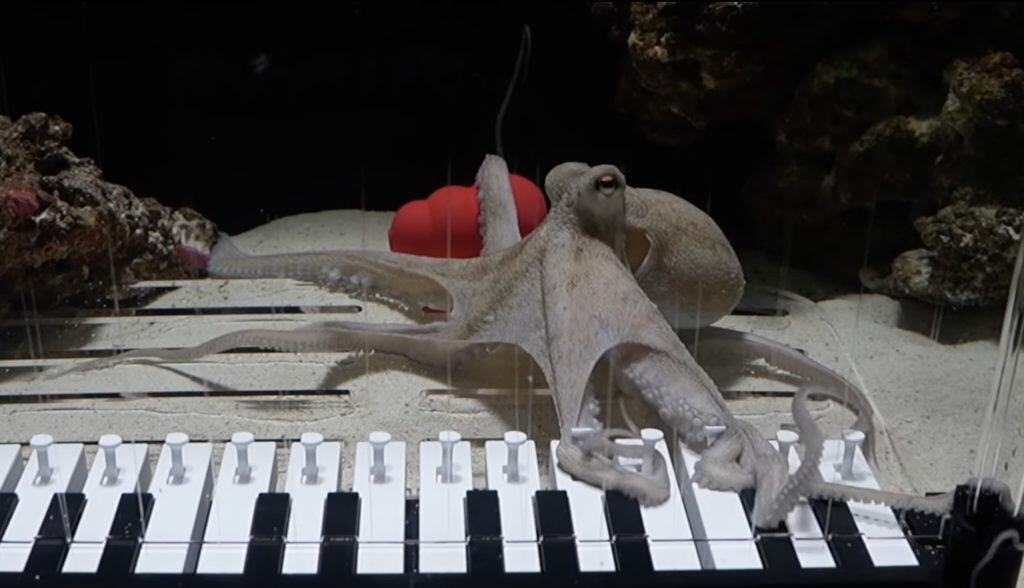
Octopuses like Tako are extraordinarily intelligent and require mental enrichment activities in captivity.
©YouTube/Mattias Krantz – Original
Krantz quickly discovered that training a cephalopod takes a massive amount of patience. He started small, using positive reinforcement whenever Tako touched a single piano key. However, even after Krantz 3D-printed an underwater piano for the octopus, Tako did not seem interested in making music. Krantz tried everything to get Tako’s attention, including flashing lights—a trick that works for chickens—but Tako completely ignored them.
Since simple rewards weren’t enough for an animal as smart as Tako, Krantz teamed up with an engineer to build a more complex system. They rigged a pulley that lowered a crab-filled tube slightly each time Tako played a note. To get his dinner, Tako had to play a specific sequence of notes, effectively turning the piano into a sophisticated, music-triggered vending machine. Tako mastered the challenge quickly, eventually approaching it with such enthusiasm that he sometimes seemed to forget about the food entirely as he became absorbed in creating melodies.
After four months of hard work, everything finally began to click. Tako learned to play the themes from Jaws and Baby Shark. Eventually, Krantz even sat by the tank with his acoustic guitar for a “jam session” with his eight-armed buddy. While Krantz was honest about the “musicality” — noting that the timing was often inconsistent — overall, the experiment was a success. Seeing an octopus intentionally pick out notes to create a recognizable melody was a huge breakthrough for human-animal interactions and communication.
More Than Just a Trick
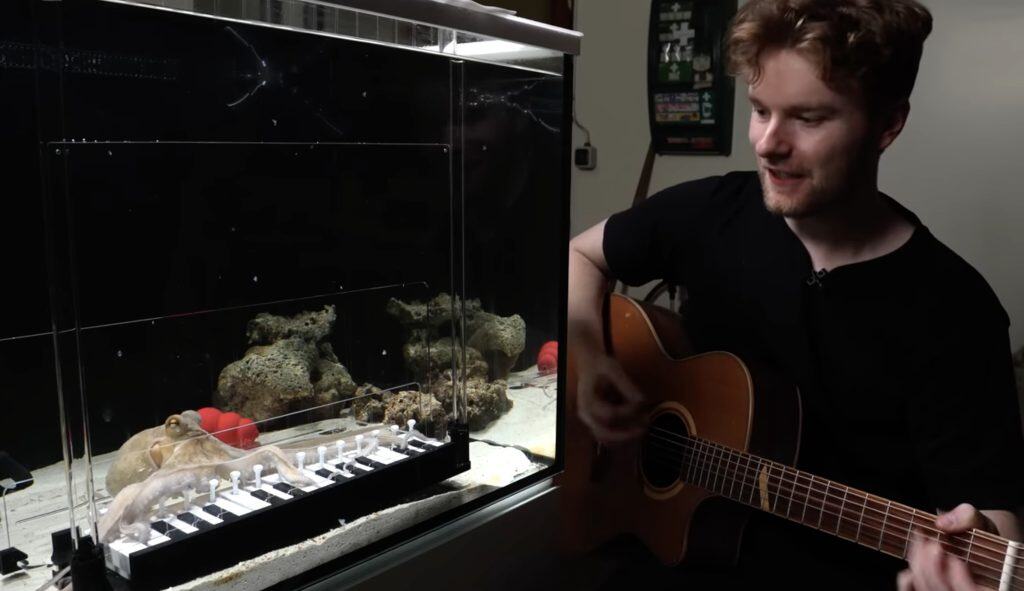
Although they are very different, Krantz and Tako have forged a strong bond.
©YouTube/Mattias Krantz – Original
While the YouTube video of Tako playing the piano is charming, it’s likely a display of intelligence rather than musical passion; in other words, he is probably playing for the reward, not for the art. However, that doesn’t make the project any less important. It provided Tako with an enrichment exercise — crucial mental stimulation that helps keep his mind sharp. It’s hard to imagine that Tako was once just hours away from becoming a seafood dinner. Now, he’s a collaborator and a member of the world’s most unlikely and unconventional band.
As of December 2025, Tako is about 14 months old and lives in a high-tech, tailor-made habitat in Krantz’s house. Their experimental “jam sessions” have evolved into a regular routine, with the duo playing together every other day. Through their regular jam sessions, Tako and Krantz have developed a deep, unspoken understanding that few humans ever experience with a sea creature. By learning to respond to one another’s cues, they have found a way to communicate across species.
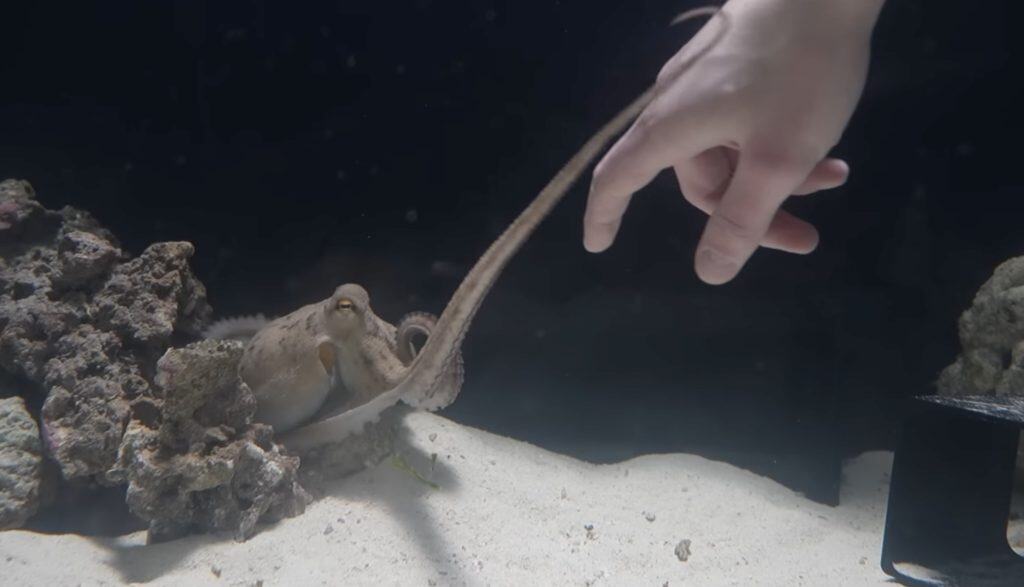
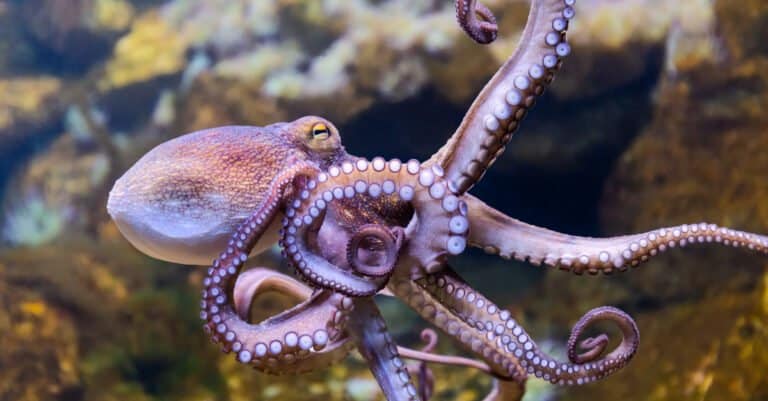
An octopus can control and move each arm independently.
©YouTube/Mattias Krantz – Original