Quick Take
- Mama garter snakes hold a secret power over when their pregnancy begins, and the reasons may surprise you.
- Newborn garter snakes are so independent that some can't wait to leave their mother's body.
- Dozens of siblings are born together, yet they never stay a family. Find out what happens next.
- Tiny and hunted from every side, these snakes still have tricks up their sleeves. What are they?
Garter snakes may not be everyone’s cup of tea, but these big-eyed miniature snakes are so small that it is hard to see them as anything but adorable. Garter snakes are also extremely good to have around, as they are natural pest controllers and will do you no harm. Read on to learn about baby garter snakes’ lives with some pictures and amazing facts about these common snakes.
1. Female Garter Snakes Are Picky About Their Babies’ Fathers
Female garter snakes are picky when it comes to choosing who will be the father of their offspring. There are plenty of options for the female snake to choose from. When she is ready to mate, the female snake gives off pheromones to attract male garter snakes. This is typically once she awakens from hibernation in the spring. Depending on the area, she could easily have many suitors show up. Once a male succeeds in mating with her, they will go about living their lives.
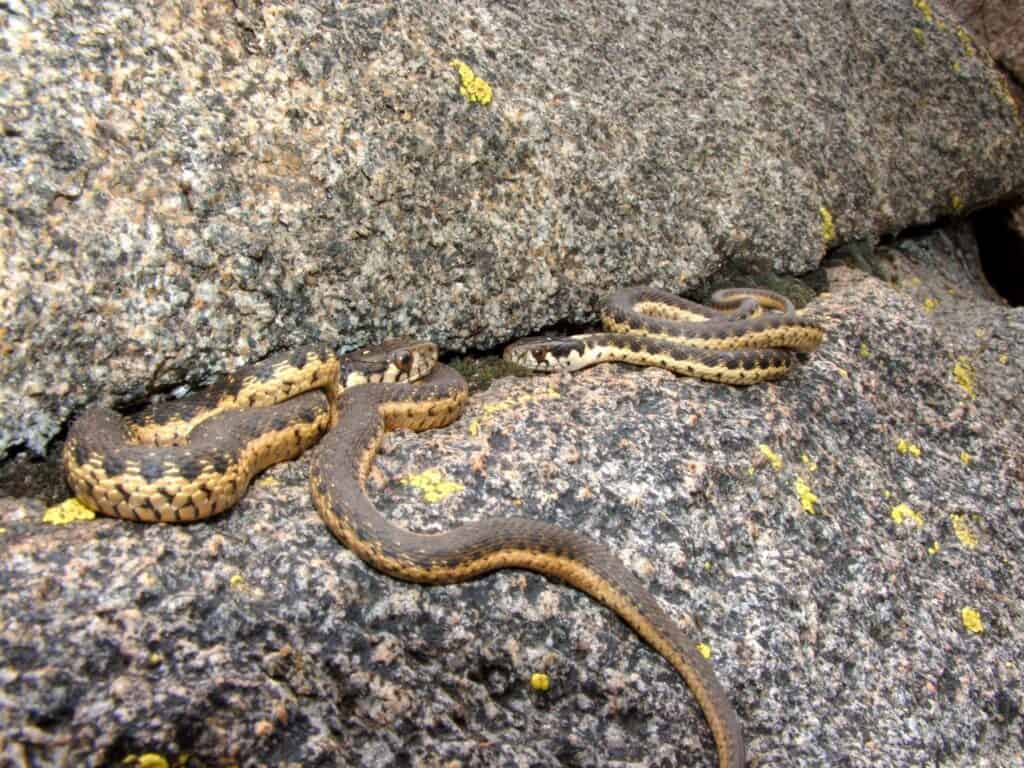
When the female snake is ready to reproduce, she gives off pheromones to attract male garter snakes.
©Matt Jeppson/Shutterstock.com
2. Garter Snake Mamas Can Choose When to Become Pregnant
The freshly mated female garter snake has another trick up her proverbial sleeve. She can choose when to ovulate and allow the sperm from the male to impregnate her. She may have several reasons for this delay. She may believe the area is unsafe for the young, or perhaps there is insufficient food. She may even delay it until the temperatures are just right for baby garter snakes to debut in the world. However, when conditions are normal, baby garter snakes are typically born in late summer, with peak times from August through September.

A female garter snake may delay pregnancy for many months until she feels the timing is perfect.
©bobloblaw/iStock via Getty Images
3. Baby Garter Snakes Do Not Hatch From Eggs
Garter snakes are ovoviviparous, which means they give birth to live young. Some other species of snakes hatch from eggs. When garter snakes are first born, they are physically mature, mobile, and ready to take off independently. Some can’t wait to leave their birth sac and try to do so before they are even fully out of their mother. When the baby snakes are born, they have extremely soft skin and must complete their first shed soon after birth. This will give them sturdier skin for life outside the womb.
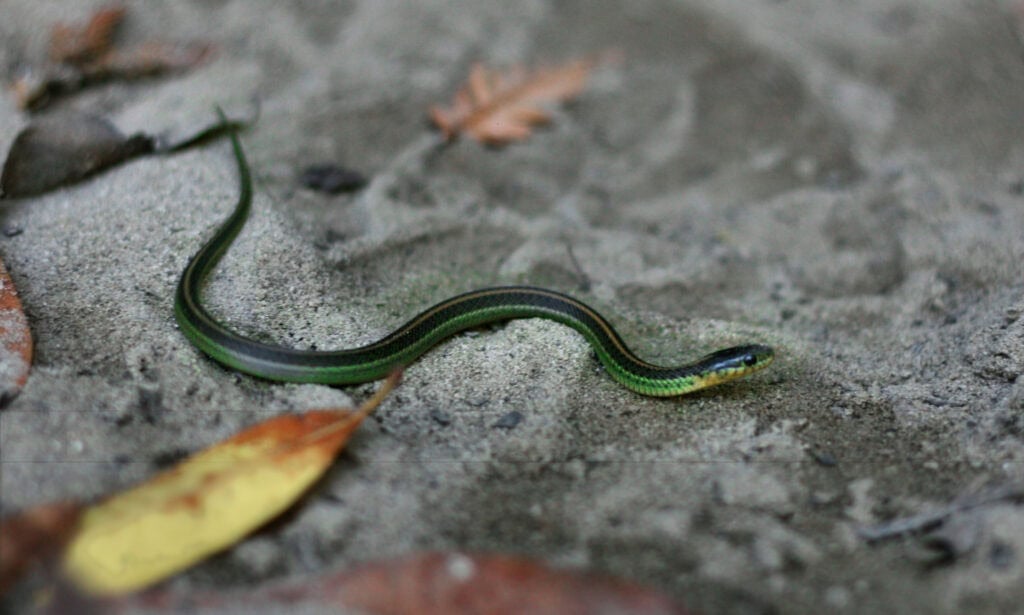
Garter snakes give birth to live young.
4. Baby Garter Snakes Are Born Tiny
When garter snakes are newborns, they are about 5-9 inches long. They do not grow much at first. They grow little from their birth in late summer until their first spring. Once they pass that point, their growth takes off. Depending on what species of garter snake they are, they will typically reach 18-30 inches in adulthood.

Baby garter snakes are 4.5-8 inches long at birth.
©rasikabendre/iStock via Getty Images
5. Baby Garter Snakes Can Have Up to 39 Siblings
Depending on the mother garter snake’s size, she may have 15-40 babies. The siblings do not bond or remain near one another once the babies disperse and begin their lives. If they all remain in the same area, it’s possible they could meet up later during the mating season.
The newborns may all gather near their mother snake for hours or days, but her parental duties end when they are born. If the snakes are born very late in the year, it is possible they may brumate (like hibernation) with their mother, as garter snakes brumate together in large underground dens called hibernacula, which helps them to survive the freezing weather.

Garter snakes can have up to 40 young.
©Breck P. Kent/Shutterstock.com
6. Garter Snakes Are Born Knowing How to Survive on Their Own
As mentioned above, baby garter snakes are born independent with a fully charged set of instincts. They are immediately alert and ready to slither away if necessary. They do not receive parental care from their mother and never meet their father. They are born fully capable of finding dens, hunting food, caring for themselves, and hiding from predators. The babies must be ready to survive, with instincts sharp enough to keep them alive.

Not all babies are born helpless like humans. Garter snakes are born ready to survive on their own.
©Nicole Glass Photography/Shutterstock.com
7. Baby Garter Snakes Are Carnivores
Baby garter snakes are carnivores like their parents. They eat earthworms, leeches, snails, small fish, small rodents, lizards, amphibians, grasshoppers, and other insects. Essentially, they will consume small, soft prey they can overpower and swallow whole.

Baby garter snakes eat small, soft-bodied prey.
©LaDukeL/iStock via Getty Images
8. Baby Garter Snakes Have Many Predators but Also Natural Defenses
Baby garter snakes have many predators because of their small size. Some of their predators are:
- Birds, such as crows, ravens, and owls
- Mammals, including raccoons, foxes, skunks, weasels, opossums, shrews, and ground squirrels
- Amphibians and reptiles, such as large frogs, toads, turtles, and larger snakes
- Large fish
However, these little snakes are not without defenses. They use strategies such as camouflage, escaping and hiding, threat displays, and releasing foul odors to deter predators.
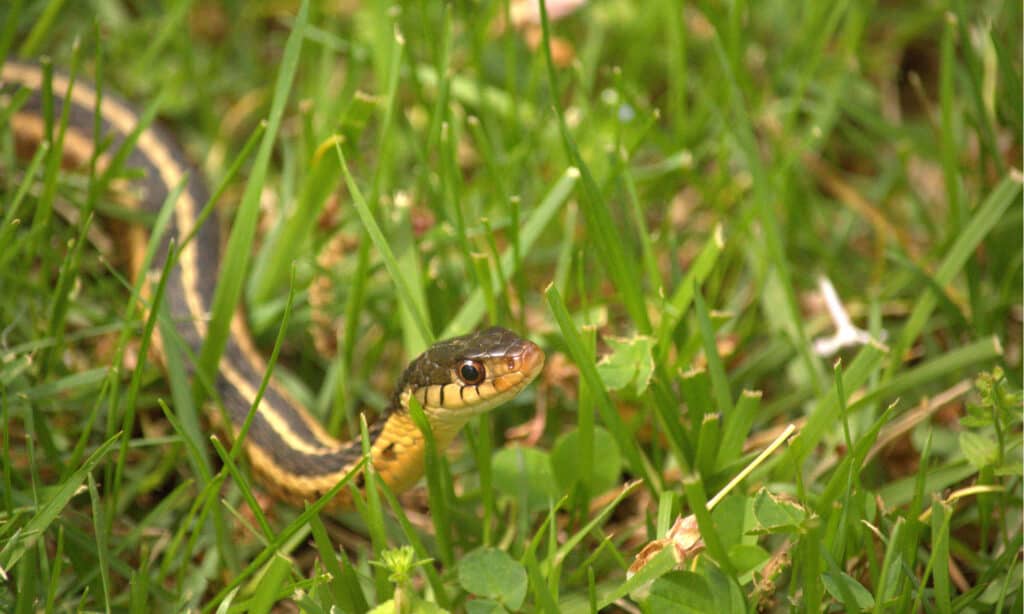
Baby garter snakes use camouflage to hide from predators.
©Charlotte Payne/Shutterstock.com
9. Baby Garter Snakes Are Primarily Active During the Day
Baby garter snakes are typically diurnal, which means they are most active during the day. Their peak activity is during warm, sunny days in late summer and early fall. This is when they are born and begin hunting independently to preparing for their first winter brumation, which, as noted above, is similar to hibernation.

Garter snakes are typically out hunting during the daytime.
©Hunter Kauffman/Shutterstock.com
10. Baby Garter Snakes Do Not Have Fangs
Baby garter snakes do not have hollow fangs. Like adult garter snakes, they have small, sharp teeth for catching soft-bodied prey. Their bite might hurt a little and should be cleaned, but it is in no way medically significant to humans.

Garter snakes do not have fangs. They have small, sharp teeth for catching prey.
©mr.kie/Shutterstock.com