
Quick Take
- Scientists once dismissed jumping genes as genetic parasites, but they may now hold the key to one of evolution's greatest success stories. Discover the genetic shift →
- The asteroid that wiped out the dinosaurs didn't just clear the stage. It may have triggered a genetic revolution inside ant DNA. See the asteroid connection →
- Ant pheromone communication is the system that lets colonies strategize, navigate, and identify enemies, and it may owe its existence to a surprisingly chaotic genetic process. Explore the pheromone origin →
- The same genetic phenomenon linked to ant dominance has also surfaced in bats and primates, a finding that raises questions about what really drives species to explode in diversity. Find the diversity patterns →
Earth’s circumstances are always changing. Life on the planet is at the mercy of these changes, for better or worse. This produces role reversals all the time: the strong become the vulnerable, and the weak become the survivors. Around 66 million years ago, perhaps the greatest revolution of environmental transformation occurred when an asteroid struck the Yucatan Peninsula. While scientists can’t provide exact figures, they estimate that this impact eventually killed 75% of all species on Earth, including all non-bird dinosaurs.
This was Armageddon for most creatures. For ants, however, which were adapted to living most of their lives underground, the Earth-changing asteroid impact was something of a boon. The mass extinction that came in the wake of the cataclysm provided serious opportunities for creatures like ants to thrive, and eventually, occupy nearly every major landmass on Earth. The latest research on ants has revealed a surprise. Scientists now believe that ants’ unparalleled success was in part due to transposable elements of their DNA known as jumping genes. Let’s learn more about this latest research and what it tells us about the unexpected tendencies of genetic success.
Jumping Genes
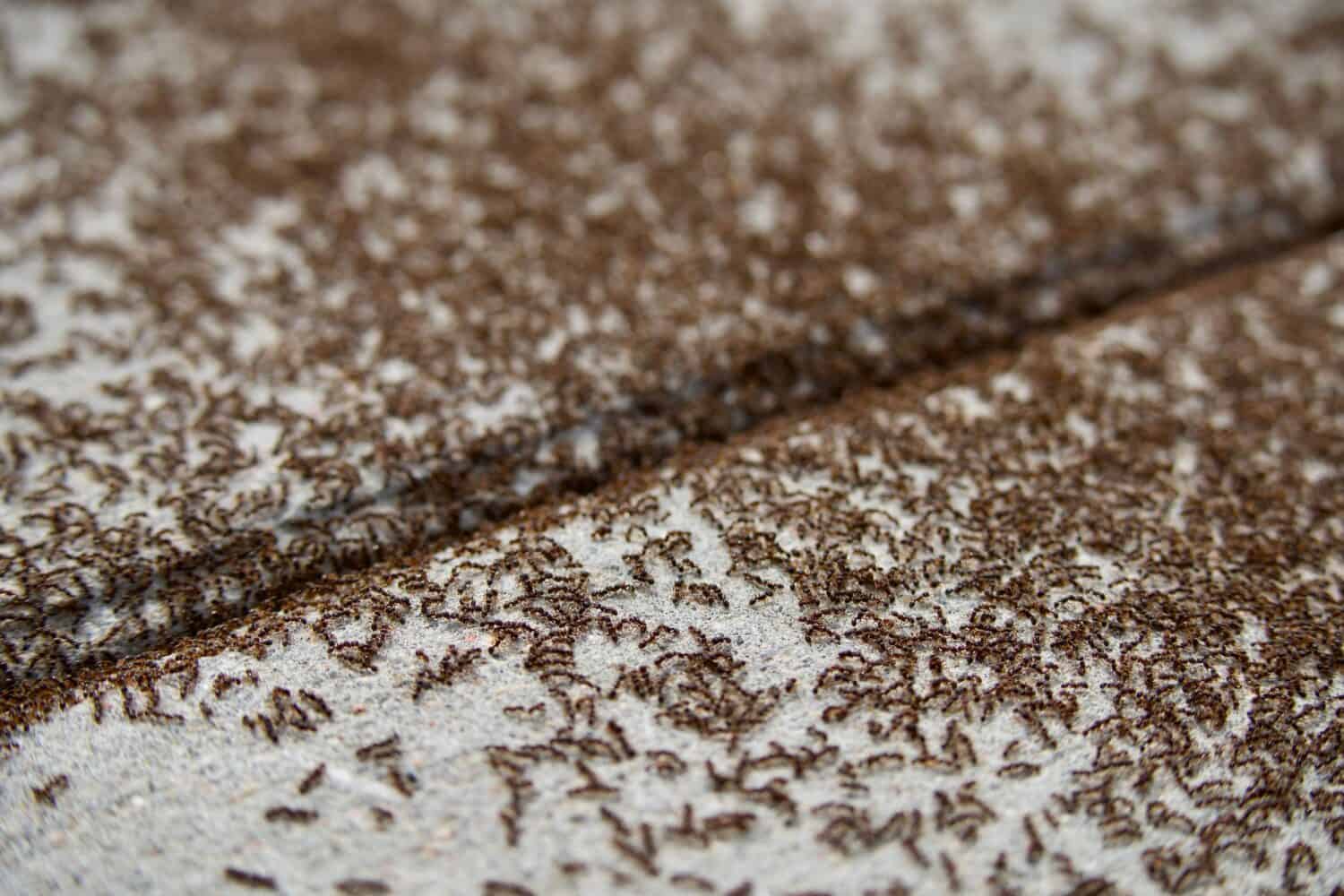
Researchers found that prehistoric surges in jumping gene activity correlated with the genetic diversification of ant species.
©Wirestock Creators/Shutterstock.com
There are unique segments of animal DNA that can cut or copy and paste themselves into a new location in said animal’s genome. They function like organic copy-paste functions built into word processors — mechanisms that can grab genetic code and move it around easily. Scientifically, they are known as transposable elements, but many call them jumping genes. At one time, scientists considered jumping genes to be, at best, useless and, at worst, parasitic. As the study of genetics has progressed, however, experts have updated their perspectives. Increasingly, research suggests that jumping genes can function as force multipliers for evolution.
This, in part, prompted researchers, led by Dr. Lukas Schrader of the Institute for Evolution and Biodiversity at the University of Münster, to learn how these genes affected ant evolution. To do so, the research team first compared the genomes of 163 ant species representing 12 of the 16 ant subfamilies alive on Earth today. Next, they reconstructed the evolutionary timeline of transposable elements, or jumping genes, over the course of 100 million years.
The modern ant consists of over 15,000 species across the world, making it the largest family of social insects. The latest research from Dr. Schrader and his team revealed a significant connection between jumping gene activity millions of years ago and the genetic diversification of ants. As a result, these transposable elements may have allowed ants to become one of the planet’s most successful insects.
The Findings
By comparing different genes from different groups of ants, the researchers found a correlation between the greatest number of jumping genes and the greatest number of species. Moreover, they found that distinct surges in jumping gene activity for major ant lineages occurred around 66 million years ago during the early Paleogene Period. Shortly after these surges, ant groups expanded into hundreds, then thousands of species that still survive to this day.
As lead researcher, Dr. Lukas Schrader explained to ScienceDaily, his team found a connection between cataclysm and environmental connectivity. He said, “The asteroid impact had dramatic consequences for the environment. We have now found the genomic mechanism that connects these ecological upheavals to the subsequent rapid diversification of the ants: transposable elements.”
Interestingly, jumping genes, or transposable elements, seem to play a part in the evolution and diversification of species beyond social insects. Other studies have also correlated periods of increased jumping gene activity with species emergence in groups including bats and primates.
Evolutionary Scents
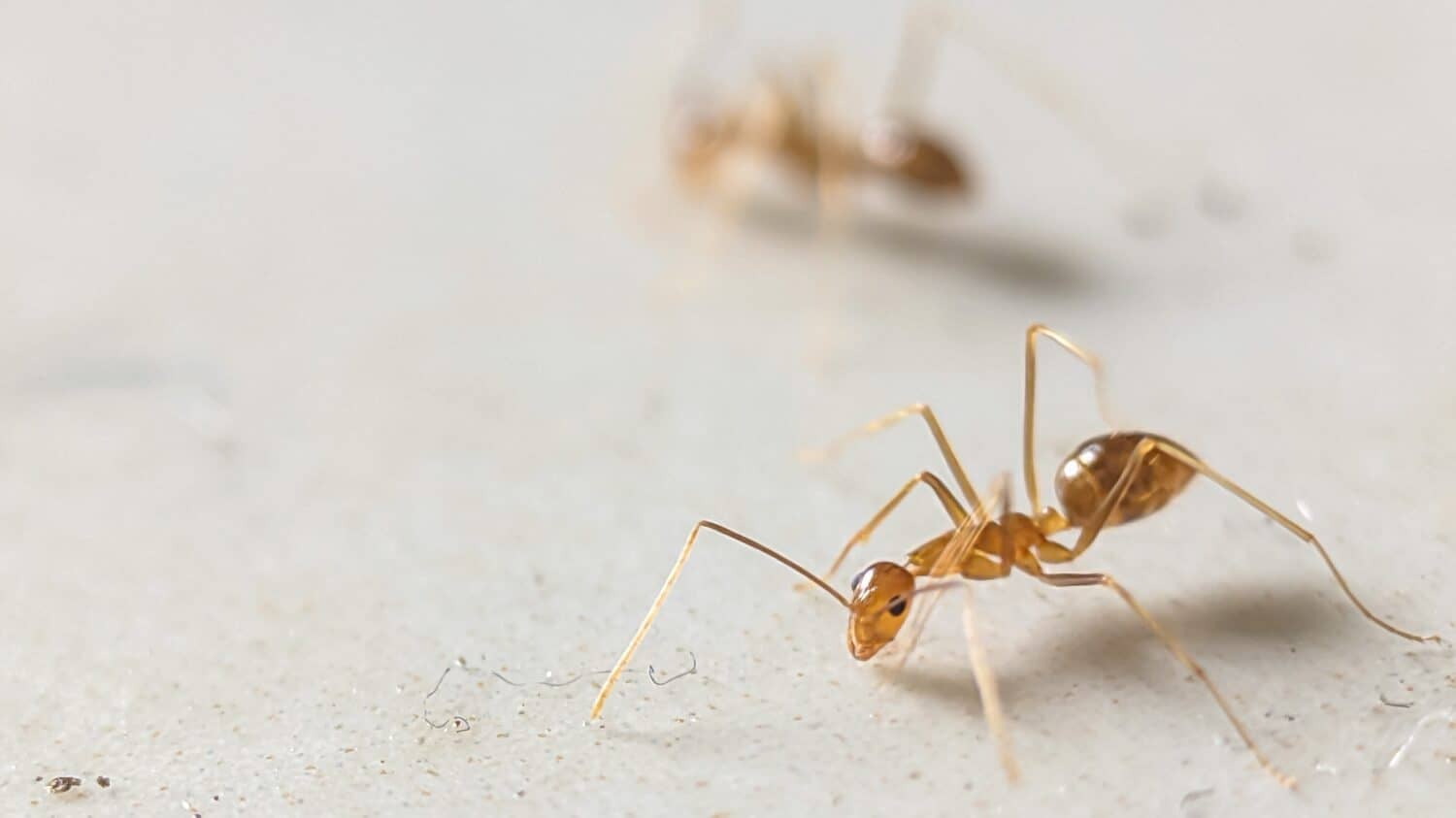
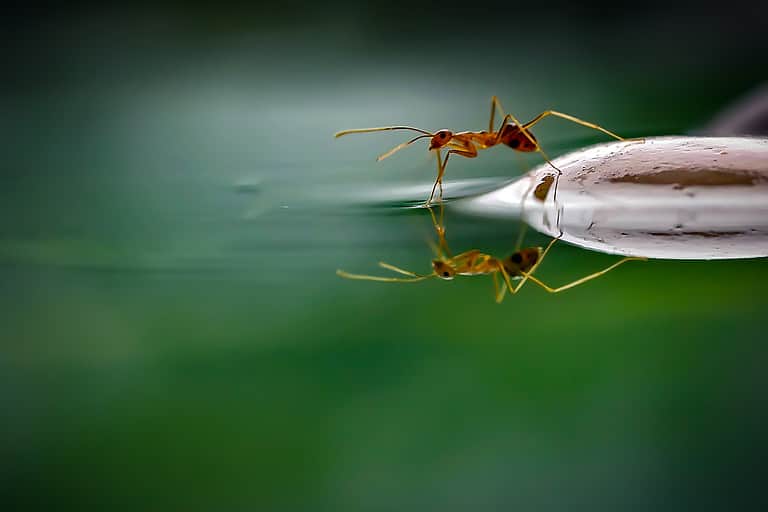
The findings suggest that ant pheromones, now integral to the insect group’s survival, may have originated from surges in jumping gene activity.
©ABYM Studio/Shutterstock.com
Perhaps the most remarkable aspect of the team’s research involves the relationship between jumping genes and genes that facilitate communication through chemical signals. Like many insects, ants rely on complicated currents of pheromones to communicate, strategize, and move through the world. Some pheromones help ants guide their companions along trails, some raise the alarm when a threat is imminent, and others help ants discern between true nestmates and intruders.
Ultimately, this form of pheromone communication relies on several genes responsible for odorant receptors. They are considered an essential part of ant survival. The research team’s findings suggest that jumping genes played a part in this reality. It seems that the surge of jumping gene activity helped expand rudimentary sensory pathways into full-blown systems.
Studying the movement of genes across hundreds of millions of years is difficult, but the researchers see real potential for future studies. As the team explained in their paper’s discussion, “Given the relationships that we could quantify for the ants, such future studies can be expected to substantially expand our general understanding of the macroevolutionary impact of [transposable elements] and their role in adaptive radiations across the tree of life.”