
Quick Take
- A golf ball-sized chunk of dinosaur dung sat unstudied for nearly a decade before revealing something no one had ever found in over 100 years of digging at one of the world's most famous fossil sites. See the accidental discovery →
- Water-dwelling birds went extinct while their close relatives survived, a finding that suggests the leading theory about what saved birds from the asteroid may be wrong. Explore which birds went extinct →
- The clue to why some birds outlasted the dinosaurs was hiding inside a predator's digestive system, and it points to something birds carry on their bodies today. See the feather evidence →
- CT scanning a piece of prehistoric poop may have just unlocked a completely overlooked source of fossil evidence, one that scientists are only beginning to dig into. Discover the new research avenue →
In 2016, a researcher from the University of Washington was climbing a rocky outcrop looking for fish fossils in the badlands of eastern Montana. What he found instead was a reddish-brown nodule about half the size of a golf ball.
It was fossilized dinosaur dung. But what surprised the researcher was that tucked inside the small ball was a tiny feather. It was the first time anything like that had been found in the Hell Creek Formation where the researcher was exploring.
A decade later, the specimen formed the basis of a new study published in the journal Current Biology. The study’s findings may help answer one of paleontology’s biggest mysteries — how did some birds survive the cataclysmic asteroid strike that wiped out the dinosaurs and many bird species 66 million years ago?
Continue reading
A Lucky and Unexpected Find
The Hell Creek Formation is a well-known dinosaur fossil site near Jordan, Montana. The formation actually extends into North Dakota, South Dakota, and Wyoming, too. In 1966, the Hell Creek Fossil Area was designated as a National Natural Landmark by the National Park Service.
Researcher David DeMar, Jr. discovered the fossilized remains while scaling a rocky slope. He is a co-author of the new study and the Hell Creek Project Collections Manager at the Burke Museum of Natural History and Culture at the University of Washington.
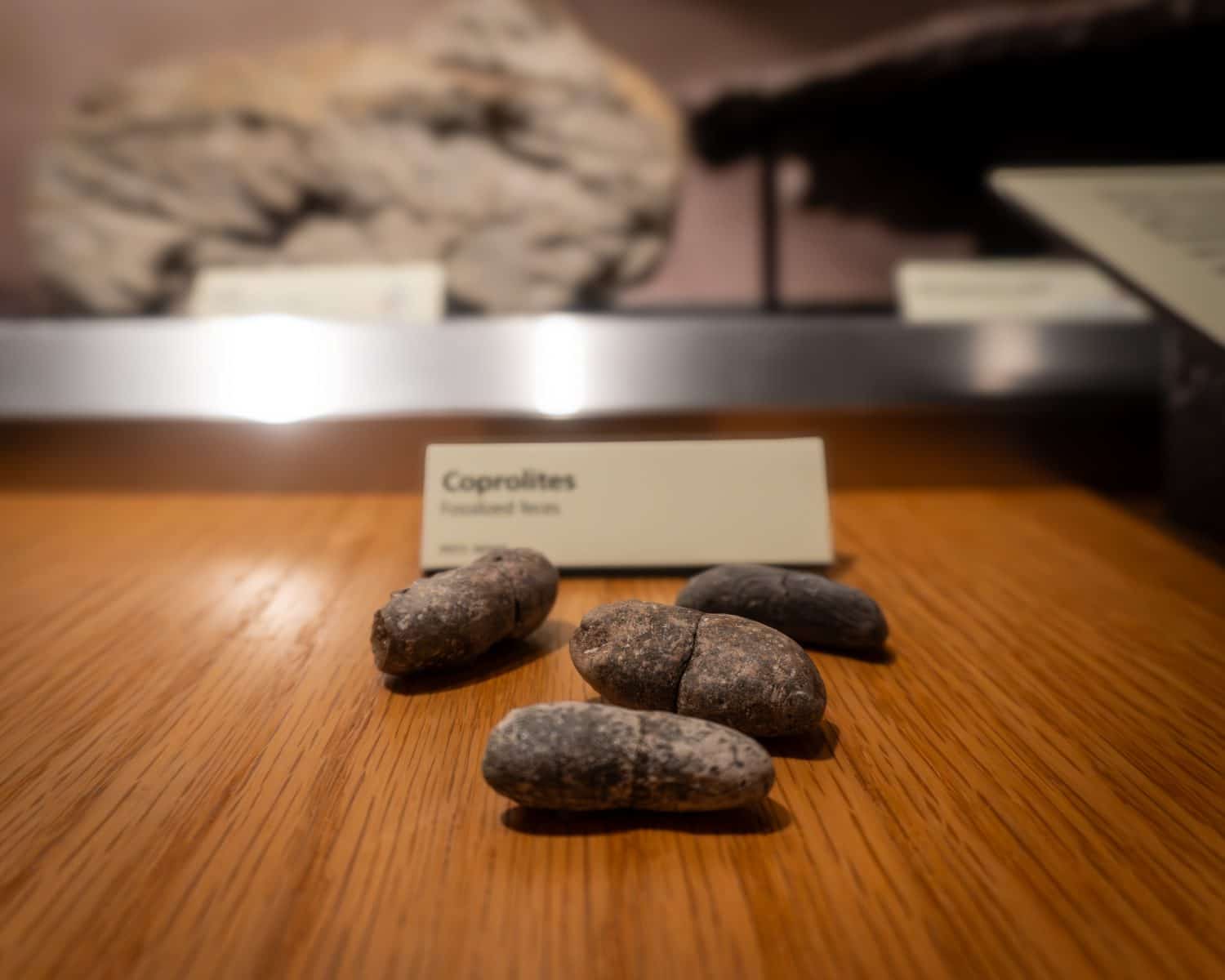
The feathers were found in dinosaur dung, also called coprolites, similar to those on display in the Rainbow Forest Museum and Visitor Center in Petrified Forest National Park, Arizona.
©EWY Media/Shutterstock.com
“I picked it up and scanned its surface through my hand lens, and that’s when I couldn’t believe what I was seeing: a tiny fossil feather. I was cautiously optimistic about its discovery, because feathers had not yet been found in the Hell Creek Formation, even after more than 100 years of prospecting,” he said in a news release announcing the study.
Despite the unusual nature of the find, the fossil wasn’t studied in detail until years later.
A Stunning Discovery In the Lab
Researchers at the University of Washington, including DeMar and study co-author Gregory Wilson Mantilla, a UW professor of biology and the curator of vertebrate paleontology at the Burke Museum, eventually examined the specimen by taking CT scans.
“Every hour processing the data revealed another feather, another scale, another bone — in stunning 3D,” said co-author Nathan Carroll, a paleontologist at the Carter County Museum. The coprolite (the scientific word for dinosaur dung) contained multiple feathers, tiny fish scales from a gar, and leg bones from an extinct group of birds called hesperornithiform — ecologically similar to a modern loon.
The feathers may have survived digestion because they contain tough keratin. Keratin takes a long time to break down, and dinosaur digestive systems were too fast to effectively dissolve the keratin. That meant feathers would be passed through the dinosaur’s body intact.
The Dinosaur’s Lunch
Two of the feathers had features previously known from modern birds and their close evolutionary relatives. “This includes a square feather shaft with a sponge-like center. No other Mesozoic feather has this combination of features. The next oldest record of this sponge-like center is from the early Eocene of Denmark, which is about 10 million years younger than this new feather record from the Hell Creek Formation,” DeMar said in the news release.
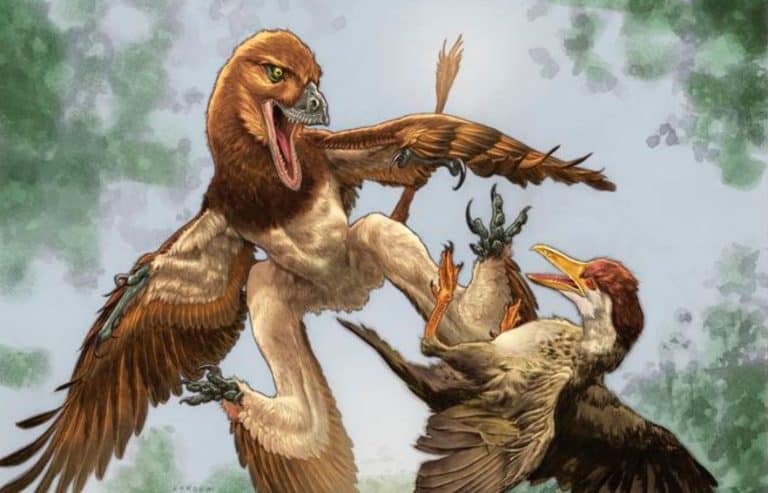
Hesperornithiforms are close relatives of the birds that survived the mass extinction and still live today, including loons.
Why This Might Explain Which Birds Survived and Which Went Extinct
Some scientists have hypothesized that the birds that survived the mass extinction event were able to survive because they lived near water. They believed there was something about the aquatic habitat that protected them. But the Hesperornithiforms also lived by water, and they went extinct.
The study’s lead author, Jingmai O’Connor, associate curator of fossil reptiles at Chicago’s Field Museum, proposed a different explanation.
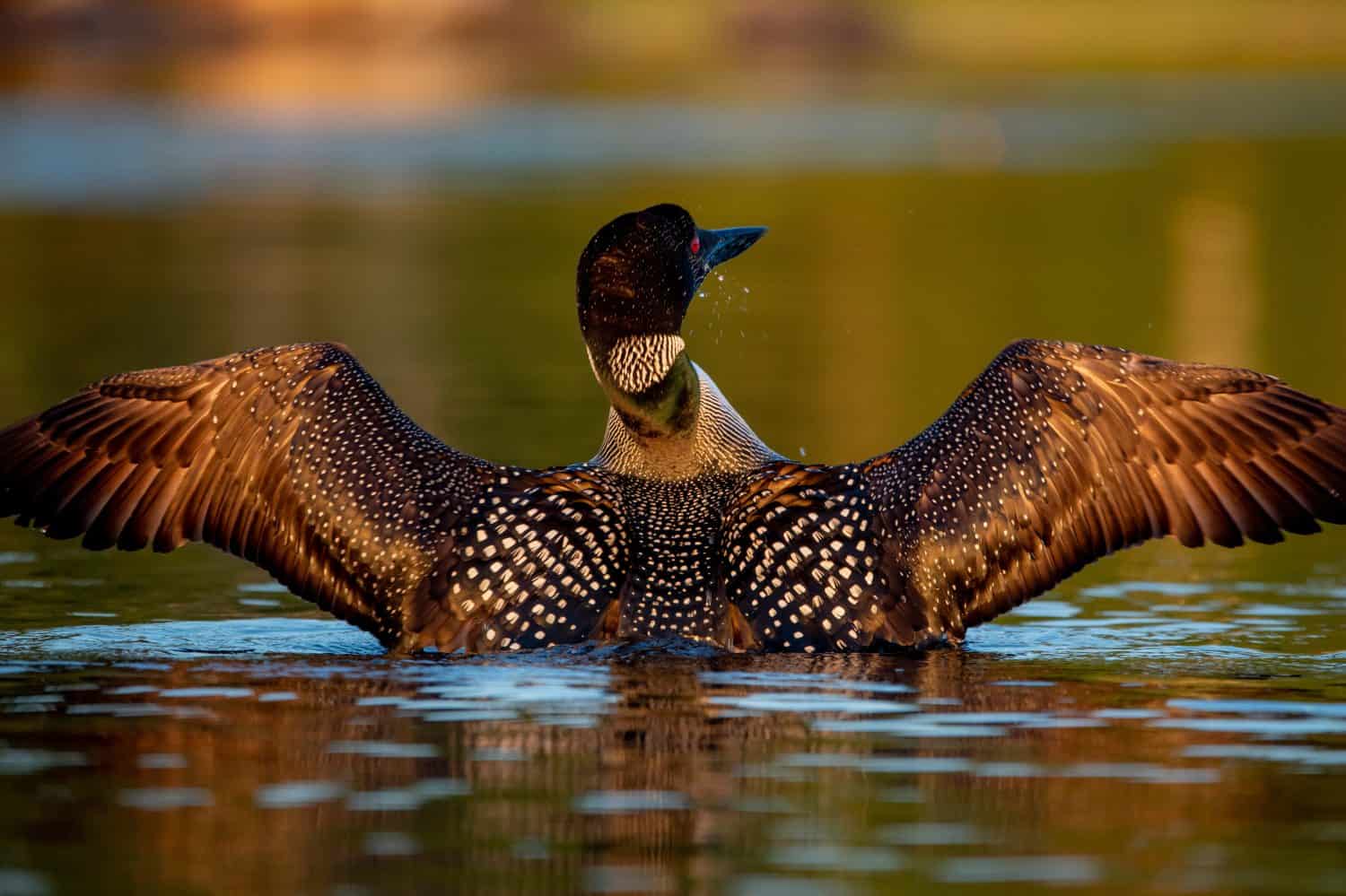
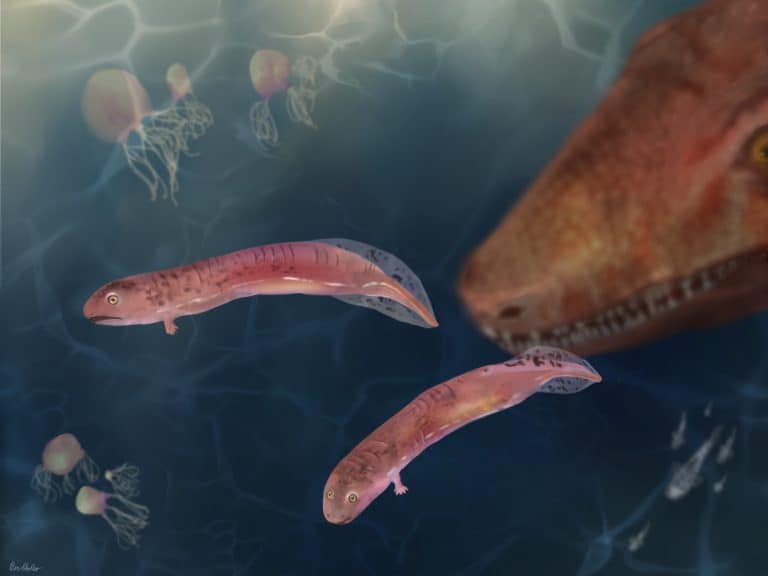
Hesperornithiforms are close cousins to the birds that did survive the dinosaur extinction, and are distant relatives of today’s loons.
©Nicholas Mullett/Shutterstock.com
“We think the types of feathers that these birds had, and/or the way they molted those feathers, may have been one of the underlying causes of the selectivity of the end-Cretaceous mass extinction — essentially, why some birds died out and why others survived,” she said in the news release. “Some of these diving birds’ feathers seem to have been modern-looking and waterproof, but they also had some smaller fuzzy, primitive body feathers that we associate with dinosaurs.”
Feathers may have helped insulate birds, making the difference between life and death during the years of darkness and cold that followed the asteroid impact. These harsh conditions were caused by dust and soot blocking the sun.
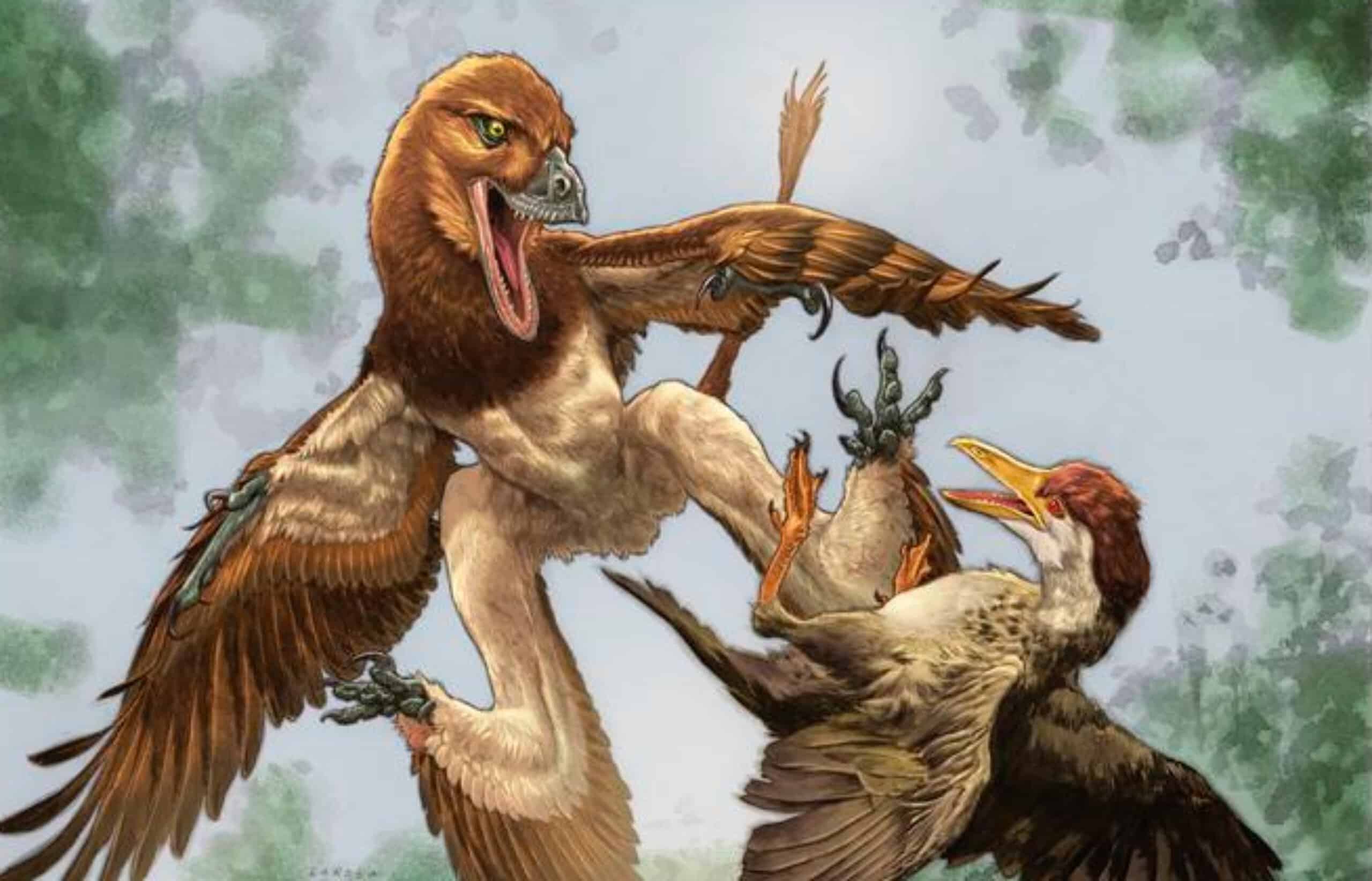
The research team notes that these are the first known fossil feathers definitively attributed to hesperornithiforms. They suspect the bird was eaten by a young T. rex or the smaller Nanotyrannus.
What the Find Means For Future Research
Now that researchers have studied this coprolite and its contents, the find opens the door to future studies along the same lines. It all started with a lucky find.
“We only knew to look at this one because of how it happened to be split open, with the feather exposed — it was literally a lucky break,” O’Connor said in the news release. “I hope more scientists start CT scanning coprolites and taking a closer look at them to see what might be inside.”