
Quick Take
- These whales are growing faster than any other humpback population on Earth, a result that researchers did not see coming. See the growth findings →
- Scientists ditched century-old whaling-era measurements to get the real numbers. Here's what drone cameras revealed instead. Explore the drone method →
- A population once hunted to near-extinction now tops 40,000, though scientists warn the rebound could take a dramatic turn. Follow the population comeback →
- Growing calves need up to 8x more food per day than adults, and what they're eating may explain everything. Or it may explain nothing. Dig into the diet data →
How fast do eastern Australian humpback whales reach their full size? New research just published in the journal Marine Mammal Science offers some clues, and the findings surprised even the researchers.
What the Research Found
The research was led by Griffith University PhD candidate Stephanie Stack in collaboration with the Pacific Whale Foundation. The foundation has been studying whales in eastern Australia since 1984. This new research builds on decades of Hervey Bay records. The foundation also started a five-year health study of Hervey Bay whales to discover more about whale growth during the first year after birth, although that project is separate from the one discussed here.
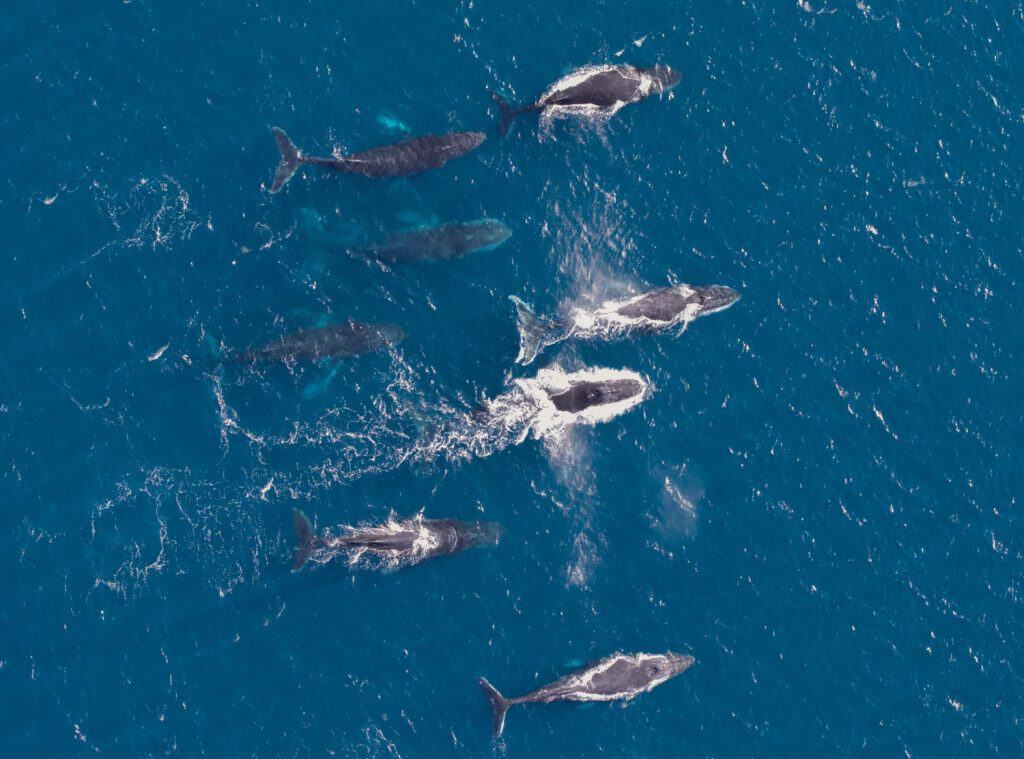
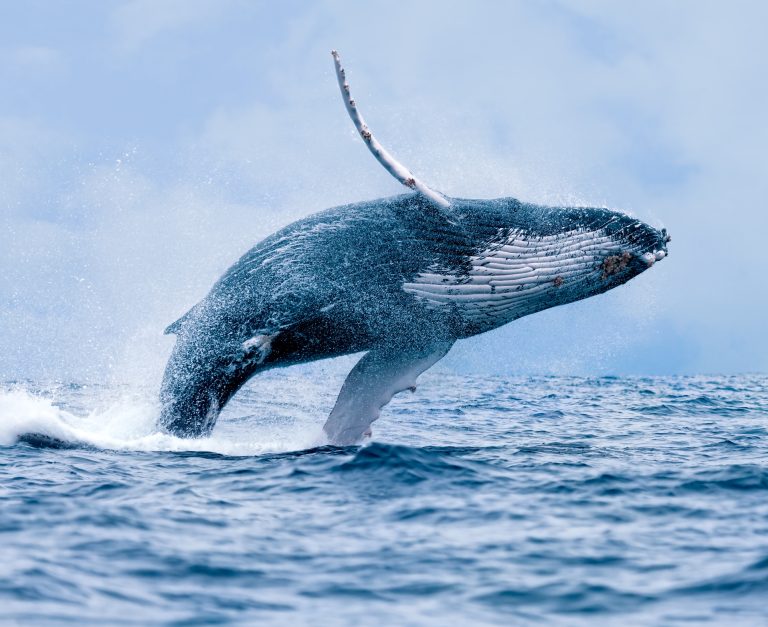
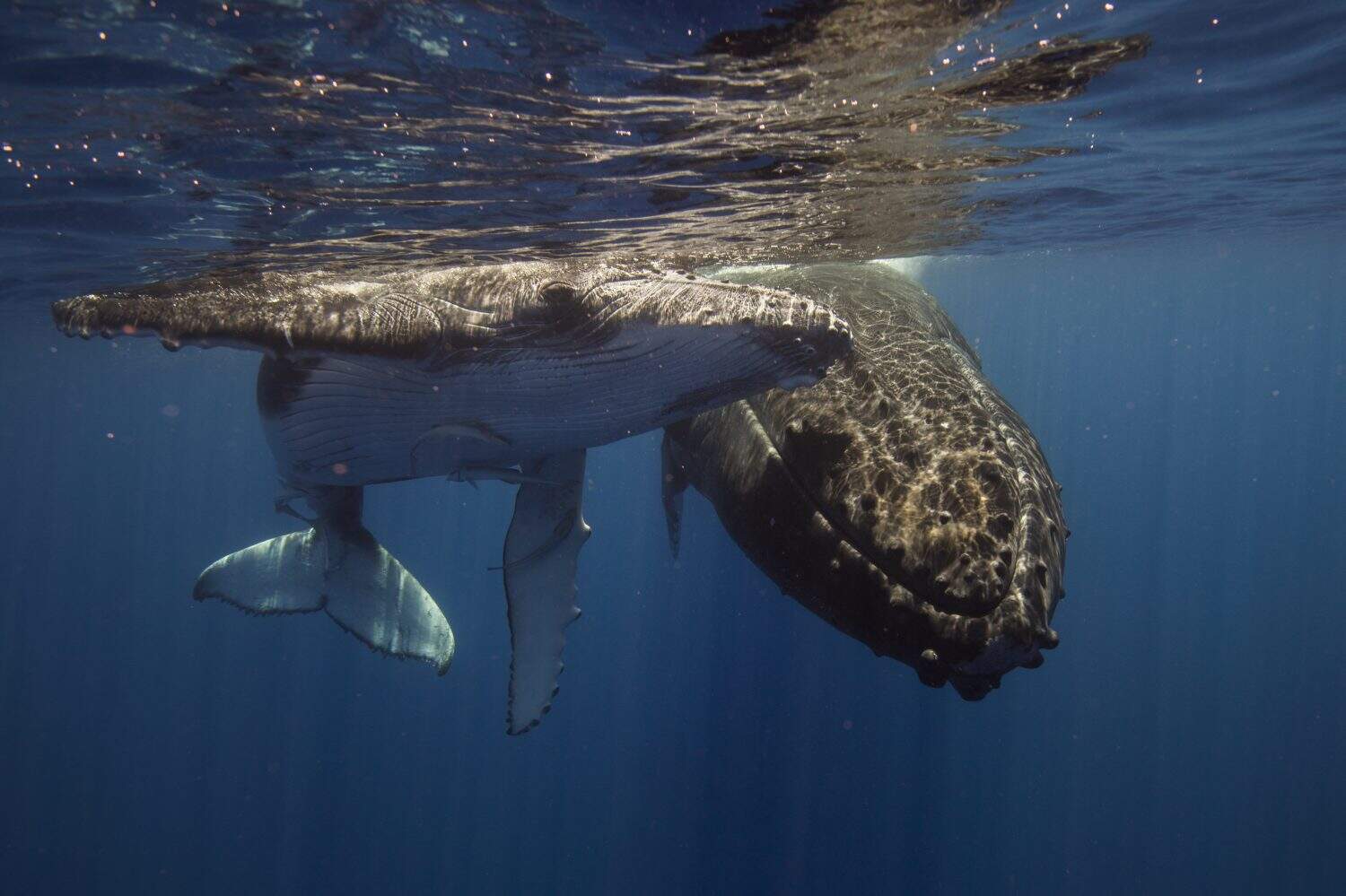
The whales were measured using drone photography.
©Coastal View Photography/Shutterstock.com
This study’s results show that eastern Australian humpback whales reach about 10.9 meters in length by the time they are 5 years old. By time they are 6 to 7 years old, they achieve about 90 percent of their adult body length.
Lead researcher Stephanie Stack notes that the findings indicate these whales grow faster than other humpback whales elsewhere in the world. She also points out that the research represents several firsts.
“This is faster growth than other humpback whale populations that have been measured,” Stack said in a news release announcing the findings.
How Was the Research Conducted?
The research team measured 865 individual whales over a period of four years (2021 through 2024). They measured the whales using drone photo imaging, a non-invasive way to capture measurements of the whales. This technique is called “photogrammetry.”
The whales they measured included calves, juveniles, and adults. By studying younger whales, the team could capture actual growth over the years rather than relying on inferred growth by studying only older animals.
The researchers also looked at existing photo ID records to supplement the drone photography.
The new approach of using photogrammetry along with existing data represents a first.
“These are also the first contemporary growth curves developed for eastern Australian humpback whales using measurements from living animals, updating knowledge that has relied heavily on measurements collected during the commercial whaling era in the mid-20th century,” Stack said in the news release.
Why Are Eastern Australian Humpbacks Important?
Eastern Australian humpbacks were hunted to near extinction by the early 1960s. Since then, the population has rebounded thanks to comprehensive conservation efforts.
In 2004, the total population was believed to be around 9,683 whales. That’s an annual population increase of about 10.9 percent.
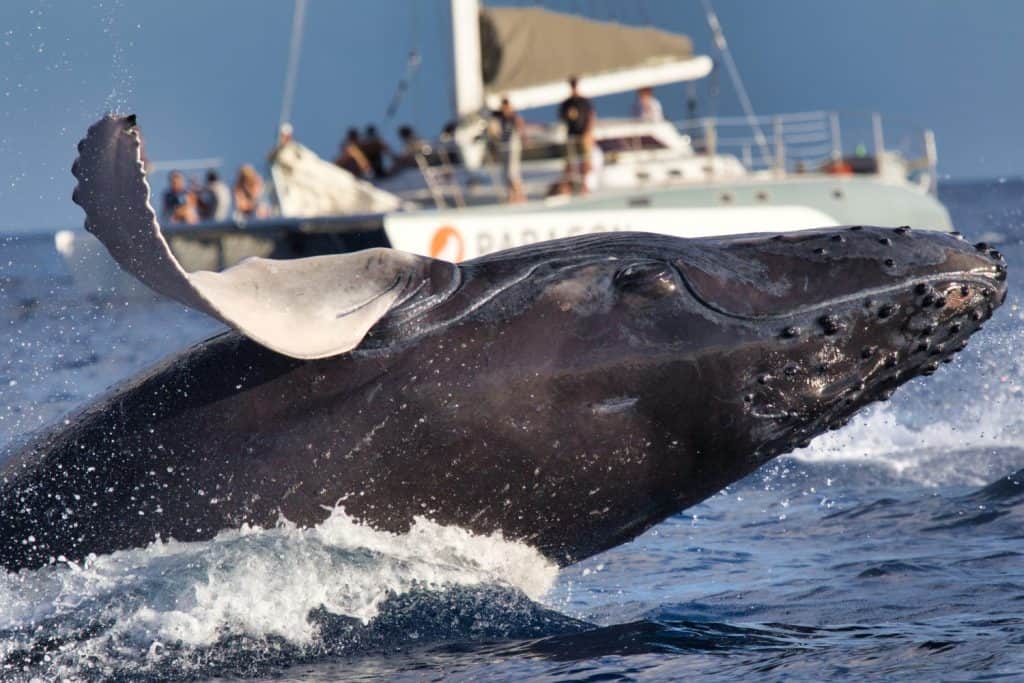
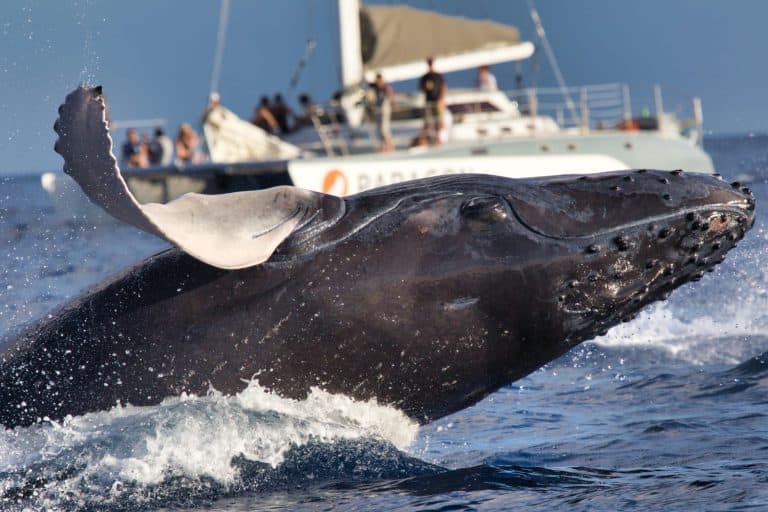
Whale watching tours are a significant contributor to local economies.
©Manuel Balesteri/Shutterstock.com
Current models suggest there are more than 40,000 eastern Australian humpbacks, with peak abundance estimated between 2021 and 2026. That number represents a peak in whale populations.
“Our observations indicate the east Australian humpback whales are doing well, averaging a 10.9 per cent increase per annum,” Associate Professor Michael Noad from UQ’s School of Veterinary Science said in a separate news story.
“In fact, our most recent data shows that the population has essentially recovered, with east Australian humpback whale populations reaching an estimated 25,000 whales. With this growth continuing rapidly, our modelling suggests that either these whales are heading for a higher-than-expected abundance – at least 40,000 whales – or, more worryingly, there may be a population surge, with a peak in whale abundance somewhere between 2021 and 2026 followed by a crash.”
Noad also notes that a population crash could have detrimental effects on the region’s whale watching tourism, an industry worth more than $100 million to the local economy.
The researchers in this study wanted to identify what role whale growth played in this comeback.
“These new growth curves establish a baseline for investigating how whale biology may respond to changing environmental conditions,” Stack said in the news release.
What Are These Whales Eating?
Another factor could be the whales’ diet. They travel between Antarctic feeding grounds and warm breeding waters off eastern Australia. To fuel their winter trip back to Antarctica, they rely on summer krill. Researchers are able to identify each whale’s diet by taking tiny blubber samples via a modified dart. The blubber sample shows fat stores and diet. It also indicates when a female is pregnant.
Growing calves need 6 to 8 times more food per day than adults. While this study doesn’t prove that food is the reason for the rapid growth, it can’t be factored out. It does, however, have other implications.
“Understanding how quickly whales grow provides another piece of the puzzle in understanding the biology of this recovering population,” Stack said in the news release. “Growth influences many aspects of a whale’s life, including its health, energy requirements and potentially the timing of reproduction.”
What’s Next?
This most recent study provides a benchmark for future research on whale populations. It also helps scientists better focus their investigations on how humpbacks respond to changing ocean conditions.
These findings are another foundational piece in the long-term monitoring of the Southern Hemisphere’s humpback whale populations led by the Humpback Whale Sentinel Programme.