
The phrase “self-care” has taken the world over in recent years, as folks have started realizing the intense hustle culture and long 12-hour day grind feed poor health. This self-care industry blossoms many unique and new options for folks to soothe, de-stress, relax, and just breathe. Older elements of traditional medicine have made their way in as well, largely in the use of essential oils. These make for a more affordable option for folks on a budget. And one of these oils, from the Camellia sinensis plant has gained significant popularity in the skincare industry and aromatherapy world. So, the question for pet owners grows. Is tea oil safe for dogs?
Let’s take a look at a few key points so you can best care for yourself and your furry baby.
Definitions: What is Tea Oil?
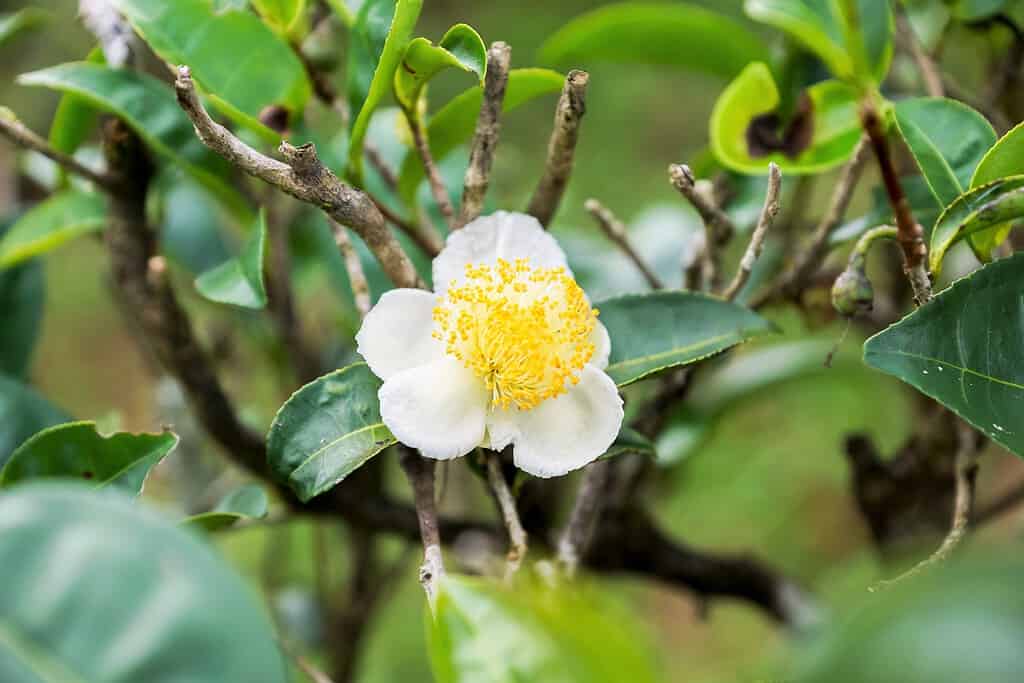
The Camellia sinensis, or tea plant, provides us with the tea oils used in many skincare and health products.
©Tharnapoom Voranavin/Shutterstock.com
When you hear the term “tea oil” you likely jump straight to adding in the word “tree” in the middle there. However, there are two kinds of tea oils commonly in use out there. However, four terms may technically be applied to these two.
Tea, Tea Seed, and Camellia Oil from Camellia sinensis – Nontoxic

The vibrant green tea leaves provide us with the beverage we’ve come to associate with good health and energy. They’re also used to make some forms of tea oil.
©R. Haidy/Shutterstock.com
When the terms “tea oil,” “tea seed oil,” or “camellia oil” are used, these refer to oils made from parts of the Camellia sinensis plant. Green, black, yellow, oolong, and white teas come from this plant, meaning it is edible and, for many, considered flavorful and enjoyable.
The plant grows natively in China and the Assam region of India as a shrub or small perennial tree, with flowers growing in groups of 3 or singly, in most cases, in a variety of colors. Some folks grow the plants not even realizing they could make tea from the leaves and shoots.
The oils come from the seeds or a special process for the leaves. Products made with these oils are nontoxic, though it’s always best to verify food-grade qualities before consuming.
Tea Tree Oil from Melaleuca alternifolia – Toxic Upon Consumption for Humans and Pets
On the other hand, tea tree oil comes from the “tea tree” or Melaleuca alternifolia. This plant is exceptionally different from the Camellia sinensis. Tea tree oil products may be used on the skin for external purposes only. Never consume a tea tree oil-based product.
How Are Tea Oils Used?
Tea oils (from Camellia sinensis) may be found in a wide range of products. Most commonly, these include cooking products, drinking teas, skin care products, and herbal remedies.
For safety purposes, always consult a medical care provider before creating or using herbal remedies. Ideally, have the intended products in mind to verify they are made with nontoxic tea oils rather than tea tree oils.
Can I Safely Use Tea Oils Around My Dog?

Tea tree oil and tea oil are very different, sourced from entirely different species. Never give your dog any tea tree oil! It’s toxic for them.
©Iv-olga/Shutterstock.com
Tea tree oil is toxic for dogs.
Tea oil itself is nontoxic for you and your pooch pal, but the caffeine in the plants may prove dangerous. However, in the case of specific medical conditions, your dog’s vet may prescribe the use of Camellia japonica leaves for your dog. This should not be done without the advice of your pet’s vet, nor should you attempt to feed your dog tea oils.
What Happens if a Dog Consumes or Inhales Tea Oil?

Sometimes, vets suggest adding natural supplements to a dog’s diet for health conditions. If you use the wrong ones, though, your pup could be in real trouble. Never give your dog tea oil without a vet’s explicit instructions to do so.
©AshMoss/Shutterstock.com
Unless your pet’s vet specifically suggests serving up some tea oil to your pooch, you’re better off enjoying the oil as an essential oil in an air diffuser. Skincare products, shampoos, cosmetics, and others containing tea oils shouldn’t cause any issues for your pooch unless they eat it.
The problem comes more from serving your dog a cup of tea. While the beverage seems harmless, the amount of caffeine contained in the tea may cause some health issues for your puppy pal. A small amount may be harmless, but frequent consumption can make your dog very ill.
Caffeine toxicity shows up within one to two hours as:
- Vomiting
- Diarrhea
- Excessive panting
- Excessive thirst
- Excessive urination
- Abnormal heart rhythm
- Tremors
- Seizures
Herbal teas don’t contain caffeine but may also cause toxicity in dogs. Do not serve tea to your dog, especially in larger amounts.