
Have you ever seen what you thought might be an oriole, but you weren’t sure? There are several different species of birds that look like orioles that can make your bird-watching experience more difficult. Continue reading below to meet the five birds that look like orioles and how to tell them apart.
What Is an Oriole?
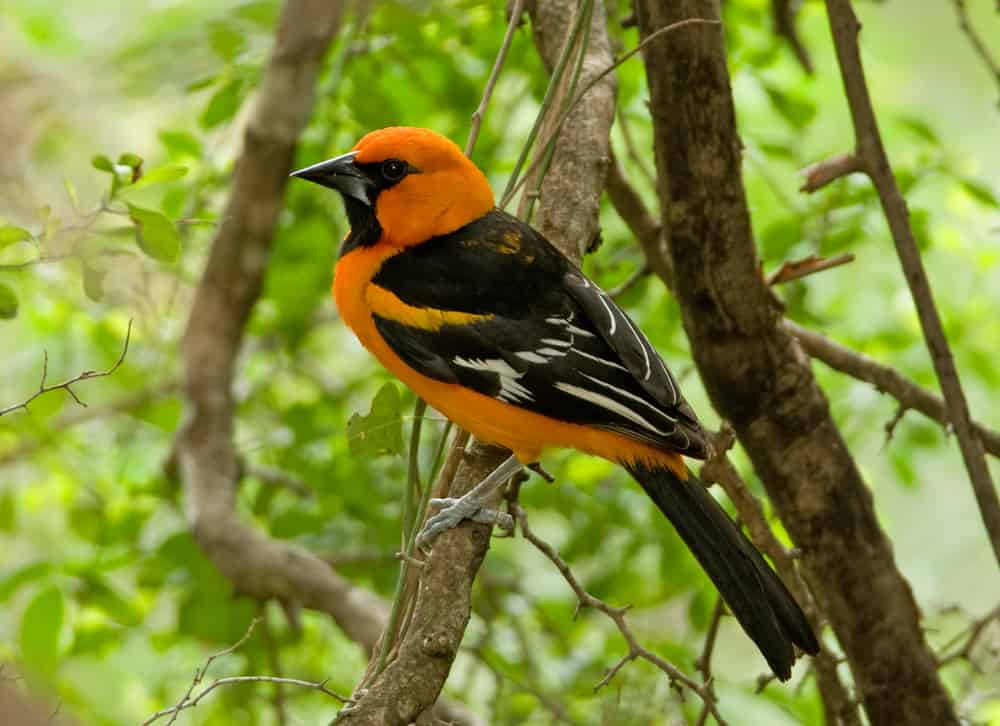
There are two types of orioles: New World orioles and Old World orioles. These species are unrelated, making up the genera Icterus and Oriolida,e respectively, but have been given the same name due to their similarities. These similarities include their size, plumage, diet, and behavior.
Orioles are best recognized by the males of the species, which sport a striking plumage. Often, they are yellow with black markings, although some individuals in the species may have a reddish color instead. This is true for both genera of orioles. Females and juveniles have a less vibrant color, often showing a buff brown and white color in place of black and paler areas of coloration.
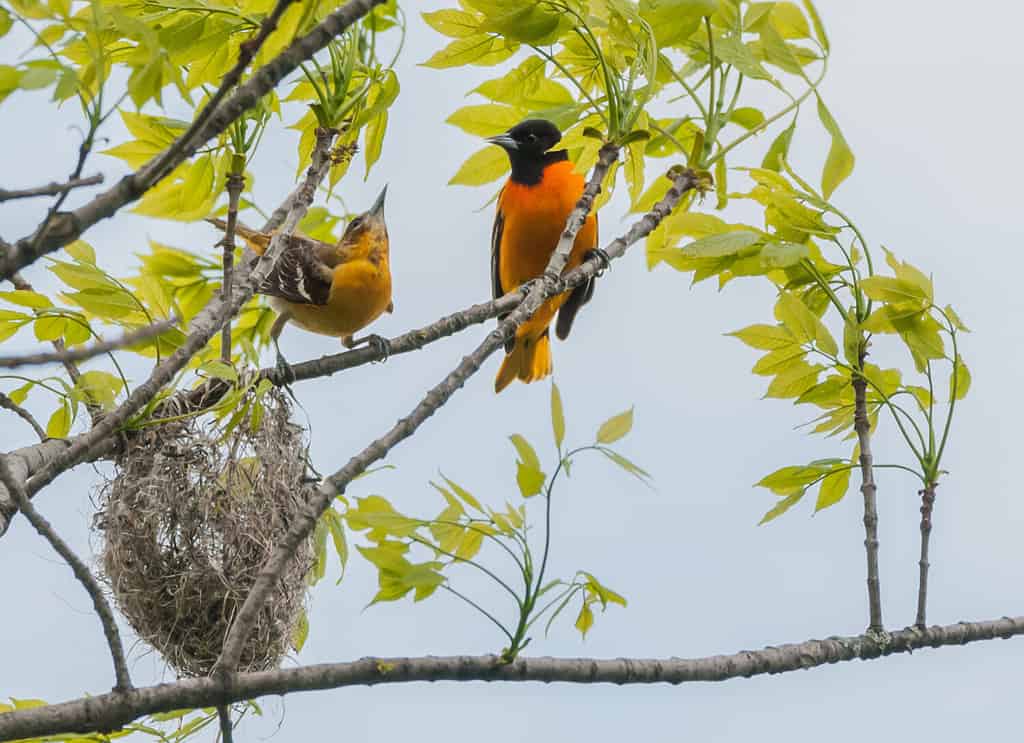
Male and female orioles differ in appearance, which can make it difficult to tell them from other species.
©Heather L. Hubbard/Shutterstock.com
5 Birds That Look Like Orioles
Although their bright colors may make orioles eye-catching, there are still several species that may resemble them. Below, discover five birds that look like orioles, as well as the key differences that set them apart.
1. Common Yellowthroat
The common yellowthroat is a small bird with a long tail. They greatly resemble orioles in their yellow and black markings. This species can be identified, however, by the white-grey band over their eyes. Females of the species have a brown head and back, while they have a yellow throat and breast.
Common yellowthroats are a medium- to long-distance migratory species. There are some year-round populations, however, located in Baja California Penisula, the American southeast, and through central and western Mexico. They breed throughout the United States and Canada before wintering in Mexico and Central America.
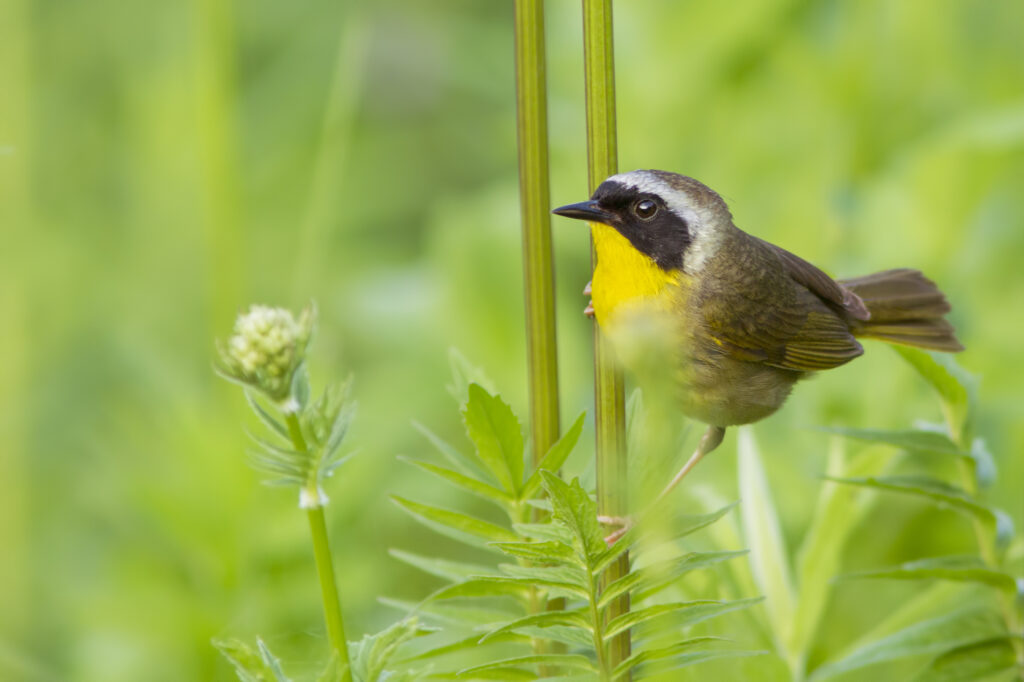
Common yellow throats have a white band on their faces that most orioles lack.
©Mircea Costina/Shutterstock.com
2. Hooded Warbler
Hooded warblers are another yellow bird species of bird featuring black markings. However, the black markings on this species’ face look more like a balaclava than a cap. That’s because the male hooded warbler sports a black marking that circles the head but does not cover the face, allowing the yellow feathers there to show.
With females of the species, however, it can be more tricky. This is because the dull coloring on the female hooded warbler’s back greatly resembles that of a female oriole. This is especially true for the orchard oriole. However, the hooded warble has a distinct olive-green hue to the dark markings along its back.
The hooded warbler has a smaller range than most oriole species. They breed strictly in the southeastern United States, and they winter in the coastal regions of Mexico and along the islands of the Caribbean.
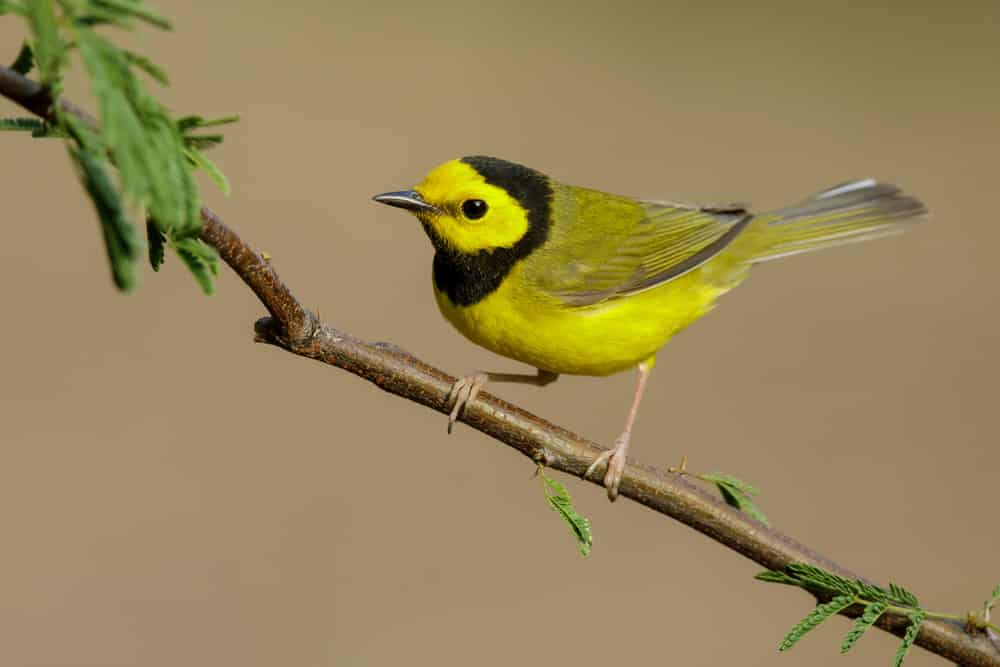
The hooded warbler is named for the black hood on its head, a feature orioles lack.
©Agami Photo Agency/Shutterstock.com
3. Cape May Warbler
Like the hooded warbler, the female Cape May warbler greatly resembles the female orioles. This is especially true for Bullock’s oriole. The best way to distinguish between these two species is to pay attention to the coloration around the eye. Most oriole species lack the green-grey marking beneath the eye that female or immature Cape May warblers possess.
Male Cape May warblers can be easier to tell apart from orioles. This is because while they possess the typical oriole black and yellow markings, males of this species also possess an orange or red eye ring.
These warblers also have a small range. There are no significant year-round populations, and they migrate along the eastern coasts of North America. During the breeding season, they are found in Canada and the northern United States, and they migrate along the coastal states to winter in the Caribbean.
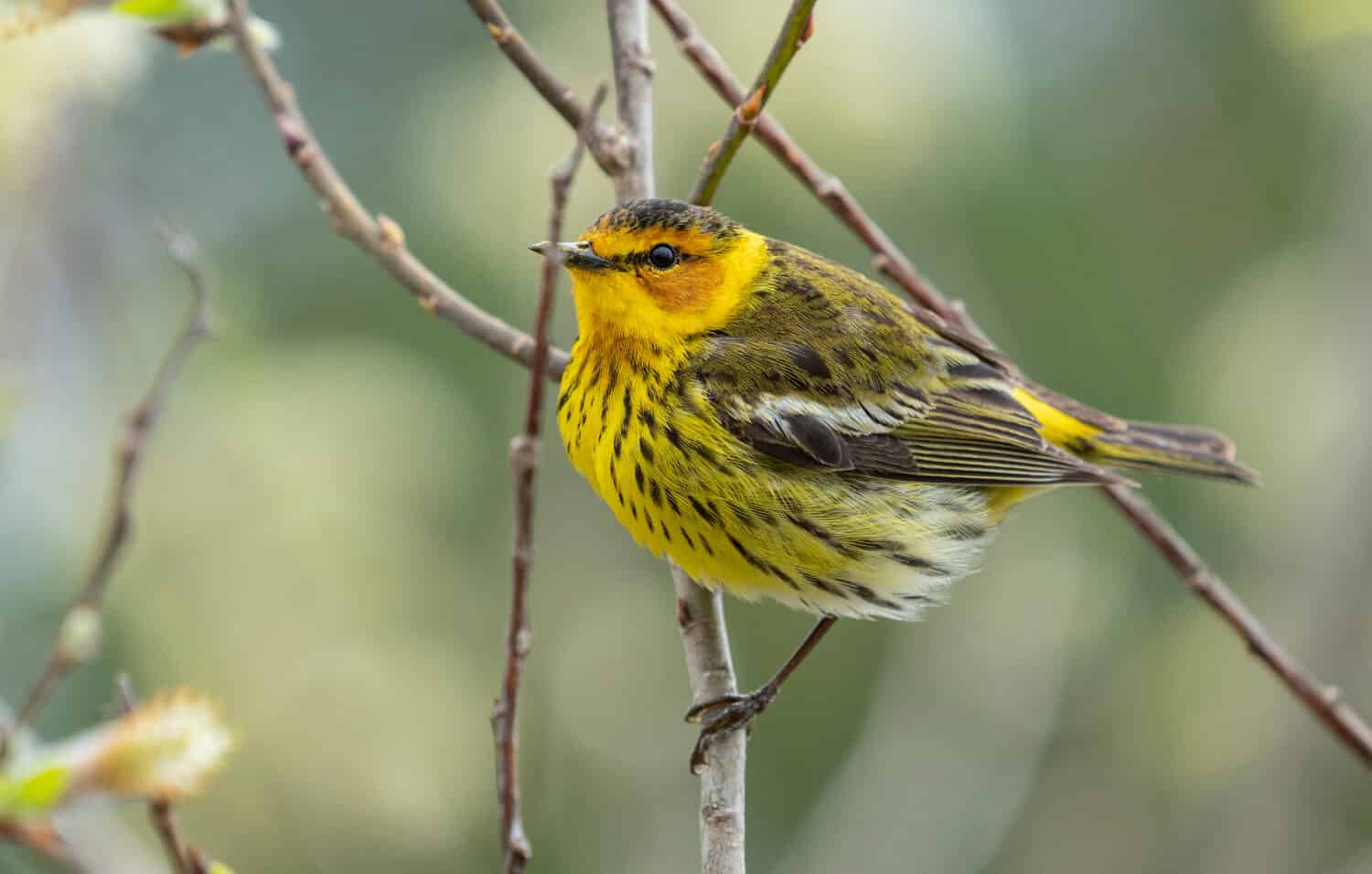
Cape May warblers have a smaller habitat range than orioles.
©Jeff Caverly/Shutterstock.com
4. Eastern Towhee
When you consider the eastern towhee at a glance, it may appear almost identical to the different oriole species of the western hemisphere. This is especially true given their like sizes and shapes. However, eastern towhees, while possessing the burnt red color and black markings of species like the orchard oriole, have a white chest. They also possess white wing bars. This species also has a striking red eye.
Eastern towhees are located only within North America, mainly the United States. There is a small region of breeding ground within Canada. The species is found only as far west as central Texas.
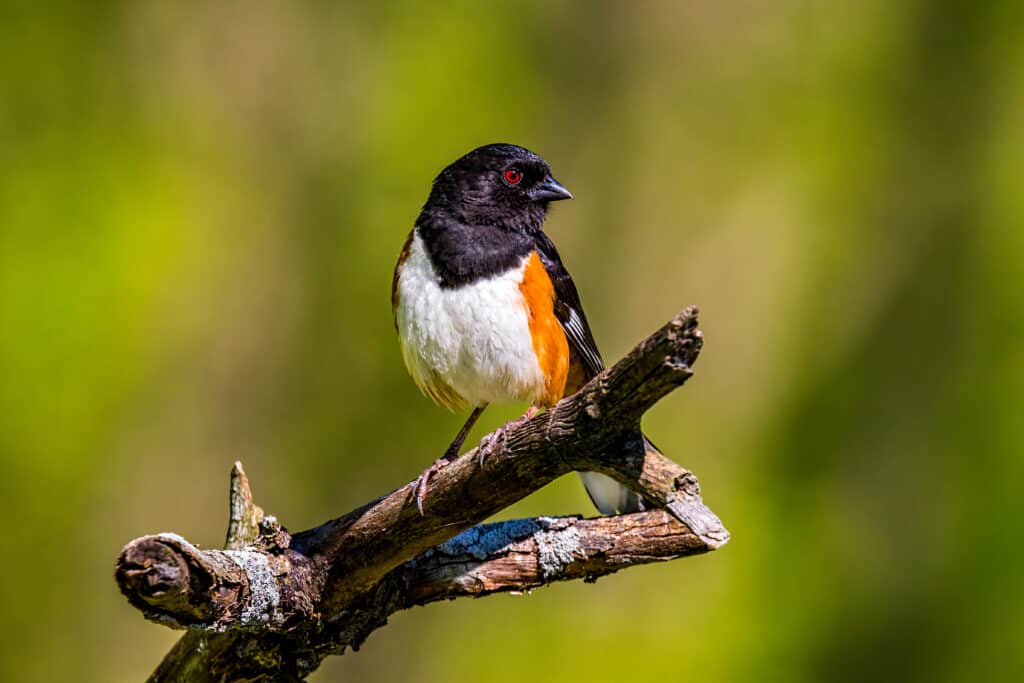
The towhee’s most distinctive feature is their red eyes.
©John L. Absher/Shutterstock.com
5. Eastern Meadowlark
Because it has a notable pattern on its back, the eastern meadowlark is less likely to be confused with males in any of the oriole species. However, from a distance, this patterned plumage can resemble the dull coloration of oriole females, which can lead to mistaken identity.
The best way to tell the eastern meadowlark from an oriole is to pay attention to the details. This includes the black horizontal eye bar as well as the dotted pattern on their backs and the top side of their wings. Upon closer inspection, you may also notice that the black “V” shape on the eastern meadowlark’s chest contains darker speckles within it in some individuals.
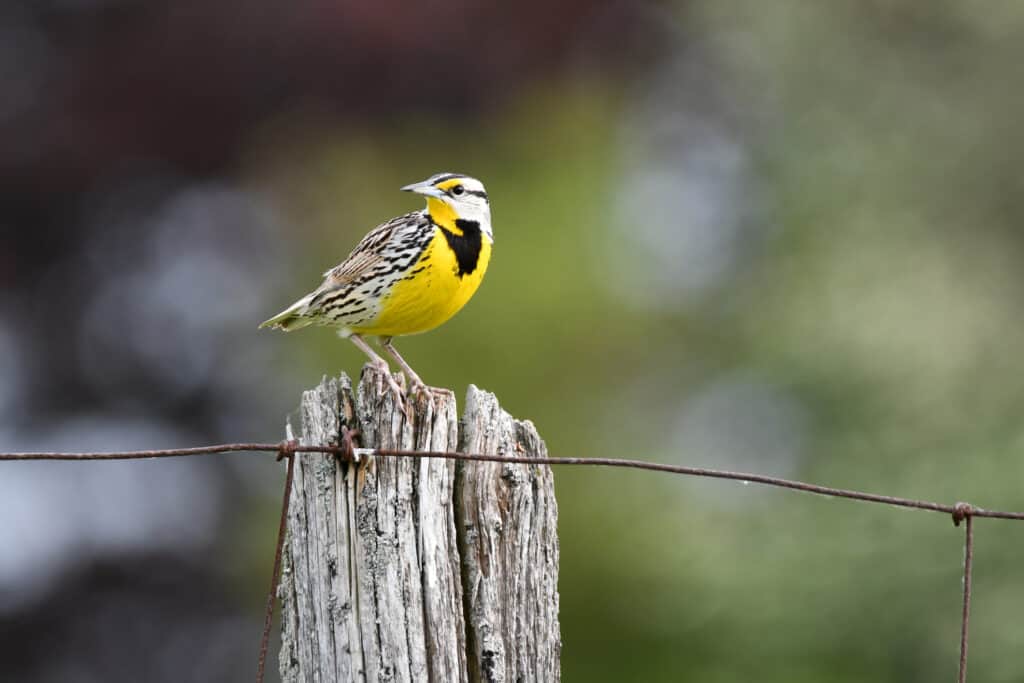
Eastern meadowlarks have a black-and-white speckled design that helps set them apart.
©iStock.com/Carol Hamilton