
Quick Take
- Winter brings more birds to feeders as natural food sources become scarce.
- Texas yards host both year-round residents and seasonal winter migrants.
- Different bird species prefer specific feeder types and foods.
- Winter is one of the best times to spot a wide variety of Texas birds up close.
During the summer, birds can feast on a variety of fruits, nuts, berries, and insects they find while foraging. However, these food sources become scarce in the winter. If you’re curious about which birds you might see at your backyard feeder in Texas, we’ve got you covered. While this is not a complete list, we’ve highlighted some of the most common and notable birds you can spot during a Texas winter.
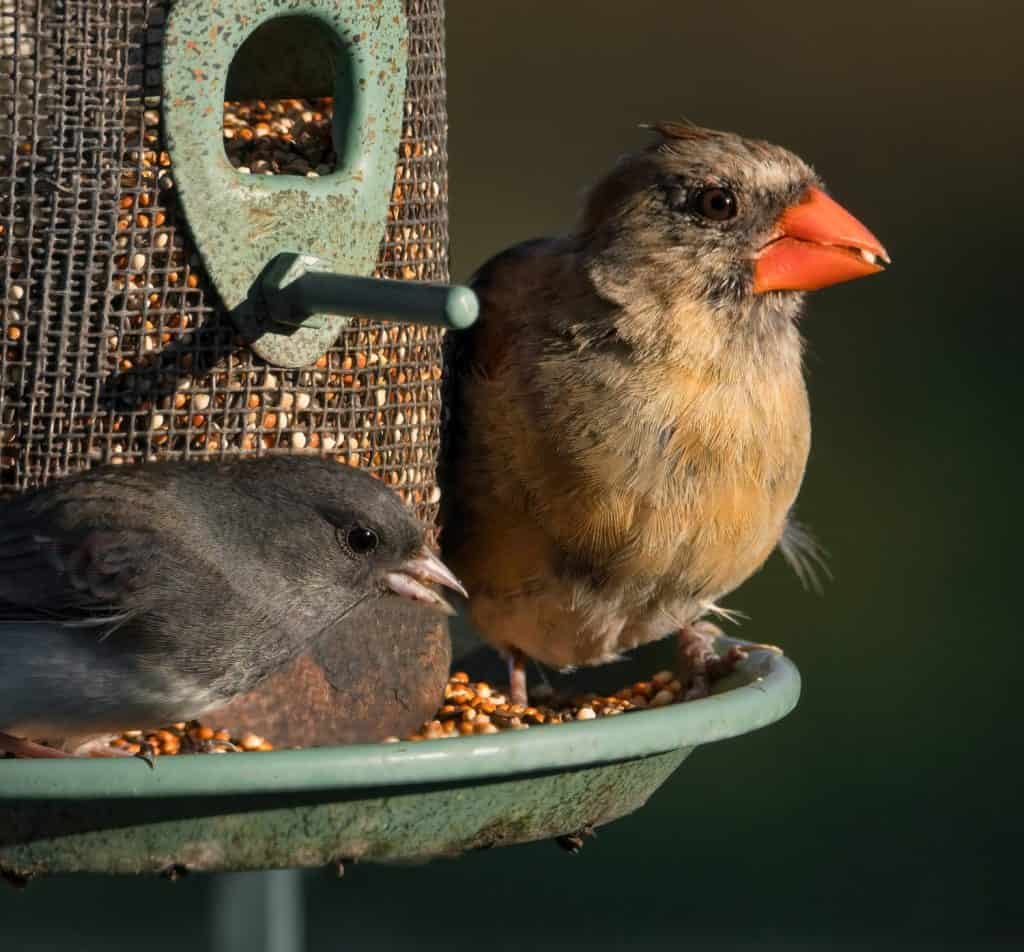
Cardinals and juncos can be found eating seed from Texans’ backyard bird feeders during the winter.
©Fiona M. Donnelly/Shutterstock.com
Texas Birds You Will Find Year-Round at Backyard Bird Feeders
The following birds are commonly seen at backyard feeders in Texas. Though you can spot them in the winter, they are year-round residents of the state and do not migrate. However, for many of these birds, winter is the best time to spot them at bird feeders, since their usual food sources may be scarce or harder to find.
Mourning Dove
Mourning doves are found throughout much of Texas. They are slender, gray-brown birds with long tails and small heads. Mourning doves tend to stay in pairs and can be recognized by their mournful and soft cooing sounds. If you want to attract mourning doves to your yard, they prefer to eat millet and cracked corn out of tray or platform feeders.
Golden-Fronted Woodpecker
Golden-fronted woodpeckers are mainly found in the central and southern parts of the state. These attractive birds have black-and-white bars on their backs. Only the males have a bright red spot on their head and a yellow nape. At backyard feeders, golden-fronted woodpeckers like to eat nuts, fruit, and sunflower seeds.
Red-Bellied Woodpecker
The red-bellied woodpecker has a similar black-and-white pattern on its back as the golden-fronted woodpecker. However, they are slightly smaller, and the males have a red crown and nape, while the females only sport the red nape without the crown. These birds mainly live in the eastern half of Texas. Suet is a top choice for attracting them to your yard.
Downy Woodpecker
Downy woodpeckers are small birds with black-and-white wings. The males have a red cap on the back of their heads. Although they appear similar to other woodpeckers in Texas, you can identify downy woodpeckers by the large patch of white on their back. Downy woodpeckers live in the eastern and central parts of the state and are attracted to suet feeders in the winter.
Ladder-Backed Woodpecker
Ladder-backed woodpeckers live throughout Texas, except for the far eastern part of the state. Their habitats include deserts and pinyon pine forests. They are slightly larger than downy woodpeckers and have black-and-white wings and backs. You can attract a ladder-backed woodpecker to your bird feeder with suet and black oil sunflower seeds.
Blue Jay
Blue jays live in Texas year-round, but they may be more conspicuous in the winter when they gather in large and noisy flocks. They are very intelligent birds and can mimic the call of hawks. These attractive songbirds are also very social and live in family groups even when it’s not mating season. Some of their favorite foods are sunflower seeds, peanuts, and suet.
Tufted Titmouse
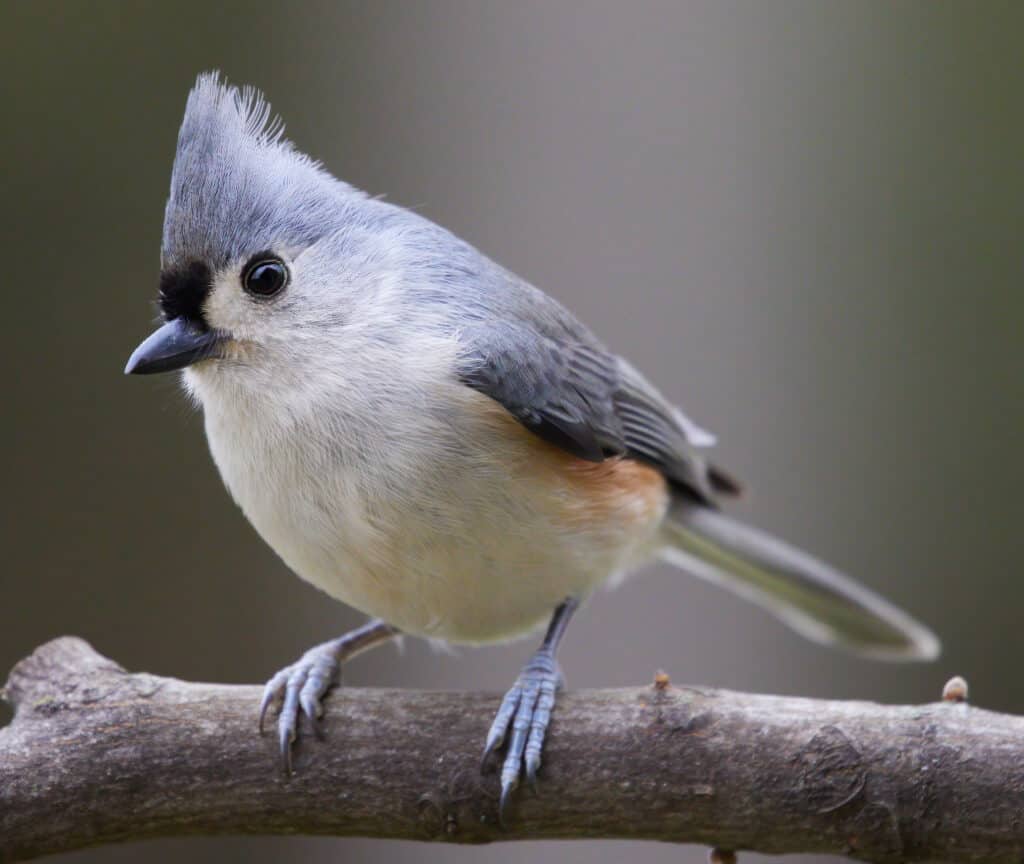
The tufted titmouse can be spotted all year in Texas.
©Rich Waite/Shutterstock.com
Tufted titmice live year-round in Texas, and in the winter, you will spot them congregating in large flocks with other small songbirds such as chickadees. The tufted titmouse is a small, grey bird with a bushy gray crest on its head and a black beak and forehead. They start building their nests in late winter in Texas and continue into spring, using nest boxes or other cavities. These little birds will flock to backyard feeders filled with peanuts or sunflower seeds.
Black Crested Titmouse
The black crested titmouse is closely related to the tufted titmouse and can be found in south and central Texas year-round. You can distinguish a black crested titmouse from a tufted titmouse by noting that the black crested has a black crest and white forehead, while the tufted titmouse has a gray crest and black forehead. While insects make up a large part of their diet, they will eat sunflower seeds and suet from feeders.
Carolina Chickadee
This tiny songbird is more common in East Texas than in the rest of the state. In the winter, Carolina chickadees form flocks to help defend their territory. Named by naturalist John James Audubon, the Carolina chickadee has a round, gray body and a black cap and bib. They will eat sunflower seeds, peanut chips, and suet from feeders in the winter.
Carolina Wren
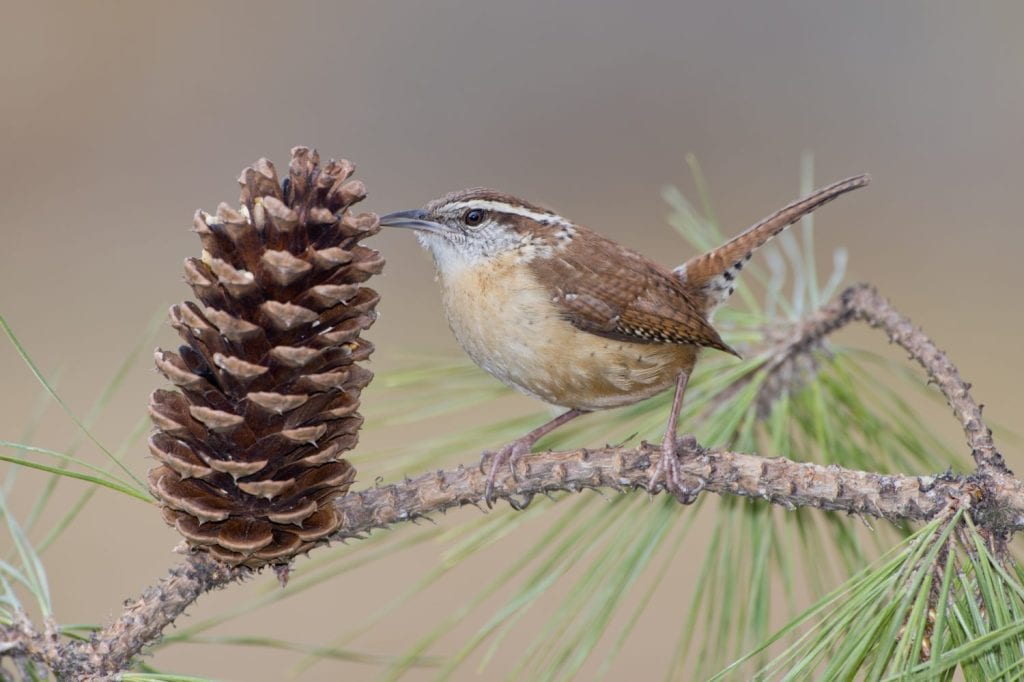
Attract Carolina wrens to your backyard with seeds, peanut pieces, and suet.
©Bonnie Taylor Barry/Shutterstock.com
Carolina wrens are commonly seen at backyard feeders in the eastern part of Texas. They mainly eat insects, but will supplement their diet at feeders with seeds, peanuts, and suet. These small, cinnamon-colored songbirds have loud, distinctive calls that sound like tweedle-tweedle-tweedle or tea-kettle, tea-kettle, tea-kettle tea. They are tiny but plump birds with a warm, orange belly and a reddish-brown back.
Northern Mockingbird
You may hear the song of the northern mockingbird throughout Texas in late winter when the males sing to defend their territory and attract mates. Both males and females mimic the calls of other birds and even frogs, but males sing more loudly and more frequently. A male mockingbird may learn up to 200 songs in its lifetime. To attract northern mockingbirds to your Texas yard, try placing fruit, mealworms, and suet in open tray feeders.
Northern Cardinal
The northern cardinal offers a beautifully striking flash of color against a winter background. Found throughout much of Texas, males are bright red while the females are olive brown with pink bills, though they have some red accents. To attract cardinals to your feeder, offer safflower seeds, cracked corn, or sunflower seeds.
House Finch
House finches are common year-round throughout Texas. They are colorful little birds that form large, noisy flocks during winter. Females are brown, while males are typically red, though their color can appear yellow or orange depending on their diet during molting. They will eat Nyjer seeds, sunflower hearts, millet, and fruit at feeders.
Birds You Will Only See at Your Texas Feeder in the Winter
The following birds only appear at backyard bird feeders in Texas during the winter. During other seasons, they migrate out of the state.
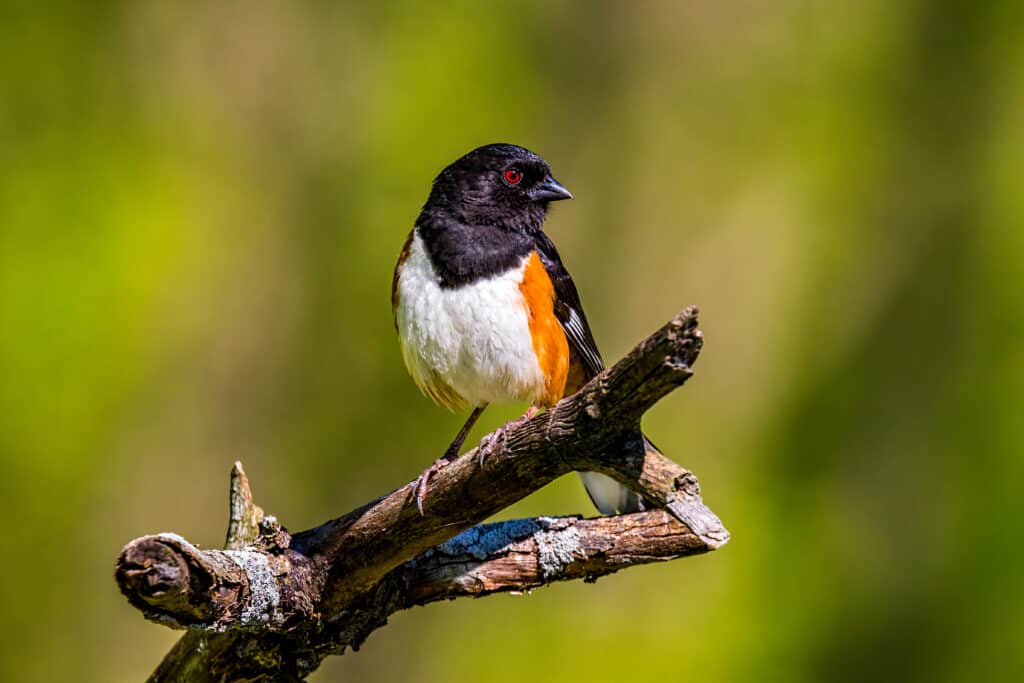
Eastern towhees migrate from the northeast and Canada to warmer climates during winter.
©John L. Absher/Shutterstock.com
American Goldfinch
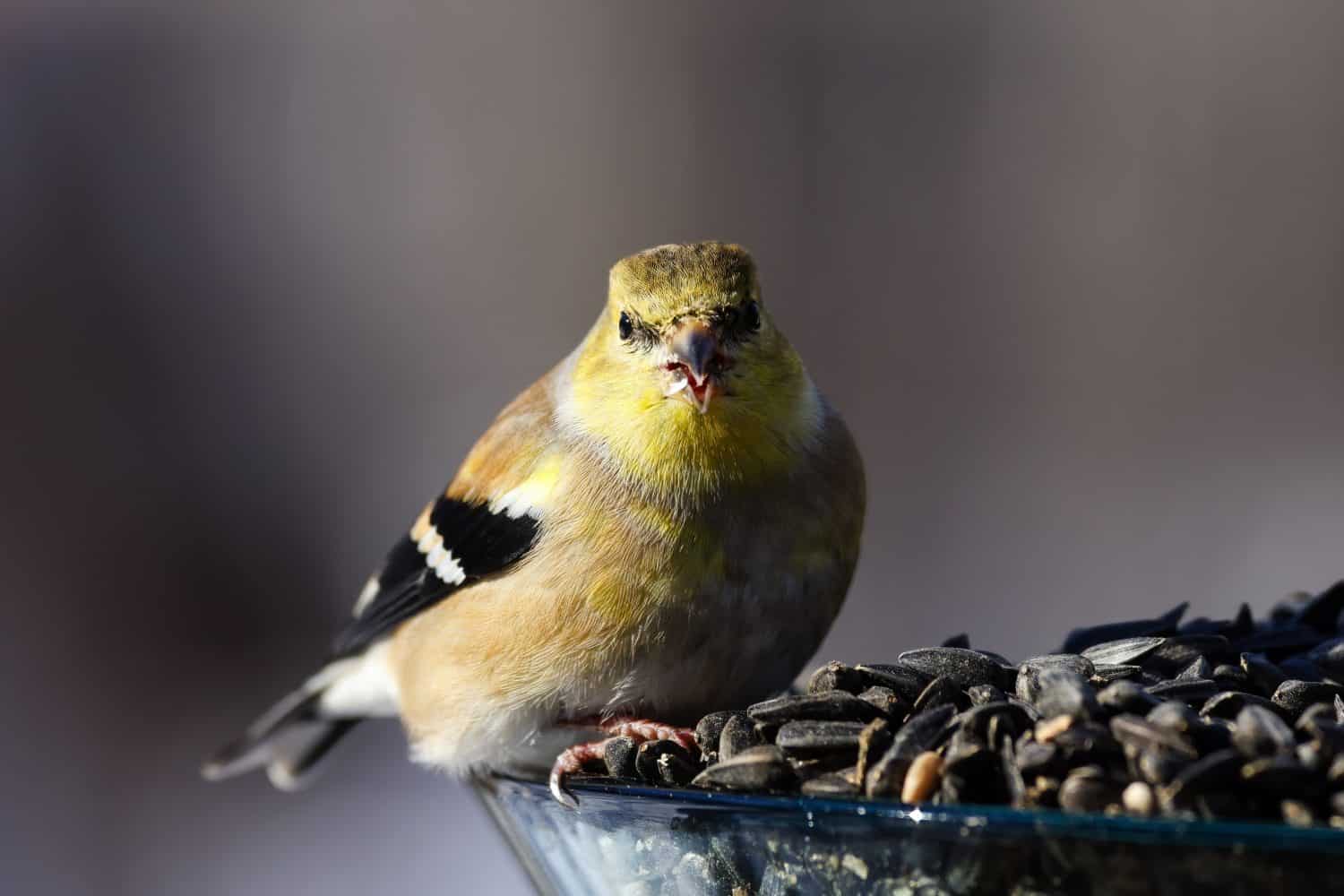
Unlike the lesser goldfinch that can be found in Texas all year, American goldfinches spend their winters in Texas, migrating north in the summer. Male American goldfinches have bright yellow feathers in the summer, which turn a paler color during winter. To attract goldfinches to your backyard feeder, try sunflower hearts or Nyjer seeds.
Dark-Eyed Juncos
Dark-eyed juncos are members of the sparrow family. They arrive in Texas in September, staying until May when they return north. These tiny birds have grey feathers on top and a fluffy white underbelly. They form large flocks in the winter, joining with other small songbirds and congregating underneath backyard feeders where they eat millet, sunflower hearts, and cracked corn that has fallen to the ground.
White-Crowned Sparrow
White-crowned sparrows are common during winter throughout the state of Texas. They arrive from the Northwest and Canada in the fall and return in the spring. They are brown birds with black-and-white patterns on their backs and wings, and a distinct black-and-white head. White-crowned sparrows like to eat sunflower seeds from backyard feeders, but mainly forage on the ground for dropped seeds under the feeder. These birds learn songs from their parents and others around them. Because they breed close to where they were raised, their songs develop regional dialects.
Eastern Towhee
The Eastern towhee can be identified by its shrill call. These large birds in the sparrow family arrive in eastern Texas in the fall and stay until spring. They have red eyes, dark heads and backs, orange wings, and white bellies. They will eat sunflower chips and peanut pieces from bird feeders, or forage on the ground for dropped seeds.