
Quick Take
- Bloodhound colors follow a hidden grading system that breeders use to rank coat patterns, a system most dog owners have never heard of.
- One bloodhound coat pattern is so rare that it only occurs through a specific recessive gene combination, and it hides within the most common color group.
- The rarest bloodhound color is regularly mistaken for a more common one, and the difference comes down to a single subtle trait.
- Not all red bloodhounds look the same. There are three distinct variations, and only one has no markings at all.
With an unparalleled sense of smell, bloodhounds evolved from medieval European hunting dogs into elite search-and-rescue and police trackers. These gentle giants feature a incredible olfactory power that makes them the gold standard for tracking. Male bloodhounds are slightly larger than femalesAlthough they are goofy and affectionate, bloodhounds are also independent, notoriously stubborn, and difficult to train. This means they are not ideal for first-time owners. Continue reading to learn more about these color designations.
Black and Tan
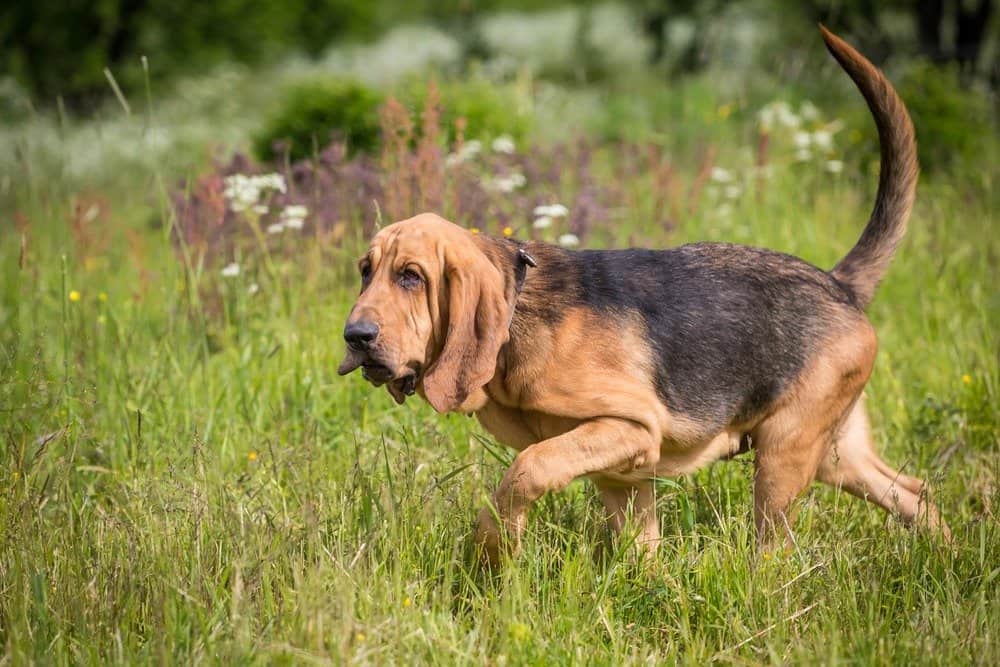
The black-and-tan bloodhound is the most common. There are four variations of this color combination, ranked B1 through B4. Breeders use this 4-point grading scale to describe how much of the dog’s body is covered by black fur versus the tan points. B1 has the least amount of black fur, while B4s have the most black fur.
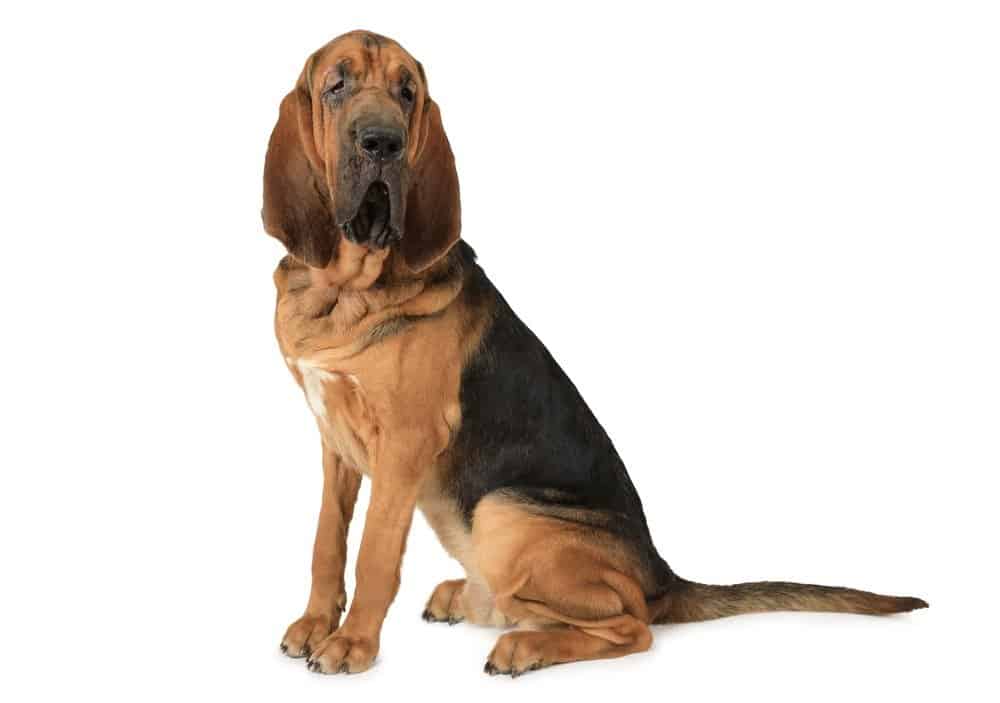
The black and tan bloodhound is the most common color.
©Kuznetsov Alexey/Shutterstock.com
The B1 coat typically has a tan undercoat, covering the majority of the bloodhound’s body. The black coloring is quite light and only appears on small patches. The B2 coat has a darker black hue, and the pattern resembles a saddle, which is why B2 is known as the black and tan saddle type, very similar to the German shepherd coat color combination.
The B3 and B4 designations belong to the same group of black-and-tan colors because there is minimal difference between them. In both B3 and B4, the black color covers almost all of the bloodhound’s back and extends over its hindquarters. B4s are relatively rare, as this full black blanket pattern results from a recessive gene combination.
Liver and Tan
Liver and tan bloodhounds are common, but not as common as black and tan bloodhounds. They also have different variations, ranked L1 through L4, depending on the brightness of the shade that covers the tan base color. The L1 shade appears as a light hue on the bloodhound’s back and is often mistaken for brown. The L2 is often referred to as the saddle coat color because the liver color forms the saddle shape on the bloodhound’s back. L3 and L4 are very similar; however, L4 is richer, and the liver color spreads over most of the body, with small sections of tan primarily on the legs and muzzle.
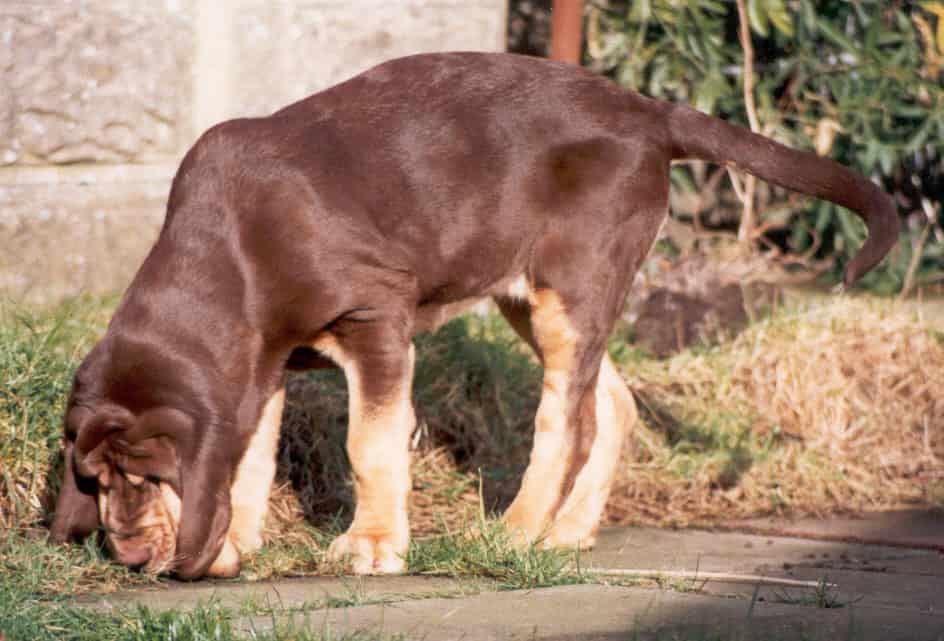
Liver and tan bloodhounds are common, but not as common as the black and tan bloodhounds.
Red
The least common bloodhound color is red. Red bloodhounds look very similar to liver and tan bloodhounds, except they do not have liver or black hues on their backs. The red color can range from a light tan to a darker, almost brown shade. Despite their similarities, red bloodhounds are distinguished by three specific coat variations.
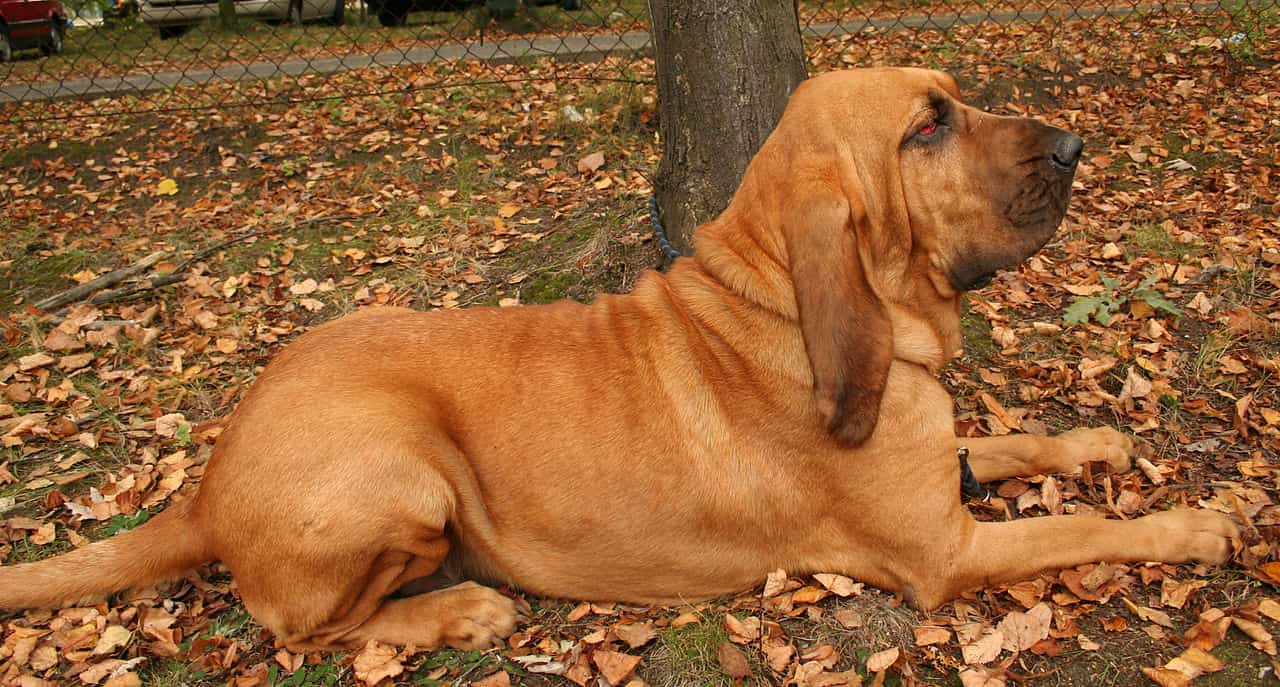
The first variation is the black and red muzzle, where the bloodhound has a solid red coat with a black muzzle. The second is the liver and red muzzle, where the bloodhound has a red coat and a liver-colored muzzle. The third variation is solid red, without any spots or markings.