
Quick Take
- Montreal's black squirrels defy the pattern seen in almost every other city studied, and the reason why reveals something surprising about how urban evolution actually works. See Montreal's surprising findings →
- Rivers aren't just scenery. They may be quietly deciding which squirrels dominate which neighborhoods. How rivers shape squirrel distribution →
- Labeling a neighborhood 'urban' turns out to be nearly useless for predicting animal evolution. Scientists now know what actually matters. What actually predicts evolution →
- A single gene tweak turns a grey squirrel black, and whether that gives it a survival edge depends entirely on where it lives. Meet the two color morphs →
Grey squirrels are not always grey; some can be black! They can also live in rural, suburban, and urban environments. But what is the connection between location and certain squirrel colors? What drives these differences? A new study carried out in Montreal has revealed that the relationship between squirrel color morphs and the landscape where they live is more complex than we thought!
How Evolution Works in Urban Habitats
Though we tend to think of evolution as something that takes place over millions of years, it is also happening right now, and nowhere is that more obvious than in urban habitats. Anthropogenic activity describes any process or change influenced by humans. These changes create pressures on organisms, and they can include elevated temperatures, artificial light, and fragmented green spaces. The animals that choose to live in cities are adapting to these situations. This presents scientists with natural laboratories where they can test ecological and evolutionary theories.
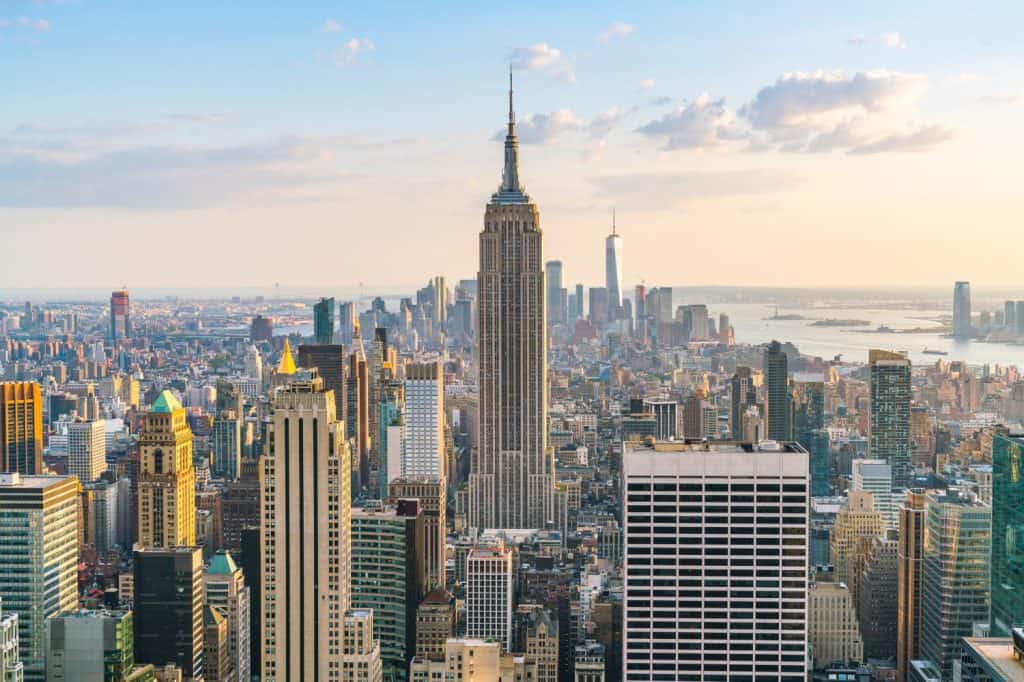
Evolution is taking place right now in cities.
©phototrip2403/Shutterstock.com
One particular phenomenon has been recorded in urban environments, and that is called parallel evolution. This is where populations of different animals develop similar traits independently when exposed to comparable selective pressures. For example, several species of animals living in urban areas show bolder behavior and enhanced problem-solving skills. Reduced body size, enhanced pollution tolerance, and changes in coloration are also seen.
Predicting Evolutionary Responses in Cities
Cities are more variable than you probably imagined. Within the urban landscape, there are differences in structure, land-use history, and climate factors. All of these exert different evolutionary pressures on the animals that live there. It is not sufficient to simply label an area as urban or non-urban. What about the proportion of green space and housing density? Are habitats fragmented by rivers, highways, and dense development? Does this lead to some populations becoming effectively isolated?
Further factors such as canopy cover, winter temperature, and patch connectivity also create localized concentrations of a certain phenotype (set of observable characteristics such as color) of some species.
Why Study the Eastern Grey Squirrel in Montreal?
The eastern grey squirrel (Sciurus carolinensis) is a common sight in urban environments in eastern North America. They have proved adept at using the urban habitat and exploiting its resources. These are medium-sized tree squirrels that grow to a length of around 20 inches and weigh up to around 21 ounces.
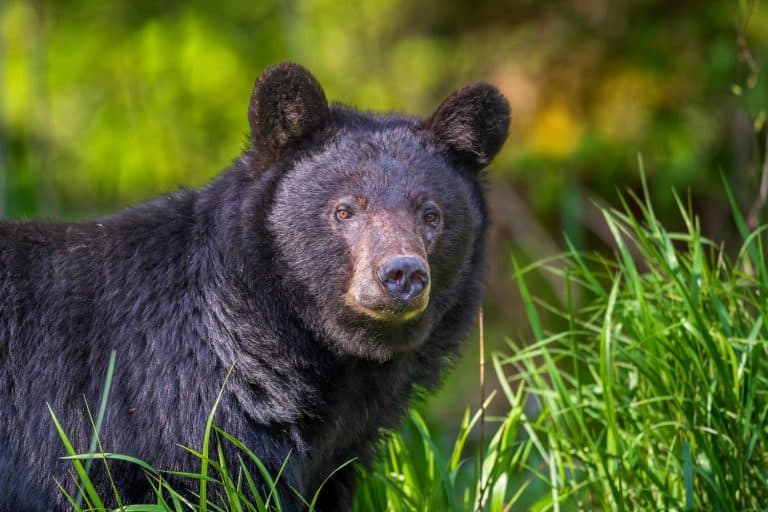
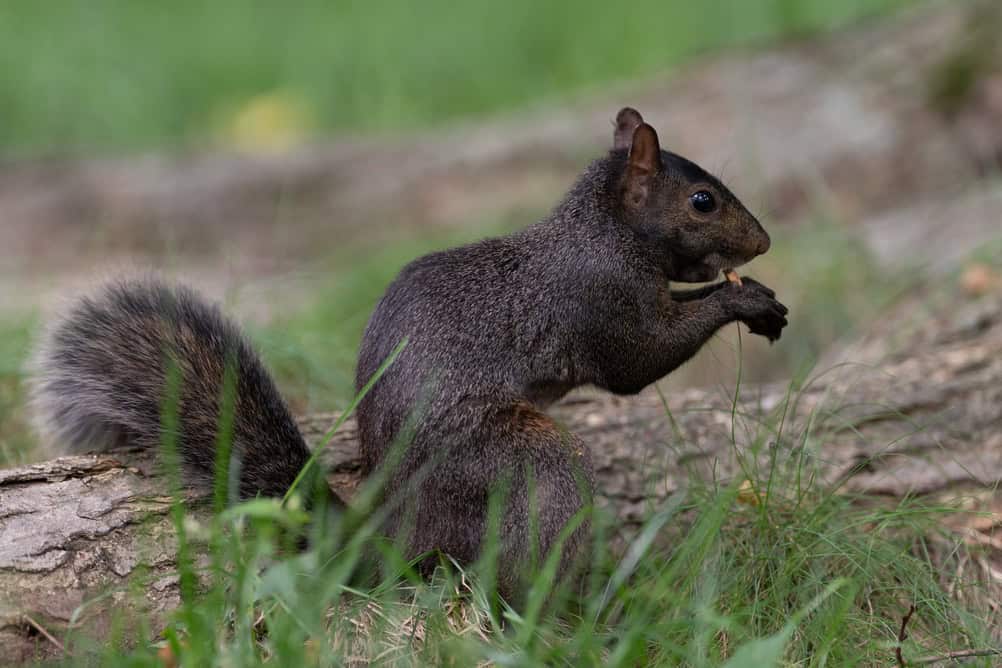
As their name suggests, most grey squirrels are grey! But another version (called a morph) also exists, and it is black. This is called a melanic morph and arises due to a change in a particular gene called the Mc1R gene. In recent centuries, melanic morphs have become rarer. This may be because they could be spotted more easily by predators in the areas where forests had been cleared. The grey morphs were better hidden in the new-growth forests.
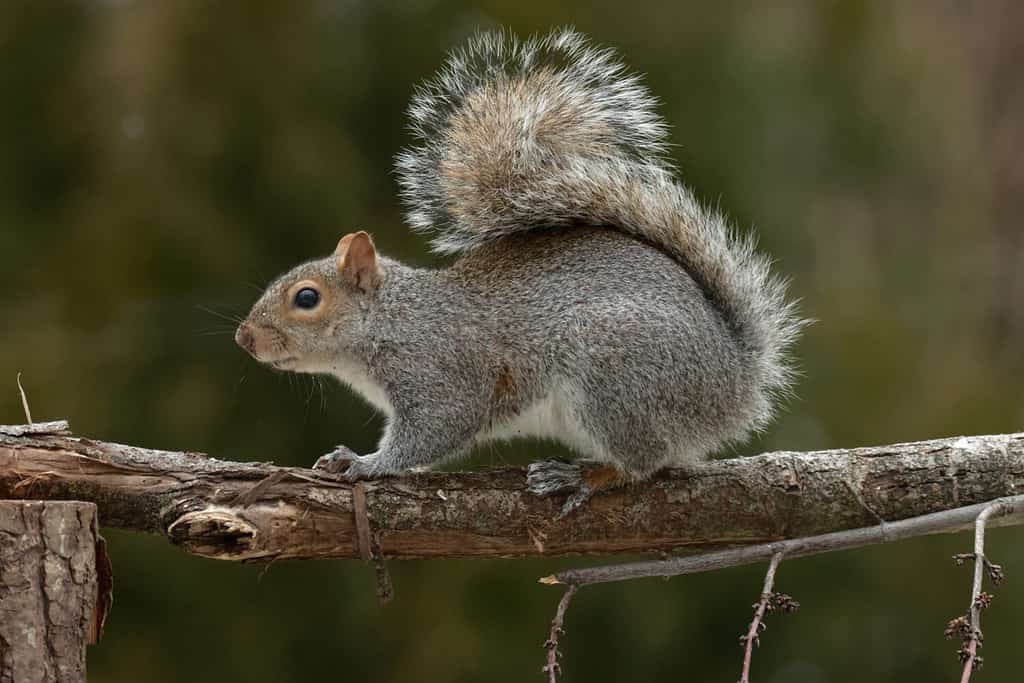
Eastern grey squirrels can also be black!
©My Generations Art/Shutterstock.com
Interestingly, melanic morphs remain common in the northern parts of their range and in urban environments. This raised the question of how black squirrels are distributed across complex urban environments and why.
Scientists chose the Montreal Metropolitan Area because it comprises a fragmented and highly heterogeneous landscape. The city is intersected by major rivers, which may form natural barriers to the movement of squirrels and therefore of their genes.
How Were Squirrels Studied?
The scientists carried out visual surveys in 197 parks across the Montreal Metropolitan Area, in the months of June and July of 2022. All surveys were carried out between 10 am and 4 pm and lasted 20 minutes.
Also, the researchers extracted all sightings of eastern grey squirrels from the iNaturalist dataset between the months of May to August in 2021, 2022, and 2023. To be sure of the squirrel species and color, they only used sightings with attached photos or videos. Added to this was a SquirrelMapper dataset compiled using citizen science reporting, visual surveys, and camera traps.
Patterns of Melanism in Montreal
The study revealed some unexpected results. Unlike the findings in many other cities, melanism was less common in the urban environments. The distribution of melanism, however, was complex across this varied city island landscape. Interestingly, rivers seemed to produce dramatic shifts in coloration. This may be because they act as barriers to the movement of squirrels across the landscape. They create regions where squirrels of a particular morph dominate.

Montreal has a diverse urban landscape.
©Susanne Pommer/Shutterstock.com
In general, melanic morphs were seen in areas with cooler winter temperatures and higher canopy cover. This may be connected with the increased thermoregulation offered by the darker coat. The black color has heat-retention advantages, which may give the darker squirrels a biological advantage in cooler winter weather.
Overall, the study makes it clear that color variation of animals in cities is not uniform. They are, instead, shaped by fine-scale environmental differences and geographic barriers. The urban landscape is not a single variable but is made up of many parts, which can be very different.