
Quick Take
- This bird has survived open ocean, predators, and longline fishing, yet one specific factor may finally push it past the point of no return. Learn about this species →
- Evolution has saved countless species from extinction, but scientists are saying it won't be enough for the black-browed albatross. See why evolution falls short →
- Researchers found one intervention that could cut the albatross's extinction risk dramatically, and it has nothing to do with conservation breeding or habitat protection. Discover the key intervention →
When it comes to animals and their ability to withstand human-produced change, consequences can develop faster than we can respond to them. Humanity is changing the environment and its ability to restore itself; too many pollutants are being released into the air, and too many industrial activities are wreaking havoc on the environment. One creature predicted to be dramatically affected by these changes is the black-browed albatross.
A recent study suggests that the forecast is grim: albatrosses will not be able to withstand the effects of climate change. The process of evolution occurs over million-year timelines: our effects on the environment and climate occur over mere decades. Saving species like the black-browed albatross requires extreme measures, including significantly limiting greenhouse-gas emissions. These strategies can reduce the albatross’s projected extinction probability by half. Let’s learn more about black-browed albatrosses, why climate change might be too powerful for them to withstand, and what we can still do to save them from extinction.
The Black-Browed Albatross
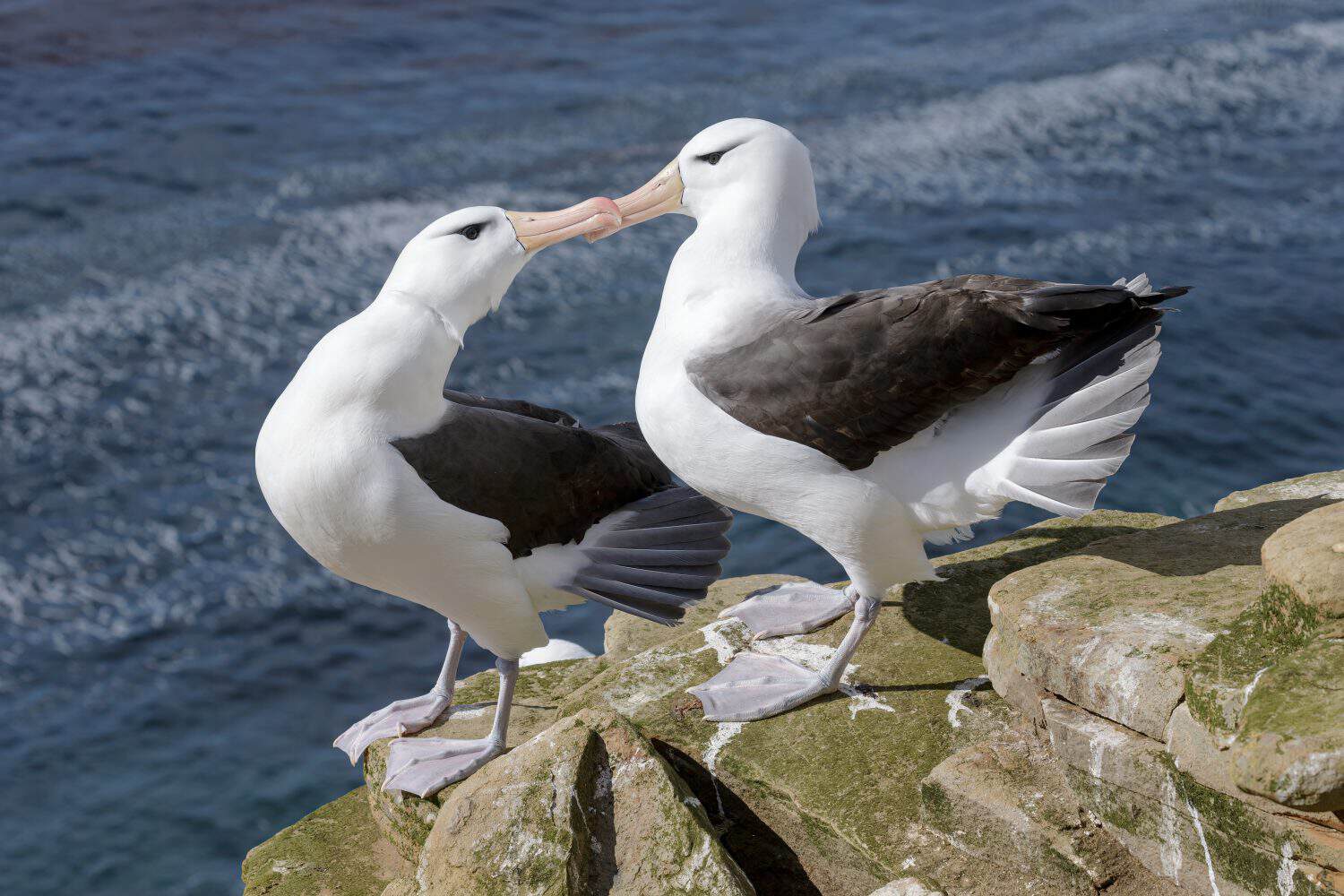
These birds stand out thanks to their considerable wingspans, contrasting dark and light coats, and natural eyeliner.
©David Osborn/Shutterstock.com
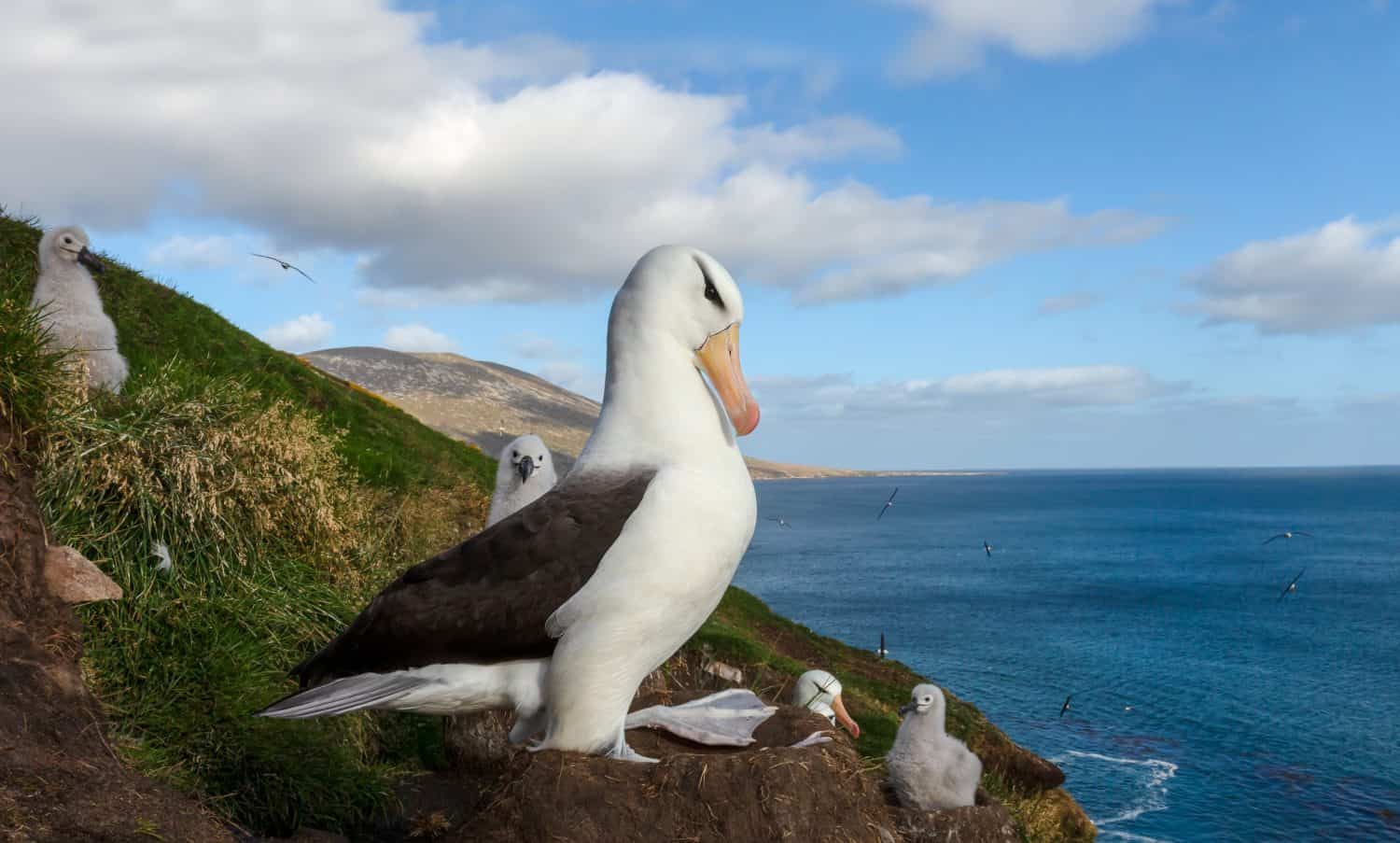
Black-browed albatrosses, also known as black-browed mollymawks, are one of the most widespread members of the albatross family Diomedeidae. They feature medium-sized builds, with wingspans of around 7 to 8 feet, and can live over 70 years. Physically speaking, black-browed albatrosses look like large seagulls with makeovers.
They have stark white coats that contrast with dark-grey saddles and dark-colored underwings. These birds stand out thanks to their yellow-orange bills and natural eyeliner. Seeing these birds in person, however, requires a trip to the Southern Hemisphere. Black-browed albatrosses spend most of their lives over open waters, traveling the wide expanses of the southern Atlantic, Pacific, and Indian Ocean. They only return to the land to breed, typically gathering in large colonies on remote islands like the Falkland Islands.
Consummate hunters, black-browed albatrosses subsist on fish, squid, and krill, which they snatch from the surface of the ocean. They also routinely follow fishing boats for prime scavenging opportunities. The black-browed albatross faces increasing threats, as nesting sites have been disturbed and longline fishing has further reduced numbers. In fact, there has been a 67% decline in the black-browed albatross population over a 64-year period. Such factors have previously contributed to conservation concerns for the species, though they are currently classified as Least Concern by the IUCN Red List.
Climate Change
This species thrives in stable climate conditions. With increasingly drastic temperature shifts, however, the black-browed albatross stands little chance. That fact was made clear by a new study published in the Proceedings of the National Academy of Sciences (PNAS). It suggests that, while evolutionary adaptation can improve the species’ overall population, it alone is unlikely to prevent further declines under climate change.
To come to these conclusions, researchers at the Woods Hole Oceanographic Institution (WHOI) and others compiled more than three decades of demographic and phenotypic data on black-browed albatrosses. They then built a computer model combining data about albatross demography, traits passed through generations, and projections of expected climate change. This allowed them to track how traits and breeding cycles would be affected by climate change, and whether natural selection could keep pace with the quickening rate of environmental shifts.
The short answer is no. The researchers found that evolutionary changes were not enough to prevent overall population decline, nor was the inheritance of traits from parents to offspring. As WHOI senior scientist and study co-author Stéphanie Jenouvrier explained in a press statement, “Evolution can help when adaptation improves the parts of the life cycle that matter most for population growth, but limiting the rate and magnitude of climate change gives adaptation a much greater chance to contribute to population persistence.”
Mitigating Strategies
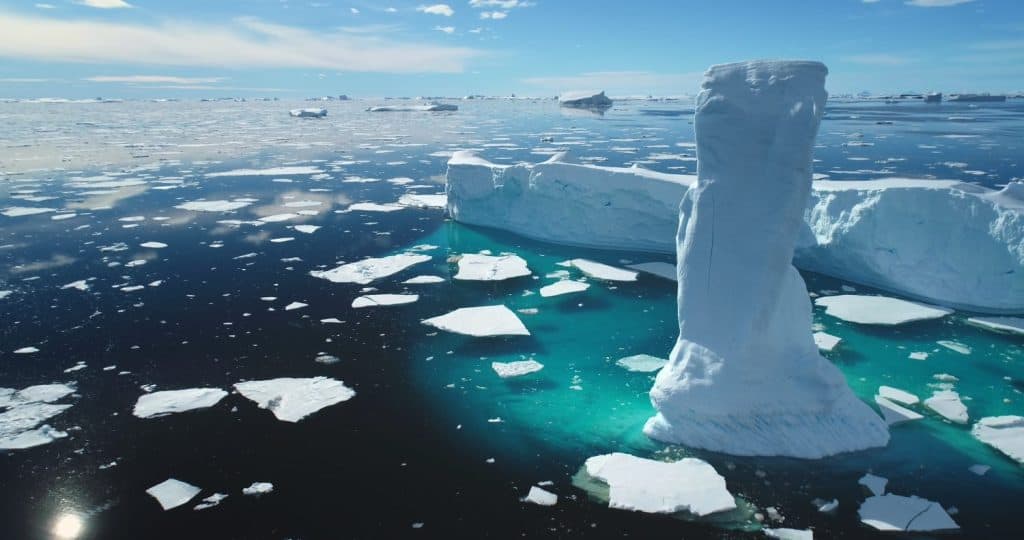
Though evolution can’t always outrun climate change, reduction of greenhouse gas emissions could give black-browed albatrosses a chance to survive long term.
©Mozgova/Shutterstock.com
Evolution can help threatened populations survive in changing environments, but these processes depend on timeframe and scale. Black-browed albatrosses live long lives. This means that environmental conditions can deteriorate faster than they can evolve new strategies to withstand those changes. In turn, populations decline faster than evolutionary benefits. There is, however, one possible approach to prevent the extinction of the black-browed albatross: human intervention.
When researchers simulated the limiting of greenhouse gas emissions in their computer model, the extinction probability for black-browed albatrosses dropped by approximately half. This suggests that there is still hope for this majestic species if humans take the right steps toward addressing climate change.
Study co-author and scientist at the National Center for Atmospheric Research, Marika Holland, said, “The rate and magnitude of future climate warming impacts the effectiveness of evolutionary adaptation. Reducing future climate change by decreasing greenhouse gas emissions slows population decline and enables evolutionary adaptation to promote population persistence.”