
Quick Take
- Octopuses are completely colorblind, yet they can perfectly mirror any color around them in milliseconds. The explanation is stranger than you'd expect. Explore the colorblind paradox →
- A sleeping octopus still shifts color, and the reason for this reveals something unsettling about how deep this ability actually goes. See how deep it goes →
- Three invisible cell layers are doing the heavy lifting behind every disguise, and one of them has nothing to do with pigment at all. Meet the three cell layers →
- Some cephalopods can run two completely different color signals on opposite sides of their body at the same time, doing so for two very different audiences. See dual signals explained →
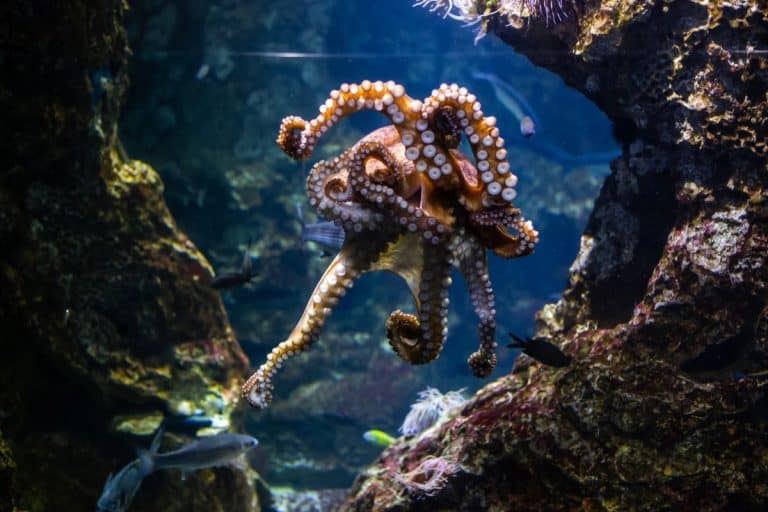
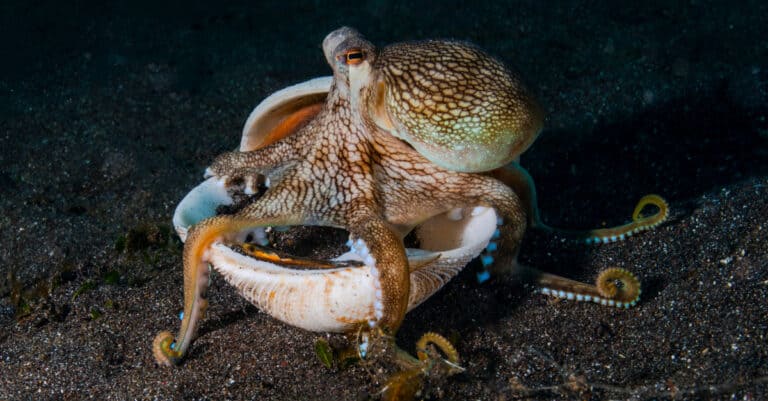
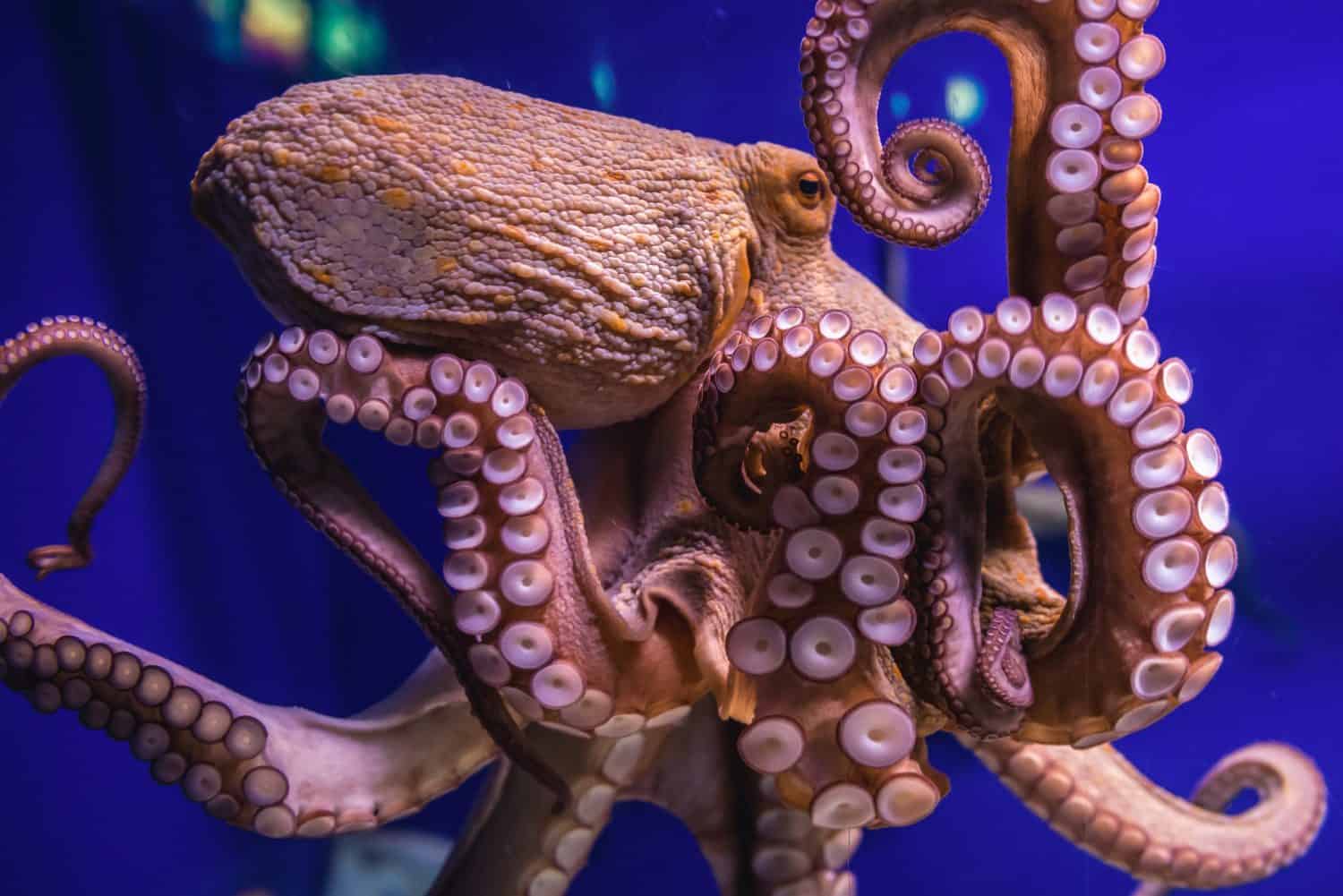
The cephalopod is arguably the greatest master of disguise in the animal kingdom. Members of this class, including squids, cuttlefish, and octopuses, can transform their skin color in an instant. Sometimes, they use this skill to become almost invisible. Other times, they use it to stand out, scaring off threats and predators. The day octopus, one of the larger octopus species, is known to change both its color and texture in an instant.
Day octopuses use their camouflage techniques so much that it can be hard to know their true color. In fact, one researcher observed a day octopus change its appearance at least 1000 times in seven hours. Remarkably, cephalopod species can uncannily match the color and texture of their surroundings even though they are completely colorblind. Let’s learn more about the remarkable process cephalopods like day octopuses use to camouflage themselves, and how a special type of cell makes these instant makeovers possible.
Mood Rings
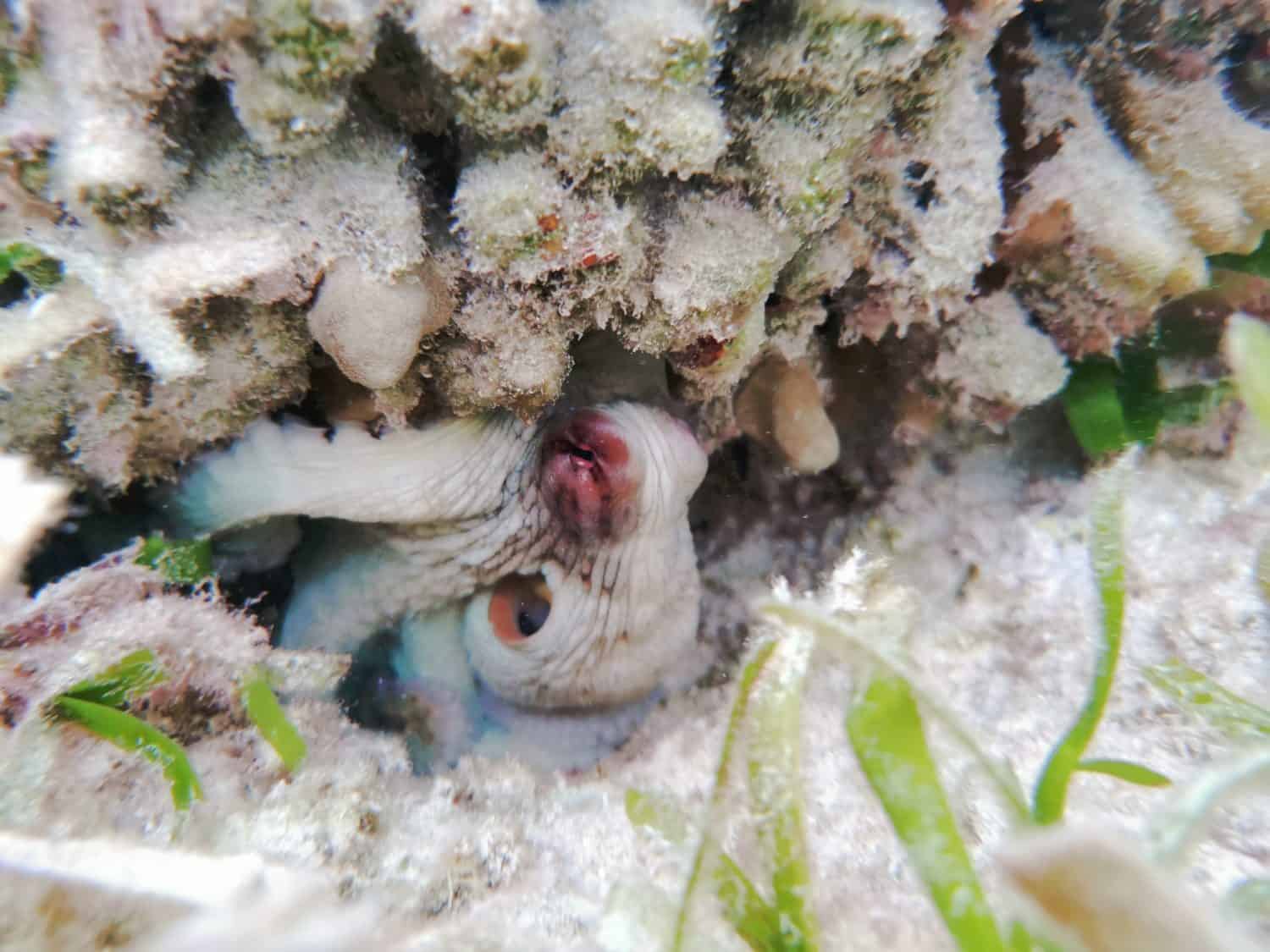
Octopuses are known to turn white while sleeping.
©OkGo1981/Shutterstock.com
Wouldn’t it be nice to be able to change your color based on your mood? While it may seem like octopuses do something similar, emotion has less to do with it than environment. When cephalopods change their color, they do so for hunting, hiding, and communication. Even when they are sleeping, octopuses are known to change their coloring to a white or grey color to match their environment.
The ability to physiologically change body color is called metachrosis. Terrestrial animals like chameleons can do it too. It is cephalopods, like octopuses, however, that are considered the undisputed champions of this type of camouflage because they can change their appearance drastically and within milliseconds. Scientists believe octopuses evolved to change colors as a defense against predators. After all, you can’t eat what you can’t see. At the same time, however, the fact that they change color during sleep suggests a deeper, more systemic process at play. Color changing directly reflects brain activity. During more active sleep cycles, an octopus’s color changes.
Cells of Light
Rapid changes in appearance, color, and tone are made possible by specialized cells organized in three distinct layers. On the very top of this structure sit chromatophores. These organs each contain an elastic sac of pigment that may be colored black, brown, orange, red, or yellow. Expansion or contraction of chromatophore sacs changes the color appearance of the skin.
The second layer features iridophores. These cells are not pigment-bearing but reflective, using protein plates to display iridescent blues, greens, and golds. The bottom layer contains leucophores, another type of cell that scatters visible light. This produces white patches on the skin that help blend the other colors with ambient light.
It’s hard to appreciate just how effective this three-layer combination is at camouflage until you see it in action. A cephalopod like a day octopus can basically mirror anything in its constantly changing environment. Whether matching the undulating ripple of an underwater current or flexing its muscles to mimic the gentle sway of seaweed, octopuses can all but disappear into the marine background.
Minuscule Muscles
Cephalopods like day octopuses also have small, specialized muscles lining their skin called papillae. Almost like manually controlled goosebumps, these structures can be raised, expanded, or flattened on demand. The contraction of radial muscle fibers underneath the skin pushes fluid into the papillae and expands them outward from the body. As such, the slightest relaxation of those same muscle fibers will flatten the skin back down instantly.
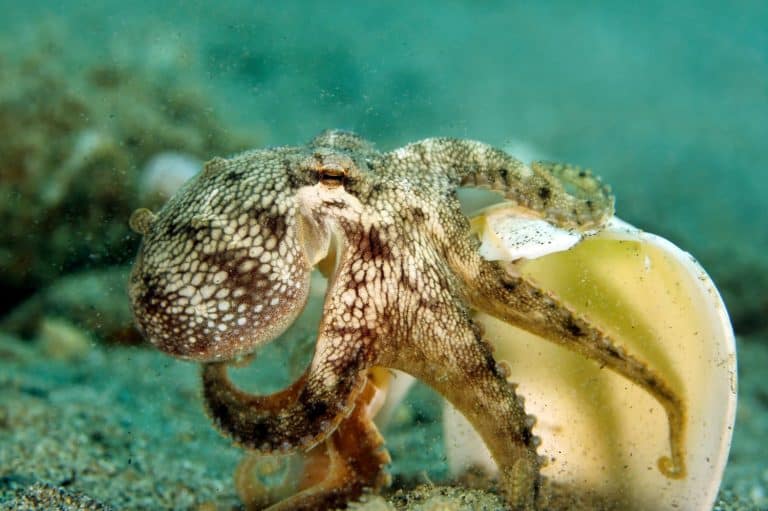
The way the papillae are manipulated determines their appearance. When the radial muscle fibers are engaged in one way, they take on the appearance of anything from sand to sharp rocks. Day octopuses, which spend much of their time in coral reefs, use their papillae to mimic the bumpy, uneven shapes of algae and coral.
When the specialized pigment-filled cells and the papillae are combined, they produce magical, eerie effects. A day octopus can blend with the coral reef beneath it to such a degree that even the keenest eye could not distinguish it. This helps them hide from predators, stalk prey, and even communicate. For example, male Caribbean reef squids will turn red to attract females and white to ward off other males. They can even split their coloration down the middle of their bodies. This allows them to simultaneously attract females on the left and scare off males on the right.
Color Blind
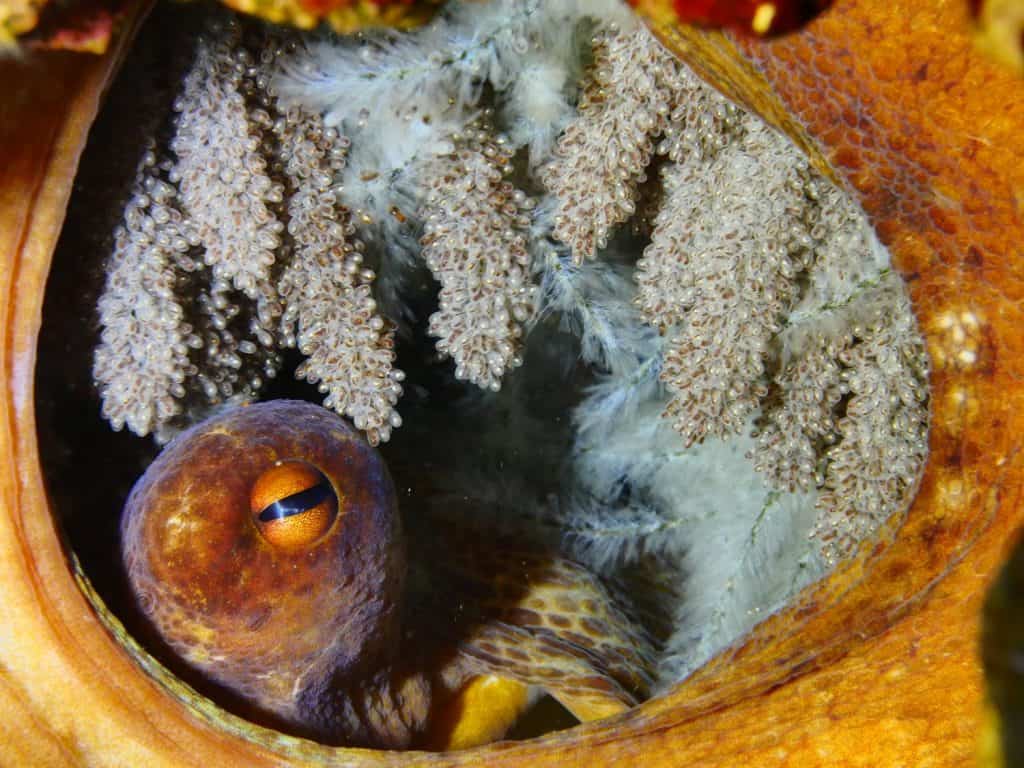
Despite being functionally color blind, octopuses have U-shaped pupils which may help them detect wavelengths in a different way than traditional color receptors.
©scubadesign/Shutterstock.com
Perhaps the most remarkable thing about color- and texture-changing cephalopods like day octopuses is that they are colorblind. They cannot perceive colors, yet their bodies can mimic them instantly. Scientists aren’t sure how they accomplish this, and research on the phenomenon is ongoing, but scientists have some theories. Octopuses have U-shaped pupils, which cause different colors of light to focus at different distances on the retina. This may help octopuses detect color variations in a different way than using color receptors.
Furthermore, recent research shows that octopus skin contains opsins. These light-sensing proteins are typically found in eyes, suggesting that octopus skin can directly sense light intensity and wavelength.