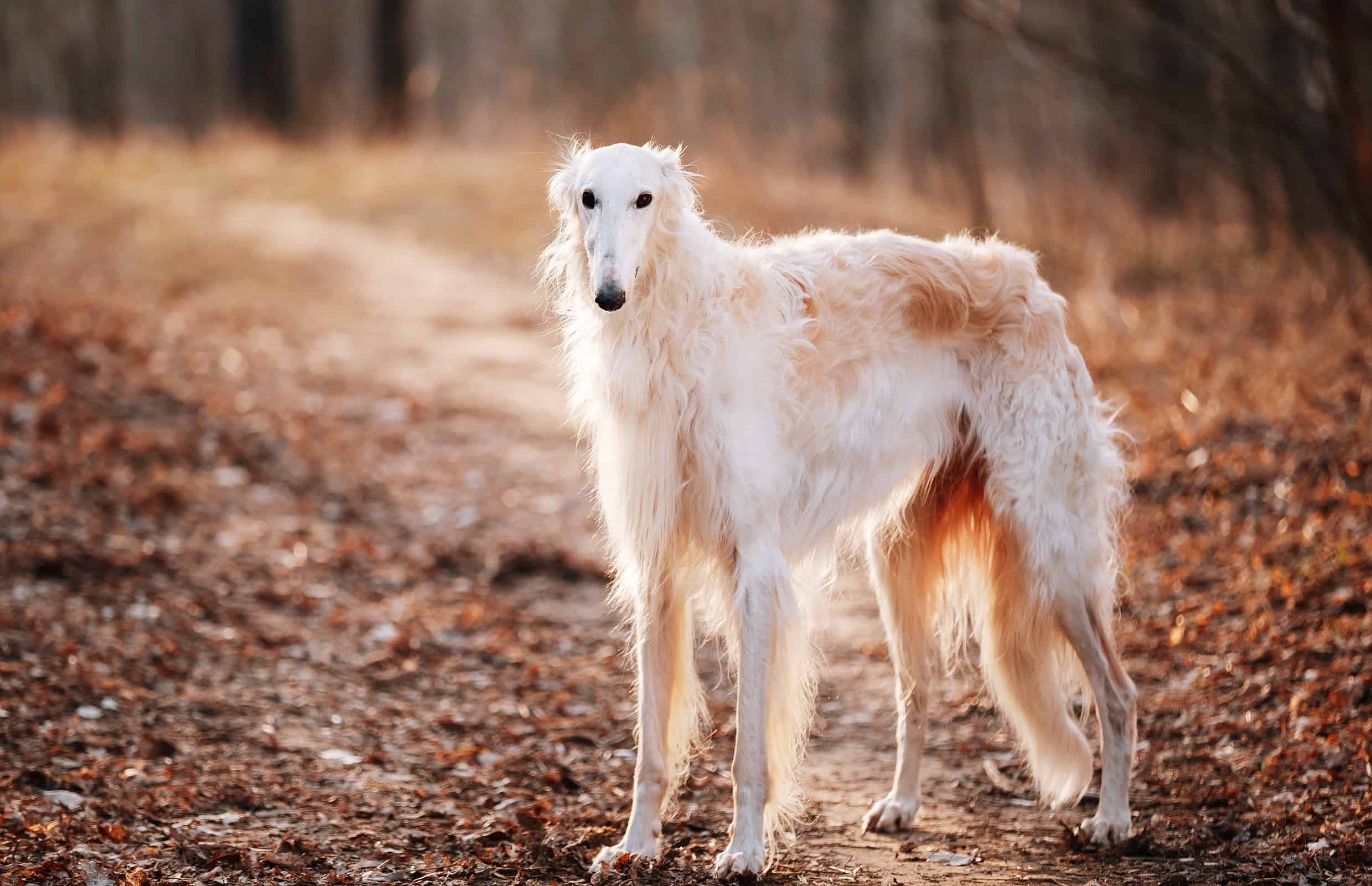

The borzoi breed has a long-standing regal reputation dotted with tragedy. The breed finds its origins in Russia — its name means fast in Russian.
Beginning in the fifteenth century, borzoi stood as the royal dog breed of Russia. However, when serf emancipation in 1861 crumbled the feudal system, the intricate system of kennel training and breeding of borzoi ground to a halt. Though borzoi dogs faced extinction in the 1900s, breed lovers worked to make sure the borzoi persisted.
Now, several decades later, the borzoi is a well-loved family dog with a gentle disposition and unique, elegant appearance. This giant, hound group breed has a personality built for companionship and a wicked-fast sprint. But how long do they live? Keep reading to discover the borzoi lifespan: how long these dogs typically live and how to ensure their health throughout their lifespan.
How Long Do Borzoi Dogs Typically Live?
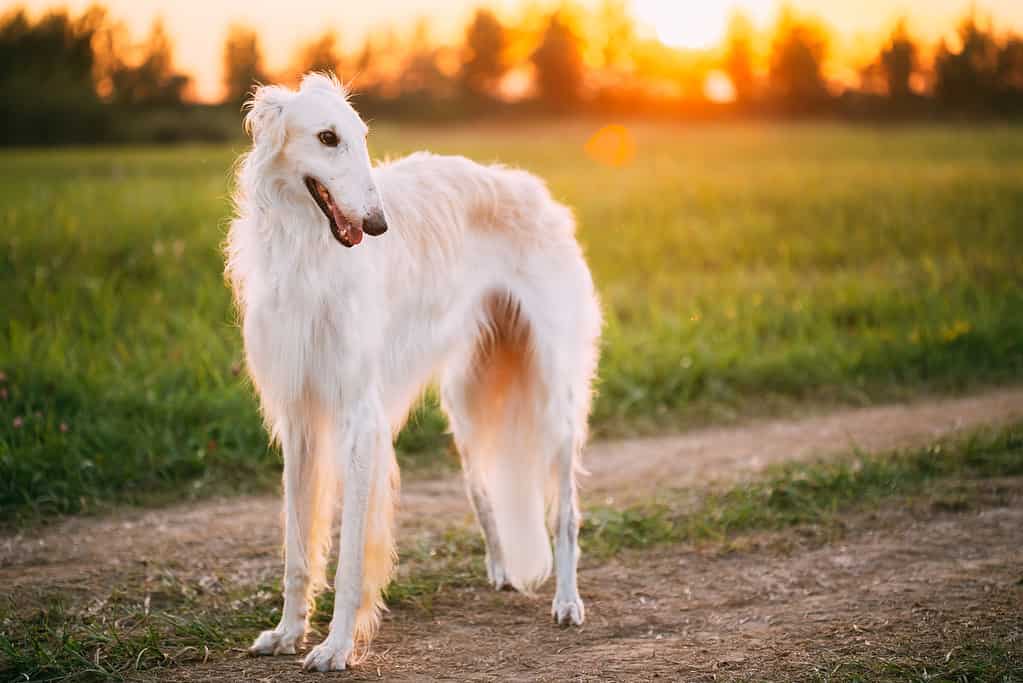
Borzoi lifespans range between nine and 14 years of age.
©Ryhor Bruyeu/iStock via Getty Images
Borzoi dogs have a lifespan of nine to 14 years. The wide range accounts for a breed individual’s upbringing and pedigree, as bloodline can act as a major factor in life expectancy.
Across the board, borzoi breeders and owners claim their borzois live at least nine to 10 years. Many mention those who have lived longer — including dogs reaching 15, 16, and 17 years old. On the other hand, breed individuals exist who pass away unexpectedly and early around the six or eight-year mark.
As with all life, chance and luck play a role too. Some owners share rare stories of borzoi puppies developing aggressive cancer and passing away, while other breeders and life-long owners have had more than one borzoi live beyond the age of 18.
When it comes to life expectancy, the borzoi’s proclivity to develop certain health issues remains an owner’s main concern. Once they’ve put proper measures and preventative care in place, it’s simply about enjoying every day with your borzoi and giving them the best life possible.
Health Concerns for the Borzoi
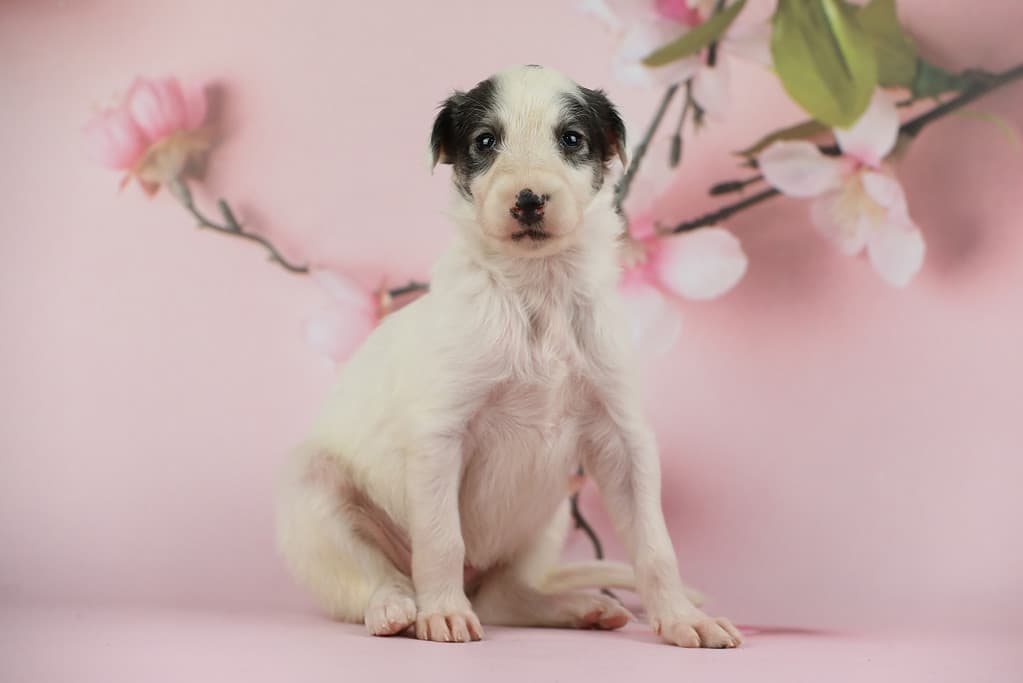
The main health concerns for borzoi dogs include dysplasia, bloat, and bone and eye issues.
©Olha Haletska/iStock via Getty Images
On average, borzoi remain incredibly healthy dogs. Only four major concerns affect the borzoi breed: elbow and hip dysplasia, bloat, osteochondritis dissecans, and retinal atrophy.
Dysplasia
With the borzoi’s giant size, it’s not surprising that elbow and hip dysplasia occur in the breed. According to the Borzoi Club of America, “Dysplasia of both the hips and the shoulders can be found in borzoi, although it is not common.”
Dysplasia generally affects larger breeds. If your borzoi develops hip or elbow dysplasia, the best non-surgical way to help them find comfort is to keep them on a healthy diet, routine exercise, and provide joint supplements.
Bloat
Also called torsion, bloat in dogs is a serious medical incident that can become fatal quickly. Similar to dysplasia, bloat generally affects larger breeds more than smaller breeds. It occurs when the stomach swells with gas, fluid, or both and twists itself. The swelled stomach pushes on other organs and restricts their blood flow.
Signs of bloat include a painful abdomen, panting, retching with no vomit production, and general distress. Immediate veterinary care is required to solve this issue.
Osteochondritis Dissecans
Borzoi have the predisposition to develop osteochondritis dissecans (OCD or OD). Like dysplasia, it occurs most commonly in the shoulders and hip joints. It may also affect the knee or hock of a borzoi. The condition flares up when diseased cartilage in a joint begins to separate from the underlying bone, according to VCA Hospitals.
A combination of medication, dietary restrictions, exercise reduction, and rehabilitation can help ease the pain of this condition. Surgery, however, is the best treatment.
Retinal atrophy
Progressive retinal atrophy remains a common senior dog affliction, and borzois have the predisposition to develop it. This eye disease is non-painful, but it will progress slowly and ultimately lead to blindness. Unfortunately, there is no cure for retinal atrophy and once diagnosed, your borzoi will lose their sight. Before they do, you can train commands and make their environment safer to ease the transition from seeing to blindness.
How to Keep Your Borzoi Healthy
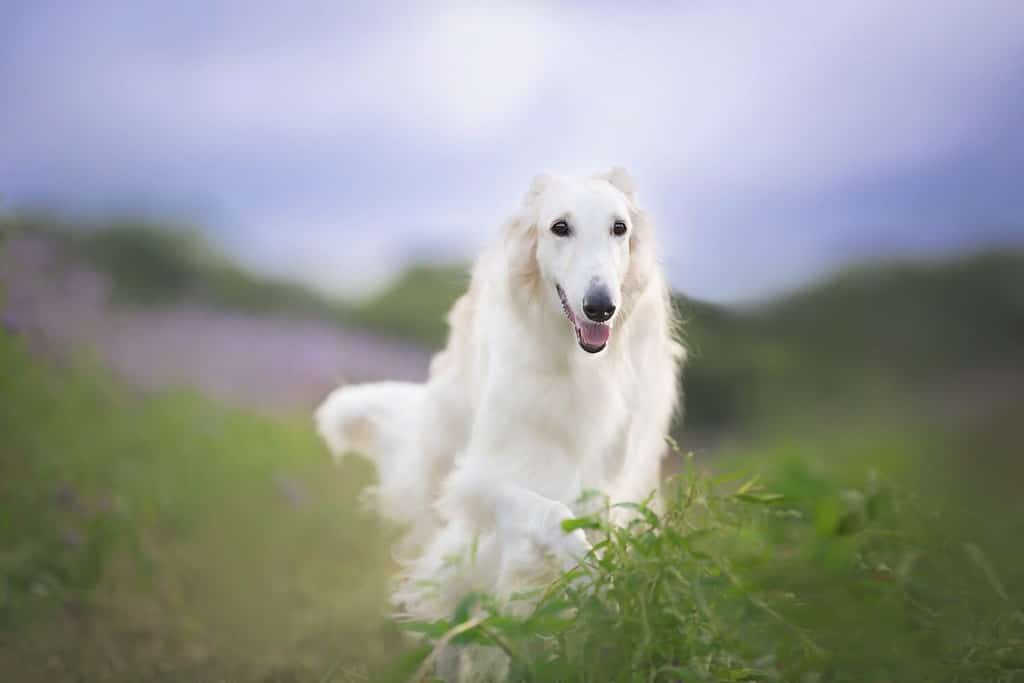
Borzoi dogs need to run and exercise to maintain a healthy mindset.
©Anastasiia Cherniavskaia/Shutterstock.com
Exercise
During puppyhood (which lasts over a year for borzoi dogs), your borzoi will want to run and exercise more than they will as an adult. Provide them with at least one to two hours of exercise a day through methods like long walks, free running — as long as the area is secure — and training or mental stimulation games like puzzles inside.
Keep an eye on your pup to discern whether the exercise you provide is enough. If they’re getting bored easily or looking to gain weight, you may need to augment their exercise schedule.
Veterinary Care and Nutrition
Like all breeds, borzoi need to visit the vet at least once a year for physical checkups, preventive medicine, and blood tests.
Dr. Alex Crow, an RCVS-accredited Veterinary surgeon practicing in the United Kingdom, talked to AZ Animals a bit about the cost of borzoi veterinary care and food. “The typical yearly vaccinations, including DHPP and rabies, will generally cost you between $70 and $200. Borzois needs high-quality, high-protein dog food due to its large size and active nature. You’re looking at spending around $40 to $70 per bag.”
You can feed your borzoi dry or hydrated food as long as it features a combination of high volume, high quantity protein, healthy fats, vitamins, fiber, and minerals. Whichever you choose, consult your veterinarian to confirm it’s giving your borzoi the nutrients it needs to grow.
What Should Borzoi Eat?

Opt for protein-heavy dog food for your borzoi.
©Yuriy Golub/Shutterstock.com
As mentioned above, borzoi need high protein diets. They do well on animal proteins like chicken and beef. Depending on your borzoi’s age, you will want to choose a food that complements their growth stage. Puppies will do well on slow-growth food because they have a predisposition for dysplasia. The slow-growth food aids the bones and growth plates with proper development and avoids joint issues down the line. Adult borzoi need high protein diets with less fat — so not all commercially available giant and large breed dog foods will suffice. Some owners even choose to feed their borzoi a completely raw diet.
Balancing Nutrition, Work, and Play for the Borzoi
Despite the borzoi’s breeding reason — to hunt — the modern borzoi is happy on the couch and with their family. Your borzoi does need room to run and play, so apartment living isn’t best suited for this breed; in fact, it could cause boredom-fueled destruction. Balance exercise, nutrition and vitamins, and downtime to strike an equilibrium of a well-loved, adequately challenged, and engaged dog.
Outside of four health concerns, the borzoi typically live a long and healthy life. Families who adopt borzoi puppies can expect to live with them for at least nine years but many will live for half a decade or more beyond that age.