
Quick Take
- Feeding your dog squash every day sounds excessive, yet there is a specific threshold that makes it perfectly safe, and most owners never get the balance right. See the safe limit →
- Raw squash hides a danger that has nothing to do with nutrition, and most dog owners don't catch it until it's too late. Check the raw risk →
- Winter and summer squash require completely different prep, and skipping one critical step with winter squash can land your dog in serious trouble. Get the prep steps →
- That can of pumpkin in your pantry probably isn't what you think it is, and the truth about what it actually contains changes how you should use it for your dog's digestion. Find out what's inside →
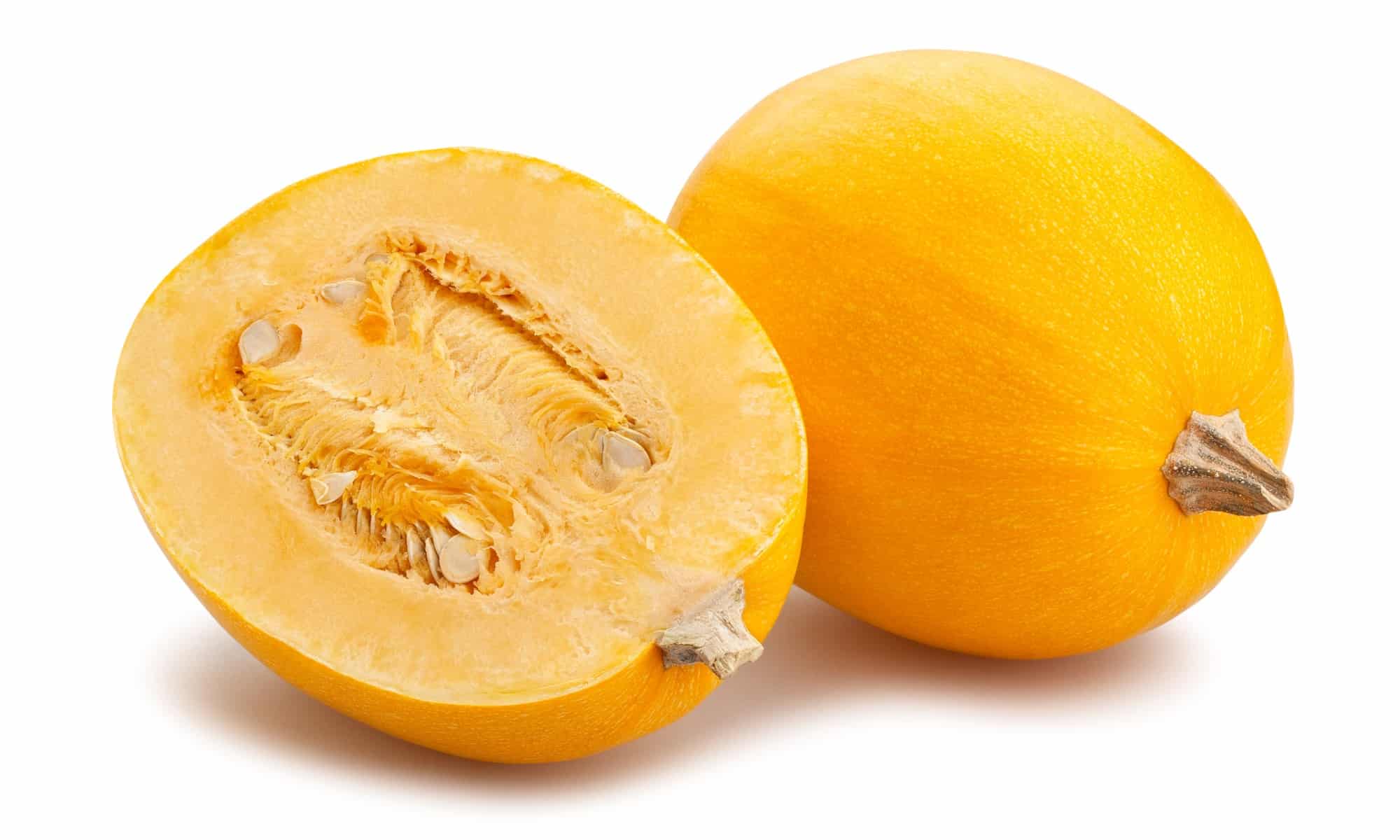
There are over 100 varieties of squash in the genus Cucurbita. These varieties are divided into two groups. Summer squash, including zucchini, straight and curved neck yellow squash, and pattypan squash, are harvested in the summer, when they are young and their skin is still tender. Winter squashes, such as butternut, acorn, spaghetti, and kabocha, are harvested in fall. Winter varieties are typically larger and starchier than summer varieties. All of the squash varieties mentioned are safe for dogs to eat, but the preparation method varies depending on the type. Continue reading to learn more about feeding your dog squash.
How Much Squash Can Dogs Eat?
Although it is safe to feed your dog squash every day, it should not account for more than 10% of their daily diet. The remaining 90% should be commercial dog food. This ensures that your dog is getting the right nutrients.
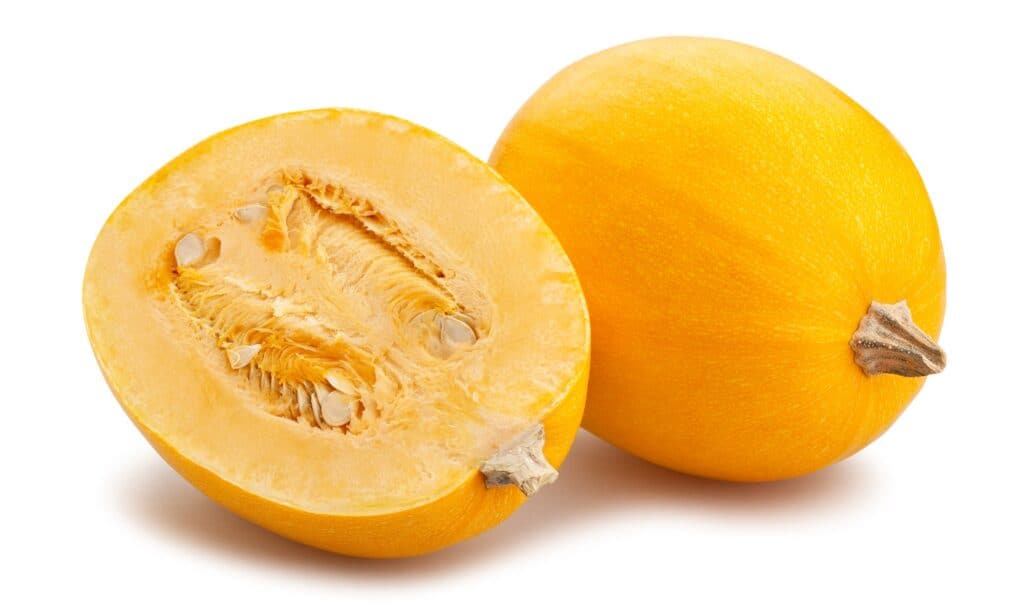
Squash should make up at most 10% of your dog’s diet.
©iStock.com/bergamont
While squash is healthy for your dog, it’s not a substitute for well-balanced dog food and shouldn’t be fed as a meal.
Squash is a healthful treat for dogs because it contains numerous vitamins, iron, fiber, and antioxidants. A serving of squash typically supplies:
- Vitamins A, B6, and C
- Magnesium
- Calcium
- Iron
- Fiber
- Antioxidants
Squash promotes better eye, skin, coat, and digestive health. The antioxidants in squash promote heart health and may reduce the risk of cancer. Squash is also low in calories and fat, making it a good treat for dogs who are watching their weight.
Can my Dog Eat Squash Raw?
Raw squash isn’t harmful for your dog nutritionally, but it can be tough to chew and serves as a choking hazard. Raw squash should be pureed or cut into small pieces. Bite-sized pieces can be used as kibble toppers, and puree can be mixed into your dog’s regular food.
How to Cook Squash for Dogs
Summer squashes like zucchini and yellow squash have soft, edible skins and tiny seeds, so they can be cooked with the skin left on and the seeds intact. Winter squashes like butternut, acorn, spaghetti, and kabocha have thick, tough rinds and hard seeds. Therefore, winter squashes must be peeled and de-seeded. Regardless of the variety, always serve squash completely plain, without any salt, butter, oil, garlic, or onions, as these can be harmful to dogs.
Steaming is considered the best method for cooking squash because it is fast, retains the most vitamins, and makes the squash easy to mash.
Can Dogs Eat Squash Skin or Seeds?
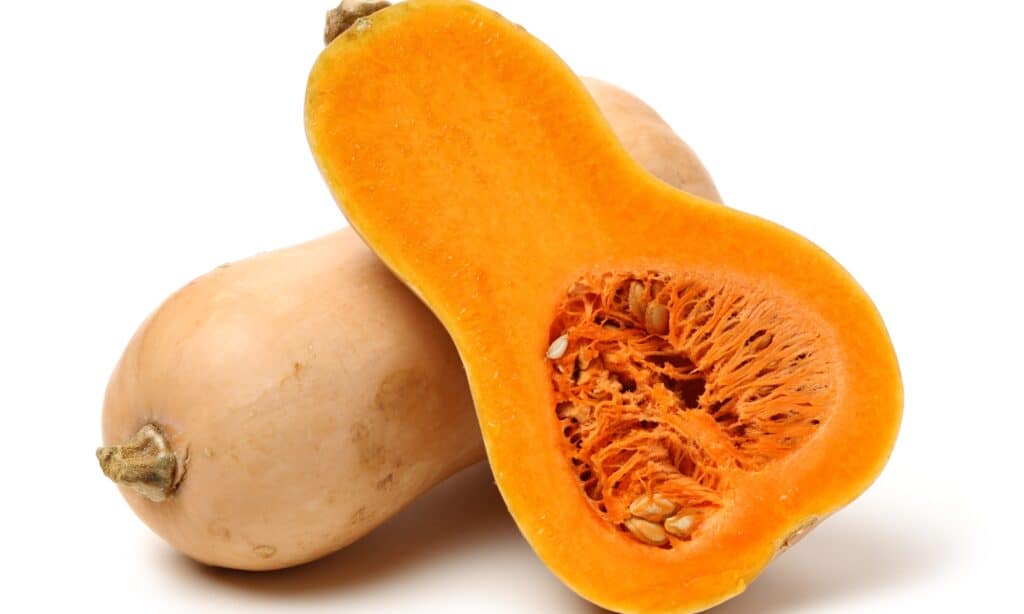
Dogs should not eat squash skin or seeds.
©iStock.com/chengyuzheng
Dogs should not be fed the skin or seeds of winter squash. While a sliver of leftover skin or a stray seed isn’t likely to cause issues, these parts of winter squash are difficult to digest.
Squash should be peeled and the seeds removed before cooking it or feeding it raw to your dog. Squash skin and seeds can cause intestinal issues or, in extreme cases, even an intestinal blockage.
Can Dogs Eat Canned Pumpkin?
Dogs can eat canned pumpkin. In the U.S., most canned pumpkin is actually made from Dickinson squash (Cucurbita moschata), which is labeled as pumpkin but is a different species from the traditional field pumpkin (C. pepo). Field pumpkin, which is also classified as a winter squash, is considered too stringy and less flavorful.
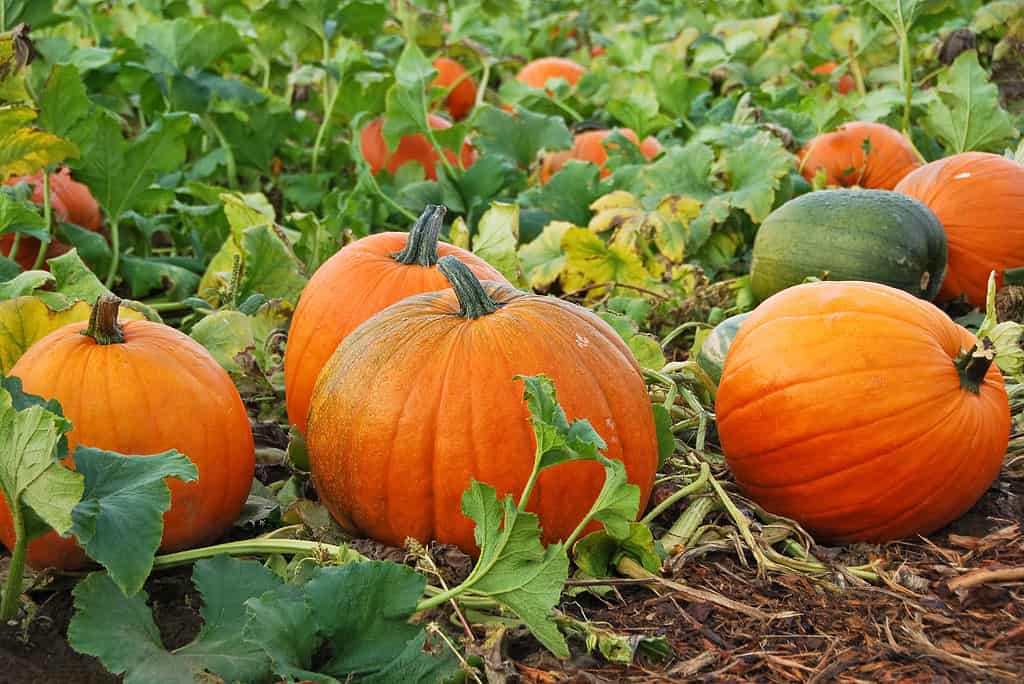
In terms of flavor and texture, field pumpkins are considered inferior to Dickinson squash.
©Loren L. Masseth/Shutterstock.com
Plain canned pumpkin is highly effective for treating both mild constipation and mild diarrhea in dogs. It acts as a natural digestive equalizer due to its unique blend of soluble fiber and high moisture content.