
Quick Take
- Common parasites affect cats and dogs, including roundworms, hookworms, whipworms, tapeworms, Giardia, coccidia, fleas, ticks, and heartworms.
- Transmission varies by parasite. Intestinal parasites spread fecal to oral, fleas transmit tapeworms, mosquitoes spread heartworms, ticks spread infections.
- Prevention is cheaper than treatment. Heartworm prevention costs range from $5 to $15 for dogs and $5 to $10 for cats.
It is no wonder that cats and dogs are beloved members of the family; they are cute, cuddly, and always willing to provide love and affection. However, these sweet canines and felines are also prone to sticking their noses, paws, and even bodies in places that are not so savory. Consequently, it is not uncommon for pets to come in contact with parasites, sometimes becoming infected with them in the process. To keep your pooch or kitty from becoming ill, pet parents need to know which parasites most commonly affect cats and dogs.
What Are The Most Common Parasites That Affect Cats and Dogs?

From roundworms to Giardia, several common parasites infect both cats and dogs.
©Ermolaev Alexander/Shutterstock.com
Dogs and cats are prone to parasites. While many believe only animals who spend a lot of time outdoors are at risk, fur babies who are primarily indoor animals can just as easily contract a parasite. These blood-suckers can survive both indoors and out. Regardless of region, there are multiple parasites that pet owners need to be aware of that can make their beloved cat or dog ill.
According to Dr. Michael Salkin, a veterinarian whose area of expertise includes canines and felines, several common parasites affect cats and dogs. Those parasites include:
- Roundworms
- Hookworms
- Whipworms
- Tapeworms
- Giardia
- Coccidia
Additionally, fleas and ticks can be included in the list.
“Heartworms are endemic throughout the world,” Dr. Salkin tells A-Z Animals. “Tick-borne infections such as Ehrlichia, Babesia, Anaplasma, Hepatozoon, and Mycoplasma are important pathogens as well.”
All of these parasites can make dogs and cats sick if left untreated. Understanding how each parasite spreads can help reduce exposure. Because parasites have different ways of infecting hosts, keeping pets completely protected without preventive medications is nearly impossible.
How Each Parasite Spreads Varies

Depending on the pathogen, the method of infecting a dog or cat varies.
©Ryan Brix/Shutterstock.com
If each parasite infected cats and dogs the same way, it would be much easier to keep them from getting infected. Unfortunately, according to Dr. Salkin, this is not the case. The way parasites spread to a host “varies with the pathogen.”
“The intestinal parasites are most often passed fecal to oral, although the common tapeworm arises after a dog or cat ingests a flea containing the larval tapeworm,” Dr. Salkin explains. “The mosquito is the most common vector for heartworms. Ticks transmit the blood-borne infections.”
Of the most common parasites for dogs and cats, the way they are transmitted is as follows:
| Parasite | How Parasite Transmission Occurs |
| Roundworms | Roundworms are very easily transmitted. They can contaminate the ground where feces land, be passed from mother to puppies and kittens through milk, or even be passed from mother to puppies and kittens before birth. |
| Hookworms | Hookworms are very easily transmitted. They can contaminate the ground where feces land, pass from mother to young through milk, or even pass from mother to babies before birth. |
| Whipworms | Whipworm eggs are passed out of the body via feces. When the feces land on the ground, the soil becomes contaminated. Dogs or cats that come in contact with the soil, the feces, or even contaminated water, can contract whipworms. |
| Tapeworms | Dogs and cats get tapeworms after they eat fleas contaminated with the parasite. |
| Giardia | Cats and dogs can be infected with Giardia by ingesting the cysts in contaminated water, food, soil, or feces of other animals. |
| Coccidia | Coccidia infects dogs and cats after they consume coccidia oocysts found in contaminated soil or feces. |
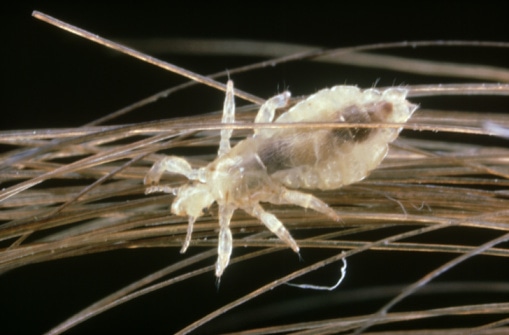
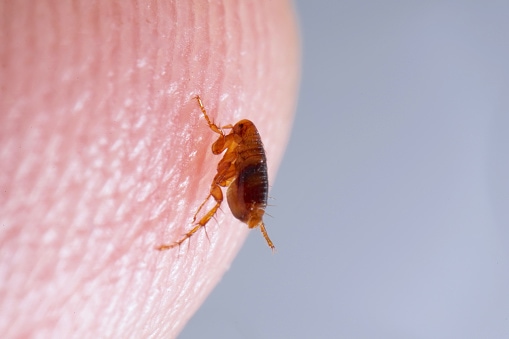
| Fleas | Fleas are often found on cats and dogs if they come into contact with other animals infested with fleas, go outside where fleas are present, or are even transferred by people. It does not matter if they are indoor or outdoor pets. All pets are prone to getting fleas. |
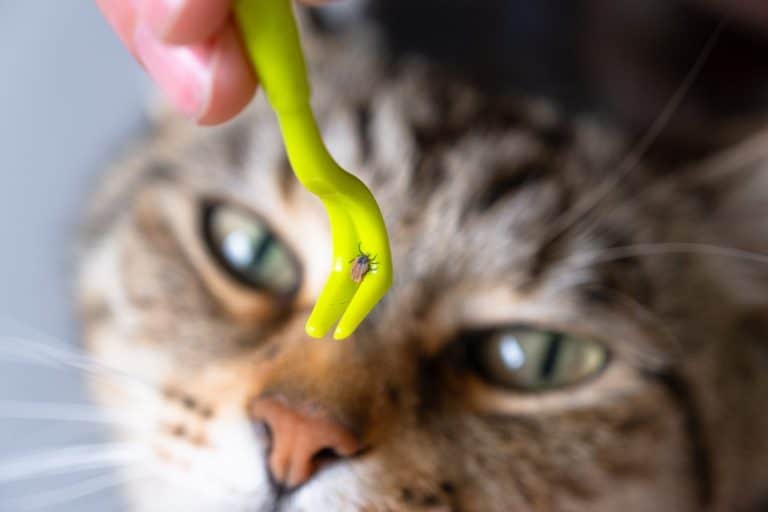
| Ticks | Pets who spend a lot of time in wooded or brushy areas have a higher chance of tick exposure. Multi-animal homes also have a higher chance of coming into contact with ticks than those with just one animal. |
Once these parasites infect a cat or dog, they will begin to move throughout different parts of the body. One problem with some of these parasites is that the infection may not show for some time, allowing the infection to grow and worsen in the body.
Intestinal parasites can cause intestinal distress in the form of inappetence, vomiting, and/or diarrhea. Tick-borne infections can cause lameness, fever, malaise, and anemia. All of these may also result in asymptomatic infection.
Dr. Michael Salkin, a veterinarian specializing in dogs and cats
What Do Symptoms Look Like for Each Common Parasite?

Symptoms of common parasites vary, with some dogs and cats showing none at all.
©Prystai/Shutterstock.com
Given that each of these parasites is different, once contracted, their symptoms naturally vary. To make matters even more difficult when it comes to diagnosing the parasite, according to Dr. Salkin, some can be asymptomatic for weeks to months.
“Intestinal parasites can cause intestinal distress in the form of inappetence, vomiting, and/or diarrhea. Tick-borne infections can cause lameness, fever, malaise, and anemia,” Dr. Salkin states. “All of these may also result in asymptomatic infection.”
Dr. Salkin, who has been practicing veterinary medicine for 53 years, continues, saying, “Heartworms can take up to six months to be symptomatic. The symptom is most often coughing.”
The typical symptoms of the most common parasites that infect cats and dogs includes:
| Parasite | Symptoms After Contracting Parasite |
| Roundworms | Rounded, pot-bellies, weight loss, vomiting, worms appearing in stool. |
| Tapeworms | Vomiting, diarrhea, worms appearing in stool. |
| Whipworms | Diarrhea and dehydration. Worms will be in the stool but are not often seen. |
| Hookworms | Diarrhea, weight loss, lack of energy, itchy, bloody paws, and dull coat. Worms will be in stool but are not seen. |
| Giardia | Vomiting, diarrhea, gas, lack of energy, and decreased appetite. |
| Coccidia | Diarrhea, vomiting, weight loss, and stomach discomfort. |
| Fleas | Consistent itching and biting of skin, flea dirt, hair loss, presence of fleas, and inability to settle due to discomfort. |
| Ticks | Fever, lack of energy, lack of appetite, weight loss, odd bleeding, joint pain, lameness, or tick being attached. |
It is important to remember that dogs and cats can be asymptomatic. This is why getting tested once or twice a year is recommended to ensure a parasite infection does not exist and, if it does, it can be eradicated sooner rather than later.
Do Parasites Infect Seasonally?

There are parts of the United States where parasites can infect cats and dogs year-round.
©TanyaBond/Shutterstock.com
There is always a risk that cats and dogs will be exposed to parasites. However, there are certain times of the year and particular regions of the United States that put pets at a higher risk than others.
“Very dry environments don’t support worm eggs in the soil, limiting their risk to dogs and cats,” Dr. Salkin explains. “Additionally, the vectors, ticks, and mosquitoes are more prevalent when it’s warm and moist.”
The timing for an increase in parasites typically looks like the following:
| Parasite | When The Parasite Is Most Likely To Infect Pets |
| Fleas | Year-round in warmer climates and summer to fall in regions that get hard freezes. |
| Ticks | Year-round in warmer climates and summer to fall in regions that get hard freezes. |
| Giardia | In humid regions that receive steady rainfall, it can be a persistent problem year-round. In dry areas, spring and summer tend to have the most serious Giardia problems, with winter runoff and warm temperatures creating ideal conditions for the parasite to thrive. |
| Coccidia | Because Coccidia can remain dormant for months, it is a year-round problem for dogs and cats. More animals tend to be infected in humid areas with warmer temperatures. |
| Heartworms | Infected mosquitoes transmit heartworms. Because mosquitoes are a year-round problem in many parts of the United States, heartworms can infect cats and dogs any time of the year. |
| Hookworms | Hookworms may do better in warm, humid environments, but their ability to survive indoors makes them a problem year-round. |
| Whipworms | As long as there is moist soil, whipworms can thrive. They may have a larger presence during warmer months, but they do not disappear during the winter. |
| Tapeworms | With fleas being a year-round presence in many areas, tapeworms are going to be found throughout the year as well. |
Fleas, ticks, and mosquitoes are no longer seasonal pests. With the weather remaining warmer longer and fewer hard frosts, pets and people alike are having to deal with the ramifications of these creatures year-round, in some instances. This highlights the fact that parasite prevention is necessary to keep pets healthy, as there are no “safe” seasons devoid of parasites.
Why It Is More Cost-Effective to Prevent Rather Than Treat Parasites

Prevention, in the form of monthly pills or topical vials, is more cost-effective and keeps pets healthier than hoping an infection never occurs.
©Alexsander Ovsyannikov/Shutterstock.com
With costs rising, cat and dog owners are feeling the pinch when it comes to food, cat litter, toys, treats, and the like. Because of this, some may wonder if it is really necessary to give their pets vaccines or over-the-counter flea and tick medication if they do not spend that much time outdoors. According to Dr. Salkin, a single exposure to any of these parasites can turn a nominal fee for preventive care into an astronomical cost very quickly.
“It’s always easier (and less costly) to prevent rather than treat a disease,” Dr. Salkin tells A-Z Animals. “There are excellent over-the-counter products that address the nematodes (roundworms, whipworms, hookworms), tapeworms, and Giardia.”
Dr. Salkin continues, “Coccidia requires a prescription drug. Heartworm preventatives are prescription drugs, but their cost is trivial compared to the cost of treating a dog with adult heartworms. Both over the counter and prescription flea and tick products abound.”
To put this into perspective, the cost of heartworm prevention ranges from $5.00 to $15.00 for dogs and $5.00 to $10.00 for cats. Treating a dog for adult heartworms can cost $500 to $3,000. The cost for cats is similar, ranging from $1,000 to $5,000. Clearly, the preventative route is the less expensive way to go. Not only will it save money, but it will also prevent animals from suffering from heartworm.
The prevalence of each of these parasites varies by region. Those who have animals that spend time outside will want to invest in preventive care to avoid having to pay a massive veterinary bill if their beloved cat or dog becomes infected. Yes, it may be a bit pricier in the short term. But in the long run, not only will pets be healthier and happier, but owners’ pocketbooks and bank accounts will be less stressed as well.