
Quick Take
- A fly problem that looks minor in the morning can turn fatal by nightfall, and most owners do not realize just how short the window to act truly is. See the 12–24 hour window →
- Cats and dogs aren't off the hook either. Certain common conditions put them squarely in the danger zone. See which pets are at risk →
- There's one well-meaning first response that vets say can make fly strike dramatically worse rather than better. Avoid this common mistake →
- A foul smell from your pet's coat might not be what you think, and ignoring it could cost them dearly. Understand that foul odor →
Warm weather brings longer walks, backyard play, and more time outdoors with our animals. It also brings something far less pleasant: flies. For many pet owners, flies feel like a minor nuisance. But under the right conditions, they can trigger a fast-moving and life-threatening emergency called fly strike.
©Singha Homesharks/Shutterstock.com
What Is Fly Strike, and Why Is It So Serious?
Fly strike may seem like a minor skin issue, but it can escalate within hours. Dr. Jonathan Townsend, DVM, DAVPB, and NAVC Board President, tells A-Z Animals what fly strike is, how to spot it early, and what to do if it happens.
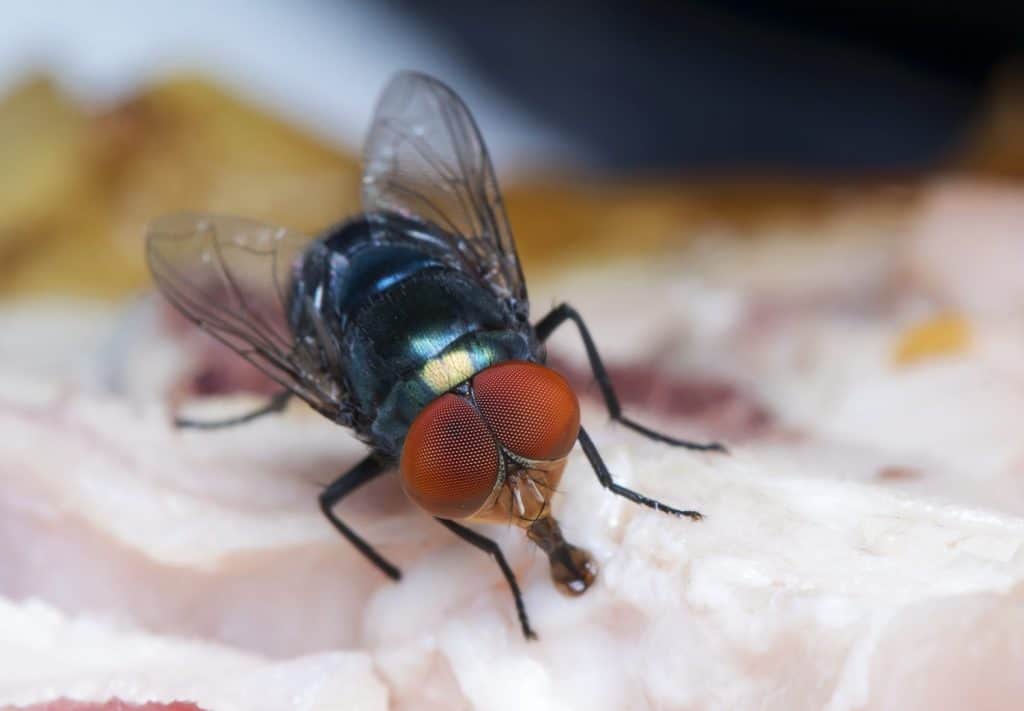
“Flystrike, medically known as myiasis, is a condition where blowflies or flesh flies (such as bot flies or blow flies) lay eggs on an animal’s skin,” Dr. Townsend explains. “Within 12–24 hours, the eggs hatch into larvae that feed on secretions, dead tissue, or flesh.”
That speed is exactly what makes it so dangerous. A problem that looks minor in the morning can become critical by nightfall.
“It is such a serious condition because it progresses rapidly and, if left untreated, can cause toxic shock, destroy tissue, lead to infections, and possibly death,” Dr. Townsend says.
In other words, this is not a “wait and see” situation. Once larvae begin feeding, the damage compounds quickly, and an animal’s overall health can decline within hours.

Rabbits are at an increased risk.
© Sasiistock/ via Getty Images
Which Animals Are Most at Risk?
Some animals are far more vulnerable to fly strike than others, and knowing where your pet falls on that spectrum helps you stay alert.
“It is most common in rabbits and other small mammals, sheep, cattle, and poultry,” Dr. Townsend notes.
Rabbits are especially prone because their fur, skin folds, and diet can lead to soiled or damp areas that attract flies. But cats and dogs are not immune.
According to Dr. Townsend, cats and dogs that “have open wounds, skin disease, are housed in unsanitary conditions, live in warm/wet weather, spend a lot of time outdoors, or have recently given birth also have an increased risk of infection.”
If your pet fits any of those descriptions, it’s worth being extra watchful, particularly during the warmer months when flies are most active.
“Flystrike, medically known as myiasis, is a condition where blowflies or flesh flies (such as bot flies or blow flies) lay eggs on an animal’s skin, within 12–24 hours, the eggs hatch into larvae that feed on secretions, dead tissue, or flesh.”
Dr. Townsend explains.
Early Warning Signs to Watch For
The good news is that fly strike often gives you clues before it becomes severe. The key is knowing what to look for and regularly checking your animal.
Dr. Townsend points to several behavioral changes owners should notice: “Restlessness, biting or scratching at infected areas, isolating behavior, lethargy, loss of appetite.”
A pet who suddenly wants to be alone, seems agitated, or stops eating may be telling you something is wrong. These shifts can be easy to miss, so trust your instincts if your animal is simply “not themselves.”
There are visual signs, too. “Owners can also look for visible eggs, which resemble tiny white rice grains,” Dr. Townsend says. “Further advanced, you may see maggots in the fur or in wounds.”
Other red flags include “a distinct odor, wet or matted fur, bleeding or tunneling underneath skin folds,” he adds.
That unusual smell is often one of the first things owners notice. If you catch a foul odor coming from your pet’s coat, don’t brush it off. Part the fur, look closely at the skin, and check any folds, wounds, or damp areas.
How to Prevent Fly Strike
Prevention is far easier than treatment, and most of it comes down to consistent, simple habits. Dr. Townsend recommends a straightforward routine, especially for animals in high-risk categories.
His prevention tips include:
- Daily checks of high-risk animals, especially those that live in warm or wet weather, and animals with a lot of skin folds
- Keeping housing clean, dry, and free of feces
- Promptly cleaning and thoroughly drying soiled fur
- Talking to your veterinary team about proactive treatments
These steps matter most for rabbits, small mammals, and any pet with skin conditions or mobility issues that make grooming difficult. A quick daily inspection of the back end, belly, and any skin folds can catch problems before flies ever get a chance to cause a problem.
Keeping the environment dry and clean removes the conditions flies love. And if your pet has ongoing risk factors, your veterinary team can recommend proactive products or treatments tailored to your animal’s needs.
What Treatment Looks Like, and How Urgent It Is
If you suspect fly strike, timing is everything. This is a true emergency, not something to manage at home.
“Any animals presenting with flystrike symptoms should get immediate medical attention,” Dr. Townsend stresses.
It’s just as important to know what not to do. Well-meaning owners sometimes try to handle it themselves, but that can cause more harm.
“Do not submerge an infected animal in water or try to pick off the maggots without veterinary assistance,” Dr. Townsend warns.
Removing larvae improperly can leave tissue behind, worsen wounds, or cause additional stress to an already fragile animal. The safest choice is to get to a veterinarian right away.
Once your pet is in professional care, treatment follows a clear path. “Treatment steps consist of stabilizing the animal, removing larvae, wound care, and appropriate medical care, including antibiotics, pain management, and supportive therapy such as intravenous fluids,” Dr. Townsend explains.
Stabilizing the animal comes first, because many fly strike patients arrive weak, dehydrated, or in shock. From there, the veterinary team can safely remove larvae, clean and treat wounds, and manage pain and infection.
When a Case Becomes Critical
One of the hardest parts of fly strike is understanding how serious a specific case has become. That judgment call belongs to your veterinarian.
“Consultation with your veterinarian is necessary to evaluate the severity of a case and its potential for successful treatment,” Dr. Townsend says.
He also shares an important clue about prognosis: “More severe depression or apparent lethargy is often seen in cases with a more guarded prognosis.”
In plain terms, the more withdrawn, weak, or unresponsive an animal appears, the more concerning the situation may be. That’s another reason early action matters so much. Catching fly strike while your pet is still alert and behaving mostly normally gives them the best possible chance.
The Takeaway for Pet Owners
Fly strike is frightening because of how fast it moves, but it’s also highly preventable with a little daily attention. Check your high-risk animals often, keep their living spaces clean and dry, and never ignore an unusual smell, a change in behavior, or those telltale white specks in the fur.
If you ever suspect fly strike, don’t wait and don’t try to treat it yourself. As Dr. Townsend makes clear, immediate veterinary care offers the safest and most successful outcome. A few minutes of daily prevention, paired with quick action when something seems off, can protect your pet from one of the most serious warm-weather threats they will face.