
Quick Take
- One fish was so thick in the water that sailors said you could scoop it up in a basket. What happened to it?
- A wooden fish still hangs in a legislative chamber in Boston. The reason says a lot about early America.
- Something arrived in the mid-20th century that turned fishing from hunting into harvesting. The cost came due faster than anyone expected.
Every place has its staple food, one that defines cultures, histories, and civilizations. If tuna is the most important fish in the East, then Atlantic cod is its equivalent in the West. This large fish inhabits the coastal waters of the North Atlantic, from Europe and Greenland to North America. Of the three true cod species, Atlantic cod might be the hardiest. It is eager to hunt, making it easy to catch, and features a low fat content that makes it ideal for preservation. These factors, amongst others, have made the Atlantic cod a staple food of Vikings, Basques, and eventually, the permanent settlers of North America.
Abundance helped too. Cod, when they release eggs, do so in the millions. They say that at one point, you could simply push a basket underwater along the New England coastline and pull up cod. But mankind, its reach always exceeding its grasp, took from the wellspring of cod over and over until the fish were depleted. By the 1990s, the once plentiful Atlantic cod population in North America reached an alarming population density; the IUCN Red List of Threatened Species labelled it vulnerable. While populations have rebounded in parts of Europe, the Atlantic cod remains one of the most overfished species on the planet. Join us as we dive into how this fish supported the discovery and settlement of the New World and the consequences that followed.
The Fortuitous Fish
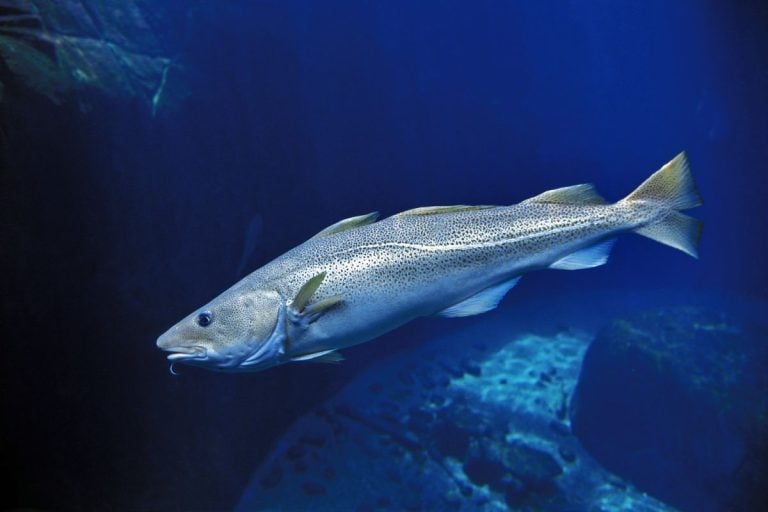
The Atlantic cod (Gadus morhua) is one of several hundred cod fish species. It has a long body, brownish-green skin, and a distinctly pale line running laterally along its frame. It also features a noticeable barbel emerging from its chin, which it uses to feel for food along the ocean floor. The species is hefty, with sizes ranging between 30 and 50 inches in length and weights ranging between 10 and 25 pounds. Some historical accounts detail specimens exceeding 100 pounds.
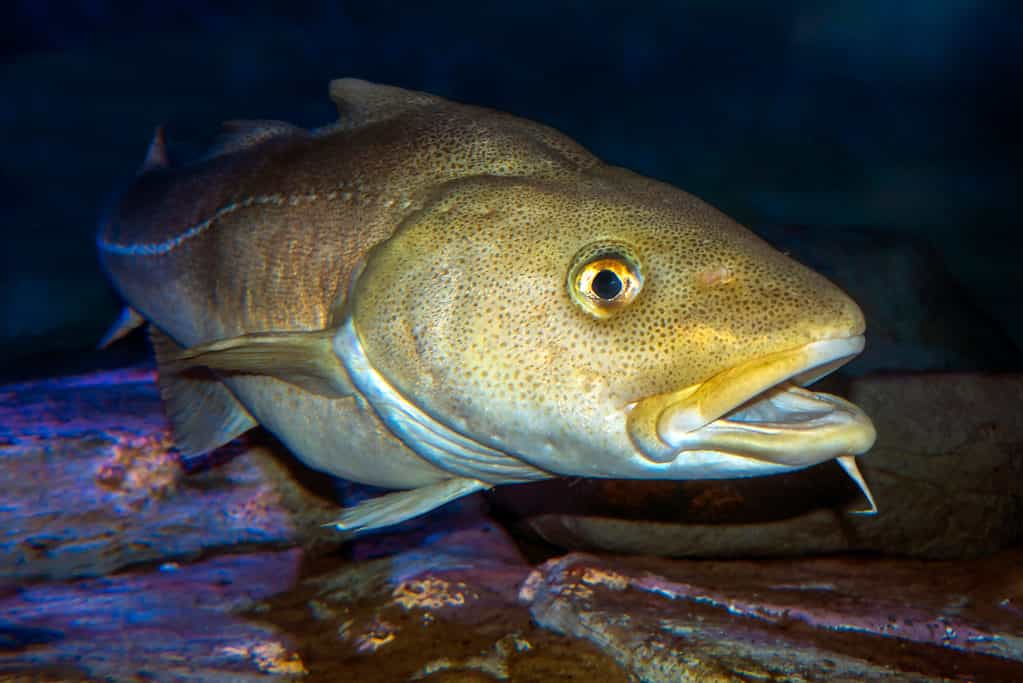
The Atlantic Cod has a greenish-brown coloring and distinct barbels protruding from its chin, which it uses to detect food.
©Miroslav Halama/Shutterstock.com
They live in the North Atlantic Ocean, along the coasts of landmasses like the United Kingdom, Scandinavia, Greenland, and North America. There, they tend to stick to ocean floors with rocky substrates between depths of 200 and 600 feet. As such, Atlantic cod are migratory to a high degree; they coalesce in large schools to spawn in late winter and early spring. Atlantic cod are also omnivorous, feeding on other fish, crustaceans, and mollusks.
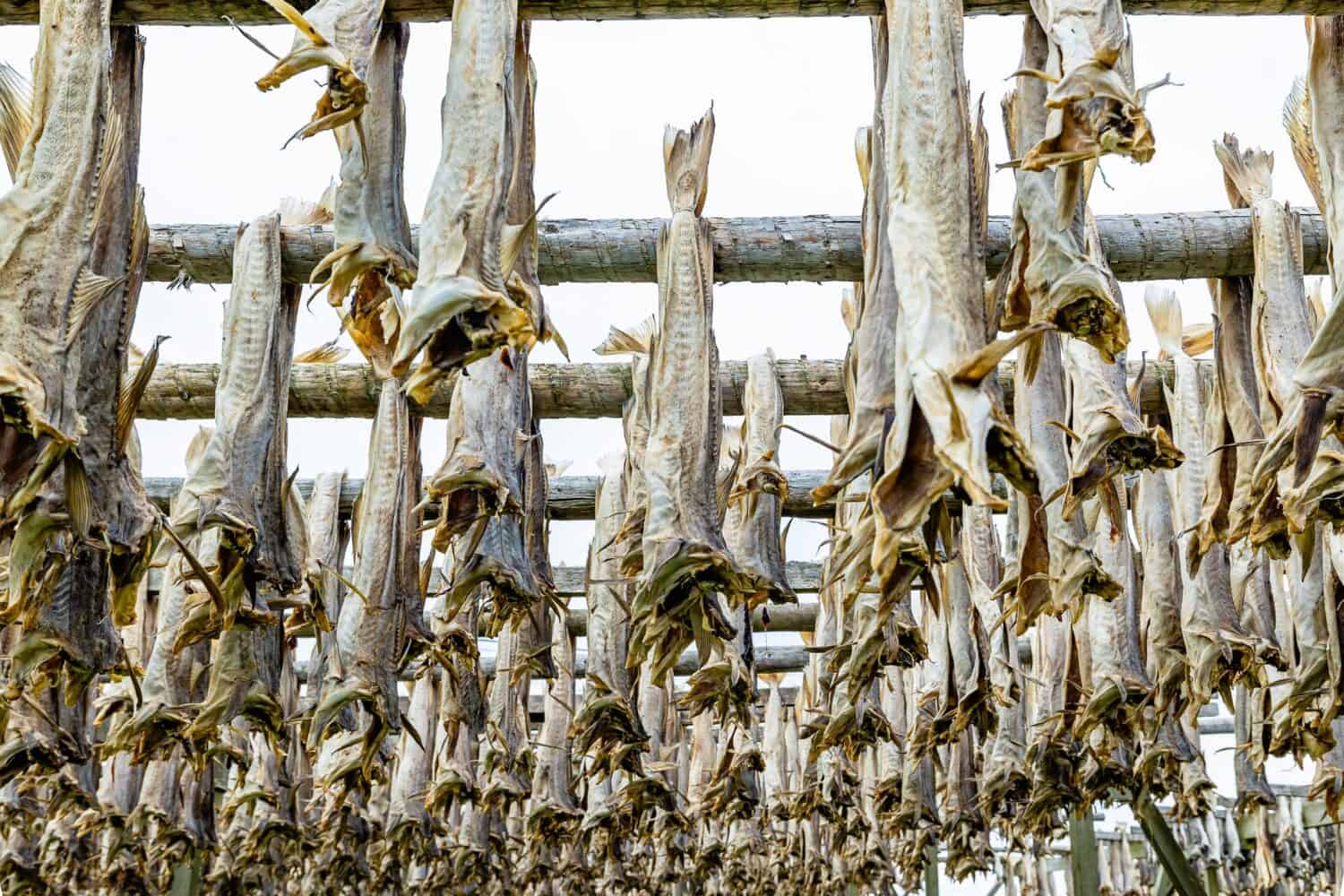
Their hardiness, eagerness to hunt, and low fat content have made them a staple of fishermen and coastal residents in the Northern Hemisphere for thousands of years. The Vikings ate them, as did the Basque. Preservation of their meat in dried form helped seafarers travel great distances and stay fed. The cod also helped usher in settlement of the New World.
The Sacred Cod
It’s hard to fathom just how important the Atlantic cod was to the development of the New World, and eventually America, without some context. Indigenous groups in North America relied on Atlantic cod as a food staple for thousands of years.
John Cabot was one of the first Europeans to sail the coast of North America. After his 1497 voyage, his crew spread the news about a fish so abundant that it almost clogged the waterways. In particular, they reported that “the sea there is full of fish that can be taken not only with nets but with fishing-baskets.”
A hundred years later, Atlantic cod remained so abundant that fishing captains reported cod schools so thick that they could hardly row their boats through them. This naturally gave way to Atlantic cod becoming one of the primary food sources in the area. By the mid-16th century, 60% of fish eaten in Europe was cod. Furthermore, most of these cod were fished in the northwest Atlantic, dried, salted, and transported back across the ocean. The cod became so important to the colonies that a large wooden cod effigy still hangs in the House of Representatives chamber of Boston’s Massachusetts State House.
Atlantic cod offered a seemingly endless supply of food until the introduction of factory fishing in the mid-20th century.
The Decline
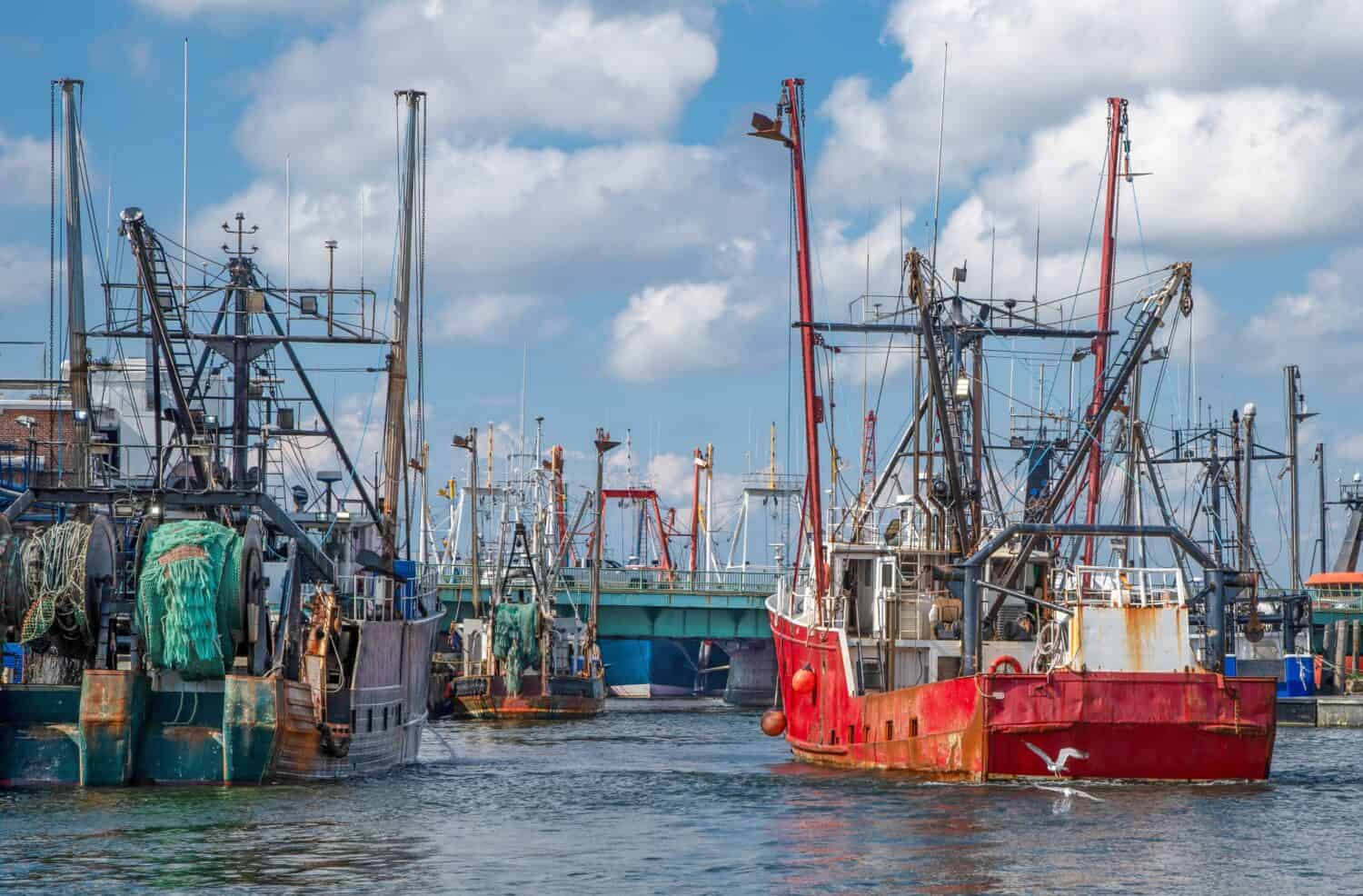
The sharp decline of Atlantic cod populations led to a near-overnight collapse of the Canadian fishing industry.
©Earl D. Walker/Shutterstock.com
Catching these fish manually was one thing; capturing them using mass-scale industrial equipment was another thing entirely. The introduction of industrial factory freezer trawlers in the mid-20th century quickly pilfered the population. It simply became too easy to catch them in massive numbers. Sonars, huge trawling nets, and processing facilities on ships allowed cod to be fished too quickly.
In the early 1990s, the northern cod biomass off of North America had dropped more than 99%. The situation became so dire that the Canadian Government legislated a complete moratorium on Atlantic cod, resulting in tens of thousands of jobs lost overnight. To this day, it remains the largest layoff in Canadian history, one that sharply altered the economic fabric of the country.
- 1497 Cabot's voyage His crew spread the news about a fish so abundant that it almost clogged the waterways.
- Mid-16th century Cod fills Europe's plates 60% of fish eaten in Europe was cod, mostly fished in the northwest Atlantic, dried, salted and shipped back across the ocean.
- Mid-20th century Factory freezer trawlers arrive Industrial trawlers quickly pilfered the population.
- Early 1990s Northern cod biomass drops more than 99% Canada legislates a complete moratorium on Atlantic cod, and tens of thousands of jobs are lost overnight.
Overfishing and Overcoming
Scientists point to several factors contributing to the Atlantic cod’s stark decline. Industrial fishing often gives way to overfishing, which has affected breeding populations considerably. Furthermore, large-scale trawling operations disrupt seabeds, destroying habitats that juvenile cod need to survive. Finally, environmental shifts, including water temperature changes and increased predation from seals, contributed to the cod’s decline. This leads to a phenomenon known as the Allee effect, where vulnerable populations struggle to rebuild.
- LC Least Concern
- NT Near Threatened
- Vulnerable VU
- EN Endangered
- CR Critically Endangered
- EW Extinct in the Wild
- EX Extinct
Population trend: Decreasing
Currently, the Atlantic cod is doing better, but the picture remains nuanced. Populations have rebounded to an extent in Europe. Off the rocky coast of Canada, some stocks have grown slightly, allowing for targeted fishing operations. Even so, the total North American biomass remains low, a fact complicated by climate change. The Atlantic cod are still around, in part thanks to long-term conservation strategies. Returning them to their historic density, however, is one of ecology’s great challenges.