
Quick Take
- Rabbits don't eat birds or eggs, yet they nearly wiped out a seabird. How?
- This diving seabird would rather swim than fly, and it plunges to startling depths.
- A population crash that once looked irreversible took decades of work to turn around. What did it take?
- Scientists mapped the nesting grounds with GPS and found a wonderful recovery.
A conservation success story on an island off the coast of northern Chile has shown how nature can bounce back given the chance. But this rebound is only possible after meticulous preparation and support. As the story of the Peruvian diving petrel shows, it takes decades of dedication to see results. And the removal of a lot of rabbits!
The Plight of the Peruvian Diving Petrel
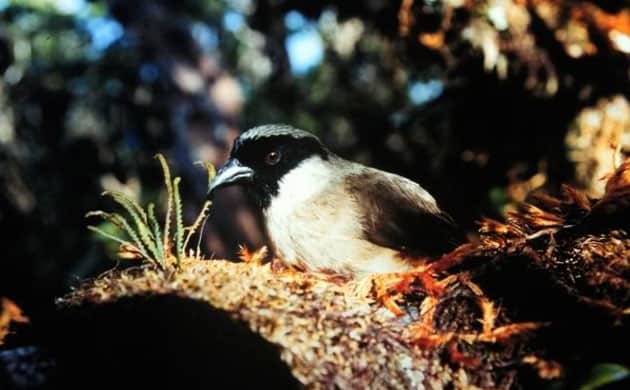
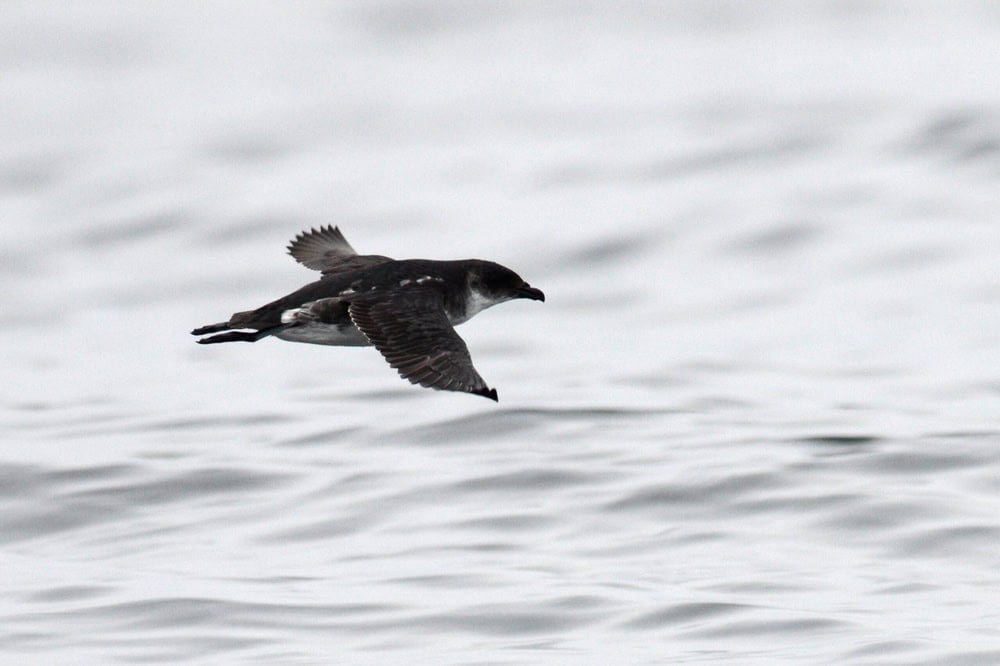
The Peruvian diving petrel (Pelecanoides garnotii) is a native species of the Humboldt Current System, also known as the Peru Current, a special type of ocean current. It flows north-northwest along the western coast of South America, from Chile up through Peru and into parts of Ecuador. It’s also very biologically productive, with nutrient-dense water being pulled up from the deeper ocean. On land, this bird species is found on the Chilean and Peruvian coasts, including the Choros and Chañaral Islands. Peruvian diving petrel are relatively small seabirds and only reach around 7.9 to 9.4 inches in length. They have a dark back and pale belly, with blue feet.
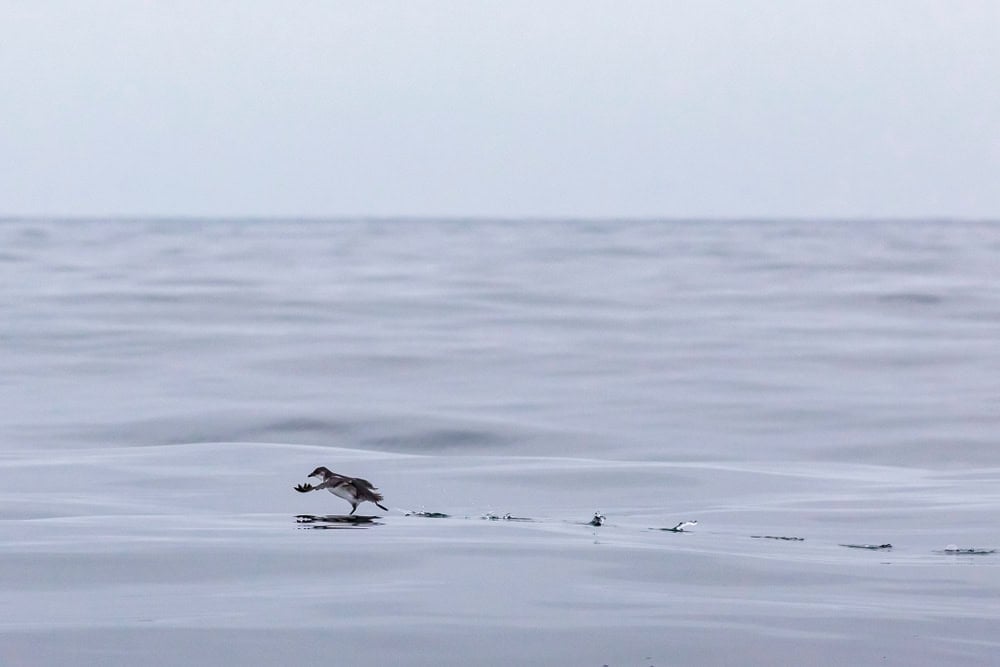
Peruvian Diving Petrels spend most of their time on the water.
©abriendomundo/Shutterstock.com
Unlike most petrels, these birds fly relatively rarely. Instead, they spend most of their time swimming on the surface of the water. Also, they are capable of diving to 260 feet in order to catch prey. They feed on small fish and crustaceans.
When it comes to breeding, they form colonies relatively close to shore. And this is where disaster struck!
Decline in Petrel Numbers
Seabirds in general have faced serious threats over the last few decades, all of which are caused by human activity. Threats include fisheries bycatch, pollution, habitat degradation, and invasive species being introduced at breeding sites.
In particular, light pollution, harvesting (adults and eggs), guano extraction, and human-caused nest damage have affected the Peruvian diving petrel. The most serious impact, however, has been from the introduction of invasive mammals. The chief culprit on the Choros and Chañaral islands has been the European rabbit (Oryctolagus cuniculus). On Chañaral Island, introduced foxes also caused problems in the past.
From an estimated 100,000 breeding pairs in the early 20th century, petrel numbers declined to just 300 pairs by 1980. The species was classified as Threatened in 1988.
How Do the Rabbits Damage Petrel Populations?
They were degrading habitat, stripping vegetation and damaging the burrows.
Rabbits are herbivores and do not consume petrel birds or eggs, so how can they cause a decline in petrel numbers? In this Discover Wildlife article, María José Vilches, Island Conservation’s conservation impact manager, explains, “They were degrading habitat, stripping vegetation and damaging the burrows.”
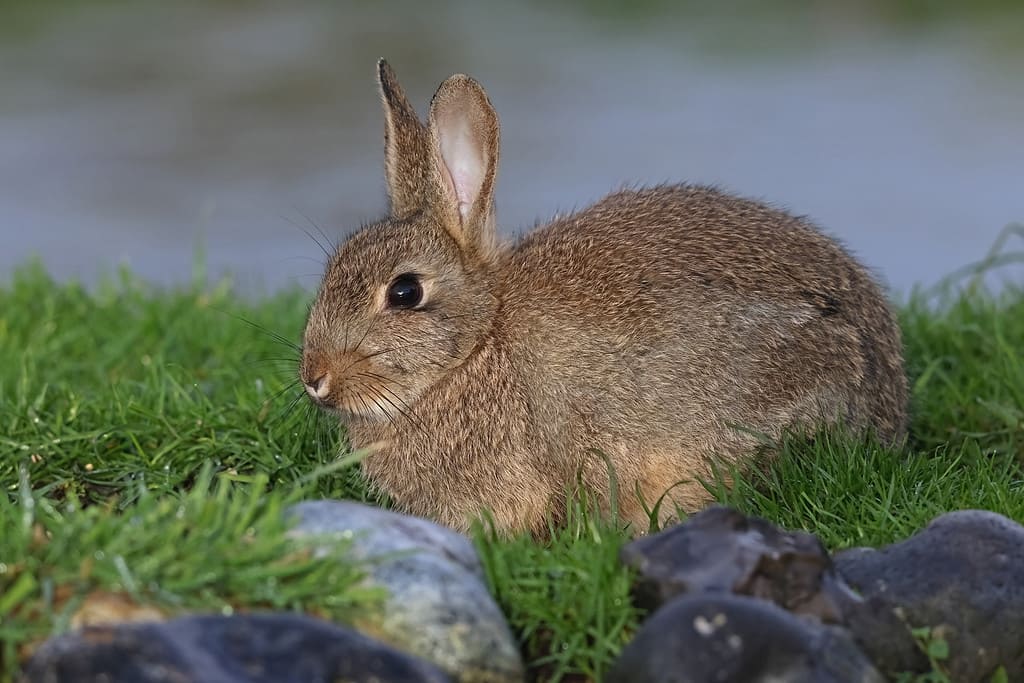
European rabbits took over the petrel’s burrows.
©neil bowman/iStock via Getty Images
European rabbits trample enlarged petrel burrows, remove vegetation, and even occupy the areas where the birds have lived. In particular, they overgraze native grasses, affecting soil stability.
Habitat Restoration
Restoring the habitat around the petrel nesting sites has been a long task. In 1990, the Pingüino de Humboldt National Reserve was established, encompassing Choros and Chañaral islands. It was actually designed to protect the Humboldt penguin (Spheniscus humboldti) but also benefited the petrel by restricting public access.
In 2005, two separate marine reserves were designated for conservation. Targeted restoration work that began in 2013 successfully eradicated European rabbits from both islands by 2017. This was followed by the installation of artificial nests and an acoustic attraction system on Chañaral Island in 2019 to promote breeding recolonization.
Finally, in 2023, the “Archipiélago de Humboldt” Multiple-Use Conservation Area was established. This expanded both marine and coastal protection for the birds to over 574,000 hectares.
- 1990 Pingüino de Humboldt National Reserve established It encompasses Choros and Chañaral islands and benefited the petrel by restricting public access.
- 15 years later
- 2005 Two marine reserves designated
- 2013 Restoration work begins
- 2017 Rabbits eradicated from both islands
- 2019 Artificial nests and acoustic attraction system installed On Chañaral Island, to promote breeding recolonization.
- 2023 Archipiélago de Humboldt conservation area established Marine and coastal protection expanded to over 574,000 hectares.
Are the Petrels Coming Back?
On Chañaral Island, the petrels have still not re-established to pre-collapse levels. That said, there are now some breeding pairs on the island. Choros Island is the most important location for species’ recovery and for monitoring conservation outcomes. The species was downlisted from Endangered to Near Threatened in 2020.
Choros Island is around a square mile in area and has a Mediterranean, semi-arid climate. In November 2024, scientists conducted a survey of this primary breeding site. They measured nesting patch size, occupancy rate, and nest density. Nesting patches were mapped using GPS.
Most of the nesting patches were found on the western side of the island. The survey showed that the total nesting-patch area had expanded from 3.2 hectares in 2010 to more than 10 hectares in 2024. The survey also yielded an estimated 89,876 breeding pairs. That is a 7.5-fold increase since 2013. But more significantly, it’s a 300-fold recovery over 44 years!
89,876
breeding pairs of Peruvian diving petrel on Choros Island
- 1980
- 300
- 2024 survey
- 89,876
- Change
- up 29859%
The findings clearly show that, thanks to the conservation efforts, there has been an expansion of breeding habitat and consolidation of petrel nesting patches on the island. Looking at previous surveys, the researchers also calculated that the greatest increase in population growth occurred after the rabbits were eradicated. Once the rabbits were gone, the petrels were able to regain the nesting burrows that had either been taken over or destroyed. The vegetation was able to regenerate and stabilize, making it easier for the birds to burrow.
This example illustrates the cumulative and long-term benefits of sustained conservation measures. It is hoped that the methodology will provide a management guide for other seabird species in the future.