Quick Take
- Being too common to study nearly doomed an entire species, a fact scientists only realized after half the population had already disappeared. See why they were overlooked →
- One Montana lake managed to buck the trend while populations collapsed everywhere else, and the reason why could reshape conservation across the continent. Explore the Red Rock exception →
- Even after populations started recovering, they crashed again, and researchers had a surprising theory about why. See the population trend data →
- Banned pollutants may still be quietly killing these ducks decades after being outlawed, and waterways most people consider clean are not off the hook either. Discover the persistent pollutant threat →
Ducks are rarely studied over multiple decades. However, this is exactly what is taking place in Montana, in hopes that a 22-year duck study can help reverse the major population decline of the lesser scaup.
Long-Term Study Could Help Reverse Lesser Scaup Decline
The lesser scaup was once an abundant bird in North America. Although no definitive population numbers exist from before the lesser scaup was first tracked in 1955, biologists and birdwatchers noted that they were among the most common ducks on the continent.
However, beginning in the 1970s, it became clear that the lesser scaup population had fallen to a fraction of its previous size. In the 1990s, sources claim the population had declined by 50%. Unfortunately, because the ducks were a staple in their habitats, no one took the time to study them to learn their migration and reproduction habits, or what the lesser scaup needed to survive.

Lesser scaup ducks have been monitored in a two-decade-long study to determine what the ducks need to increase their population numbers.
©ps50ace/iStock via Getty Images
This changed in 2004 when Jeff Warren began what would become a long-term study at Red Rock Lakes National Wildlife Refuge in Montana. Although the population at Red Rock Lakes was smaller than the Canadian boreal population, it still had plenty of ducks that could reveal secrets about the species. As a result, researchers began monitoring and tagging the lesser scaup to learn more about their habits.
Warren’s research findings were very interesting. The population at Red Rocks Lakes National Wildlife Refuge increased from 2005 to 2015. However, after that increase, the population declined again to the same levels seen in the 1990s. This led Warran and his team to investigate why the population declined even as it seemed to be improving.
This study is still ongoing. Each season, ducklings are tagged and monitored to see whether they return, their health, and the population during breeding season. Using the results from the protected wildlife refuge, the goal is to share what works for the ducks and what does not, so the population across North America can increase to more sustainable levels than it has today.
Reasons Lesser Scaup Population Has Declined
The lesser scaup population has declined for decades. Some statistics say the population has declined by 50% since the 1970s, while others cite a 1% annual decline beginning in 1955. Regardless of which statistics are used, it does not change the fact that there are far fewer lesser scaup in North America today than there were a century ago.

Lesser scaup populations have declined due to fewer hatchlings being born, a smaller female population, and food scarcity.
©2009fotofriends/Shutterstock.com
Some of the biggest reasons why there are significantly fewer lesser scaup in wetlands, marshes, and lakes today have to do with the following:
- Fewer hatchlings are being born
- The female population is smaller than the male population
- Food has become scarce
- Breeding ground habitats have declined in their ability to adequately support the lesser scaup
- Pollutants and contaminants remain in the soil long after being banned and are still being consumed by the lesser scaup
The lesser scaup in the Western Canadian boreal forest has experienced the steepest population decline. This is devastating for the species, given that the majority of the lesser scaup breed in this location.
However, the lesser scaup at Lower Red Rock Lake have remained stable or even increased over the years. This is why the long-term study is so important for the birds. Without it, trends would not have been realized, and birds would not have been tracked, which has provided researchers with valuable knowledge of how to help save the species outside of the Yellowstone ecosystem.
Why is Lower Red Rock Lake Important for Lesser Scaup?
Despite declines in individual scaup populations due to habitat loss over the last several decades, Lower Red Rock Lake has remained constant. Consequently, Lower Red Rock Lake is arguably the most important wetland for lesser scaup in North America.
Since the 1970s, the wetlands that the lesser scaup need to migrate or breed have disappeared. Therefore, it is no surprise that populations have declined during that same period. However, because Lower Red Rock Lake is managed by the U.S. Fish and Wildlife Service and designated as a National Wildlife Refuge, it became a safe haven for the lesser scaup. With over 32,000 acres of designated wetlands that cannot be developed under the 1976 Wilderness Act, Lower Red Rock Lake is not only a good place for migrating lesser scaup to rest as they migrate, but also a safe place to raise their young.
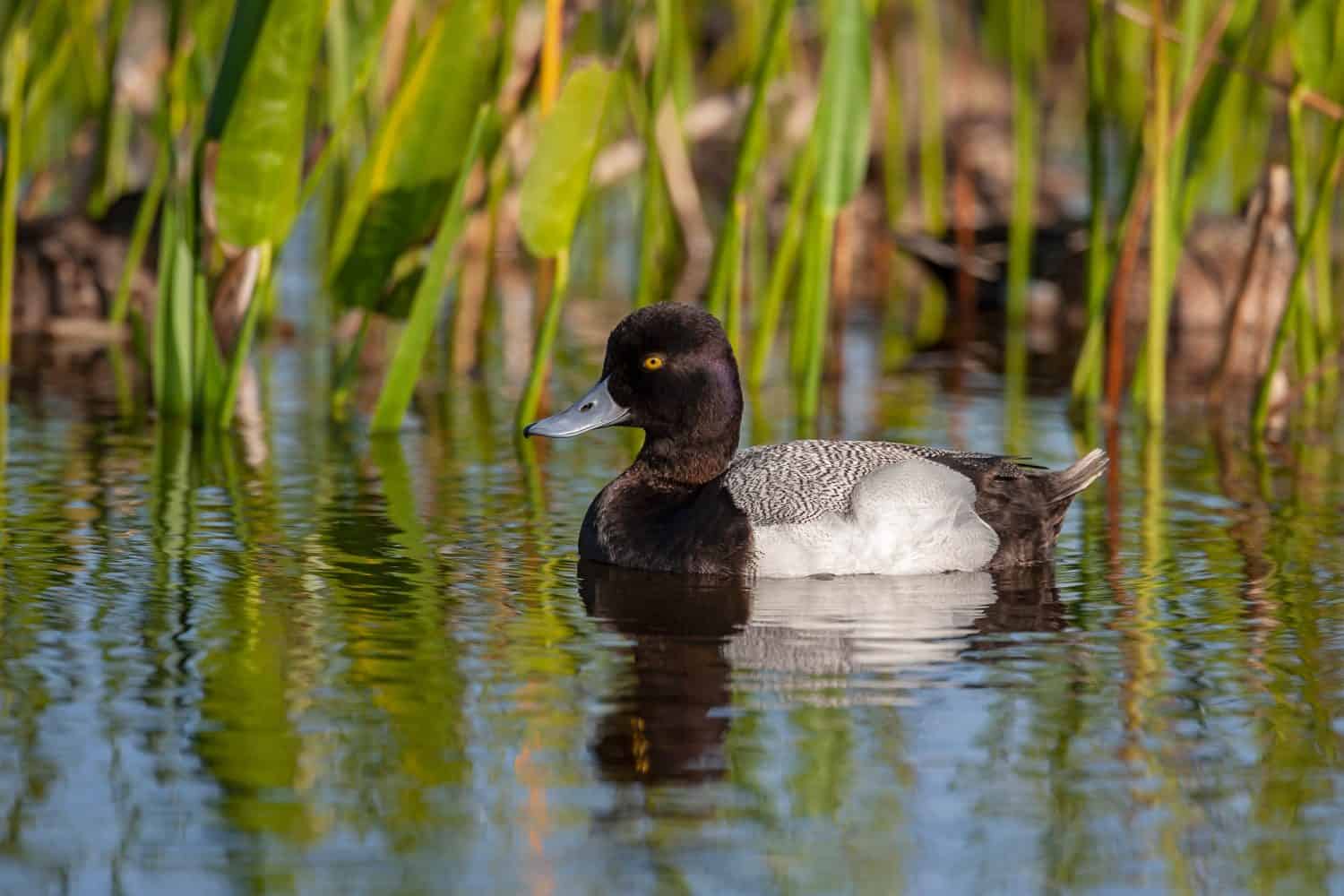
Lower Red Rock Lake has set the gold standard for lesser scaup, given the population has stabilized and increased during the course of the study.
©Glenn Price/Shutterstock.com
Additionally, with the data collected from the Lesser Scaup Project, Lower Red Rock Lake has served as the gold standard for habitats for the lesser scaup. What has been learned about what makes for good breeding sites, what creates a successful breeding season, and what allows for reproductive success within a habitat has been shared so that lesser scaup in other regions of North America. This has been done so habitats can be replicated, with the hope that other lesser scaup populations can not only remain stable but grow, as they have in Lower Red Rock Lake. If this is accomplished, the overall population can move closer to the 4.9 million population goal the North American Waterfowl Plan set for the lesser scaup, a goal intended to be achieved by 2019.
What Can Be Done to Save the Lesser Scaup
Given that the lesser scaup population has again declined to its 1990s level after its two-decade increase, the question is what can be done to save the lesser scaup. While the long-term study is indeed massively helpful for tracking individual ducks, reproduction rates, and habitat threats, more can still be done to help save the lesser scaup.
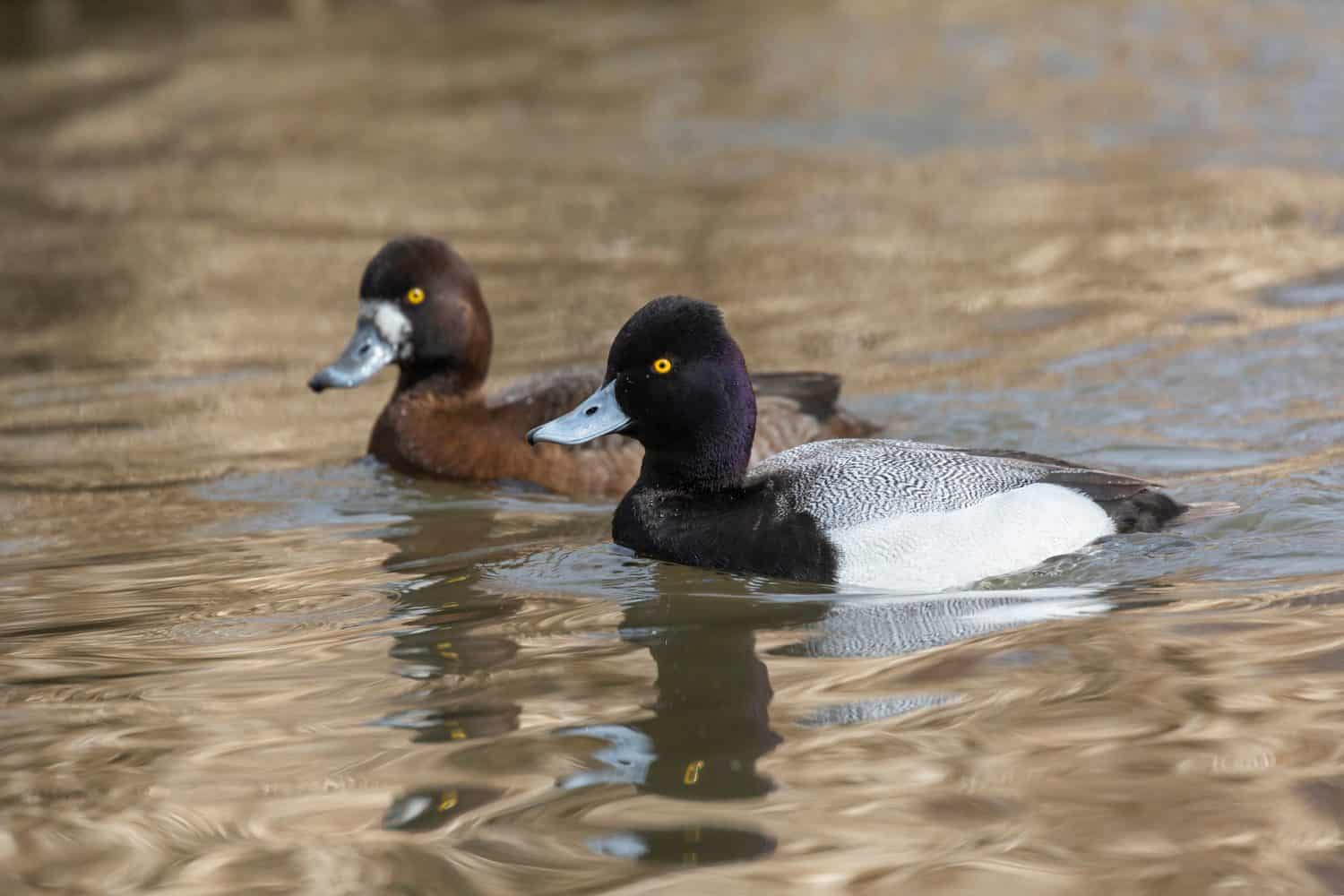
To increase declining scaup populations, natural habitats need to be restored, bodies of water along migration routes need to be created and restored, and quotas need to be set for how many ducks and which sex can be harvested during hunting season.
©Feng Yu/Shutterstock.com
Some things that can help increase the lesser scaup populations include:
- Restoring wetlands in boreal nesting grounds and other traditional nesting grounds
- Creating and restoring bodies of water along migration routes that sustain breeding and rest stops
- Restoring natural habitats so they are no longer fragmented
- Creating quotas for how many of each sex and age of duck can be hunted each year
- Testing waterways for contaminants and finding ways to remove pollutants from the environment as necessary
Only through these steps can the lesser scaup stand a chance of recovery. Unfortunately, if it takes too long to implement these strategies, the population will continue to decline, and it may be too late to restore the lesser scaup to the population levels the species once enjoyed.