
Quick Take
- One shark on this list can hunt you in freshwater rivers, a place far from where most people expect danger. Bull shark's freshwater ability →
- The shark with the most unprovoked attacks on humans has the strongest bite, and the gap between their bite and those of the other sharks is staggering. Great white's attack record →
- The fastest shark alive pairs that speed with a bite force that dwarfs most others on this list, and it is probably not the one you would guess. Mako's speed and bite force →
- One of these sharks is known to eat plastic, wood, and metal, and it still makes the cut as one of the ocean's most powerful biters. Tiger shark's trash diet →
Sharks are often misunderstood because some species occasionally attack humans. Fortunately, you are more likely to be killed by a lightning strike than by a shark attack in the United States. But which shark has the strongest bite force? Here are the top 5 sharks with the strongest bites and everything you need to know about these powerful predators.
5. Great Hammerhead (Sphyrna mokarran)
The great hammerhead has a bite force of around 540 pounds per square inch (psi), but fortunately, they tend to avoid humans. These sharks have brownish-grey to dark grey bodies with light undersides, wide, straight heads (cephalofoil), and tall, curved dorsal fins. The longest great hammerhead on record measured 20 feet long, and the heaviest specimen weighed 991 pounds. They occur in oceans around the world, but they prefer warm coastal waters, with an ideal temperature closer to around 85°F. These massive sharks are mostly solitary and migrate long distances, sometimes upwards of 1,864 miles at a time.
These hammerhead sharks have long, razor-sharp serrated teeth, which they use for catching and eating their prey. Their hammer-shaped heads have electrical receptors called the Ampullae of Lorenzini that sense prey, including those hiding in the sand. Great hammerheads mainly feed on cephalopods, stingrays, other sharks, and crustaceans. These sharks are vulnerable to overfishing. Sadly, they are caught intentionally in bottom trawl, longline, hook-and-line, and gillnet fisheries, as they are commercially targeted for their valuable fins.
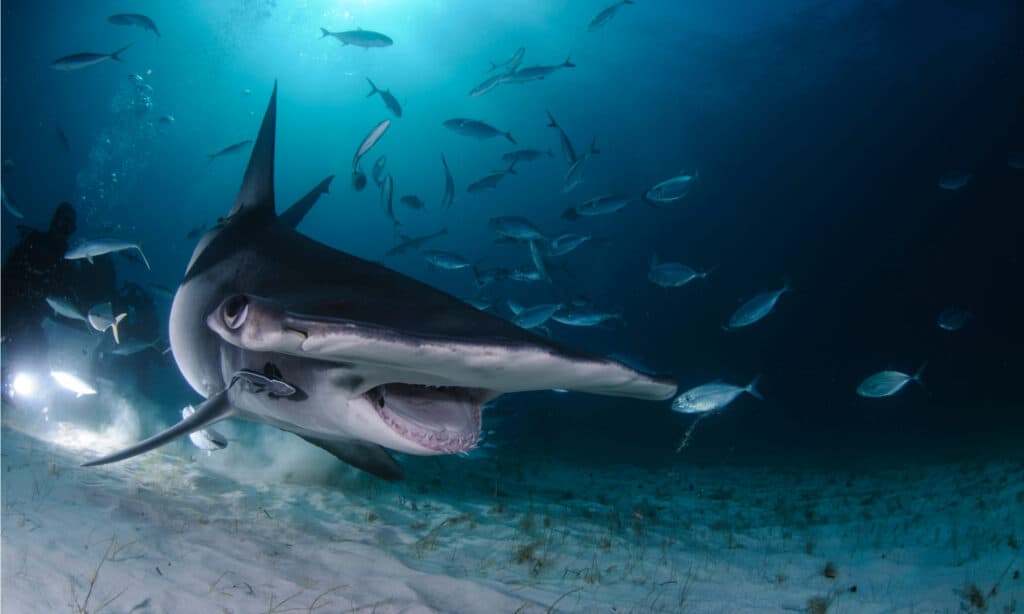
The longest great hammerhead on record measured 20 feet long.
©Martin Voeller/Shutterstock.com
4. Tiger Shark (Galeocerdo cuvier)
Tiger sharks have a bite force of around 1,000 psi, making the tiger shark one of the shark species with the strongest bites. These sharks are second only to great whites in recorded unprovoked attacks on humans. These sharks are bluish-grey to dark gray with dark, vertical stripes on their sides and pale underbellies. They have flat heads, blunt rounded snouts, and serrated teeth with curved tips. These sharks can grow up to 18 feet long and weigh up to 2,000 pounds.
Tiger sharks inhabit subtropical and tropical waters worldwide. They tend to be found closer to the surface along continental shelves, in estuaries, near coral reefs, in coastal bays, and in lagoons. Tiger sharks are opportunistic hunters and are notorious for their aggression. While their usual diet consists of seabirds, stingrays, smaller sharks, fishes, sea turtles, and marine mammals, these sharks have also been known to eat trash such as plastic, metal, wood, and fishing gear.
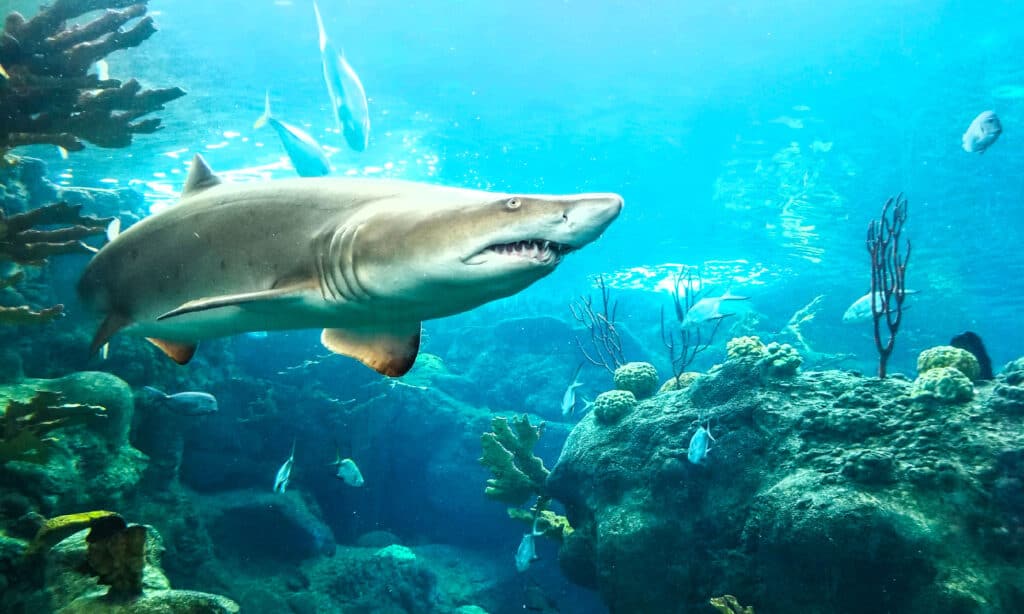
Tiger sharks are second only to great whites in recorded unprovoked attacks on humans.
©iStock.com/Sean Craft
3. Bull Shark (Carcharhinus leucas)
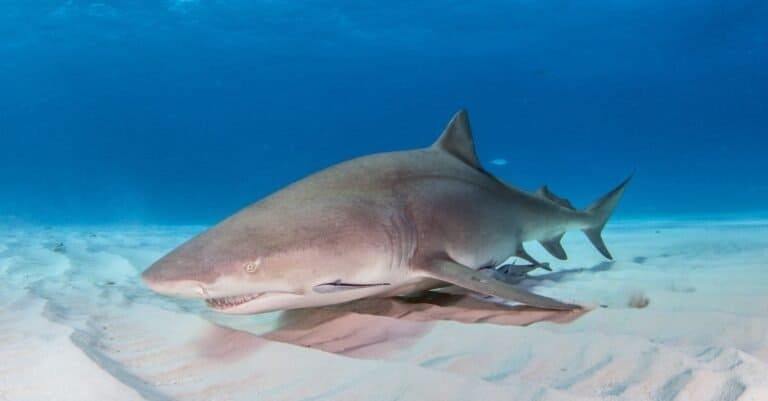
Bull sharks have a bite force of 1,300 psi. These sharks live in coastal seas, but also can move into freshwater, especially in large coastal lakes and rivers. This means bull sharks have a greater chance of encountering people. Their extreme aggression and territorial behavior make them one of the most dangerous sharks to humans. Usually, when bull sharks bite a person, they quickly realize it’s not their usual prey and let go. However, just one bite from these powerful sharks can prove fatal.
Bull sharks can grow to 13 feet long and weigh almost 700 pounds. They are among the largest species of requiem shark. They eat a wide variety of foods, including seabirds, small sharks, bony fishes, some mammals, and sea turtles. Adult bull sharks do not have any predators. However, they do not reach maturity until they are around 10 to 15 years of age, so until then, they can fall prey to other sharks and killer whales.
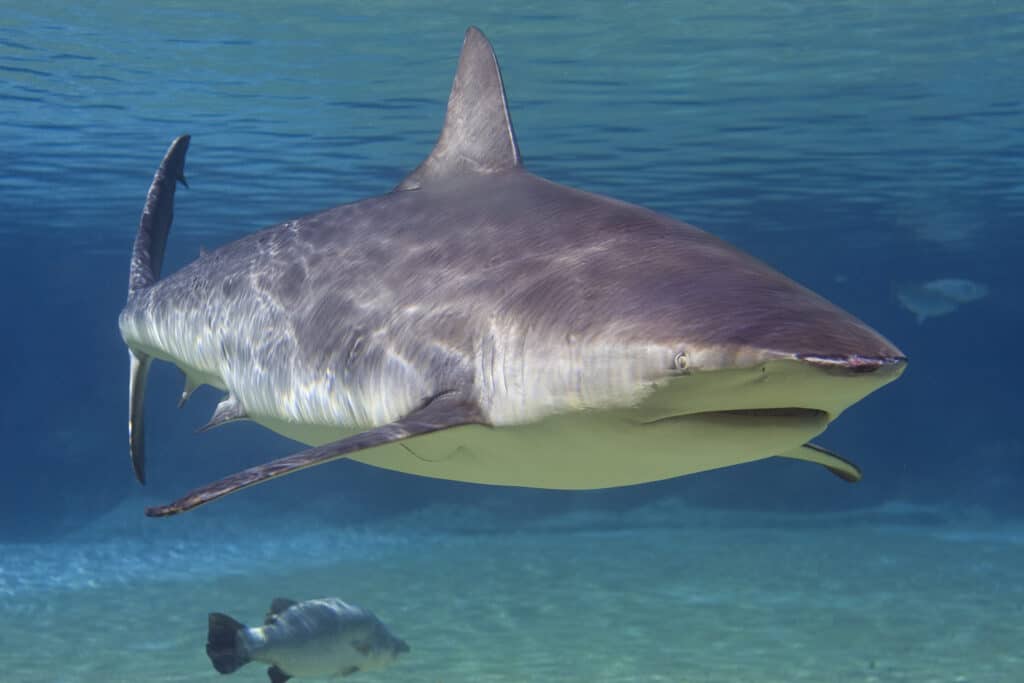
Bull sharks are widely considered one of the most aggressive shark species.
©Ian Scott/Shutterstock.com
2. Shortfin Mako (Isurus oxyrinchus)
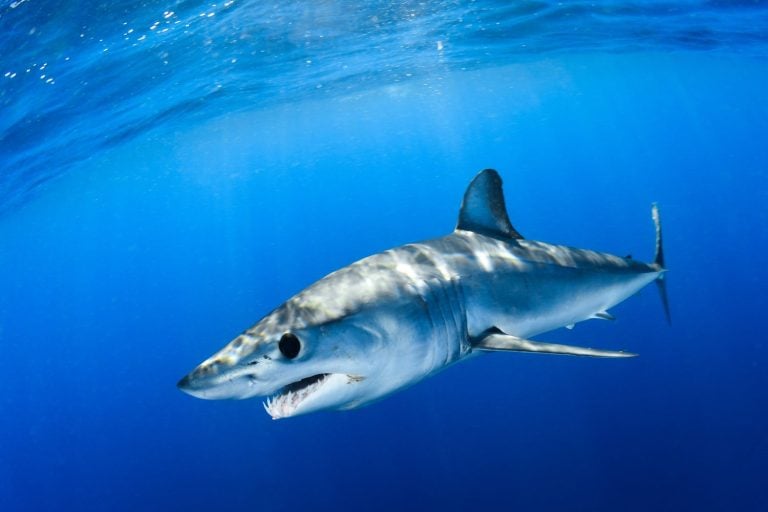
Shortfin makos have a bite force of 3,000 psi, making them the shark with the second-strongest bite. They are large sharks that occur throughout the tropical and temperate latitudes of all oceans. They can grow up to 13 feet long and weigh a maximum of around 1,200 pounds, although most sharks typically only average around 300 pounds. These sharks have metallic blue skin on the top of their bodies, fading to a lighter blue on the sides with white underbellies. They have pointed snouts and crescent-shaped tails.
Shortfin makos have a varied diet, but they mainly eat squid, bony fishes, other sharks, sea turtles, and small marine mammals. They are the fastest sharks, reaching speeds of up to 46 mph in short bursts. They are also known for their leaping abilities and are often seen jumping out of the water while chasing prey. While these sharks are among the few that attack people, attacks are rare. These sharks are highly sought-after because of their fins and meat.
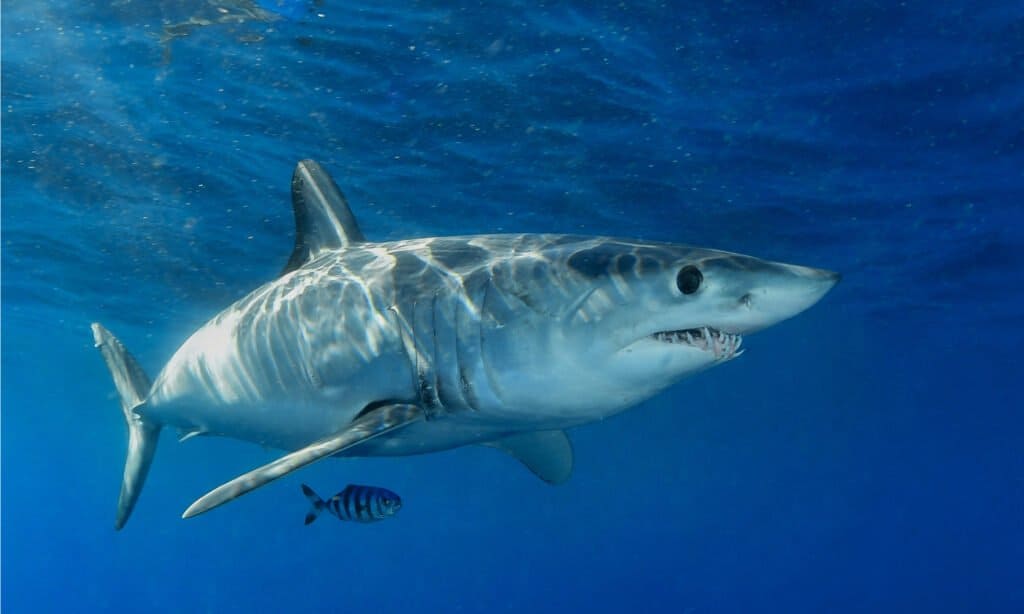
Shortfin makos are the fastest sharks, capable of reaching speeds of 46 mph.
©Xavier ELIAS Photography/Shutterstock.com
Great White Shark (Carcharodon carcharias)
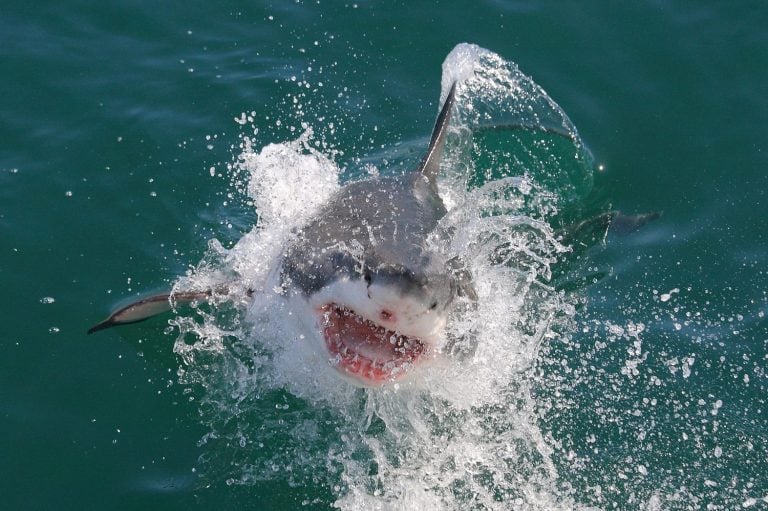
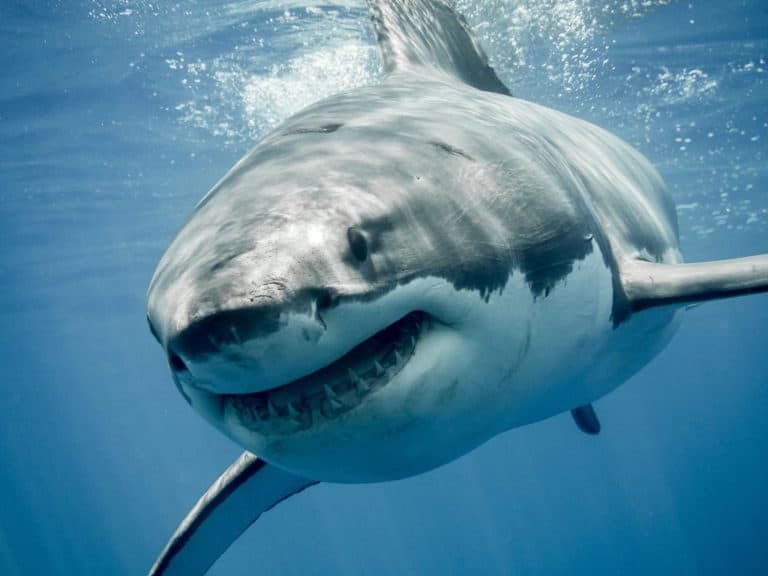
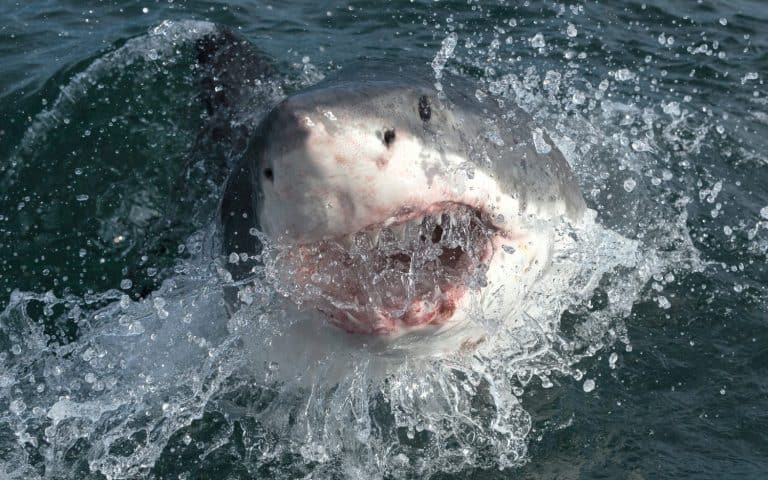
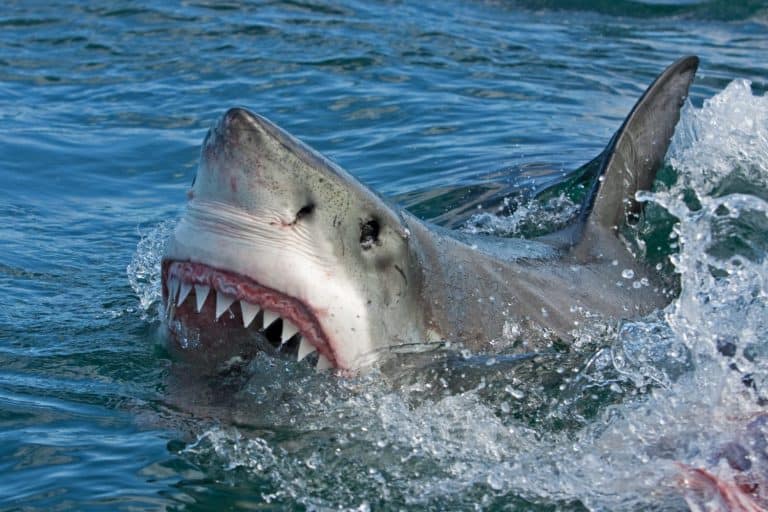
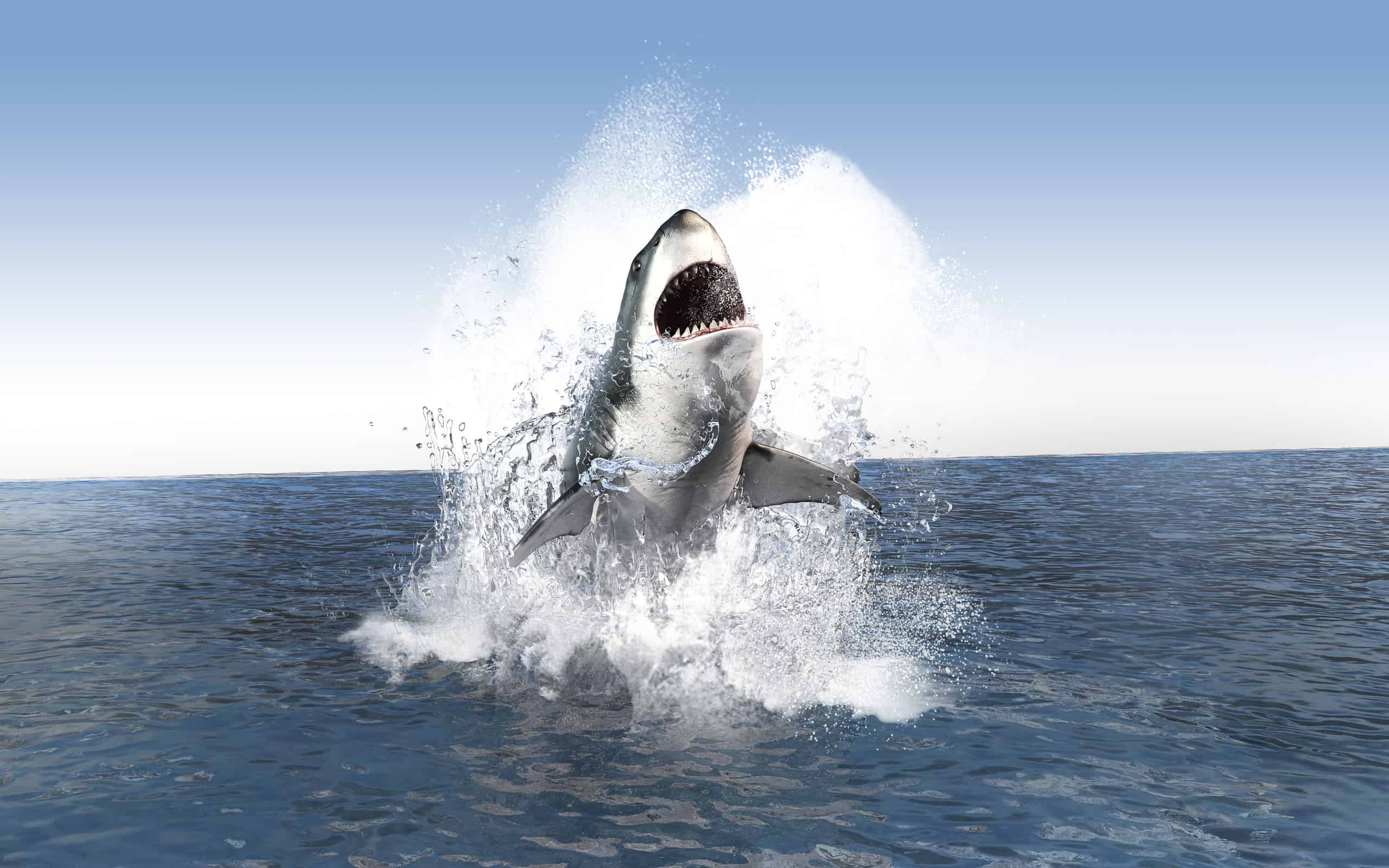
Great white sharks have the strongest bite force of any shark at 4,000 psi. They are named after their white underbellies and are the most popular shark species on the planet, thanks to the movie Jaws. These sharks are massive, reaching an estimated 20 feet in length and over 4,000 pounds when fully grown. Great whites are easily distinguishable by their torpedo-shaped bodies, cone-shaped snouts, and crescent-shaped tail fins. These sharks are dark bluish-grey on top with a white underbelly. They have 300 sharp, serrated teeth in multiple rows.
Great whites are highly migratory and live in the waters of every major ocean on Earth, except for those in the polar regions. They are opportunistic predators but primarily prey on marine mammals such as seals and sea lions. They may also consume whales, sea turtles, seabirds, and large fish. Great whites have been involved in more unprovoked attacks on humans than any other shark species. Despite having such a powerful bite force, the majority of great white bites are not fatal.
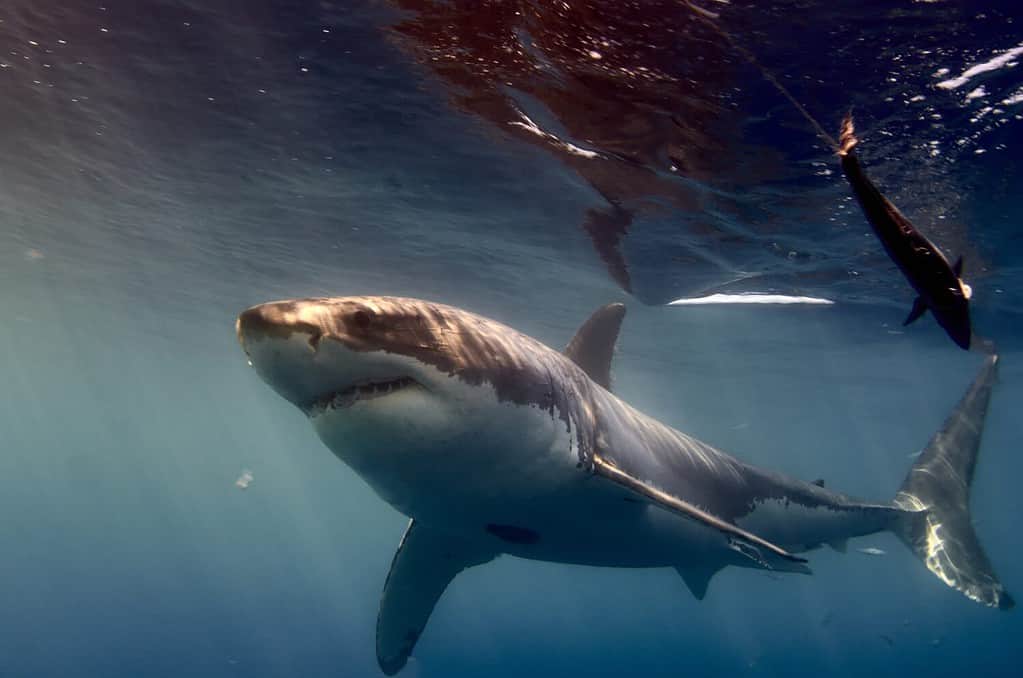
Great white sharks have the strongest bite force among sharks at 4,000 psi.
©Wirestock Creators/Shutterstock.com