
Quick Take
- Cottonmouths don't actually hibernate, which changes when you might encounter one in Missouri. Learn about brumation →
- Rainy days in Missouri carry a specific cottonmouth risk most people never think about. See rainfall activity patterns →
- Their bites are rarely fatal, but the real danger is something far worse than death. Discover the venom effects →
- The single biggest factor in whether a cottonmouth bites has nothing to do with how close you are. See what triggers bites →
Northern cottonmouths (Agkistrodon piscivorus), also called water moccasins, are venomous snakes that are found throughout the Southeastern United States. In Missouri, cottonmouths are found in the southern part of the state in areas south of the Missouri River, where they inhabit swamps, sloughs, and rocky, spring-fed streams. Cottonmouths are uniquely adapted to live, hunt, and travel in and around water. Cottonmouths possess a potent mix of hemotoxic and cytotoxic venom, which destroys tissue and may cause permanent damage. Although highly venomous, cottonmouth bites are rarely fatal, and deaths from their bites are extremely uncommon. Continue reading to discover when cottonmouths are most active in Missouri and when they are the most likely to bite.
What Type of Cottonmouth is Found in Missouri?
There are two recognized species of cottonmouths: the Florida cottonmouth (Agkistrodon conanti) and the Northern cottonmouth (A. piscivorus). A 2014 DNA study reclassified the Eastern and Western subspecies into a single species (Northern) and established the Florida cottonmouth as a separate species, with no subspecies currently recognized. Only the Northern cottonmouth is currently found in Missouri.
When Are Cottonmouths Most Active in Missouri?
Although they are present year-round in Missouri, cottonmouths are most active in the state from late April through October. They are primarily nocturnal in summer, but frequently bask during the day in spring and autumn. They are likely to be active and foraging during and immediately after rainfall, particularly in warmer months. Rain, especially heavy rainfall, drives them out of hiding and can create periods of high activity when they hunt for prey such as frogs and fish.

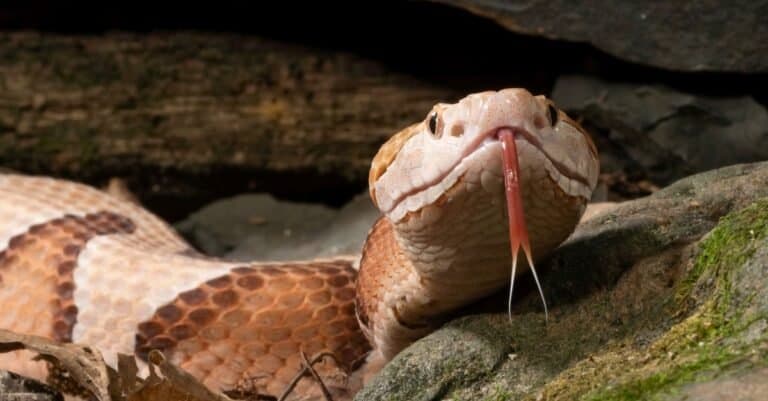
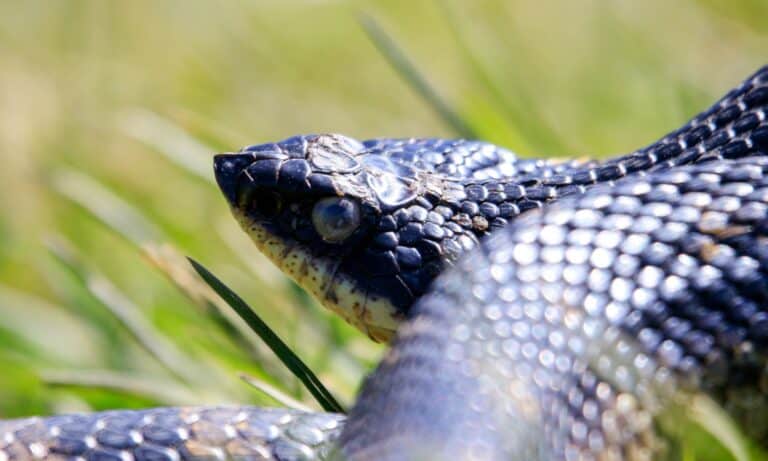
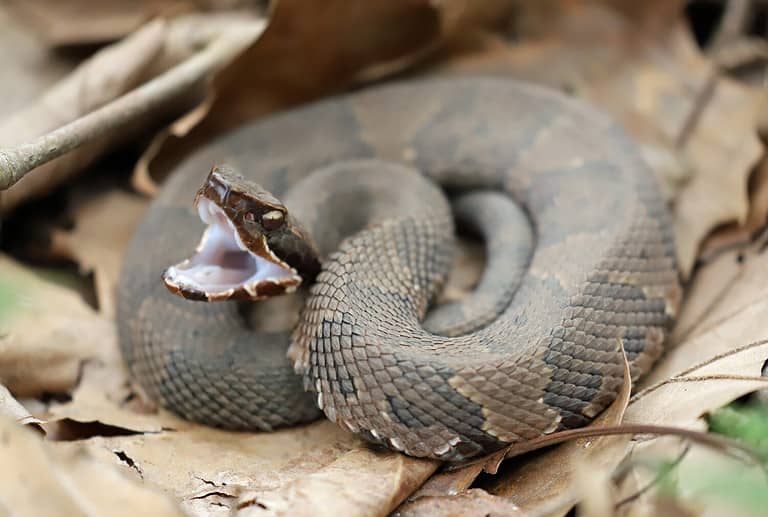
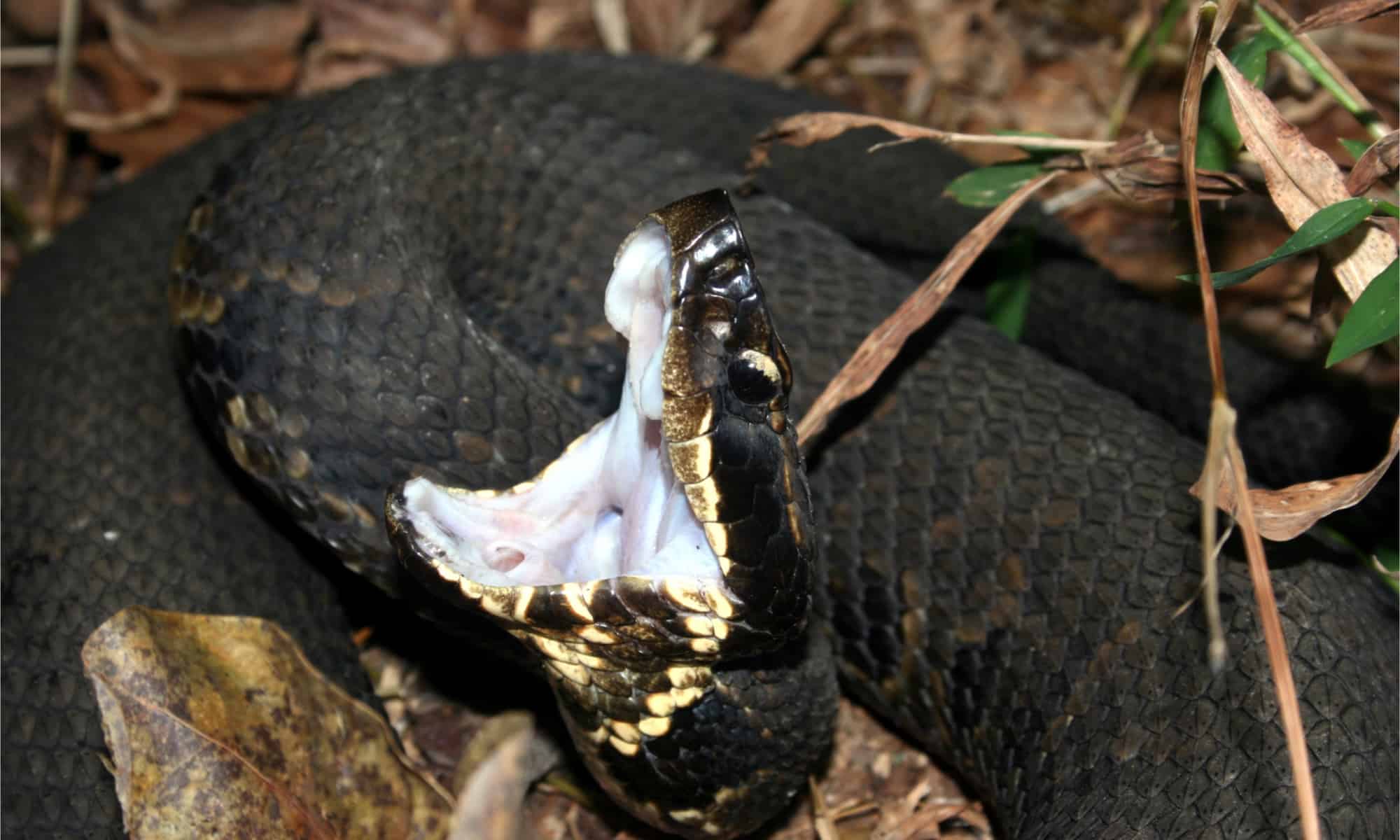
Cottonmouths get their name from the white color of their mouths.
©Jason Patrick Ross/Shutterstock.com
When are Cottonmouths Most Likely to Bite?
A cottonmouth is most likely to bite a human if it is intentionally provoked, handled, or accidentally stepped on. While they are not typically aggressive, cottonmouths are highly defensive and may bite when they feel cornered, threatened, or are accidentally surprised.
However, there is an antidote, or antivenin, for cottonmouth venom. Medical professionals typically use a polyvalent antivenin designed to neutralize the bites of cottonmouths, copperheads, and rattlesnakes.
When Do Missouri Cottonmouths Hibernate?
Cottonmouths do not enter deep hibernation like mammals. Instead, they undergo a form of winter dormancy known as brumation. In Missouri, cottonmouths brumate from November until April. They seek elevated spots such as limestone crevices, rock piles, animal burrows, or rotting logs, where they can shelter from freezing surface temperatures.
Because they are not deeply unconscious, cottonmouths may wake up and emerge on warmer, sunny winter days to bask in the sun and drink water.

Cottonmouths are semi-aquatic snakes that can be found in the water or on land.
©KF2017/Shutterstock.com
Are Cottonmouths Dangerous?
Cottonmouth snakes can deliver a highly dangerous bite. These snakes have both hemotoxic and cytotoxic venom, which is extremely damaging to humans. Their venom can break down blood cells, preventing blood from coagulating and clotting. While their bites are rarely fatal, they can cause terrible scarring and, in some extreme cases, amputation.