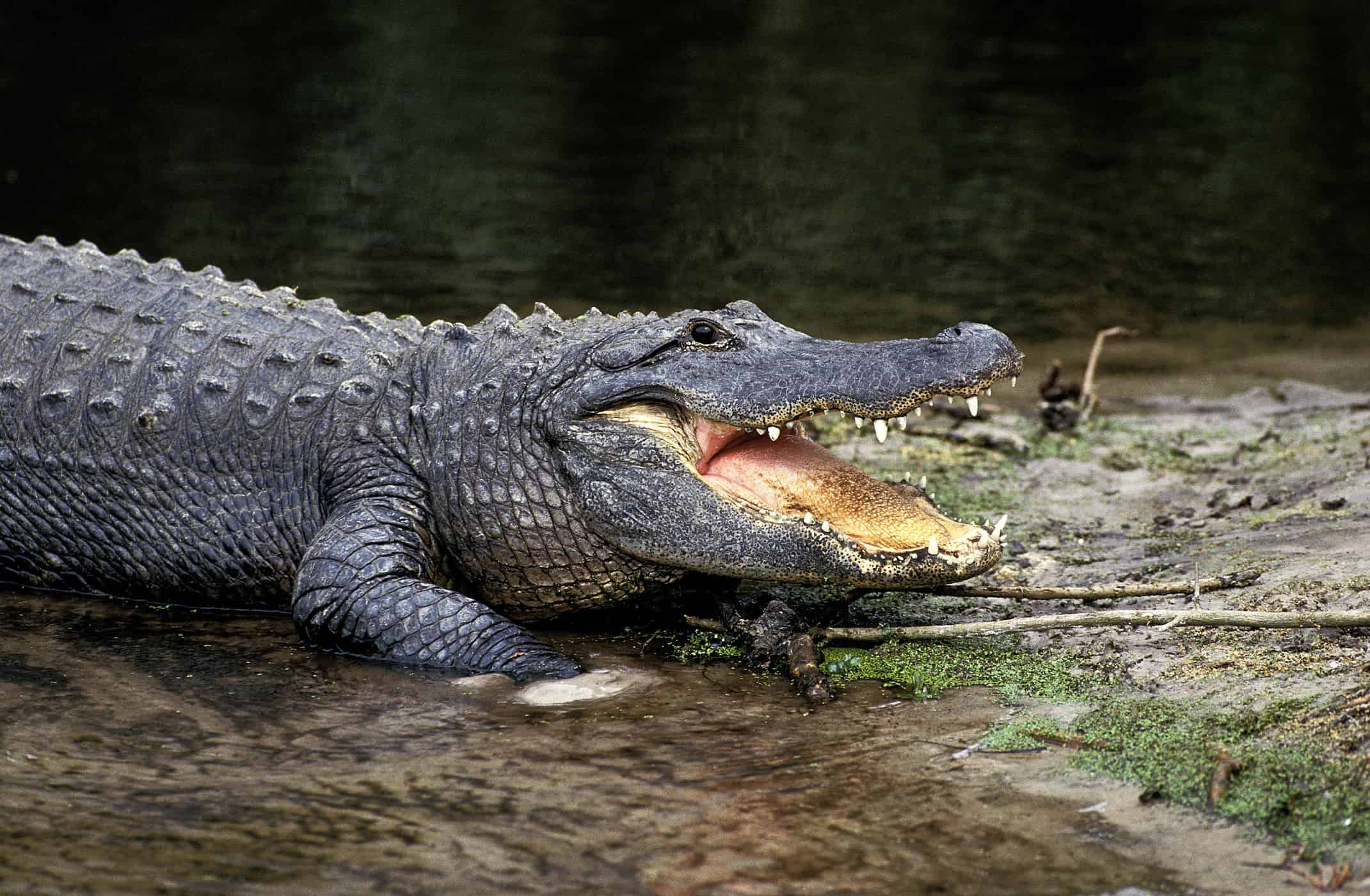

Alligators have a surprising discography of songs (and dances). They make many sounds and have advanced choreography for their growling, bellowing, dancing, inflating, slapping, and hissing. But for any nearby humans, that hiss is a dangerous sound. This post helps discover why alligators hiss and why you never want to hear it.
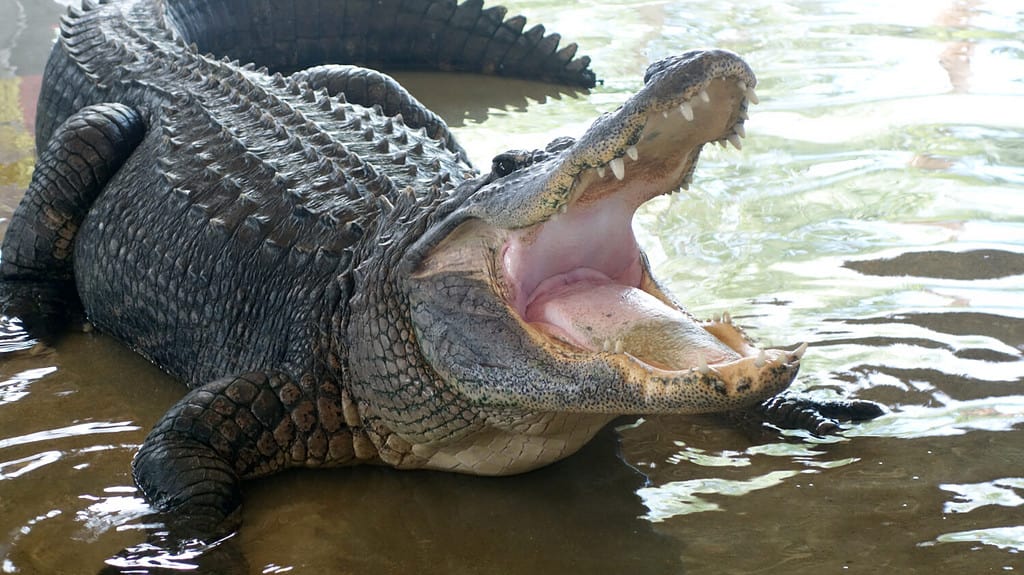
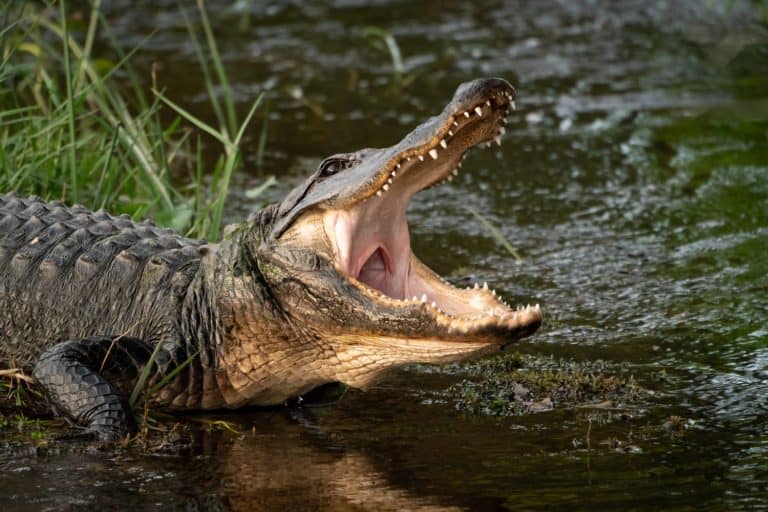
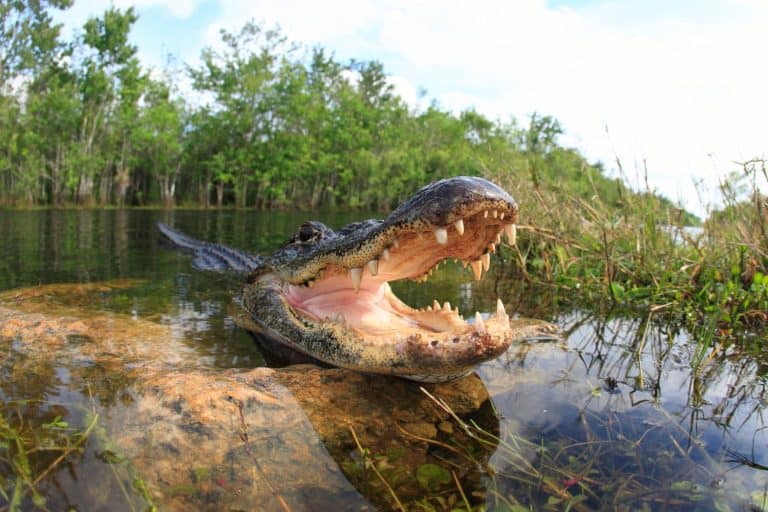
Alligators have a lot of sounds they emit, but hissing is not a good one. This gator might be hissing, suggested by the tail cocked to one side.
©Ernie Hounshell/Shutterstock.com
Female alligators and male alligators hiss and do so primarily out of territoriality. The hiss lasts about 1 to 3 seconds and sometimes will be repeated.
Hissed Off: A Hissing Alligator is Never Happy
Alligators hiss in response to perceived threats. Hissing at a human is a clear sign they think the person is intruding. Nesting moms and breeding-season males are particularly territorial.
Gators have a long playlist of expressive noises despite technically not having vocal cords, and many of those sounds can have slightly different meanings. But hissing is different. A hissing alligator is alarmed and is not afraid to attack.
Why Does An Alligator Hiss and Why Does an Alligator Get Aggressive?
Alligators, like many wild animals, are territorial. They’re also generally solitary animals (so hearing from a distance is essential.) They like their space, wherever that may be. They’re indeed less snappy than crocodiles, but they still want to be left alone.
Because of this get-off-my-lawn attitude, alligators will leave you alone if you leave them alone. Gators have a natural fear of humans and will usually scuttle off if they see one. It’s when they don’t that there is a problem.
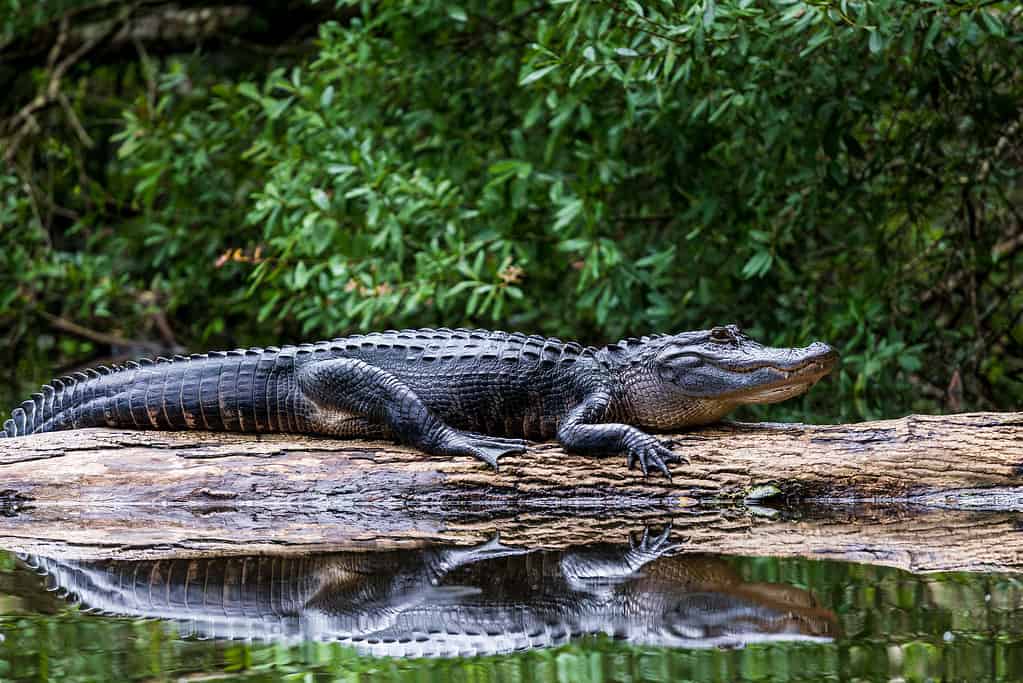
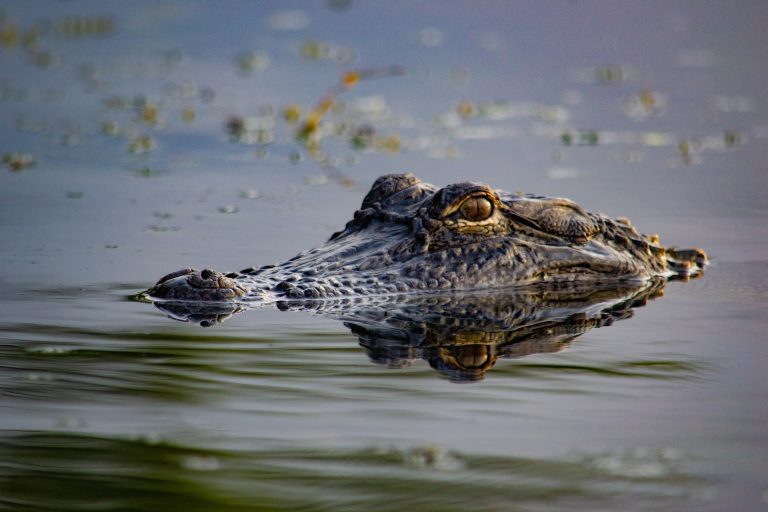
Alligators are usually fine just basking in the sun and are happy to leave humans alone. If they’re hissing, a human or an animal is too close.
©Joe Pearl Photography/iStock via Getty Images
Gators acclimate to human presence when larger waterways are integrated into housing, golf courses, or other developments. Another way that acclimation happens is when humans share their picnics out on the boat or elsewhere. The comfort level between the gators and humans becomes a two-way ratchet until the gator feels threatened and attacks.
So, be careful if an alligator is spotted. Stay 60 feet away (from adults, but that’s probably a good idea for hatchlings, too), and don’t feed them.
These are all excellent ways to avoid hearing an alligator hiss.
How to Tell If Alligators Are Stressed, or Feel Threatened
Alligators communicate in surprisingly rich and complex ways. This includes body language. A landmark study by Garrick, Lang, and Herzog went deep into the lexicon and body language of gators.
From this and other studies, specific postures and expressions have been translated. Be on the lookout for threatening ones.
The Alligator Rosetta Stone – Key Study Translates Certain Signals Like the Hiss (Garrick, Lang, and Herzog)
- The “inflated” posture: swinging tail, back lifted, mouth open and looking, well, inflated. According to Garrick, Lane, and Herzog, other animals fled when the gators did this. It’s probably a threatening pose. Look out for the “inflated” posture.
- If their tail and head are both out of the water, they are signaling, more subtly than a hiss, that they see you. This was mainly seen among mom gators guarding their nest.
- The main hissing posture, at least for moms guarding their nest, is an alligator looking straight ahead, tail cocked to the side. (But the hissing sound is enough to know they mean business.) You don’t want to discover why alligators hiss and why you never want to hear it!
- When alligators lift their heads and smack them back down into the water? This has at least eight different meanings!
- There are lots of low-frequency “subaudible” bellows and grunts.

Alligators make lots of sounds, but the human ear can’t hear all of them.
©pathdoc/Shutterstock.com
Hissing and the Many Air-Fueled Sounds of Alligators
It’s true that alligators don’t technically have vocal cords, at least not in the same way that humans do. But, as noted, they do have a lot to say. They grunt, bellow, and send out low-frequency growls. They shift and flex their larynx, glottis, and other parts of their throat to regulate airflow, allowing them this high range.
Besides the hiss, their “bellow” is their main mode of communication. It is a mating call but also a GPS beacon for their young. It’s also a signal to step off.
Bellowing gets a lot of use as a mating call. Male gators will bellow, do a water dance, and wait for a reply from a female. There are even different types of bellows, and it is just one of the three main vocal (or subvocal) sounds alligators use.
The Good News Is They’re Usually Chill Unless Provoked
Unless agitated by humans (and even then, it’s usually humans getting unnecessarily close), gators don’t usually attack. There are some important ways to avoid upsetting them or being at risk of attack. A gator hissing is, by itself, a sign of being too close.
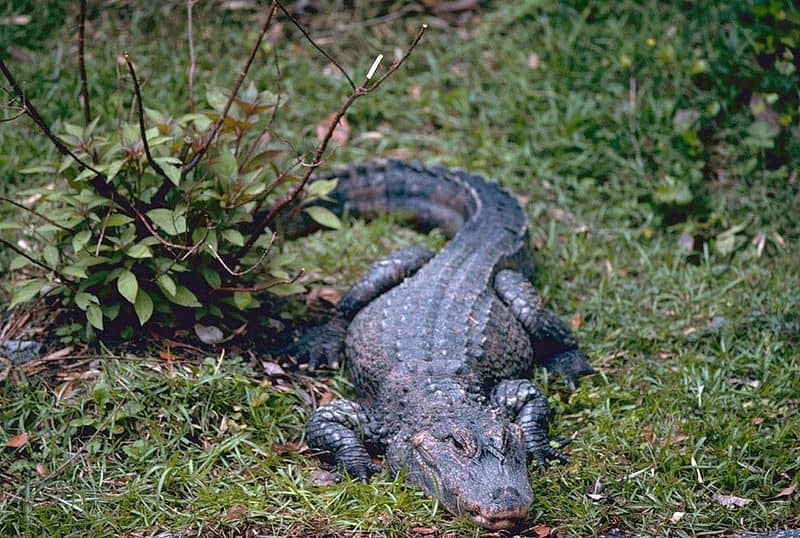
When a fish native to Tibet heard an alligator hissing from a speaker set up by researchers, the fish noticed.
©Stolz, Gary M, Public domain, via Wikimedia Commons – Original / License
Even Fish Know to Stay Away from an Alligator’s Hiss
The Tibetan-native fish species Ptychobarbus kaznakovi doesn’t have a common English name, but it does have a sense of self-preservation. Researchers in China determined that an excellent way to preserve fishery stocks was to blast the sound effects of a Chinese alligator, Alligator sinensis, hissing.
Whether the researchers used pure tones or broadband, some fish reacted by swimming away from the sound. Broadband got results for a much larger percentage of sample fish, though. The researchers concluded that if the fisheries blast these sounds in places where the fish are likely to become prey, fish will avoid those areas, which can boost the stocks.
Back It Up
In the effort to discover why alligators hiss and why you never want to hear it, it’s clear that only someone close enough can hear it. They are fierce, fascinating creatures, but enjoy them from a distance.