
Quick Take
- Male and female alligators bellow for different reasons, a distinction that says a lot about how alligators actually choose their mates. How mating calls differ →
- The sound that terrifies humans has a completely opposite effect on alligator hatchlings. Hatchlings and the bellow →
- Those ripples spreading across the water are not random at all. They are part of a communication system with a name and a very specific purpose.
The sound of an alligator bellow is not one you soon forget. The low, spine-chilling roar you hear from the marsh has a purpose, and it’s not to spook you. In this YouTube video, a female alligator is sending a clear message, but not to the humans filming her. As soon as mating season starts, the shallow waters of the south are full of these rumblings — and it’s a sign that females are ready to start the next generation.
Bellowing Is a Way of Saying, “I’m Single!”
Both male and female alligators bellow, but the powerful vibrations create visible ripples on the water’s surface. This is known as the ‘water dance‘, and is commonly produced by males due to their larger size and deeper bellows. This mating call can be heard more than a mile away and also serves as a warning to other males in the area. In this case, size matters, and the larger the alligator, the deeper and louder its bellow.
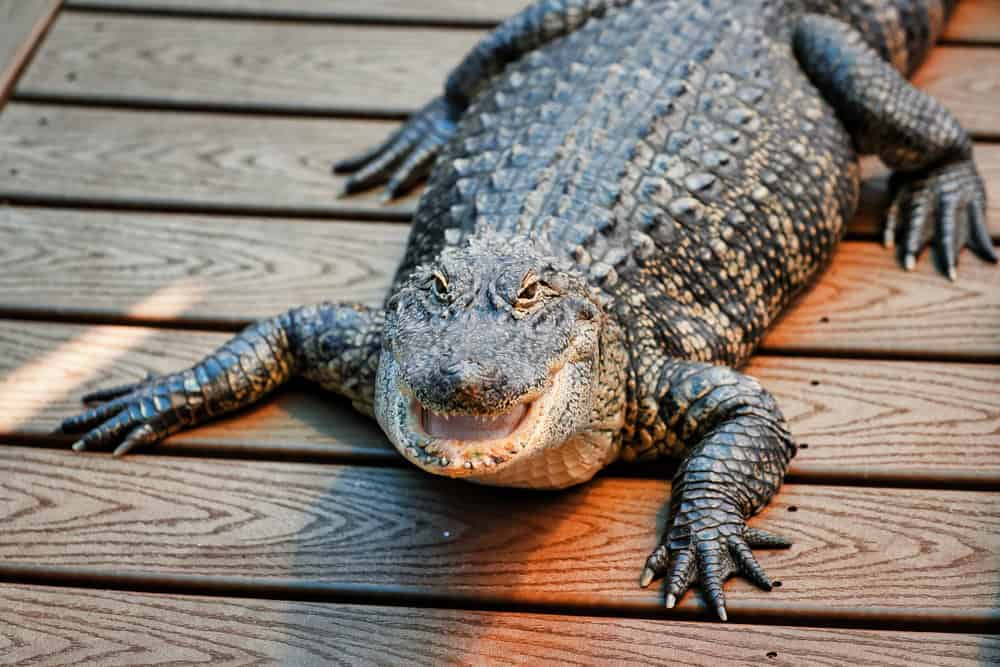
Alligators bellow by forcing air through their larynx, emitting a roar-like sound while partially submerged.
©damoon016/Shutterstock.com
The female in this video emits a bellow that’s not as powerful as a male’s, but still effective. It might not reach a full mile, but it’s enough to catch the attention of nearby males. Male alligator bellows typically range from about 20 to 50 Hz. This allows the sound to travel efficiently through water and reach other alligators, both submerged and on land. Female bellows are usually higher in frequency and less powerful. During the prime mating season in the spring, you can often hear these bellows back and forth. Whereas males bellow to attract all females, a female bellows to attract her neighbors. When this happens, she’s essentially saying she’s ready to reproduce.
Defending Territory and Her Babies
Mating calls are the most common alligator bellows, but there are several other reasons a female might vocalize. If you hear this call outside of mating season, it could mean an alligator is defending their territory. This is a warning to nearby alligators and an indication that you might be too close. To other females, this sound provides information about the surrounding territory. It typically means there’s already a large female occupying this space, and that she has first dibs on food and shelter.

Female alligators are highly protective of their young and may warn others nearby.
©Marc Pletcher/Shutterstock.com
Bellowing can be a form of maternal communication, and while it sounds scary to us, it’s comforting and soothing to hatchlings. If a female bellows with juveniles around, it means she’s protecting her young. This could be a warning to predators or other alligators, or she might be comforting her babies.