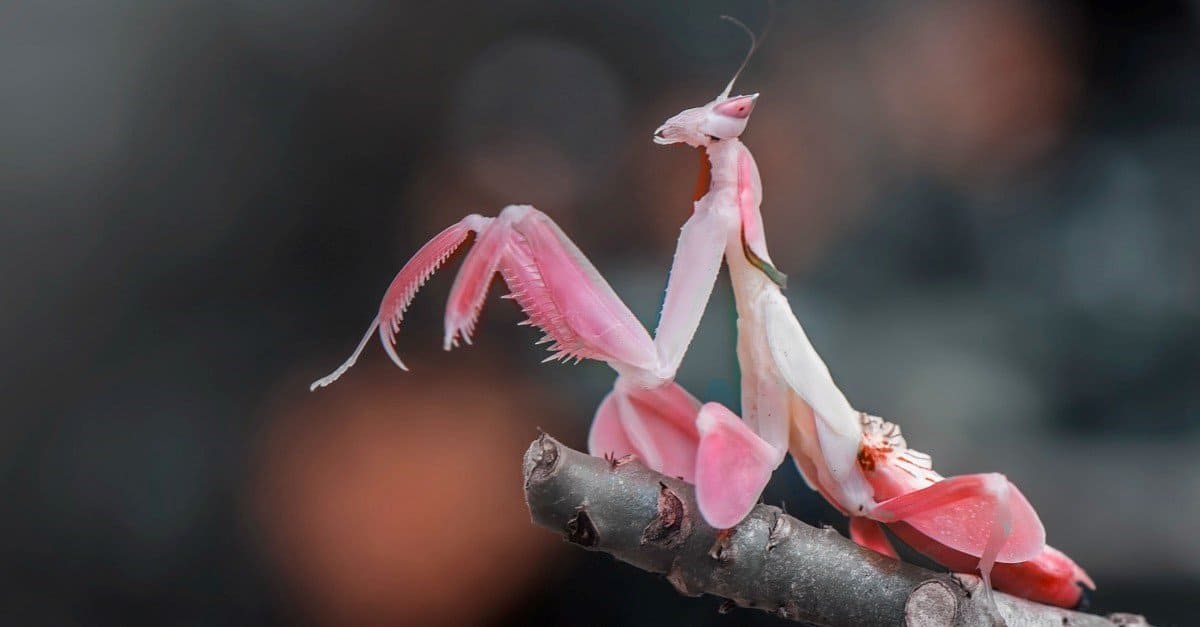

The European mantis (Mantis religiosa) or praying mantis is a species of praying mantis native to Europe, Asia, and Africa. The praying mantis was introduced in North America at the end of the 19th century. These insects are easily recognized by their triangular heads and the distinctive posture they assume at rest, with their front legs folded as if in prayer. These carnivorous predators are skilled hunters, using camouflage and powerful forelegs to capture prey, which can include various insects and, occasionally, small vertebrates. Their large eyes and triangular head may lead you to wonder: Do praying mantises bite? Continue reading to learn about praying mantis bites and more.
Praying Mantis: Ambush Predator
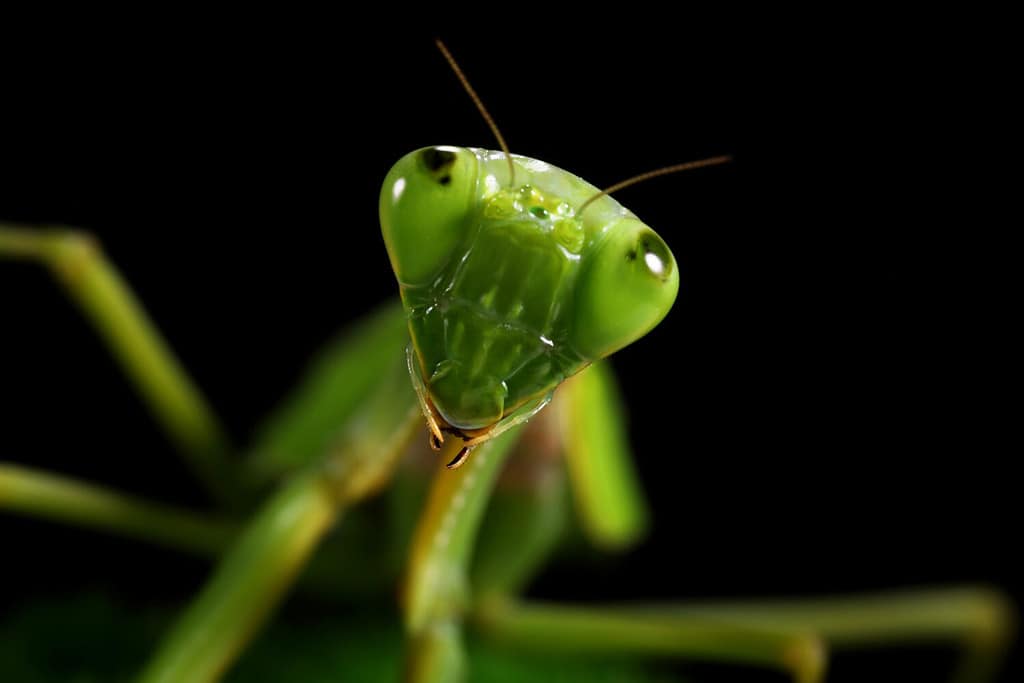
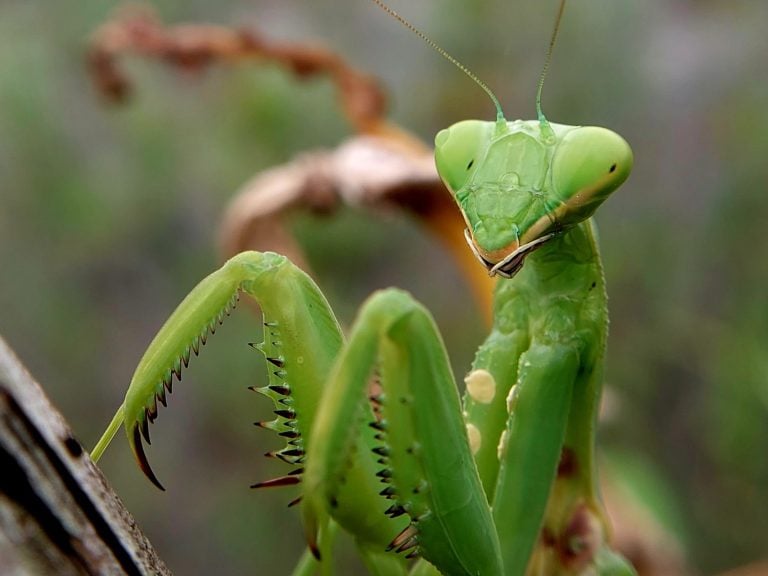
The praying mantis has a triangular-shaped head, with wide-spaced eyes, and jaws lined with sharp mandibles.
©Lauren Suryanata/Shutterstock.com
Yes, a praying mantis can bite. But, instead of teeth, it has mandibles, powerful, scissor-like mouthparts adapted for a predatory lifestyle. These curved, sharp mandibles are crucial for capturing and consuming prey, allowing the mantis to grasp, slice, and break down its food.
Praying mantis forelegs, known as raptorial legs, are highly specialized for capturing prey. They are equipped with rows of sharp spines that act like a cage when the leg is folded, allowing the mantis to quickly seize and hold onto its victim. The spines interlock, making it difficult for prey to escape.
Praying Mantis Bites
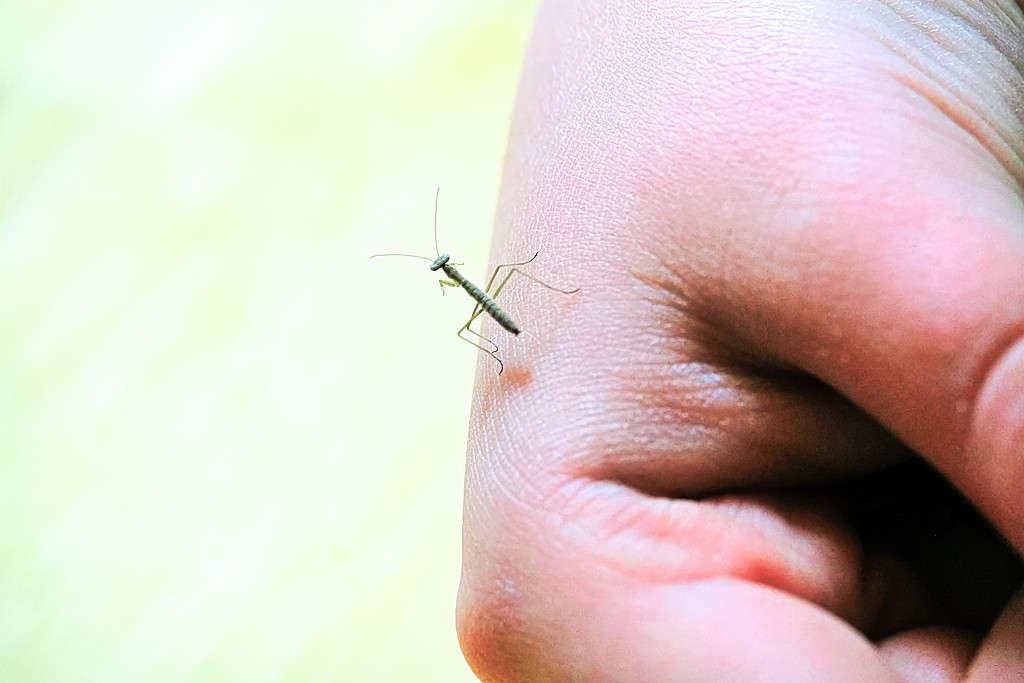
A bite from a small praying mantis might not leave a mark.
©Akchamczuk/iStock via Getty Images
Praying mantises do bite humans, but it is very rare. If a praying mantis feels threatened by a human, the insect would likely take its defensive pose as opposed to trying to bite.
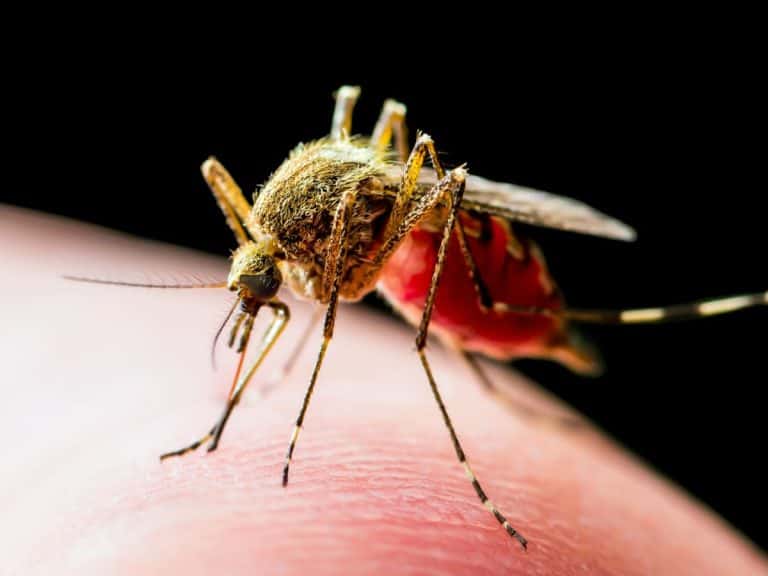
When praying mantises measuring three inches or less bite a human, the bite might not be perceived. However, a bite from a larger mantis (they can grow up to nearly eight inches long) might cause a bit of discomfort, not unlike a mosquito bite.
Praying mantises are not venomous or poisonous, and their bites are harmless to humans, causing at most minor irritation. Also, praying mantises have three-dimensional vision; thus, it is unlikely that they would ever mistake a human for prey.
What does a praying mantis bite look like? A praying mantis bite may appear as a red spot that might become itchy or swollen. If bitten by a praying mantis, washing the area with soap and water is recommended. Should the bite become irritated or itchy, applying a cold compress or calamine lotion can help soothe it.
What Do Praying Mantises Eat?
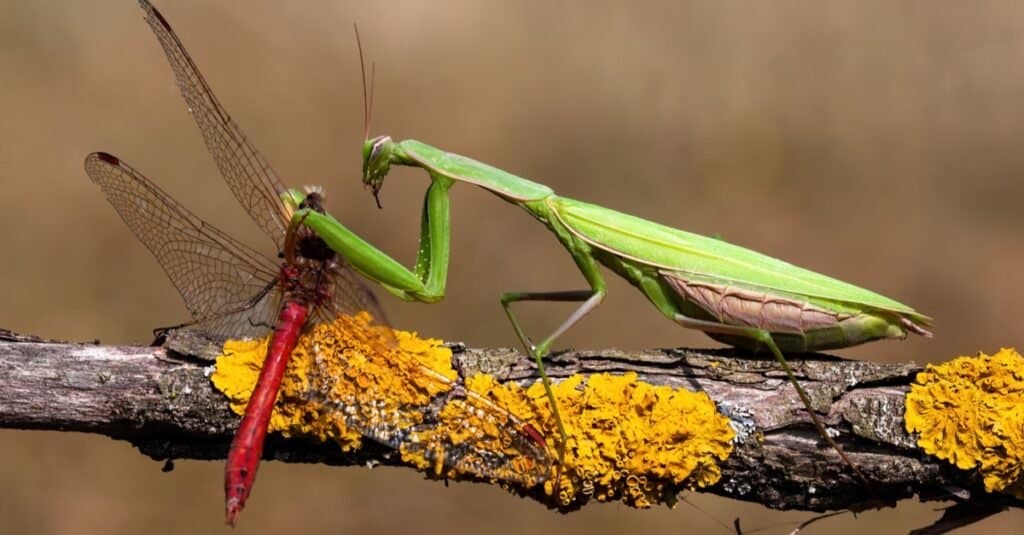
The praying mantis is a carnivore.
©WildMedia/Shutterstock.com
Though a praying mantis’ bite is not really of concern to a human, it is a big concern for many small insects! A praying mantis is a carnivore that eats crickets, spiders, lizards, frogs, and even tiny birds.
The size of a praying mantis dictates the type of prey it consumes. Large praying mantises, particularly those approaching six inches in length, have occasionally been observed preying on hummingbirds and frogs, though such events are rare. In contrast, a three-inch mantis may stick to catching crickets and grasshoppers, which are easier to grab.
Female Praying Mantis May Bite Off the Head of Their Mate
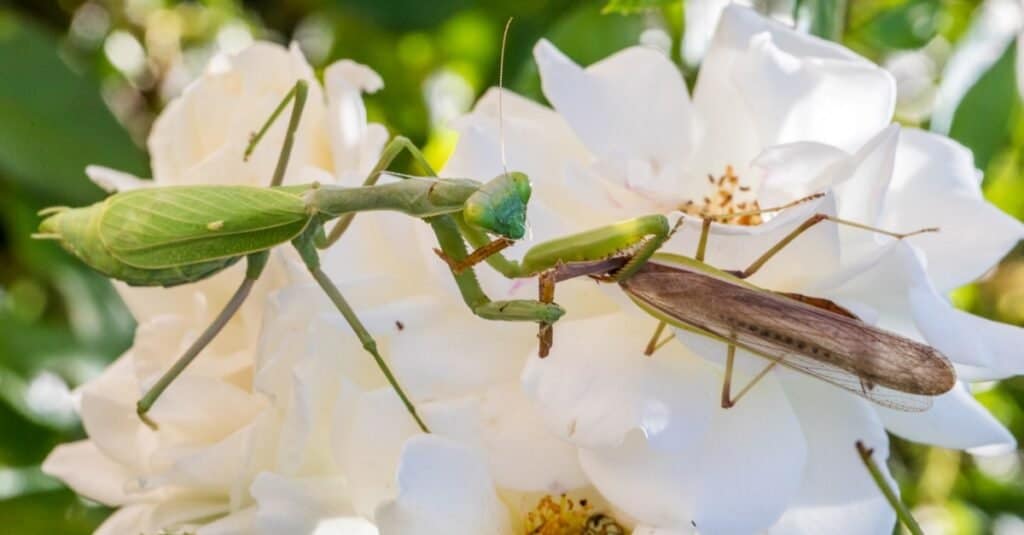
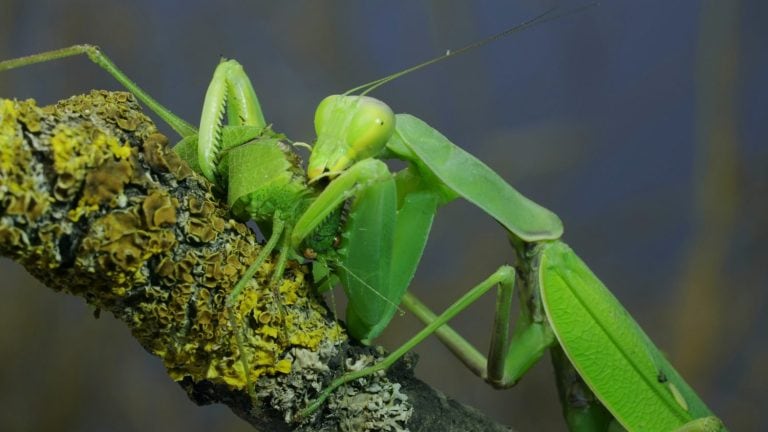
A female praying mantis cannibalizing her mate.
©Warren Parker/Shutterstock.com
After a female mates with a male praying mantis, she may bite off his head. Not only might she bite off his head, but she might also consume it, along with his legs and other parts of his body. This behavior has resulted in the praying mantis being cast as an aggressive insect. Why do female praying mantises exhibit this behavior?
Scientists aren’t sure why a female praying mantis bites off the head of a male while mating. Sexual cannibalism isn’t practiced across all mantis species, and studies show it occurs in about 13–28% of matings among praying mantises.