
Quick Take
- Swans can twist their necks in ways that seem impossible, and the anatomy behind it is stranger than you'd expect. Explore the neck anatomy →
- That viral swan 'hug' with a human looks adorable, but wildlife experts say it sends a dangerously misleading message. See why experts are concerned →
- Approaching a calm swan feels harmless, yet wildlife authorities document injuries you wouldn't associate with a bird. Find out the real risks →
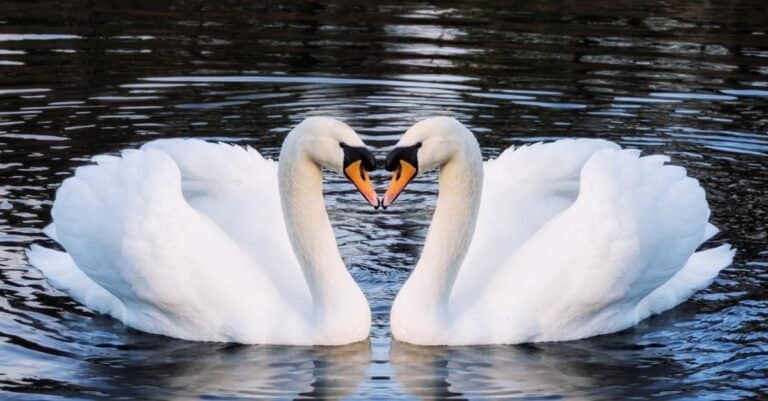
Few sights in nature are as charming as two swans drifting toward each other, their long necks intertwining in a gentle embrace. However, rather than two swans, this recent Instagram post shows a bit of affection between a human and a swan. The bird drapes its long neck around the wildlife presenter like it’s his best friend. But is this act truly a hug, in the way people tend to think of them? Let’s look more closely at swans and their unique behaviors.
Are Swans Affectionate?
When addressing whether or not swans are affectionate, we first have to define what we mean by affection. If “affection” is defined as forming strong social bonds with one another and engaging in behaviors that reinforce those bonds, then yes, there is plenty of evidence to suggest that swans are affectionate.
However, we don’t know that a swan experiences affection in the same emotional way that a human does. What we can observe is that swans form long-lasting pair bonds and have elaborate behaviors associated with courtship and maintaining relationships. Mute swans, for example, are predominantly monogamous and form long-lasting breeding pairs. They also participate in synchronized displays involving head and neck movements. Those behaviors can look remarkably romantic to human observers.
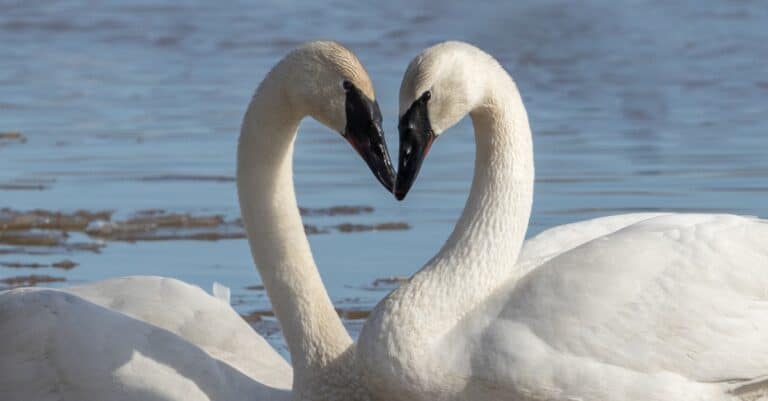
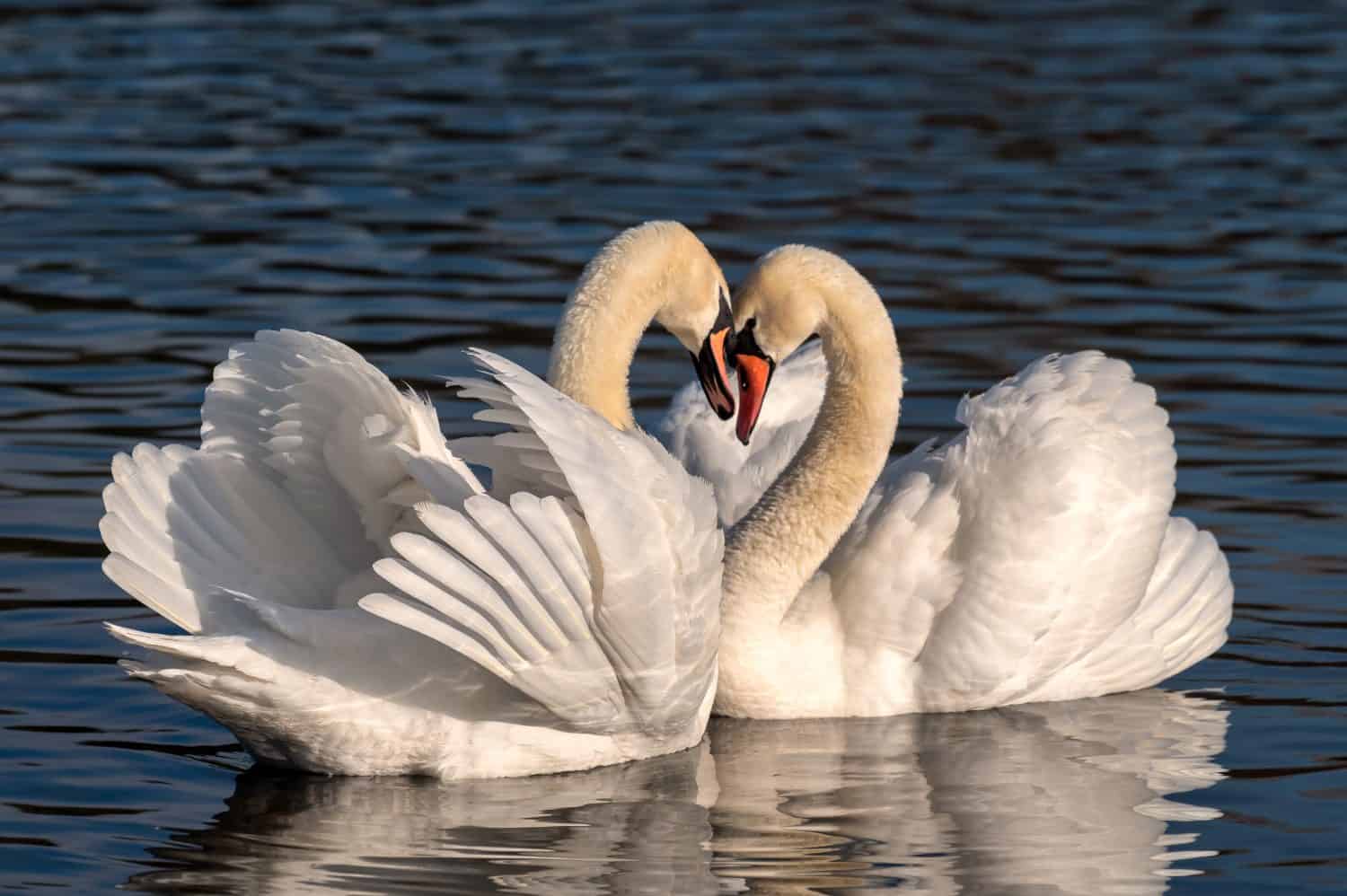
Two swans may face each other, move their heads and necks together, dip their heads, swim alongside one another, and eventually bring their necks into contact or intertwine them. That’s one reason swans have become such powerful symbols of love and lifelong romance.
Is a Swan Hug Actually a Hug?
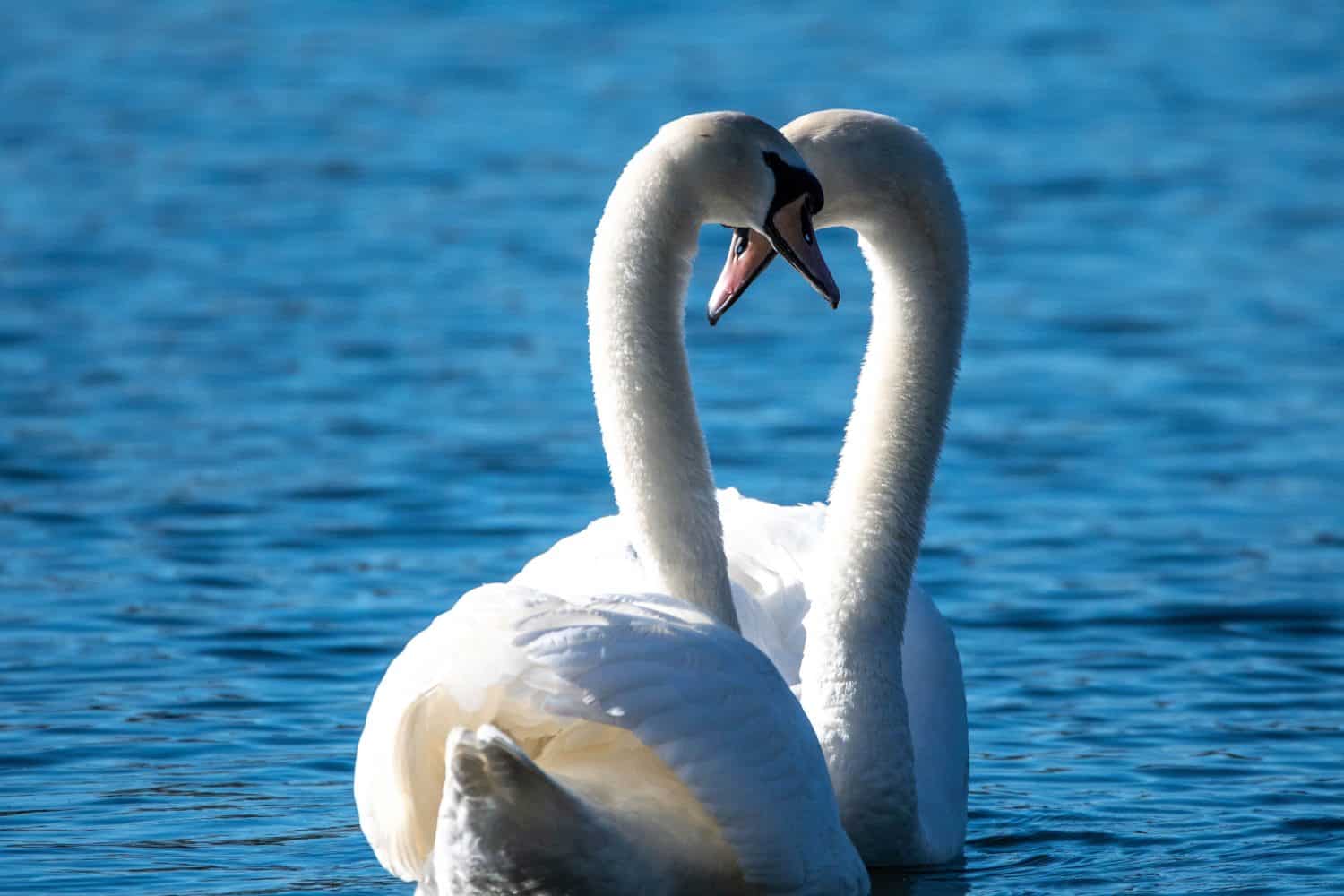
What looks like swans hugging is really them showing affection through their flexible necks.
©Wirestock Creators/Shutterstock.com
When swans engage in their famous display, are they actually hugging? Not in the human sense of the term. Their behavior is better described as neck intertwining or synchronized courtship behavior. These movements are part of a much larger communication system.
During courtship, swans can perform synchronized movements involving their heads and necks. Mute swan courtship includes calls and greetings, coordinated neck movements, and rhythmic head-dipping. Eventually, the pair may rise chest-to-chest from the water. Though neck intertwining is associated with courtship and mating, it is not necessarily a general expression of affection.
How Can Swans Hug?
Even if they aren’t technically hugging, it is remarkable how swans can move and twist their necks. This flexibility is due to their incredible number of neck vertebrae. Research on bird anatomy has found that mute swans can have 23 cervical vertebrae, placing them at the high end of the vertebrae range found among birds. For comparison, humans have seven cervical vertebrae.
Each vertebra is a small, movable component of an incredibly complicated mechanical system. Instead of one or two large joints doing all the bending, the swan uses many individual joints to create overall movement.
Think of a chain creating a large curve: each individual link moves a little. A swan’s neck works somewhat like the chain. The many vertebrae allow the bird to distribute movement across the entire neck.
These unique vertebrae have saddle-shaped articulations and are known as heterocoelous vertebrae. These joints allow substantial bending and side-to-side movement while helping to maintain stability. This is why a swan can curve its neck into an elegant S-shape, reach backward, lower its head toward the water, and perform the dramatic movements seen during courtship. They may do so to communicate, reach food, groom feathers, drink, interact with other birds, and control their head position while swimming or flying.
Is This Instagram Post an Anomaly?
Now that you know how swans “hug,” how about the swan embracing the man in the Instagram post? Is the swan actually hugging the man? While the swan’s neck position itself isn’t an anomaly, the fact that it’s comfortable enough to embrace a man is a bit odd. That behavior is not something you should expect from a wild swan. Many swans, including mute swans, can be extremely territorial and aggressive, particularly around breeding areas.
In this case, the bird in the post is simply comfortable with that particular person. A swan that calmly lets a trained handler hold it is a very different situation from a wild swan at a pond.
Should You Approach a Swan in the Wild?
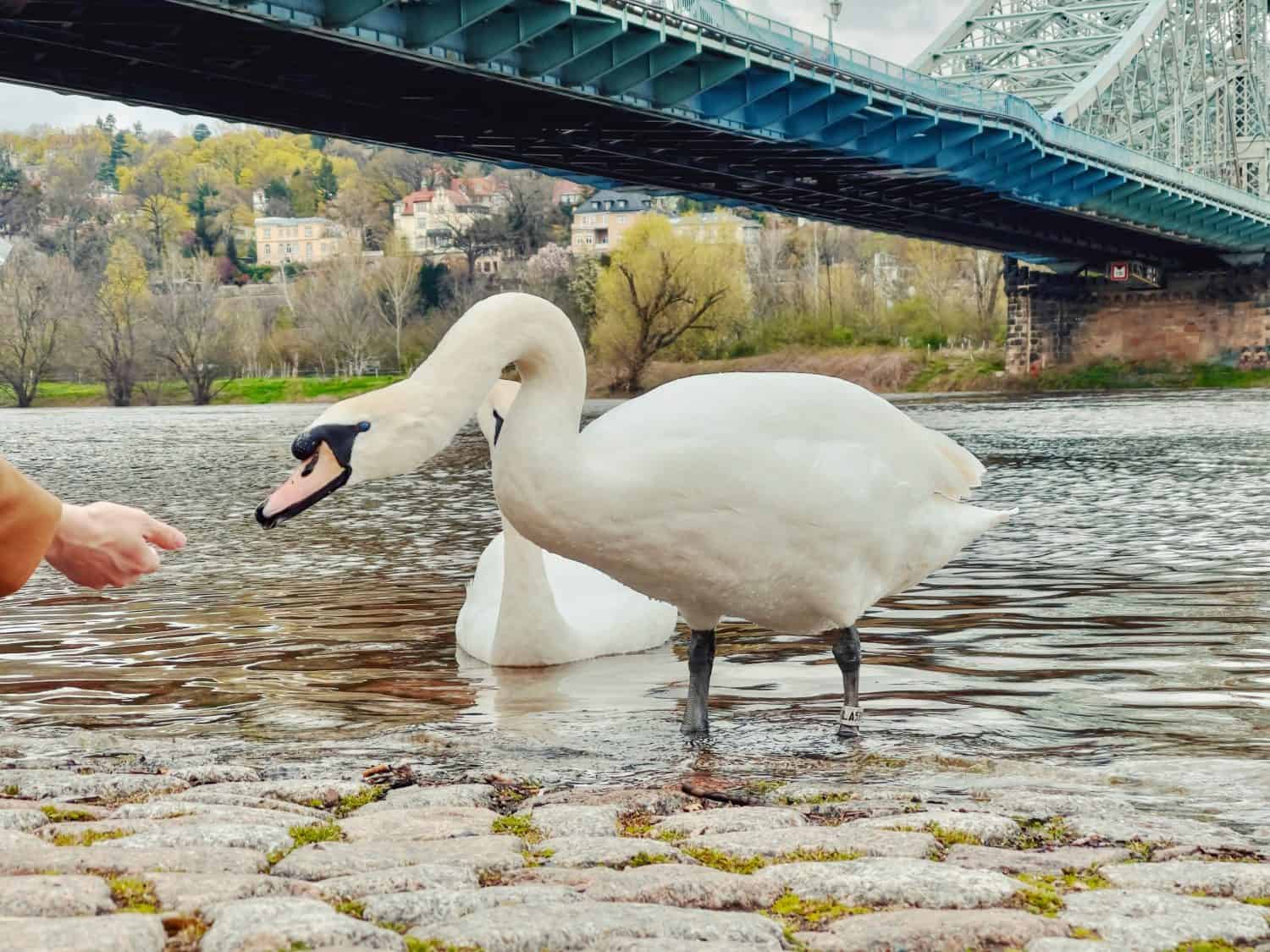
Do not attempt to approach a swan. They can often be aggressive and territorial.
©Vaitseh/Shutterstock.com
A wild swan defending its territory may interpret a person approaching too closely as a threat. And because swans are large birds, an aggressive encounter can cause real injuries. The Illinois Department of Natural Resources notes that mute swans can inflict bruises, sprains, and even fractures. So even if a swan appears calm, tame, or curious, that doesn’t mean it wants physical contact.
A Hug Unique to the Swans
If you’re lucky enough to witness two swans wrap their long necks together, you’re getting a rare glimpse into their world of communication and courtship. If you find yourself a fortunate observer of this beautiful display, give them plenty of room and enjoy the moment from a respectful distance.