
Quick Take
- Swans form lifelong bonds, often in less than two years of life.
- Parents work together to make sure their young survive to adulthood.
- Since swans often bond for life, they are able to recognize each other even after time apart.
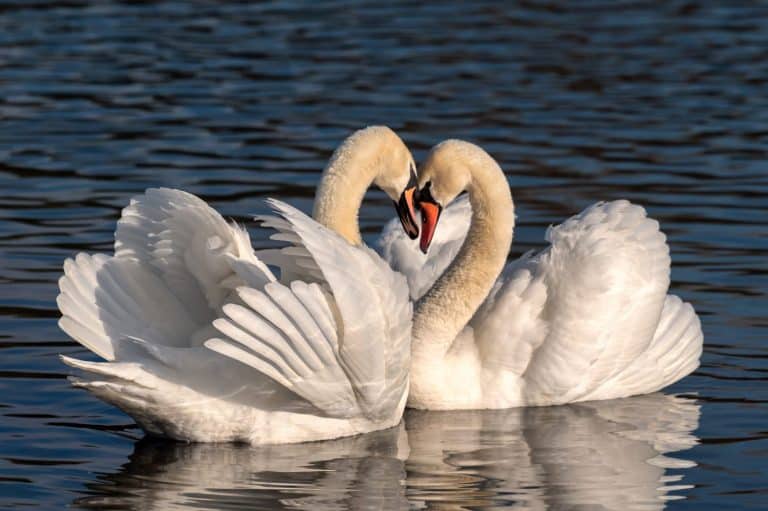
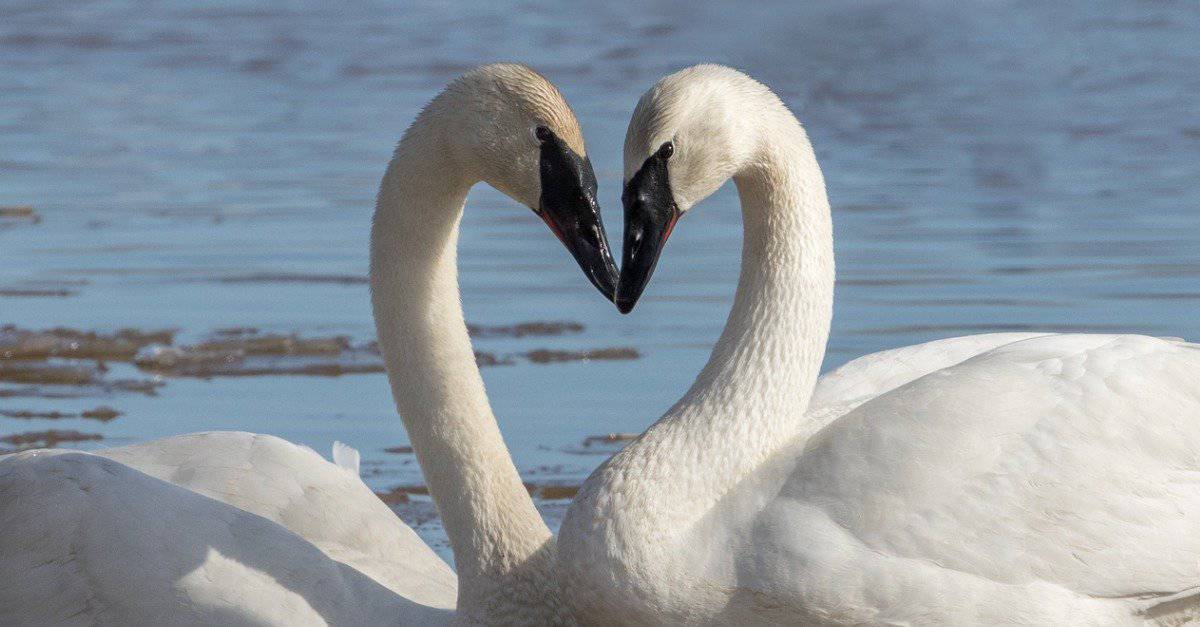
Swans are one of the most famous symbols of romance. Their commitment to their mates and the famous heart shape when they put their heads together is undeniably romantic. In this video, a swan was reunited with her mate before performing a beautiful swan dance. The YouTube reel from @We_Love_Animals is adorable and definitely worth a watch. Read below to learn more about swans, the most romantic animals.
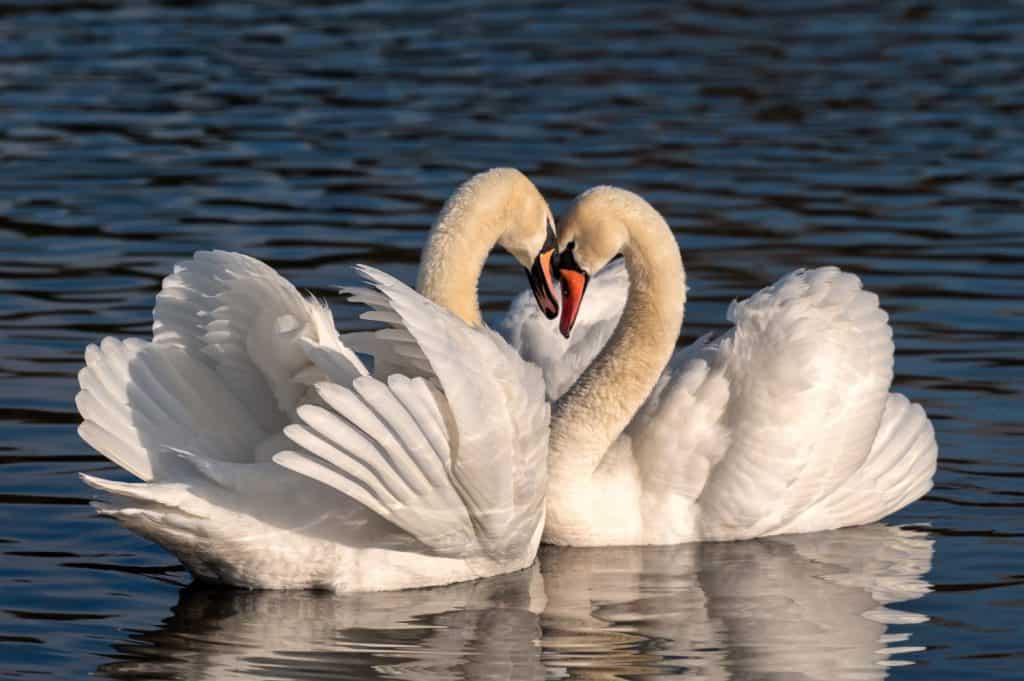
Swans are famous for forming pair bonds that typically last for life.
©oliver magritzer/Shutterstock.com
Why Are Swans So Romantic?
Swans are easily some of the most romantic animals in the world. They have been a symbol of love and affection for centuries, and for good reason. Their dedication to their partners is one of the most beautiful examples of commitment in the animal kingdom. Swans are monogamous birds, meaning that they form a long-term bond with a single partner. This relationship is rarely broken, as most swans mate for life. The only time the bond may break is when a mate dies or after an unsuccessful breeding season. Because of their commitment to each other, swans are a symbol of love, romance, and loyalty throughout the world.
In the video above, it seems like the swans were separated for an unknown amount of time. While the time apart may have been difficult, swans have excellent memories, especially when recognizing their partners. Since they already spend so much time together, it makes sense that they would have a hard time forgetting their partner. There is also some belief that swans can recognize individual humans and other swans as well. Thanks to their amazing memory and recognition, it’s no wonder the swan in the video flew over that quickly to their mate.
How Do Swans Show Affection?
Swans aren’t just famous for their commitment to romance, but also for their other affectionate behaviors. Swans are often used as symbols of romance. It’s not uncommon for a swan pair to put their heads together. When they do this, the arch of their neck resembles that of a heart. This is one of the most famous ways they show affection to each other. Some other ways include swimming and dancing. Swan pairs often mirror each other’s movements. This synchronization is very important for swans and is uncommon among other bird species. Courtship behaviors, such as bobbing their heads and displaying their wings, further reinforce their relationship. Most swans also preen each other’s feathers, which helps build trust and strengthen their bond.
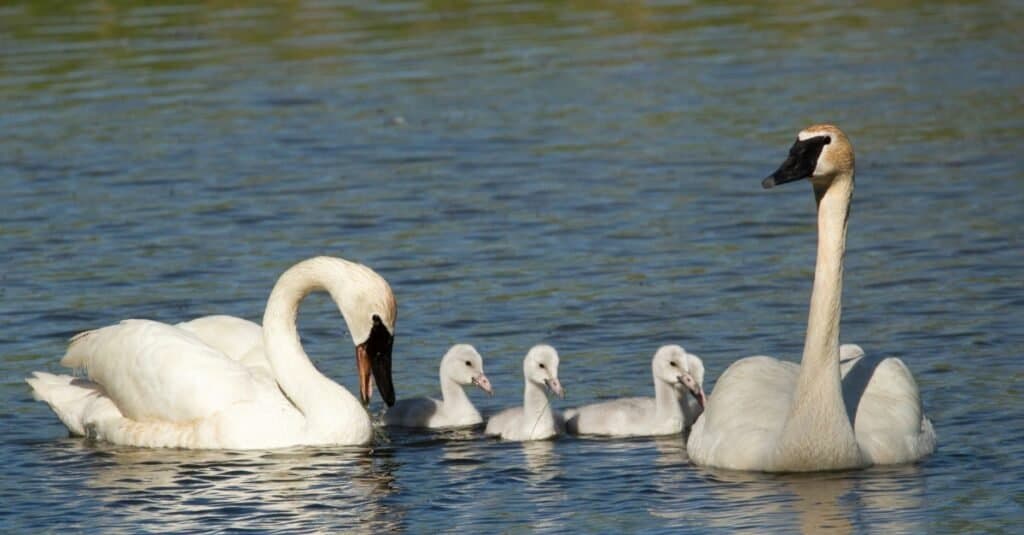
Trumpeter swans, which can live as long as 24 years and only start breeding at the age of 4–7, form monogamous pair bonds as early as 20 months.
©iStock.com/Zeke1
Why Are Swans So Monogamous?
Bonding for life is a significant commitment—so why do swans mate for life? While it may just seem like a simple biological code, there are plenty of practical reasons. Teamwork between the pair is extremely beneficial, especially in raising their young. Raising young is a significant investment for swans, as they must build nests, incubate eggs for five to six weeks, and protect their hatchlings for months afterward. Cygnets, or baby swans, require constant protection from predators and environmental hazards. Having both parents involved makes this task easier. Typically, the male will guard the nest and surrounding territory aggressively while the mother stays in the nest. Predators aren’t the only threat; rival swans can also pose significant challenges. Because of this, it’s essential to have one parent on guard while the other takes care of their babies.
When Do Swans Have Babies?
Bonding for life means that they get to know their partner’s behaviors and patterns more easily. Swans typically breed once a year, usually starting from around three to four years old, and generally live 10 to 20 years in the wild, though some may reach up to 25 years or more. Depending on the species, they lay clutches of four to seven eggs at a time. Incubation takes a little over a month, and it is an extremely challenging time. Because of predation, usually only a few cygnets survive to adulthood, so the parents must work hard to protect them. Even after hatching, swan parents care for their young longer than most other bird species. While cygnets can swim within the day of hatching, they often stay close to their parents for the first six months of life. The parents are also extremely protective, often chasing away other animals and even humans.
There are so many environmental factors that can cause stress to swan parents. For this reason, finding a new mate each year would be more costly and stressful for swans. By remaining with a reliable partner, swans can raise their young more successfully each year. This stability is essential for these remarkable birds and is a key reason they are considered among the most romantic animals in the world.