

Quick Take
- Bathing your dog too often can actually make them smell worse, and the reason for this is biological. See why it backfires →
- A damp coat after a winter bath isn't just uncomfortable for your dog. It can be genuinely dangerous. Understand the winter risks →
- The real secret to a clean, healthy coat has nothing to do with how often you bathe your dog. Discover the real solution →
- Whether your dog dreads bath time may be less about training and more about something hardwired into their breed. Help your dog cope →
Humans have been selectively shaping dog characteristics for 10,000 to 15,000 years, for specific tasks like hunting, guarding, and herding. However, the vast majority of the breeds we recognize today were standardized during the 19th and 20th centuries. There are currently over 400 distinct dog breeds worldwide, though the American Kennel Club (AKC) currently recognizes 205 breeds. These breeds vary considerably in coat type and activity level, which inform how often they need to be bathed. Continue reading to learn everything you need to know about bathing a dog.
How Often Should You Bathe Your Dog?
How often your dog needs to be bathed will depend on its breed, coat type, and lifestyle. This can range from once every six weeks to just a few times a year. Most short-haired dogs only need to be bathed when they get into something messy, have a health problem, or begin to smell.
Dogs with long, thick coats are more likely to get debris caught in their fur, and their coats also trap dander and dead skin, and typically require more frequent baths.
Active breeds that spend time outdoors and those with denser or longer fur will need to be bathed most often, while indoor lap dogs will require fewer baths.
©iStock.com/DuxX
A dog with a long double coat should be bathed every 6 to 12 weeks. Bathing more frequently than every 6 weeks can strip away the coat’s natural, weather-resistant oils, which keep the skin healthy and help prevent matting.
For these breeds, routine brushing is far more important than bathing. Brush them 2 to 3 times a week using a slicker brush and an undercoat rake to reach down to the skin. This removes trapped dirt and prevents severe mats without stripping natural oils.
Dogs with skin conditions may need more frequent bathing than healthy dogs. Your vet may recommend a medicated shampoo.
Should I Bathe my Dog Less Frequently in the Winter?
Dogs should generally be bathed less often in the winter.
Cold air outdoors and central heating indoors combine to create a low-humidity environment, which can dry out a dog’s skin, making them more prone to itchiness, flaking, and irritation if washed too frequently. Thick coats, especially double coats, take a long time to dry.
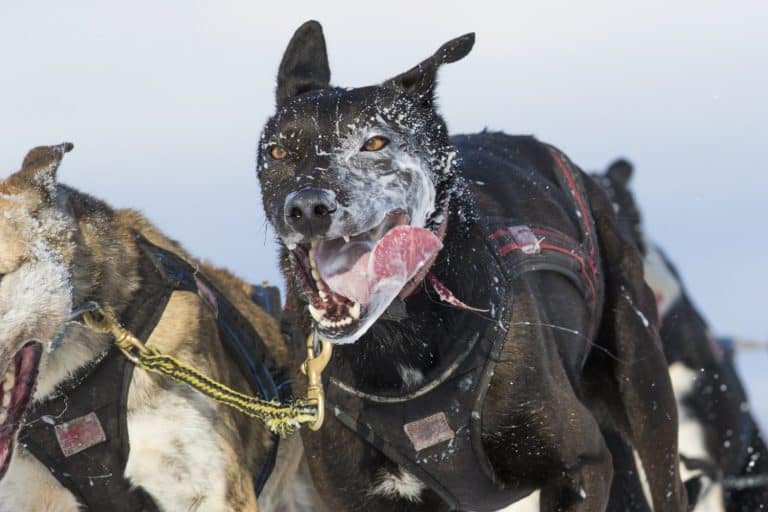
A damp undercoat in freezing weather can cause a dangerous drop in body temperature. Washing also removes the oils that protect a dog’s paw pads.
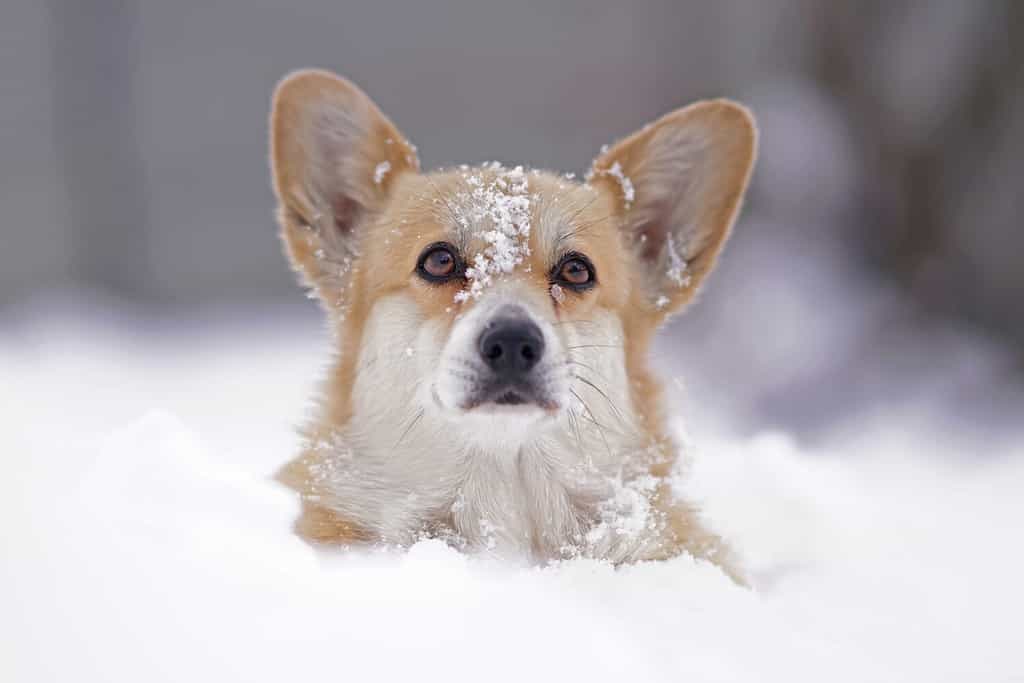
It can sometimes be more difficult to bathe dogs in the winter months.
©Eudyptula/Shutterstock.com
Can You Bathe a Dog Too Often?
Bathing a dog too often strips away sebum, the vital natural oil that hydrates the skin and waterproofs the coat, leading to a cascade of dermatological issues.
Without this protective moisture barrier, dogs develop chronic dry skin, severe itching, and flaky dandruff, while their fur becomes dull, brittle, and highly prone to painful matting. Furthermore, excessive washing disrupts the skin’s natural pH and healthy microbiome, leaving the dog highly vulnerable to opportunistic yeast and bacterial infections.
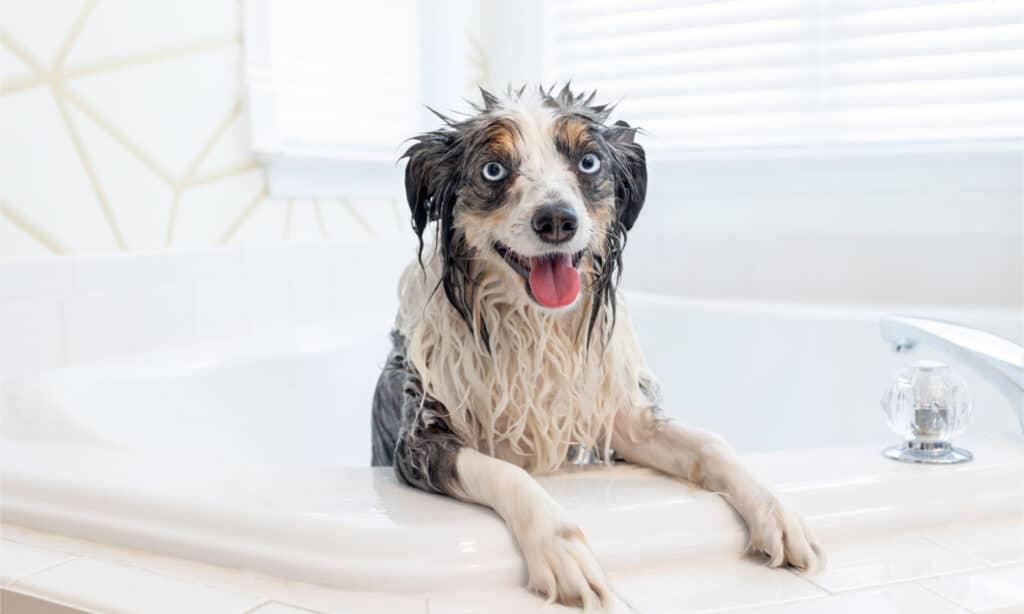
Frequent bathing can harm a dog’s coat and skin.
©Danielle W Press/Shutterstock.com
In some cases, the body will even overcompensate for this extreme dryness by overproducing grease, resulting in a rebound oily coat that actually makes the dog smell worse, faster. Regular brushing is the best way to keep your dog’s coat clean and healthy between baths.
Brushing removes outdoor debris before it can irritate the skin, as it spreads sebum along the length of the hair shaft, naturally sealing, shining, and waterproofing the coat.
Helping Your Dog Enjoy Bath Time
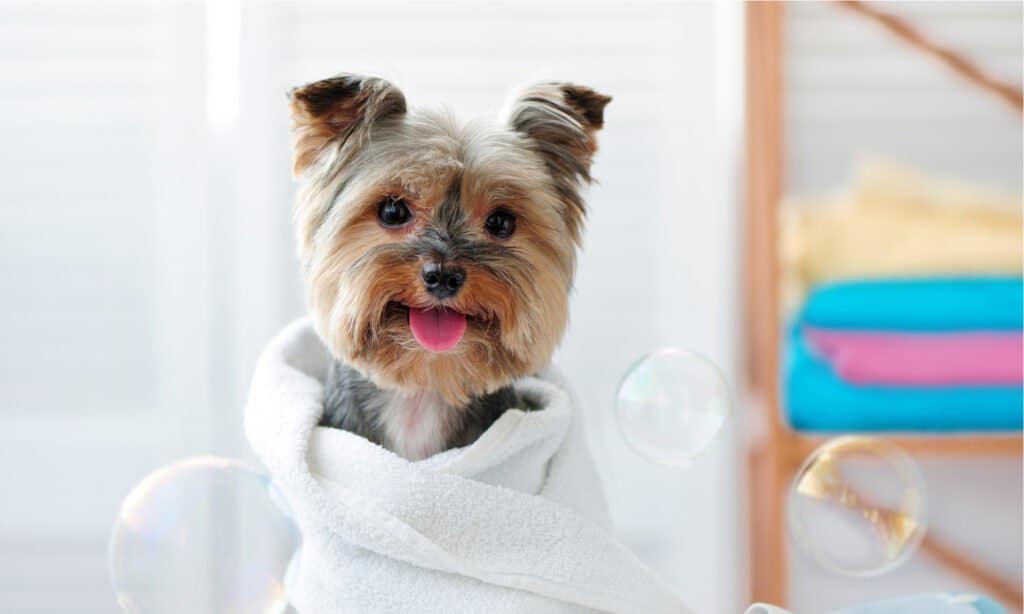
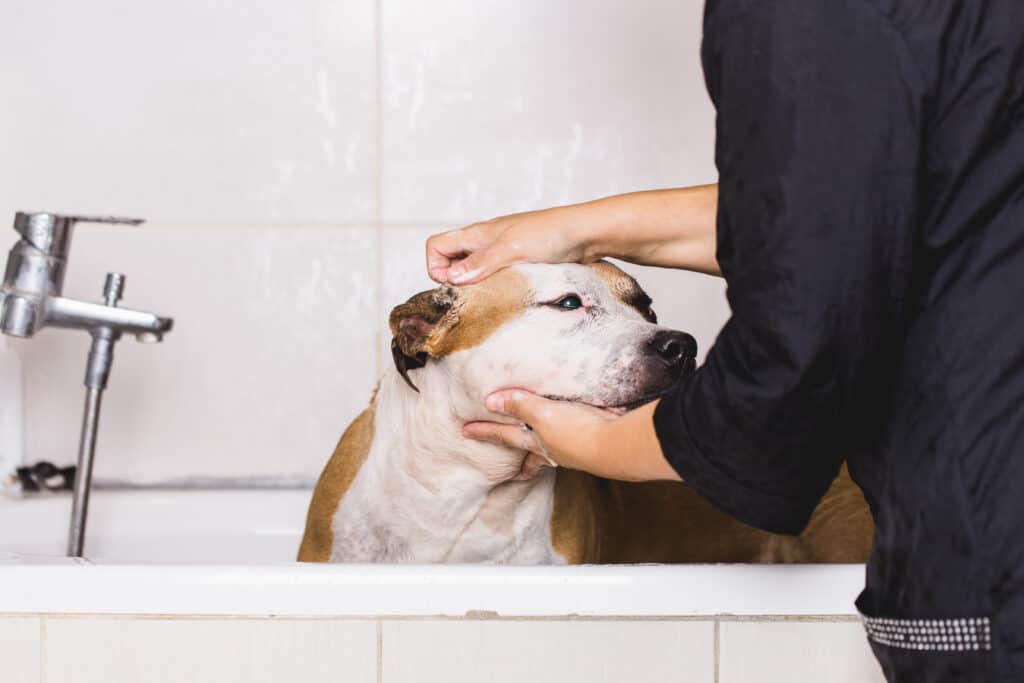
Some dogs enjoy baths more than others, but training can help make the experience better for them.
©Kasefoto/Shutterstock.com
Whether or not your dog enjoys baths will depend on many factors, including breed, personality, training, past experiences, and more.
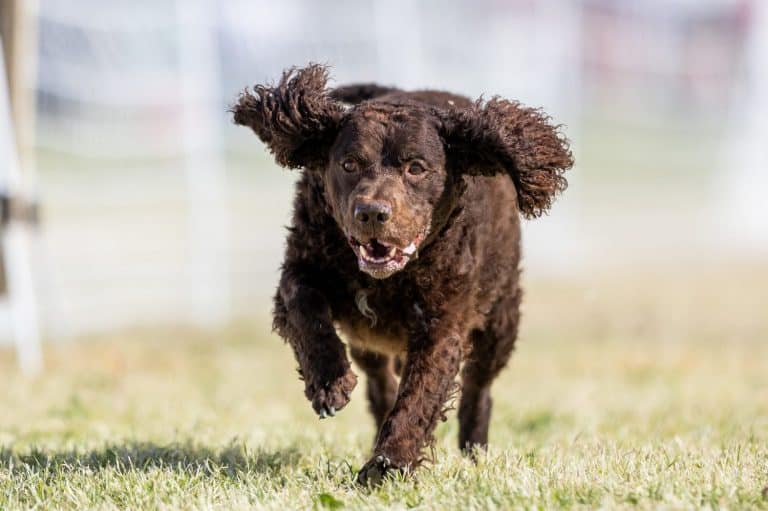
Breeds like Labradors and poodles, which were bred to hunt waterfowl, are therefore more likely to enjoy bath time.
While some dogs may never enjoy bath time, they should nonetheless be taught to tolerate it.
Some ways to help make bath time more enjoyable for you and your dog include:
- Check the water temperature. Make sure the water feels comfortable to you before exposing the dog to it. Like humans, dogs prefer a warm bath.
- Running water can be scary. Some dogs are sensitive to noise. Filling the tub with a couple of inches of water beforehand and using a cup to pour the warm water onto their coat rather than spraying them with a showerhead or hose can make bath time less stressful.
- Lick mats are perfect for bath time. Lick mats that stick to the side of the tub are a wonderful way to distract a nervous pup.
- Never punish your dog for disliking the bath. Focus on making it the best experience possible for them, and extend some understanding to your pup if they dislike the process.
How to Bathe Your Dog
Bath time might feel intimidating, but it is actually a straightforward task, especially if you take it step-by-step and focus on keeping things calm and positive.
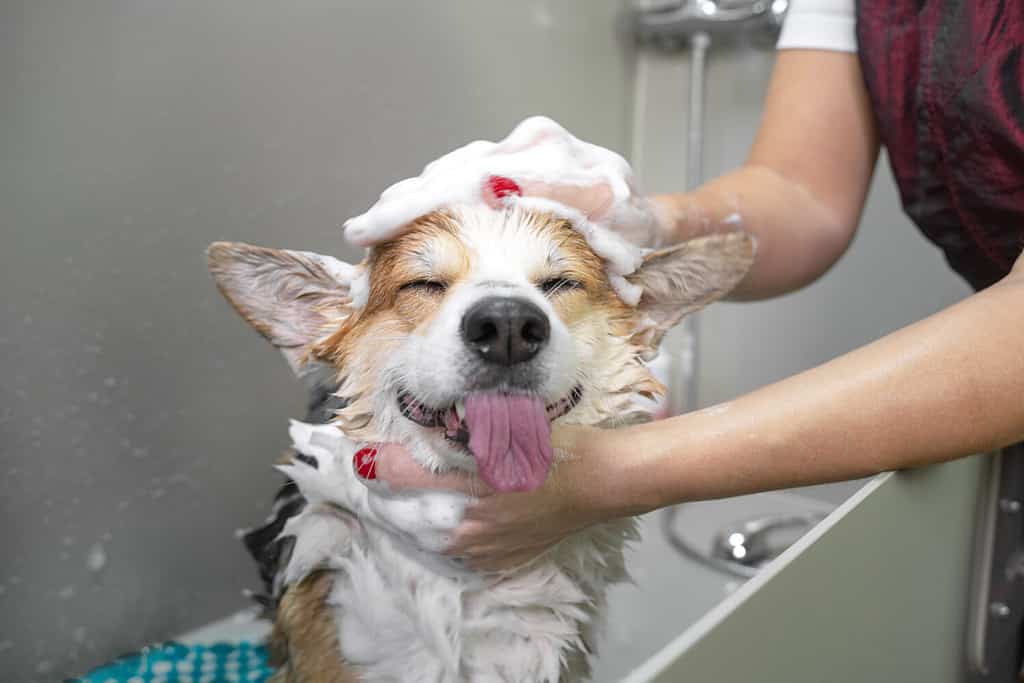
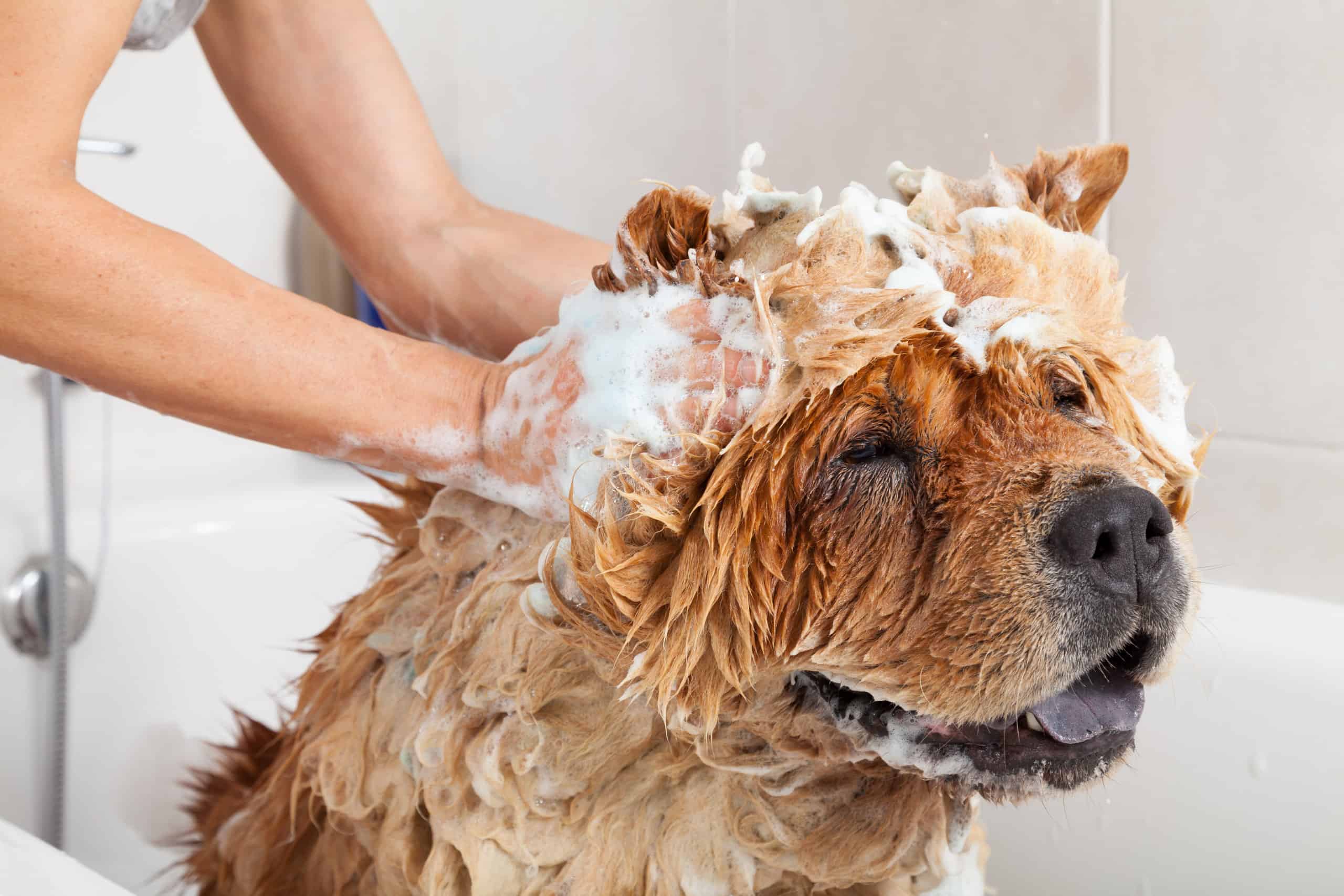
The most difficult part of bathing your dog might be getting them to get into the water.
©Masarik/Shutterstock.com
- Purchase a dog shampoo. Human shampoos and dish soap will dry out a dog’s skin. They’re typically okay in a pinch, such as when giving a new dog a flea bath, but not for repeated use.
- Desensitize them slowly if possible. Sometimes, your dog will need an immediate bath. But if they don’t, try to introduce the process slowly and give them time to learn.
- Wet their coat thoroughly. You can use a shower head or hose to spray them down, or fill the bathtub with a bit of water and scoop it onto your dog’s body.
- Lather shampoo in your hands, then wash your dog’s entire body down to the skin. Remember to wash their feet, tail, belly, armpits, and any wrinkles in their skin.
- Rinse well. You don’t want to leave any soap behind, as this can irritate your dog’s skin. Rubbing circles in their coat as you rinse can help to lather any leftover soap, making it more noticeable.
- Use dog conditioner if desired or needed. Conditioner is great for dogs who get frequent baths, as it reintroduces some oil to the coat.