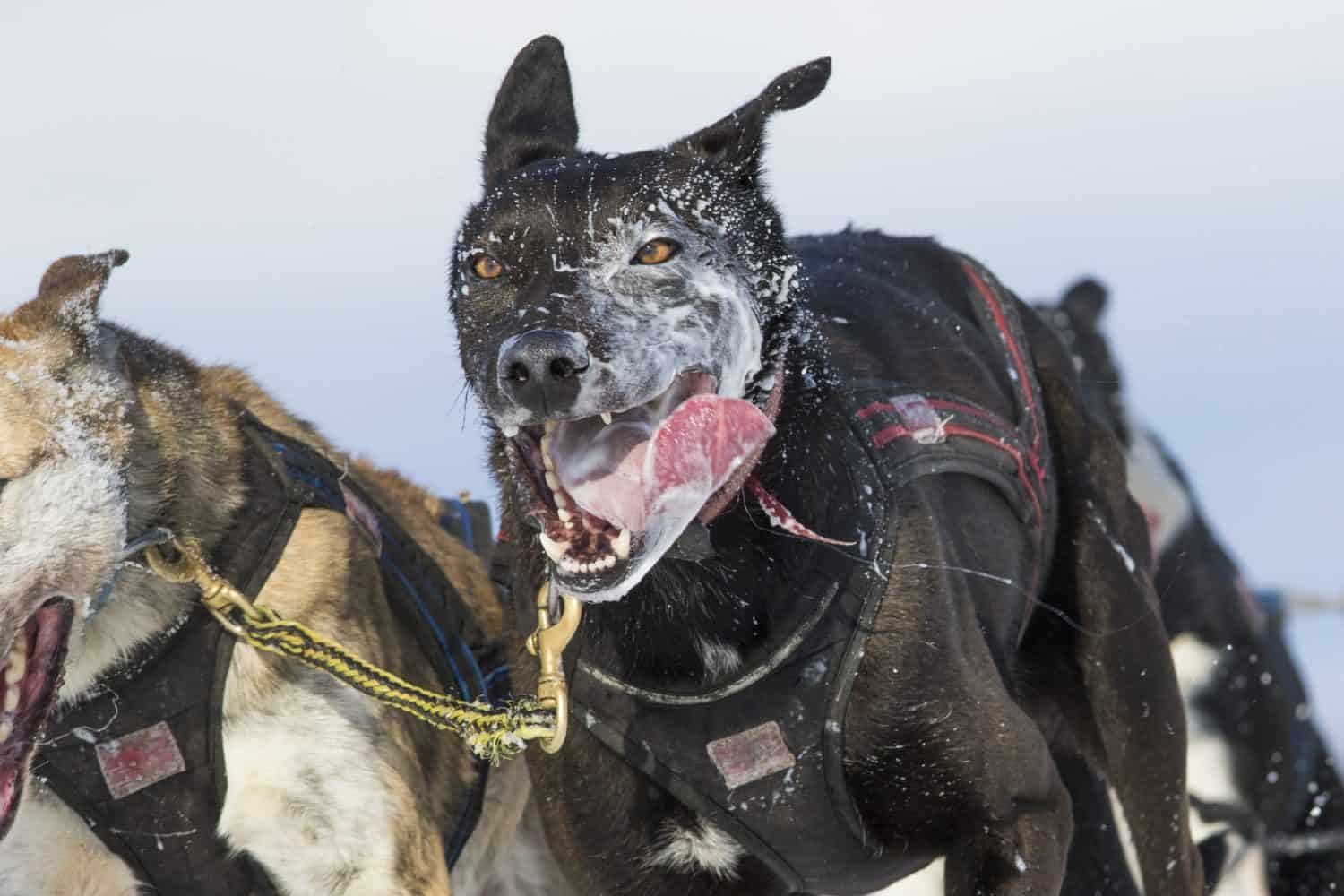

Quick Take
- Sled dogs have a biological "switch" that human athletes simply cannot flip, and this is the real reason they can run the equivalent of 39 back-to-back marathons without collapsing. How the switch works →
- Those booties sled dogs wear on the trail aren't there for warmth, and the real reason reveals something surprising about how their bodies handle freezing temperatures. What booties actually do →
- Racing physically reshapes a sled dog's heart in a way that looks almost identical to what happens inside elite human athletes. See the heart remodeling →
- Scientists aren't just impressed by sled dogs. They're studying them for clues that could change how we treat human metabolic disease. Explore the research findings →
Human athletes know what it feels like to “hit the wall.” Your energy drops, your muscles ache, and keeping your pace feels impossible. Sled dogs, on the other hand, play by entirely different rules.
These dogs don’t just run far — they tackle hundreds of miles in freezing conditions, sleep a bit, eat, and then wake up eager for more. Running the roughly 1,000-mile Iditarod is equivalent to completing 38 marathons back-to-back, although the exact number varies depending on the race route each year. Yet, instead of collapsing at the finish line, many sled dogs cross it alert, energetic, and ready to keep going.
How do they do it? Scientists have found it isn’t a single superpower, but a team of unique biological adaptations.
The Metabolic Switch
At the start of a race, sled dogs burn glycogen for energy, just like human runners. The difference happens after hours of nonstop work. As their glycogen drops, a “metabolic switch” flips. Their muscles shift into a glycogen-sparing mode, conserving their remaining carbohydrates and drawing energy directly from fats circulating in their blood. Instead of draining a limited internal fuel tank, their bodies become highly efficient at burning fat on the go.
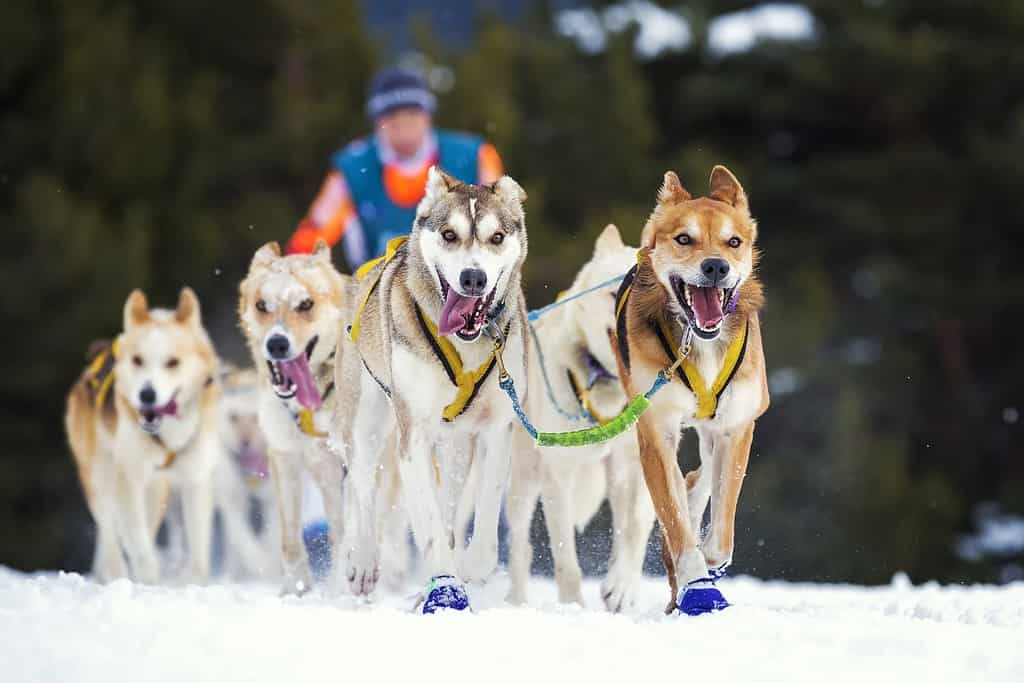
The best sled dogs are often the ones who simply love to run.
©prochasson frederic/Shutterstock.com
The result is simply astonishing. While human runners often finish a marathon completely depleted, sled dogs can keep running day after day without experiencing extreme fatigue.
Fueling a 1,000-Mile Race
This unique metabolic strategy is supported by an enormous appetite. During long, multi-day races, a single dog can burn between 10,000 and 15,000 calories a day — more than five times what an average human eats. To meet this demand, their diet is roughly 60 percent fat, balanced with protein, carbohydrates, vitamins, and minerals.
To keep their dogs going during multi-day events, mushers feed them frequently on the trail, often offering the dogs high-calorie snacks every few hours. At rest stops, the dogs receive warm, high-fat meals. The goal is not just to keep the dogs full, but to ensure a continuous supply of fuel for muscles that may be working nonstop for a week.
Once the race is over and the dogs return to normal life (or retirement), their massive appetite disappears, and their food intake drops back down to normal levels.
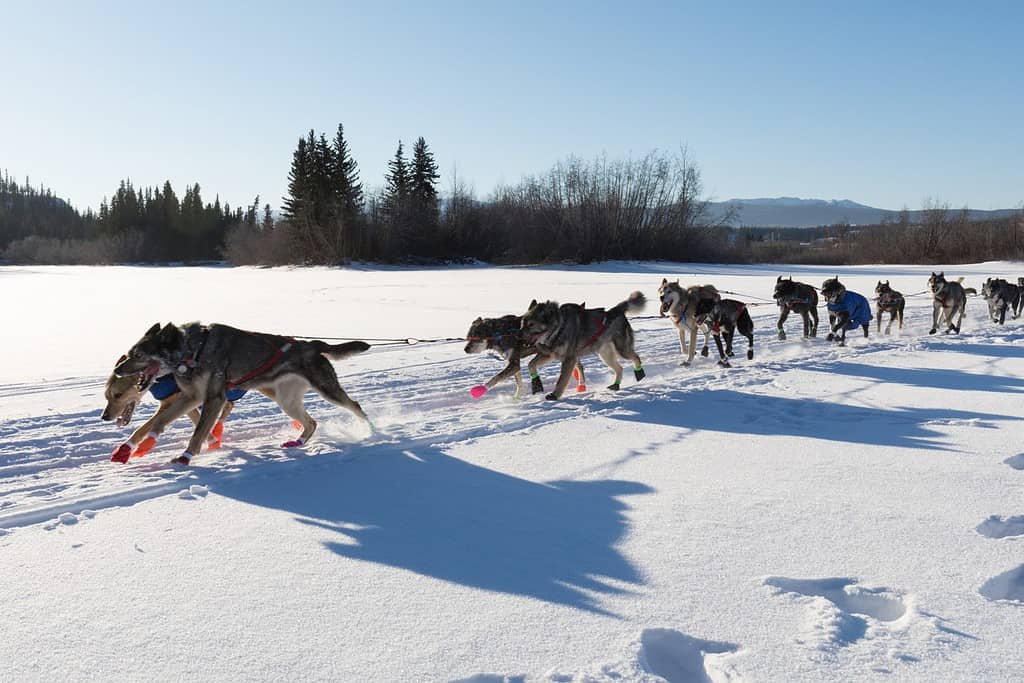
Sled dogs must have both speed and endurance to be successful in a race.
©Pi-Lens/Shutterstock.com
The Cellular Engine
As impressive as a sled dog’s metabolism is, the real magic happens inside its muscle cells. Sled dogs have an unusually high density of mitochondria — the structures responsible for producing cellular energy. Essentially, more mitochondria mean more machinery and microscopic “power plants” available to process fuel and convert it into ATP, the molecule that powers muscle contraction.
This intense cellular infrastructure allows the dog’s working muscles to process massive amounts of fuel over long distances. Because their bodies rely almost entirely on efficient aerobic energy rather than anaerobic metabolism, they avoid muscle burn and can maintain a steady pace for hundreds of miles.
The Heart of an Ultra-Endurance Athlete
A sled dog’s muscles are not the only parts of its body built for performance — its heart physically transforms with training, too. Elite racing dogs develop what veterinarians call Athletic Heart Syndrome, a healthy condition where endurance training reshapes the heart. The hearts of these elite canine athletes are often larger because the heart muscle expands to pump more blood per beat. Their heart’s electrical system also adapts to support a slower, more efficient rhythm.
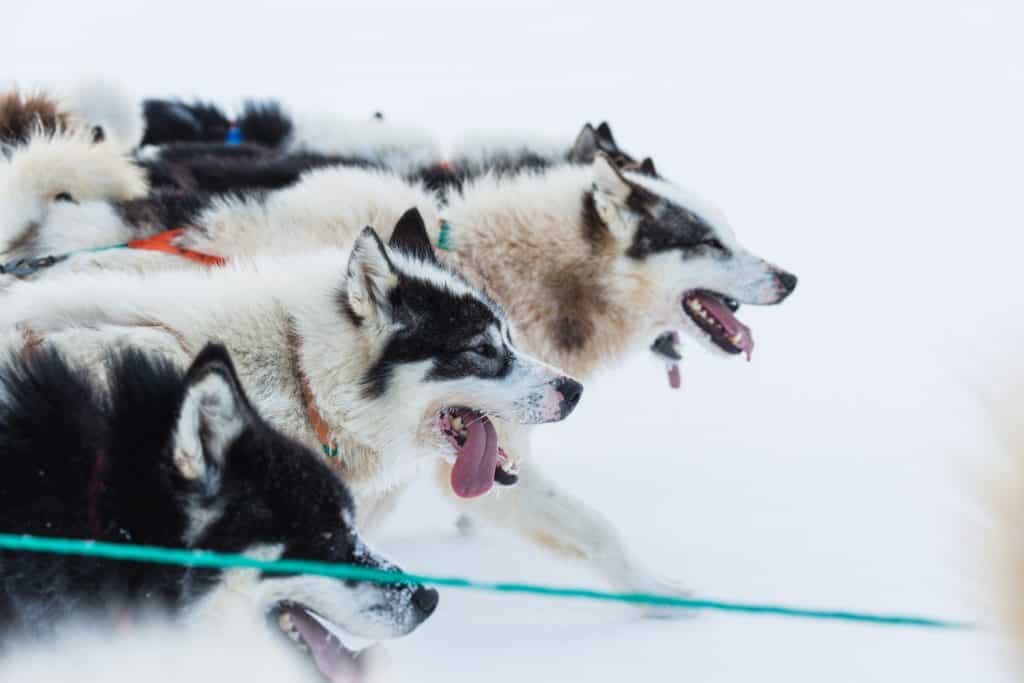
Sled dogs in the Iditarod typically maintain an average speed of around 8 to 12 miles an hour.
©Kedardome/Shutterstock.com
Essentially, endurance training remodels a sled dog’s heart in much the same way it does in elite human cyclists, rowers, and marathon runners. This allows their hearts to deliver far more oxygen to working muscles with less effort.
A Built-In Winter Survival Suit
Sled dogs carry their own built-in cold-weather gear. Breeds like huskies and Malamutes stay warm thanks to a classic double coat:
- The undercoat is a soft, dense, and fluffy inner layer that traps air close to the skin for maximum warmth and insulation.
- The overcoat, made up of guard hairs, consists of tough, coarse outer hairs that repel moisture, snow, dirt, and sun.

A husky’s double coat also helps keep the dog cool in the summer, as it blocks outside heat and protects the dog’s skin from harmful UV rays.
©iStock.com/Elayne Massaini
Together, these two layers form an exceptionally effective thermal barrier. The undercoat locks heat in, while the outer guard hairs keep water and snow out. While human runners need piles of specialized equipment to survive the trail, the dogs arrive with their insulation already attached.
Snowshoe Paws Engineered for the Trail
A sled dog’s feet face a difficult challenge: staying warm enough to avoid freezing while losing as little body heat as possible. Fortunately, they have a unique set of specialized adaptations.
Warm blood flowing down to the paws heats up cold blood returning to the body. This built-in heat exchange keeps foot tissues functioning while locking core heat inside. The paw pads themselves also contain insulating fat that helps protect against snow and ice.
Sled dogs also wear booties, but these are not primarily for warmth, since their circulatory systems already handle that function. Instead, booties mainly protect the dogs’ feet from trail abrasion, ice buildup between the toes, and the relentless wear and tear of hundreds of trail miles.
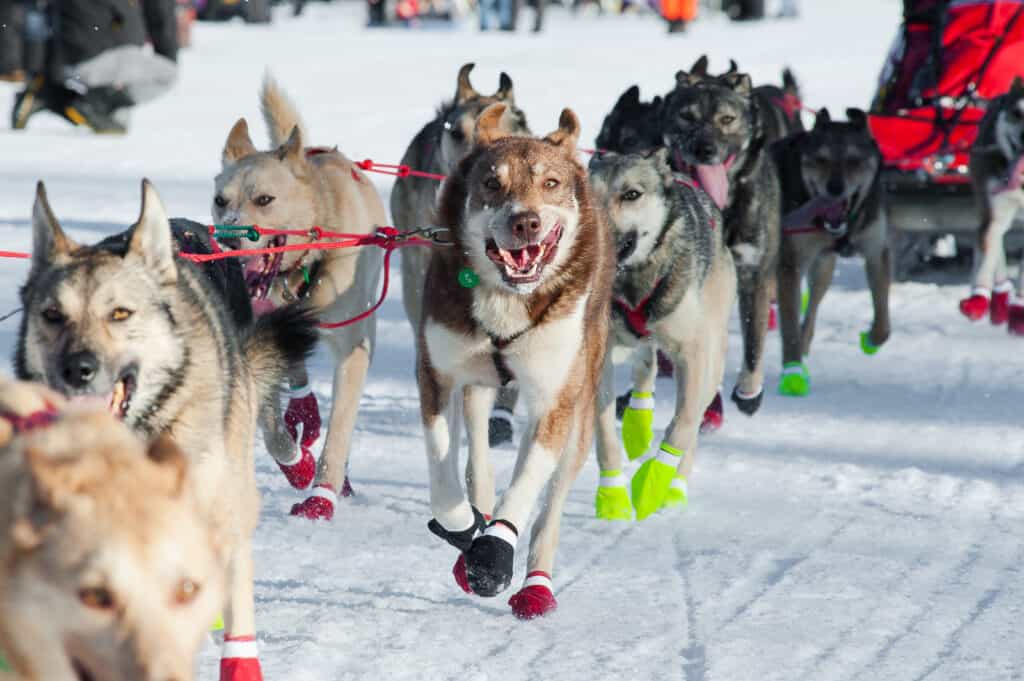
Evidence from Zhokhov Island in the Eastern Siberian Sea suggests that dog sledding goes back over 9,000 years.
©iStock.com/Jeff Manes
Studies of racing dogs show that even after a 170-mile run, paw biopsies reveal no significant structural skin damage. Interestingly, research also shows that forepaws take more stress than hind paws, and warmer, wet snow is actually harder on their feet than cold, crusted snow.
Thousands of Years in the Making
None of these incredible adaptations appeared overnight — they are the result of thousands of years of evolution and deliberate breeding. The Siberian Husky was originally developed over 3,000 years ago by the Chukchi people of northeastern Siberia, who relied on dogs for daily survival. For the Chukchi, efficiency trumped brute strength. They selectively bred dogs for specific key traits, such as the ability to travel vast distances on relatively little food, rest and recover quickly after hard work, and remain social enough to live closely with humans and other dogs.
Rather than producing heavy freight haulers, these selected traits resulted in lean, wiry distance athletes with long limbs and economical strides. Modern racing Alaskan Huskies build directly on that foundation through generations of selective breeding for speed, endurance, appetite, recovery, and trainability.
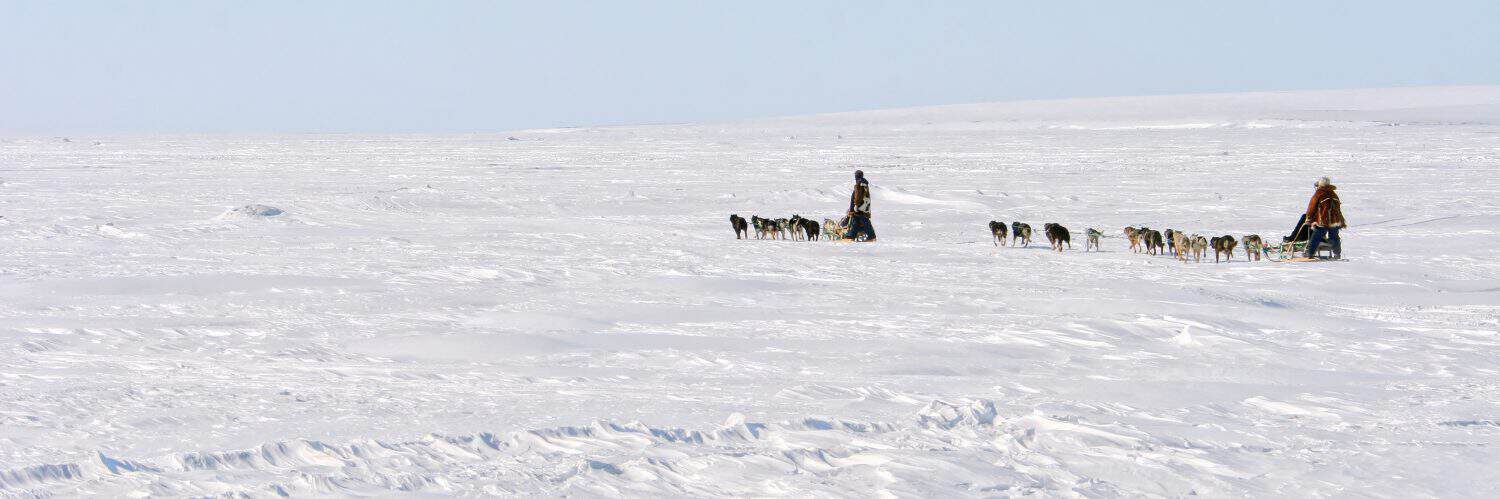
Marco Polo wrote about sled dogs during his travels in the 13th Century CE.
©Andrei Stepanov/Shutterstock.com
What Sled Dogs Are Teaching Scientists
Because sled dogs sustain workloads that would cripple most other mammals, researchers study them as a biological model in understanding energy regulation, insulin sensitivity, cardiovascular adaptation, and extreme endurance performance. Their biology may eventually provide insights relevant to human metabolic disorders such as diabetes and obesity, as well as to athletic performance and recovery.
For scientists, sled dogs are far more than racing champions — they are a living laboratory revealing how mammals produce energy and push past the limits of fatigue.
The Mammal That Rewrites the Endurance Rulebook
Sled dogs do not rely on a single magical trait. Instead, they are the ultimate product of multiple biological systems working together:
- A fat-burning metabolism that spares glycogen by drawing energy directly from fat.
- Muscle cells packed with mitochondria.
- A cardiovascular system physically remodeled for endurance.
- A dual-layer coat that protects against cold weather conditions.
- A specialized circulatory system that conserves heat and protects feet from ice.
- Thousands of years of selection for distance travel in one of the harshest climates on Earth.
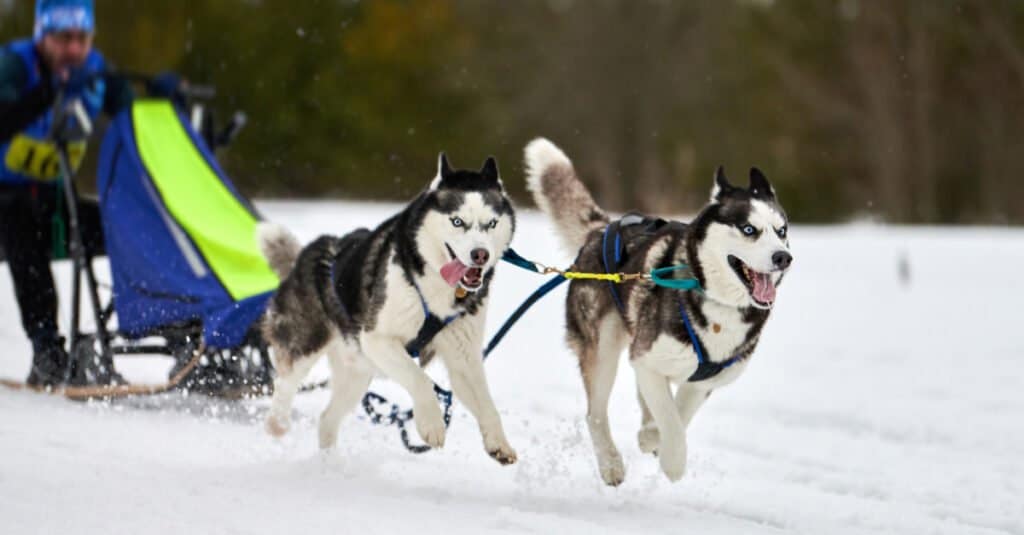
The Alaskan Gold Rush played a major role in popularizing dog sledding in the United States.
©travelarium.ph/Shutterstock.com
Individually, each trait is impressive. Together, they create one of the most extraordinary endurance athletes in the animal kingdom — an animal that can run the equivalent of dozens of marathons through snow and ice, sleep for a few hours, and wake up ready to do it all over again.
For most mammals, endurance has a firm boundary. For sled dogs, however, that boundary lies far beyond our expectations — proving that the limits of mammalian performance may depend on who is setting the rules.