
Quick Take
- Despite its name, a whale shark is neither a whale nor a shark, and what it actually is changes everything about how you'd expect to encounter one. Discover what they really are →
- A single tagged whale shark traveled from Tampa to New York in under a month, and its route reveals why NC sightings may soon stop being rare. See why NC sightings may increase →
- Whale sharks look terrifying enough to swallow a person whole, yet the real danger when you encounter one runs in the opposite direction. Learn about their harmless nature →
- There's one mistake boaters routinely make near whale sharks that puts these endangered giants at serious risk, and most people never see it coming. See the boating risks →
A fishing trip turned into an encounter of a lifetime when a rare whale shark was spotted off the coast of North Carolina recently. Because this is not where whale sharks are typically seen, it could be a sign of changes beneath the ocean’s surface.
Rare Whale Shark Observed Off the North Carolina Coast
On Sunday, June 14, 2026, Charles Gaddy and his father were out fishing for tuna when a massive figure in the Oregon Inlet caught his attention. While unexpected, Gaddy knew exactly what he had spotted – a whale shark.
“I was just looking in the water, seeing if, you know, any birds or anything, and I see this big gray fish with white dots,” Gaddy explained to WRAL News. “Just from reading books and watching movies as a kid, I was like, ‘that’s got to be a whale shark.'”
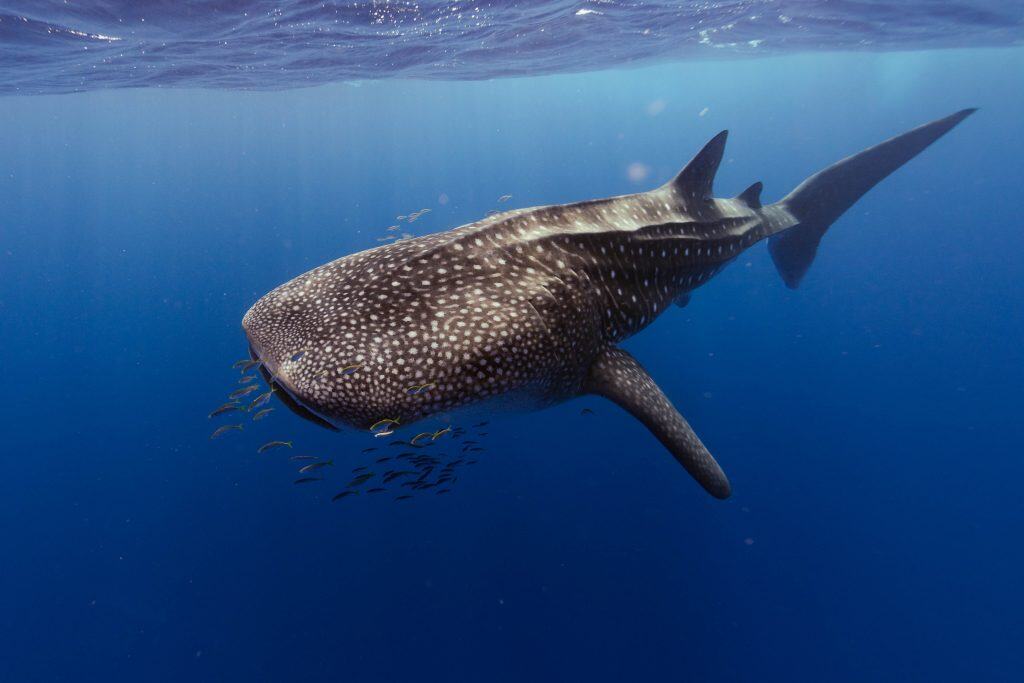
A father and son were treated to a rare whale shark sighting when fishing off the North Carolina coast recently.
©Anna LoFi/Shutterstock.com
Gaddy wasted no time grabbing his GoPro to film the massive creature. It was something he called a “once-in-a-lifetime experience.”
“It’s just sitting there, swimming beside us,” Gaddy said. “It really, truly was amazing.”
What Is a Whale Shark?
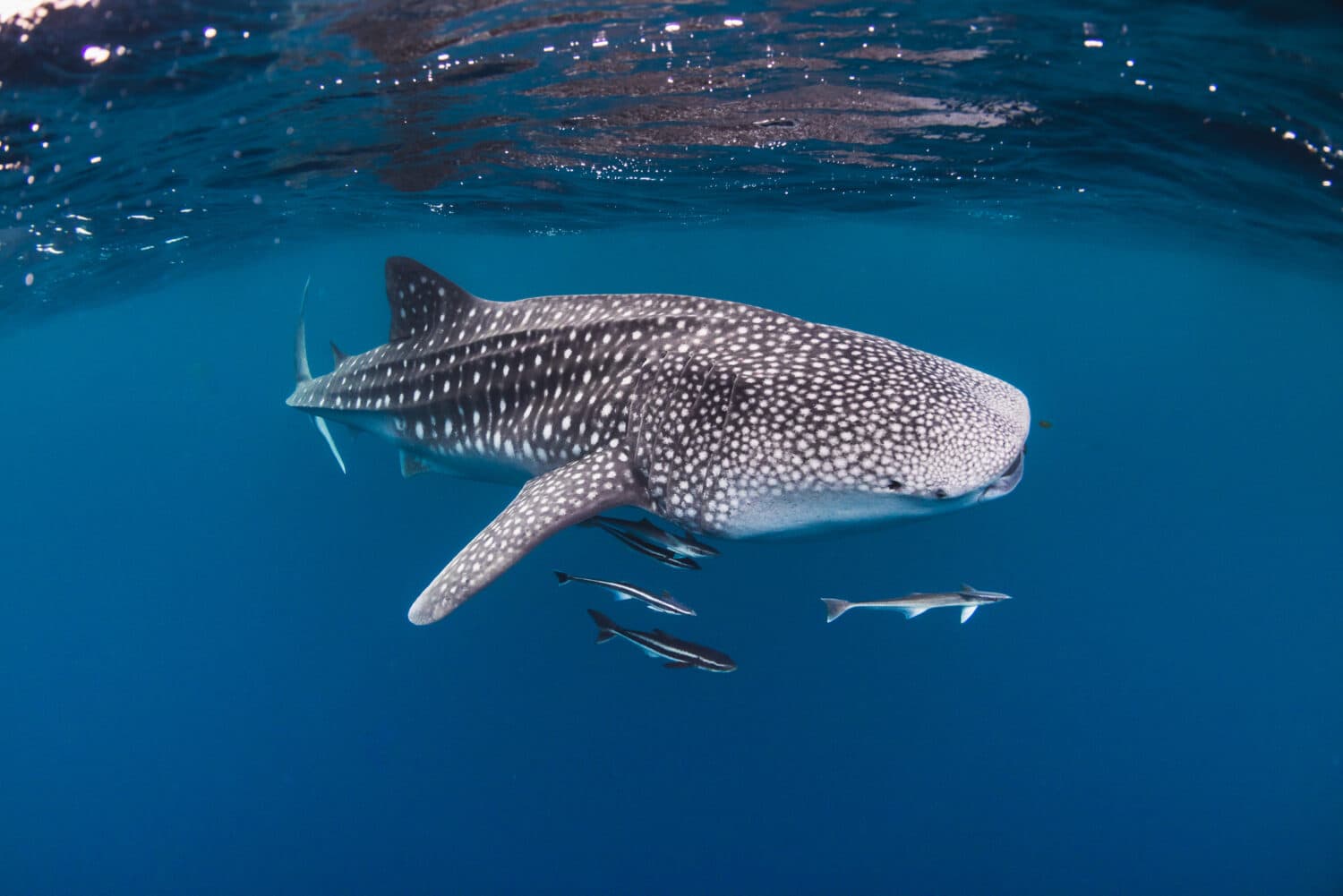
Despite its name, a whale shark is neither a whale nor a true shark; rather, it is the largest fish species alive today.
Whale sharks can be up to 66 feet long and weigh 47,000 pounds. Their coloration is gray to gray-brown, with white spots and stripes down their backs.
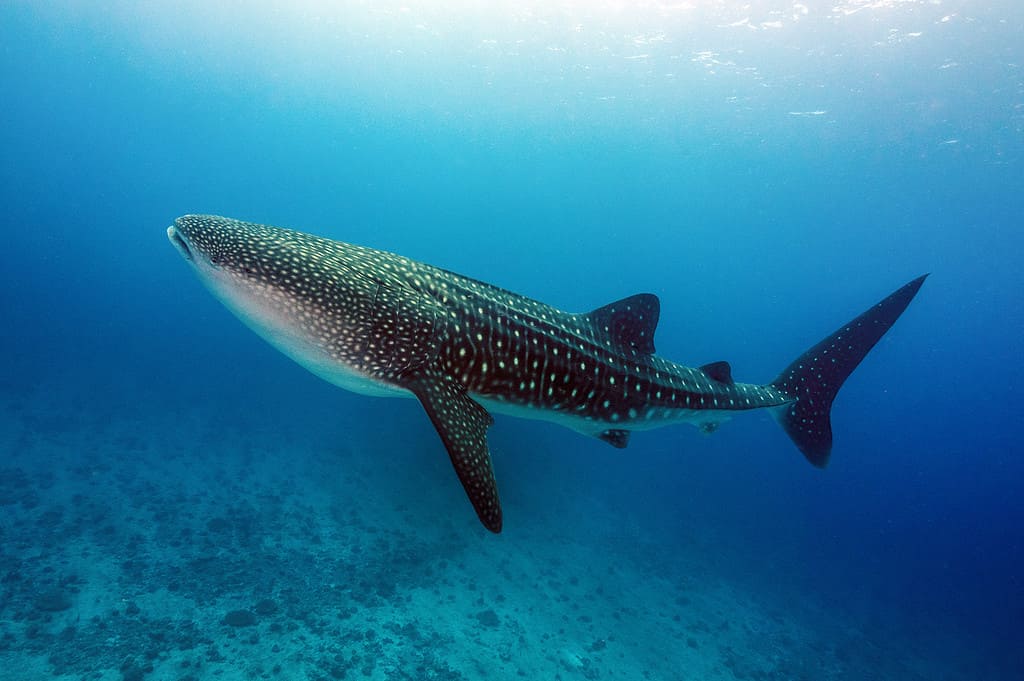
Whale sharks are the planet’s largest fish.
©Jan Finsterbusch/Shutterstock.com
With its massive size, it would be possible for a whale shark to swallow a person. However, these gentle giants are plankton eaters. They open their mouths up to five feet wide to bring in large amounts of water and plankton. The water is then filtered out through gill slits on the sides of whale sharks’ heads, leaving behind the plankton.
Why a Whale Shark Would Be Found Off the North Carolina Coast
Spotting a whale shark off the coast of North Carolina is rare, but not unheard of. According to Eric Hoffmayer of the National Marine Fisheries Service, whale sharks can follow the Gulf Stream and be in New England by the end of summer and into the fall.
“We had an animal last year that we tagged off Tampa and within a month was off New York, and cruised right past North Carolina about this time of year,” Hoffmayer told WRAL News. “It’s not unheard of, but it’s not real common either.”
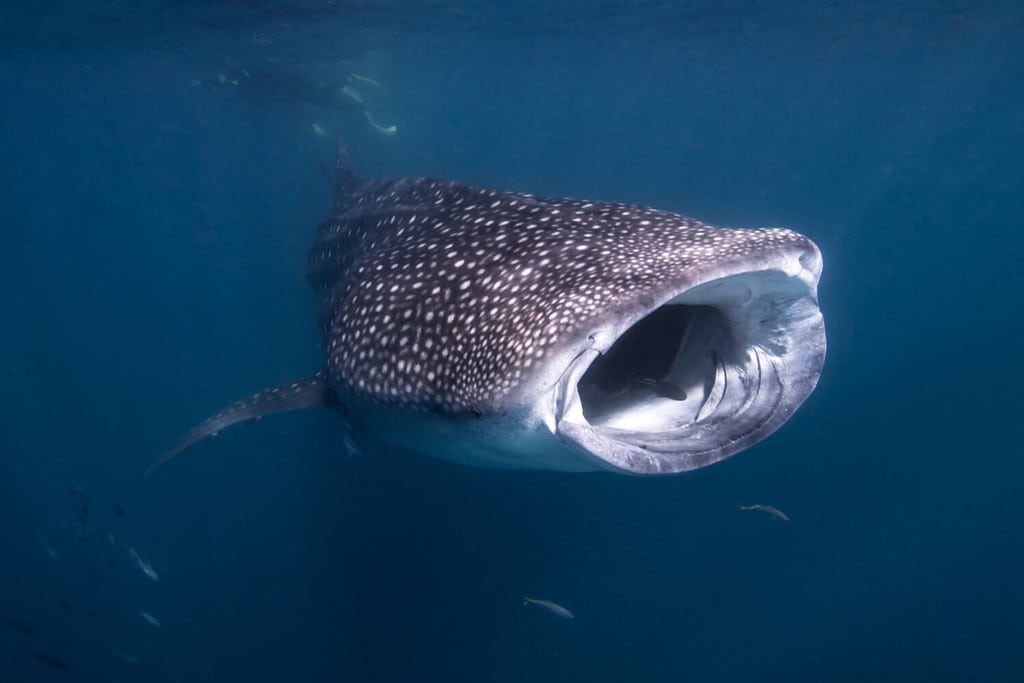
Whale sharks may be following food, currents, or swimming to more temperate waters when spotted off the North Carolina coast.
©Sean Steininger/Shutterstock.com
Whale sharks tend to prefer water temperatures that are 70°F or above. Locations where whale sharks are consistently spotted include the coasts of Australia, the Yucatán Peninsula, the Philippines, and the Galapagos Islands. Additionally, it is not unheard of for whale sharks to be seen less frequently off the coast of Florida.
In regions where seeing whale sharks is uncommon, the reasons they are swimming through are simple. Whale sharks are looking for warmer water, following a food source, or following ocean currents. As climate change continues to alter the marine landscape by increasing water temperatures, changing salinity levels, or altering currents, whale sharks and other marine life will be seen in regions outside their aggregation sites. Therefore, in the future, it may be more common to see whale sharks swimming off the coast of North Carolina than ever before.
Precautions to Take When Near a Whale Shark
Whale sharks are not vicious animals. Quite the opposite, in fact. This is why scuba divers and snorkelers have been photographed near, or have taken video of, whale sharks in the ocean. But just because they are docile creatures does not mean that precautions should not be taken when near whale sharks.
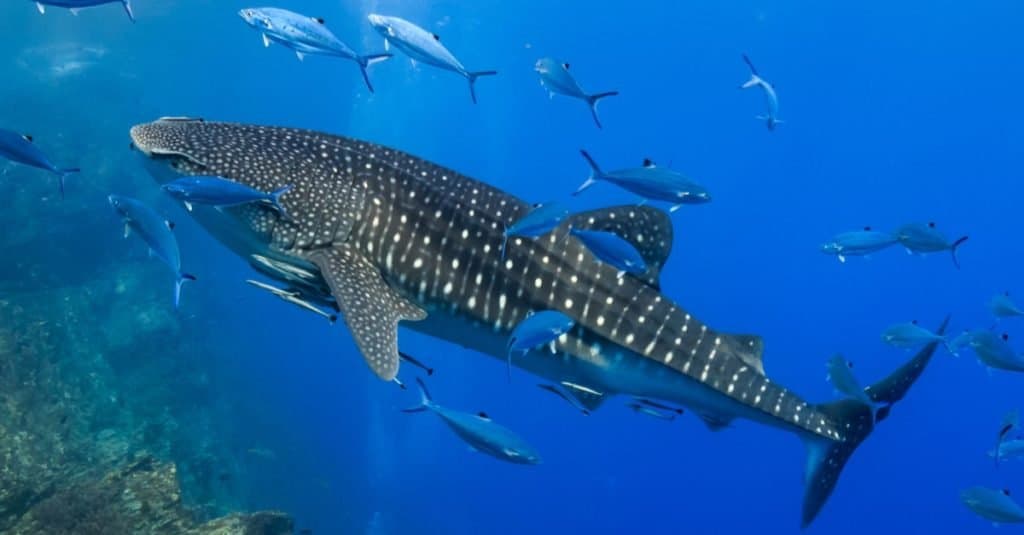
Whale sharks should be given space, not touched, and left alone when stressed.
©Richard Whitcombe/Shutterstock.com
Some ways to ensure that both whale sharks and people stay safe when encountering one another include:
- Keep a distance of three to 10 feet
- When entering the water, do so calmly and slowly so as not to startle whale sharks
- Do not touch whale sharks, as their delicate skin can be easily damaged.
- Do not feed whale sharks
- Only swim alongside the whale shark, not in front of or behind it.
- Do not use flash photography when taking pictures
- If whale sharks try to leave or roll over, they are showing signs of stress and need to be left alone
In addition to these precautions, those who are in a boat need to pay close attention to the positioning of whale sharks. They tend to spend the majority of their time on the surface of the ocean. Because of this, they are prone to boat strikes. Therefore, if you spot a whale shark, slow down and give it plenty of space to help protect these magnificent, endangered animals.