
Quick Take
- Gila monsters can maintin a crushing grip for more than 10 minutes.
- Gila Monsters have pleurodont teeth, which are fused to their jawbone.
- Gila Monsters deliver their venom through their saliva.
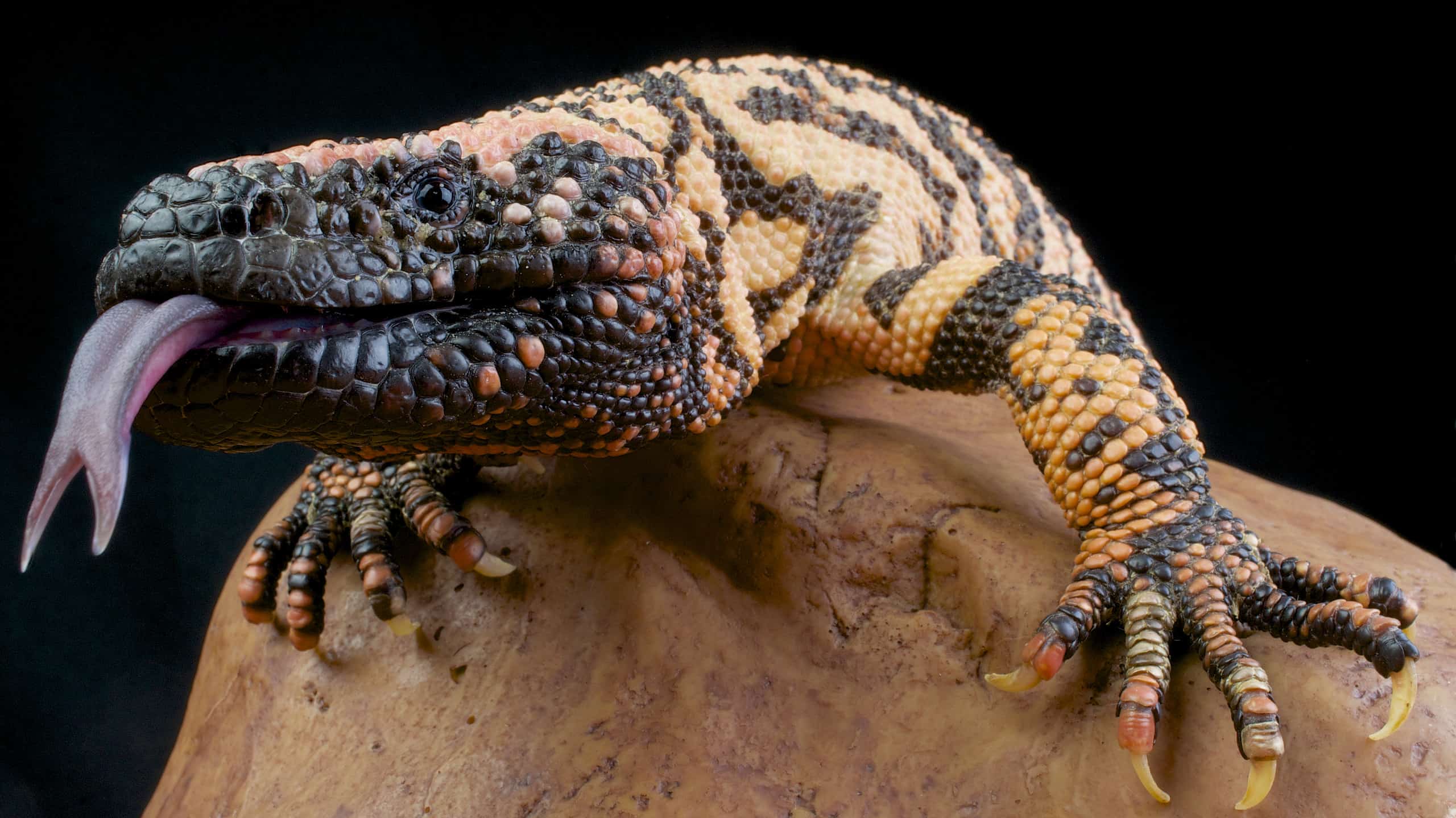
Gila monsters (Heloderma suspectum) are reptiles that are found in the deserts, shrublands, and woodlands of Northwestern Mexico, and in Arizona, California, New Mexico, and Utah, in the Southwestern United States. Gila monsters are the largest lizards in the United States and can measure up to 22 inches long. They are excellent hunters, preying on small mammals, birds, bird eggs, and other reptiles. Gila monsters do have teeth, which they use to capture prey. They subdue their prey with venom that is delivered via their grooves in the lower teeth. Continue reading to discover everything you need to know about Gila monster teeth.

Gila monsters have sharp, pointy teeth.
What Kind of Teeth Do Gila Monsters Have?
Gila monsters have an impressive set of teeth that are thin, pointy, and sharply tipped in their upper and lower jaws. Adult Gila monsters typically have between 40 and 45 teeth. These teeth are distributed between their upper and lower jaws. The upper jaw typically has a single row of 18-20 teeth, while the lower jaw has 22-24 teeth, also in a single row.
Each tooth has a similar appearance; however, the teeth in the upper jaw lack the grooves found in the teeth in the lower jaw. These grooves are responsible for delivering venom to the wound. Unlike snakes with hollow fangs, Gila monsters’ teeth are not hollow and do not inject venom. Instead, specialized salivary glands in the lower jaw release venom into the saliva, which is then delivered through grooves in the lower teeth as the Gila monster chews the wound.
When Gila monsters bite, it can be difficult to detach. Gila monsters can maintain their grip for more than ten minutes, either on prey or in self-defense against predators.
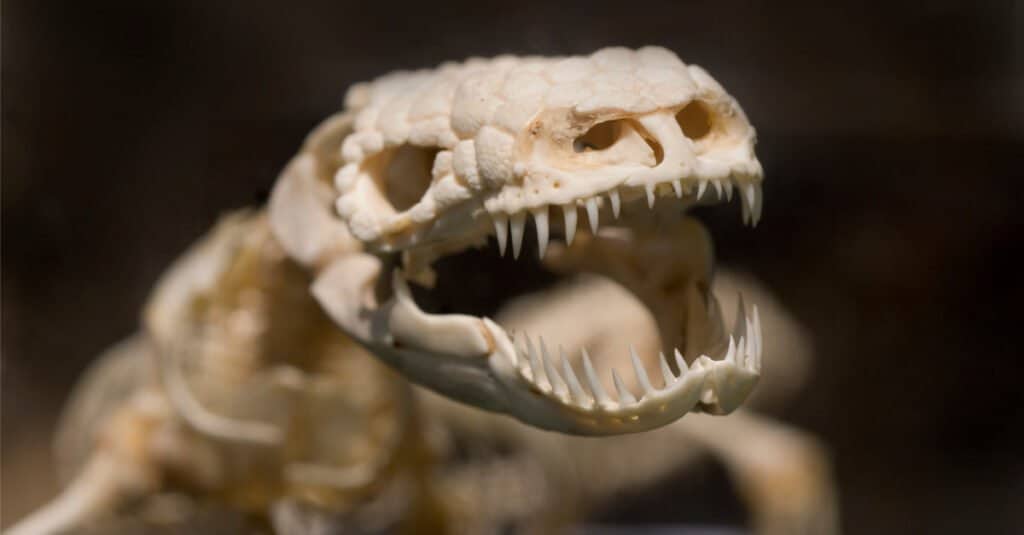
Pleurodont teeth are fused directly to the jawbone, rather than set in individual sockets.
©iStock.com/Windzepher
Gila monsters have pleurodont teeth, which are teeth that are fused to the jawbone rather than set in individual sockets. Their teeth are consistently replaced throughout their lives in a staggered, wave-like pattern. If a tooth is lost accidentally, the Gila monster must wait for the next replacement cycle for a new tooth to grow in.
What Do Gila Monsters Use Their Teeth For?
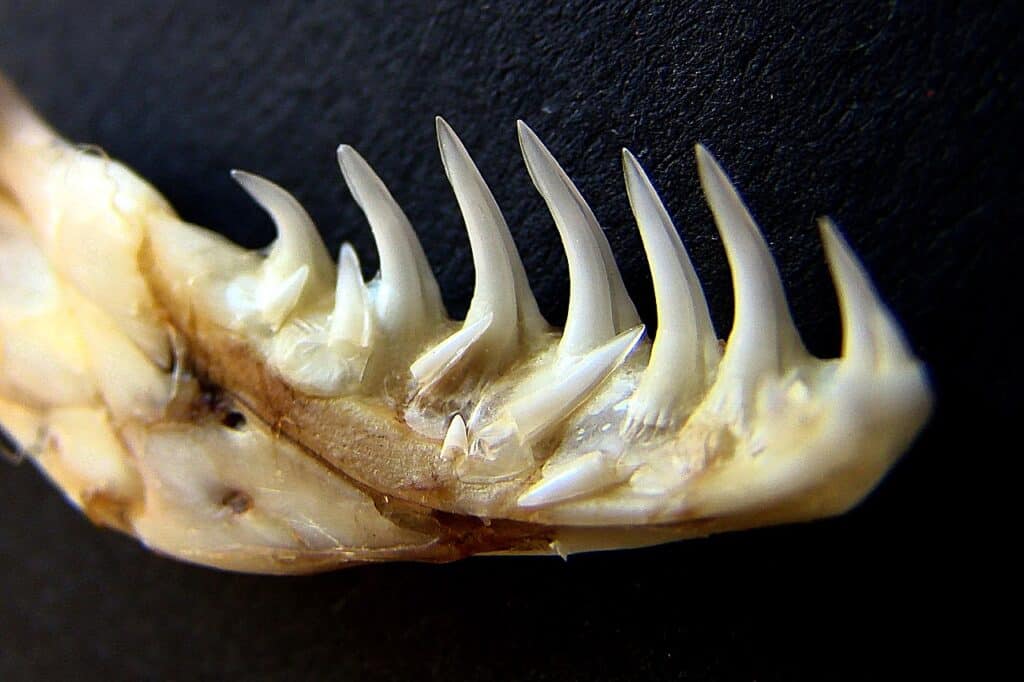
The grooves in a Gila monster’s teeth help in spreading its venom into its prey very quickly.
Gila monsters do not have flat-crowned teeth for chewing and grinding prey; instead, their sharp-tipped teeth are used only for grabbing and holding onto their prey. As venomous lizards without fangs, Gila monsters use grooves, called canal spaces, in their lower teeth to deliver venom to the prey’s wound. These grooves in the Gila monster’s teeth aid in spreading its venom very quickly. The Gila monster’s mild neurotoxin can incapacitate small prey, but it is not strong enough to kill them.
Gila monsters use their flexible, forked tongues to transport food and water into their throats and to pick up scent particles from their environment. Because Gila monsters are slow-moving, they must ambush unsuspecting prey, which includes a variety of small mammals, birds, snakes, insects, lizards, amphibians, and bird eggs.
Do Gila Monsters Bite?
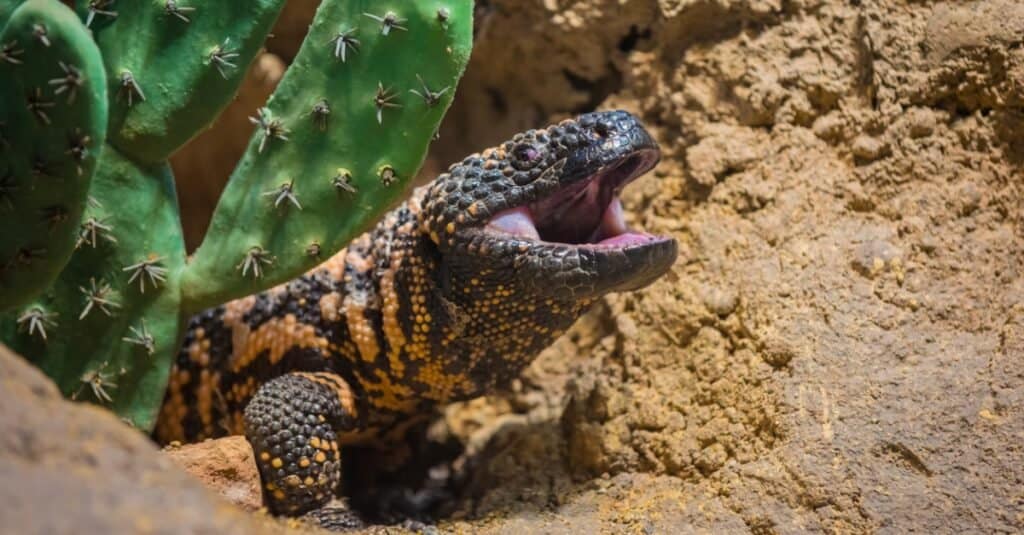
Gila monsters bite humans only when they feel threatened.
©iStock.com/kwiktor
Gila monsters are not aggressive toward humans and rarely bite them unless they feel threatened. Although Gila monsters are venomous, their bite is not considered life-threatening, but severe reactions and even death have been reported in rare cases. However, a bite from a Gila monster does require medical attention. A Gila monster bite can cause dizziness, vomiting, weakness, and intense burning pain. Medical attention is recommended due to the effects of the venom and the potential for severe reactions.