
Quick Take
- A creature smaller than a Chihuahua was the apex predator of its era, and its body shouldn't exist by any modern logic. See the chimeric creature →
- Stomach contents found inside a 165-million-year-old fossil reveal a diet that rewrites assumptions about what early mammals hunted. Discover the stomach contents →
- A bone hidden in this fossil's throat pushes back a critical milestone in mammal evolution, one that is shared by every human alive. Explore the hyoid bone find →
- Scientists thought Jurassic proto-mammals lived narrow, constrained lives, but this single fossil proves them wrong in multiple ways. See how assumptions changed →
The history of life on Earth is a story told by all creatures, great and small. The sheer variety of evolutionary options and adaptations from millions of years past can be hard to imagine. Fortunately, science can extrapolate appearances from the fossil record. The latest chapter in this story comes by way of a Chinese fossil from the Jurassic period. Meet Megacauda sungei, the largest known Jurassic mammaliaform, a chimera in the truest sense of the word.
Megacauda sungei had a body like a mixture of modern-day animals. Its back half resembled a platypus, as did its limbs, which allowed it to swim and dig tunnels along riverbanks. Its teeth, however, were decidedly more carnivorous, as they included large canines that cut and chewed meat in a unique way. Half otter, half platypus, Megacauda sungei weighed no more than a Chihuahua. First unearthed in 2016, scientists recently published a paper detailing its discovery, anatomy, and other aspects of its ancient lifestyle. Let’s learn more about this research and what it tells us about some of the earliest mammal relatives that lived on Earth.
Uncovering the Fossil
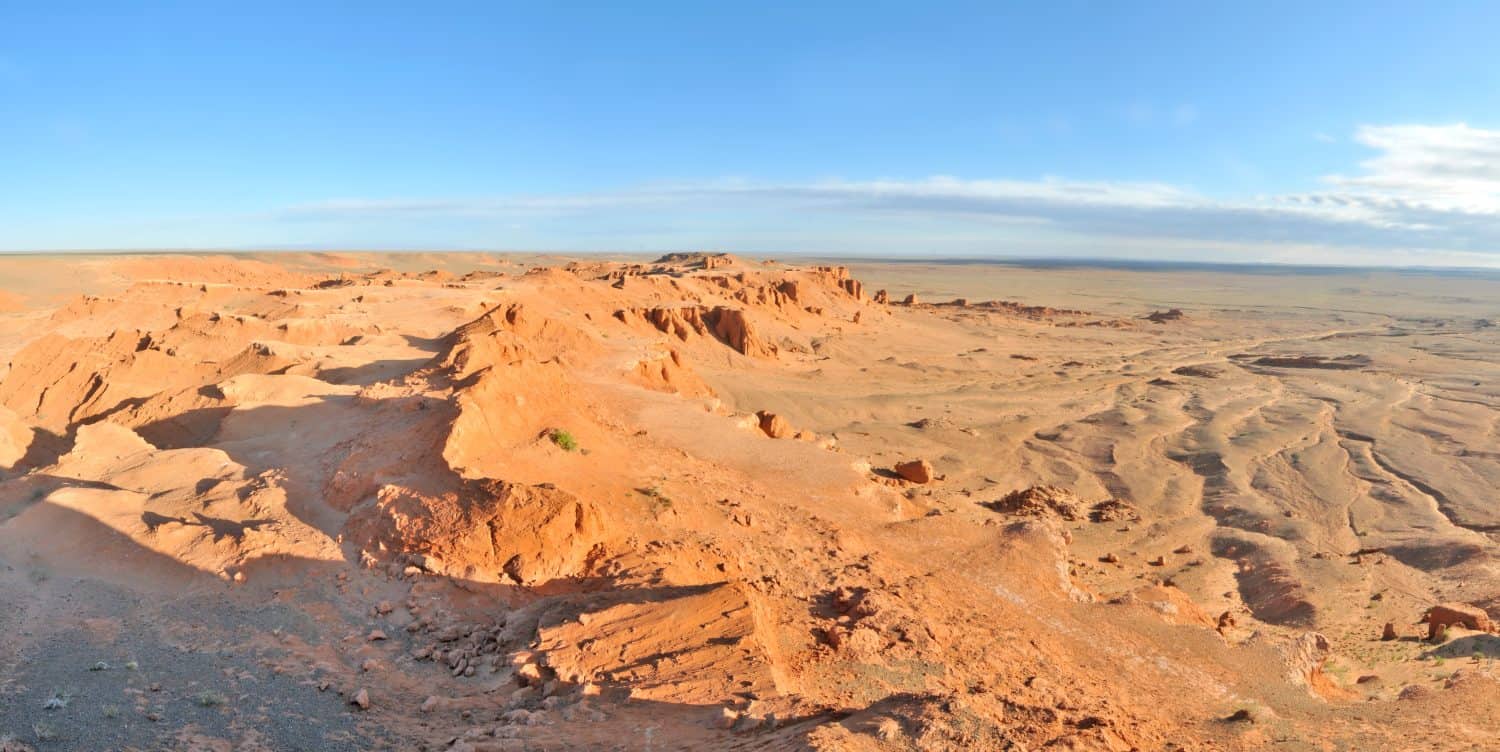
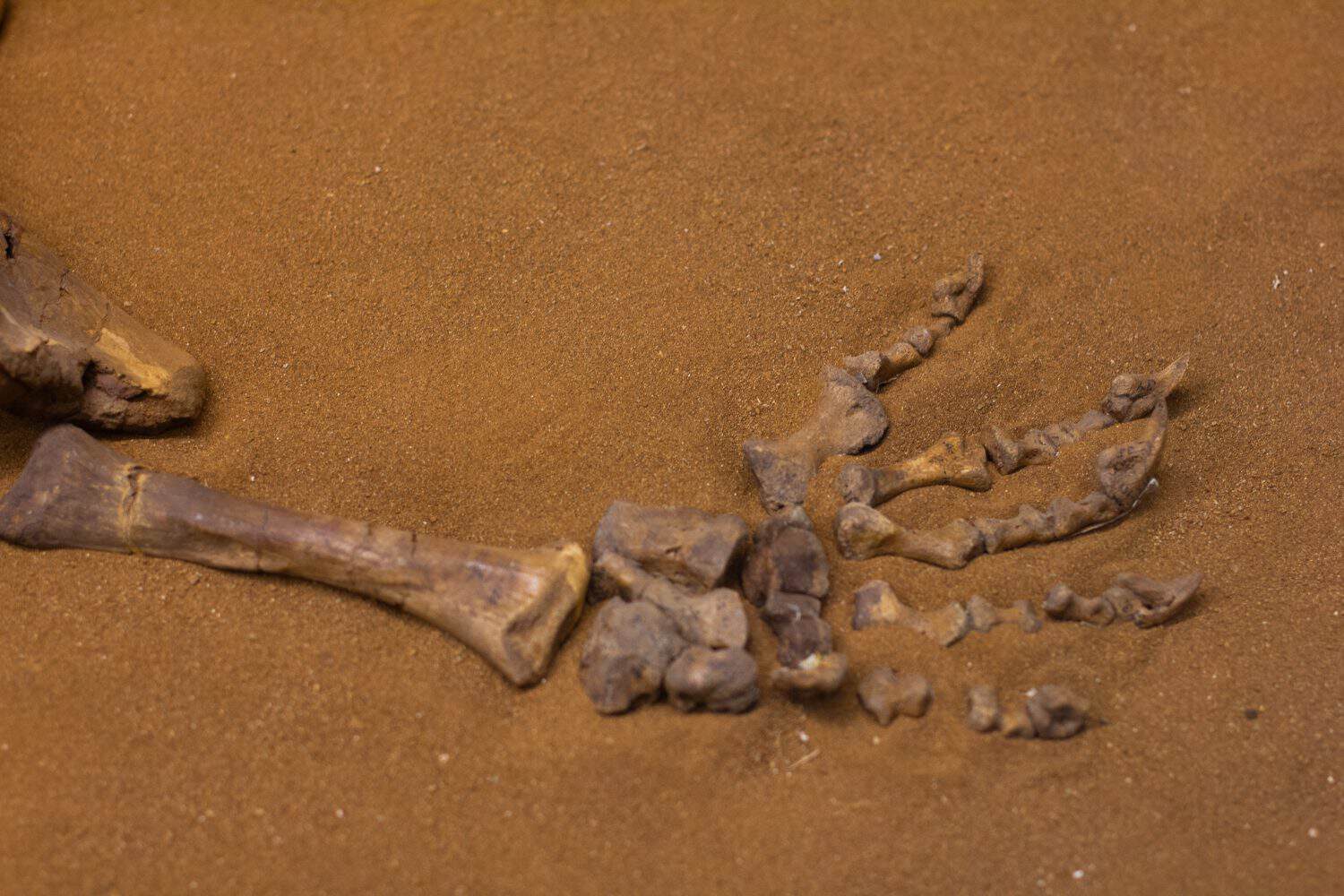
Researchers found this fossil in the Haifanggou Formation in Inner Mongolia between 2015 and 2016.
©RobNaw/Shutterstock.com
Between 2015 and 2016, researchers uncovered a remarkably well-preserved fossil from a layer of rock called the Haifanggou Formation in Inner Mongolia. They kept it hidden from the public eye until a detailed study of its provenance and attributes was recently published in the journal Nature. They named it Megacauda sungei, and it stands as the largest-known mammal relative from the entire Jurassic period.
Relative to modern mammals, this creature was small, weighing no more than 2.2 to 4.4 pounds. Back then, however, this was big for mammals. Dinosaurs dominated the Jurassic and Cretaceous periods over 100 million years ago, but the first mammal-like creatures began appearing, too. This well-preserved fossil belonged to an extinct lineage of docodonts, the most common mammaliaforms of the time, distinguished from others by their complex molar teeth.
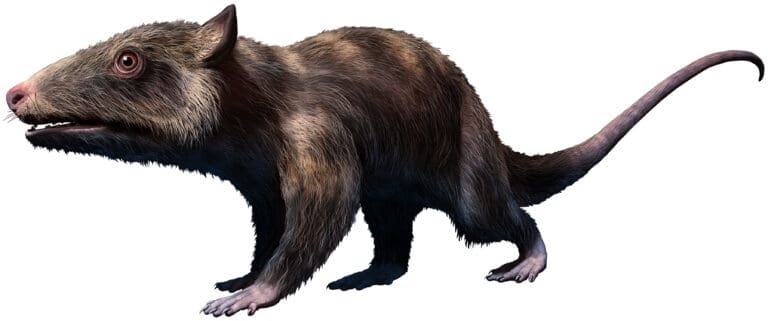
Megacauda sungei appears even more unique. It featured a broad, flat tail, short hind legs, and longer feet reminiscent of the modern platypus. Its front half, however, included strong canine and shearing cheek teeth that looked more like modern-day otters. As the study’s co-author, Zhe-Xi Luo, explained to Live Science, “It’s like a chimera. The back half of this animal is very much like a platypus. So are the limbs, which would be capable of swimming or digging tunnels in riverbanks. It’s a predator with gigantic and very specialized canines. So, it’s partly otter-like and partly platypus-like.”
Well-Preserved
The remarkably well-preserved fossil of Megacauda sungei featured aspects usually missing from the fossil record: throat passages and hyoid skeletal bones. There were also tiny pieces of vertebrate remains found in the creature’s stomach and in the surrounding fossil bed that suggested it primarily ate salamanders. The researchers also believe that the chimera-like creature likely burrowed on land but hunted in bodies of water for fish and invertebrates.
As previously mentioned, the presence of throat bones in the Megacauda sungei points toward features of modern mammals, including humans. Hyoid bones in mammals typically feature a U-shape. These facilitate throat muscles to swallow food one piece at a time. They also allow babies to suckle mother’s milk. The presence of these physiological features also suggests that the features needed for swallowing and suckling had already evolved by the Middle Jurassic, with Megacauda sungei providing some of the oldest known evidence of this development.
Co-author Zhe-Xi Luo told Live Science that this capability allowed mammals to diversify into eaters of plants, animals, insects, or all of the above. He said, “This is an incredibly important evolutionary innovation. Now we push the history of it back to before the split of modern marsupials and modern eutherian [placental] mammals.”
Docodont Variety
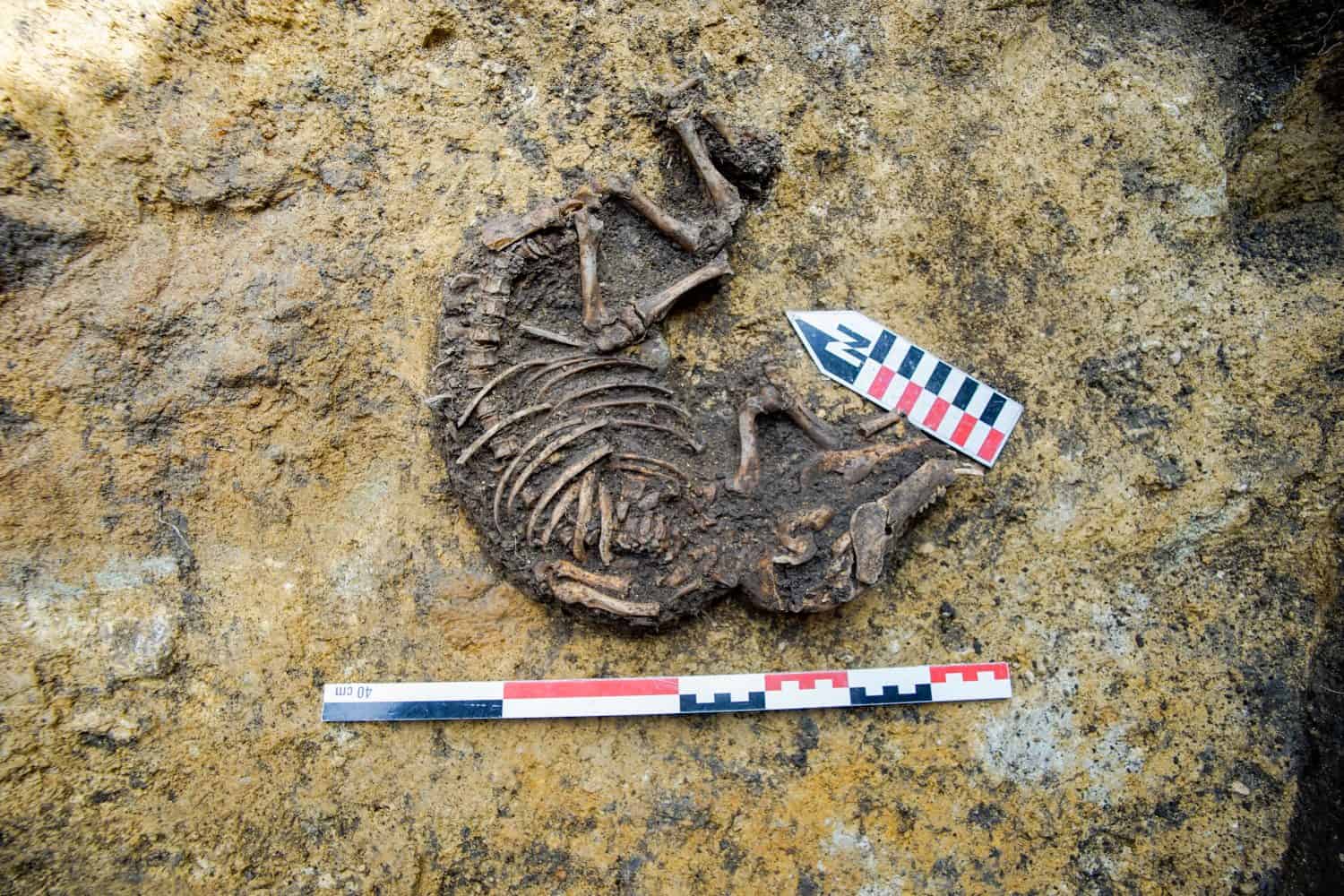
The major takeaway from this discovery is that Jurassic Era proto-mammals were more diverse than previously thought.
©Stoyan G. Ivanov/Shutterstock.com
The findings were significant enough to prompt thoughts from other scientists and paleontologists. Sue Hand, a vertebrate paleontologist from the University of New South Wales, told Live Science, “Neonatal suckling behaviour was previously thought of as being a hallmark of advanced mammals, but it now appears to have evolved well before then, in the common ancestor of docodontans and mammals at least 165 million years ago.”
Docodonts lived in a variety of habitats during the Jurassic period. Some lived in trees, including the shrew-like Microdocodon gracilis. Others, like Docofossor brachydactylus, dug tunnels with their shovel-shaped paws. If this remarkably well-preserved fossil tells us anything, it’s that docodonts were adapted to more Jurassic-era environments than previously thought.
As Tim Flannery, a mammalogist at the Australian Museum Research Institute, told Live Science, “It seems that an aquatic lifestyle arose often in early mammal-like species.”