
Quick Take
- To save the native fish, researchers had to kill every fish in the stream. This included the very fish they were trying to protect. See how it was done →
- The ecological recovery happened faster than the researchers who planned it expected, a surprising outcome whose underlying reason challenges how most conservation timelines are built. Explore the faster-than-expected recovery →
- The fish removal itself took four years, but that wasn't actually the longest part of the project. See the four-year eradication process →
- Right Hand Fork works as a conservation model, but one critical condition has to be true first. That condition won't apply everywhere. See what makes this replicable →
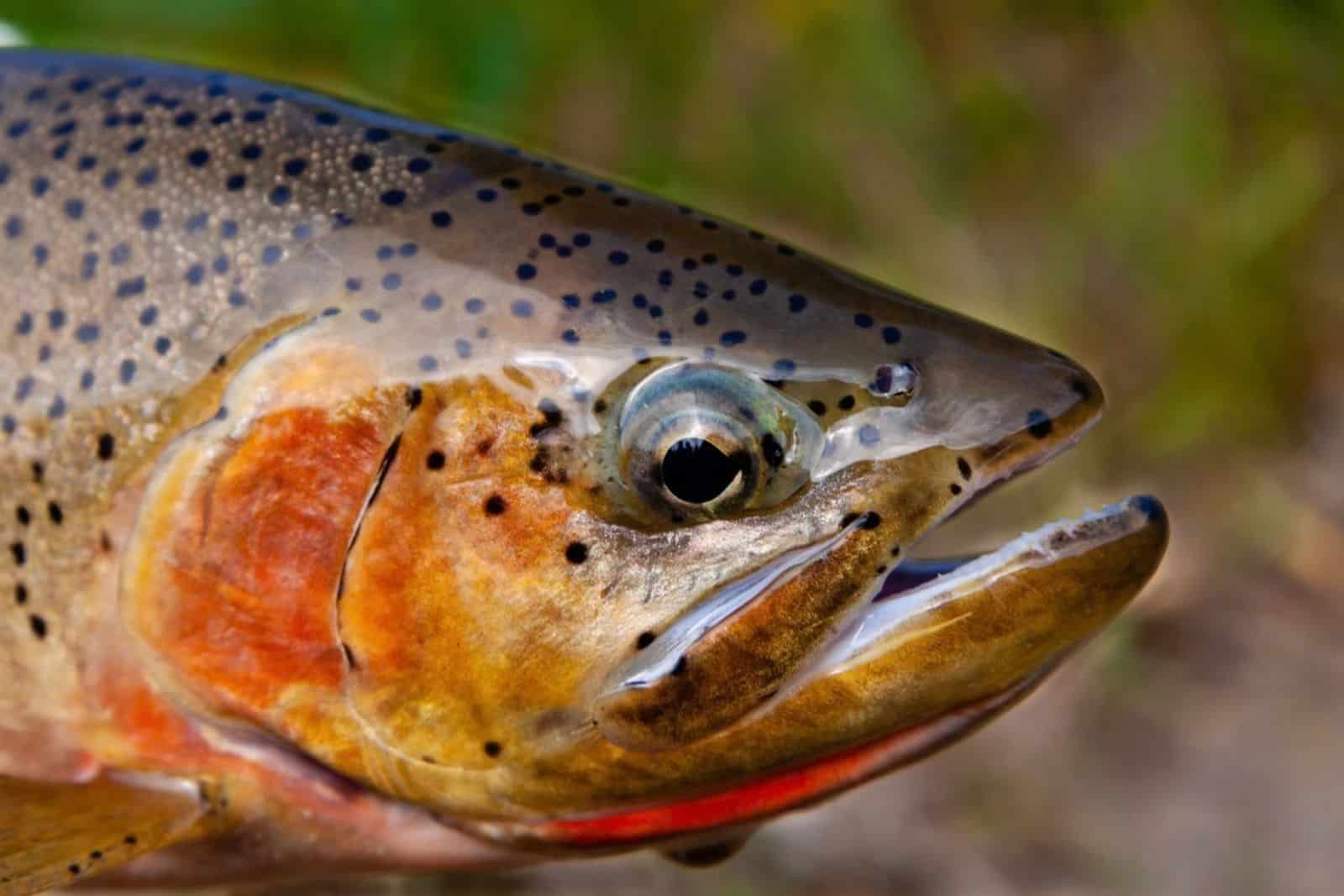
Right Hand Fork, a small tributary of Utah’s Logan River tucked into the mountains of the state’s north, spent years overrun by brown trout, a species introduced from Europe that had pushed out the native Bonneville cutthroat trout, Utah’s state fish. Researchers monitored the decline for 10 years before deciding the only real fix was to remove the invaders entirely and start over.
Four Years To Clear Out An Invader
Eradicating the brown trout took four years. Crews spent the first two years using electrofishing to physically remove as many brown trout as possible, then switched to a chemical treatment called rotenone for the final two years, which eliminated every fish left in the stream, invasive and native alike. Because no hatchery source existed for Logan River-specific Bonneville cutthroat, researchers collected a small number of eggs and juvenile fish from a nearby stream to reintroduce the species once the water was clear, according to Utah State University.
Back Near Carrying Capacity In 6 Years
The rebound surprised even the researchers who planned it. A study published in the journal Conservation Science and Practice found that Bonneville cutthroat trout approached the stream’s estimated carrying capacity, the maximum population the habitat can realistically support, within about six years of the brown trout’s removal. Projections from the study give a 95 percent probability the population will reach at least 90 percent of carrying capacity within 10 years, according to the U.S. Geological Survey. Within that recovered population, researchers found at least four distinct age classes represented, including fish large enough to satisfy anglers, a sign the population wasn’t just surviving but reproducing and maturing normally.
Why Removing One Fish Let The Other Thrive
Brown trout and Bonneville cutthroat trout compete for the same food and the same spawning gravel, and brown trout are generally the more aggressive of the two, crowding cutthroat out of the best feeding spots and eating many of their young. Once that competition disappeared, Right Hand Fork’s existing habitat, largely unaltered and still capable of supporting a healthy trout population, did most of the rest of the work on its own. Researchers describe the stream as a case where the habitat itself was never the limiting factor. The invasive species was. Remove that one variable, and a native population with enough genetic stock nearby can rebuild itself far faster than a from-scratch reintroduction ever could.
The project also required years of groundwork beyond the fish themselves. Researchers and land managers spent more than five years building public and stakeholder support before the removal even began, a reminder that a six-year ecological recovery still sat on top of a much longer human effort to get everyone on the same page about killing off one species to save another.
Researchers now point to Right Hand Fork as a model for similar streams across the Intermountain West, where brown trout have displaced native cutthroat in dozens of smaller tributaries. The appeal is partly cost: a targeted, multi-year removal in a contained stream segment is far cheaper than an ongoing suppression effort that never actually finishes the job. It also depends on having a nearby source population to restock from, which won’t be true everywhere, but where it is, Right Hand Fork suggests recovery can happen faster than most conservation timelines assume.