
Quick Take
- Hedgehogs have four types of teeth: incisors, canines, premolars, and molars.
- Hedgehogs have between 34 and 44 teeth.
- Plaque buildup is common in pet hedgehogs. Brushing with a wet Q-tip helps reduce it, but professional cleaning is recommended.
There are 17 species of hedgehogs (Erinaceidae) living across Europe, the Middle East, Africa, and Central Asia. Their most distinctive feature is their quills, of which the average adult hedgehog has between 5,000 and 7,000. Their quills, also called spines, are made of keratin and used to deter predators. In addition to their spiny cover, hedgehogs have incredibly sharp teeth, which they use as a secondary means of defense. Continue reading to discover everything you need to know about hedgehog teeth.
What Kind of Teeth Do Hedgehogs Have?
The hedgehog’s dental structure is similar to that of humans. They have four different types of teeth: incisors, canines, premolars, and molars.
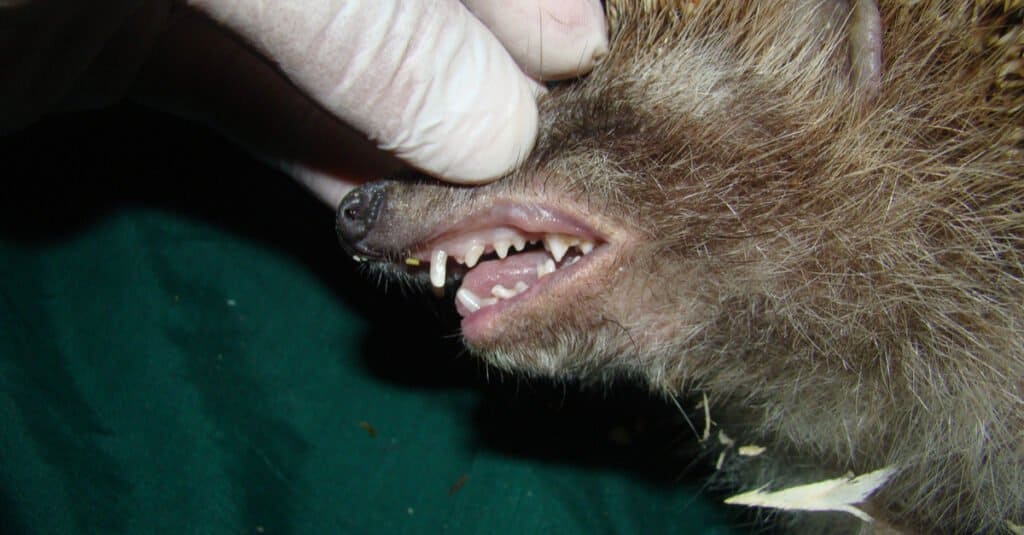
Hedgehogs have very sharp and pointed front teeth.
©Dr.MYM/Shutterstock.com
Hedgehogs have tiny, yet very sharp and pointed front teeth called incisors. They use their incisors to capture prey. Next to the incisors are the canines, sharp, fang-like teeth that help process the insects and other small prey that make up their diet. The premolars and molars are located on the sides and back of the mouth. These large, flat, multi-cusped teeth are designed for crushing and grinding.
Hedgehog teeth are well-adapted to their omnivorous diet. Although hedgehogs are primarily insectivores, their natural diet also includes slugs, snails, and earthworms.
How Many Teeth Do Hedgehogs Have?
Hedgehogs typically have 34 to 44 teeth. The dental formula for hedgehogs is incisors 3/2, canines 1/1, premolars 3/2, and molars 3/3. Hedgehogs, like most mammals have diphyodont teeth, which include a set of deciduous (baby, milk) teeth and a set of permanent adult teeth.
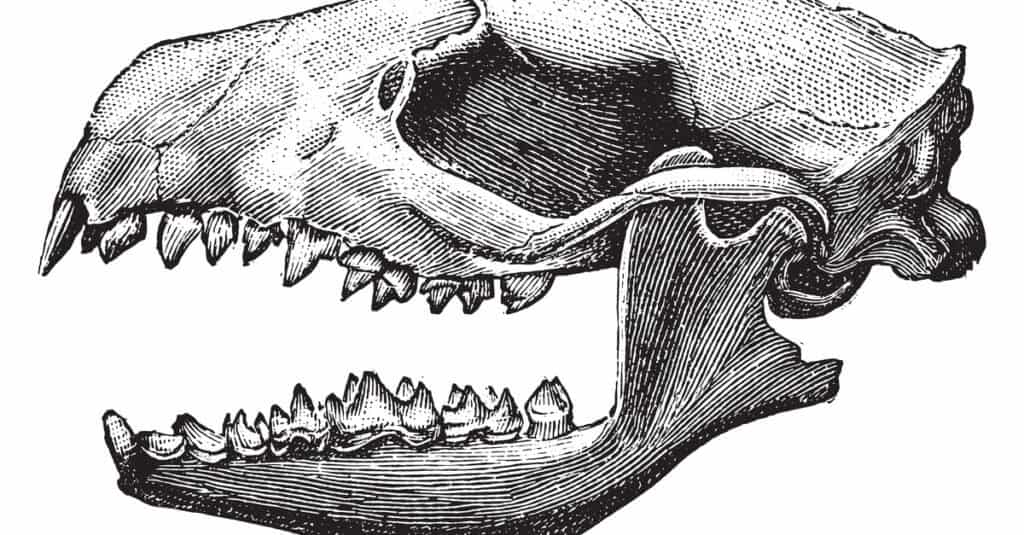
Hedgehogs have between 34 and 44 teeth.
©Morphart Creation/Shutterstock.com
Hedgehogs are not born with a full set of teeth. Baby hedgehogs, called hoglets, are born without teeth. Their deciduous (baby) teeth begin to erupt at around 3 weeks of age. A hoglet’s permanent teeth come in when they are 7 to 9 weeks old, replacing their temporary milk teeth.
Do Hedgehogs Bite?
Hedgehogs rarely bite, but there may be times when a pet hedgehog will accidentally nip a finger. A hedgehog’s bite is strong enough to pierce skin and may occasionally draw blood, especially if the animal is frightened or bites hard. They may also nibble or gently bite to signal that they no longer wish to be held.
Common Dental Problems
Hedgehogs are not immune to dental issues and diseases, and these problems can lead to serious conditions when ignored or left untreated. To ensure proper health, pet hedgehogs should have their teeth checked and cleaned professionally by a qualified exotic pet veterinarian.
The tough exoskeletons of insects in a wild hedgehog’s diet contain fibers that help clean their teeth naturally. However, pet hedgehogs may not have a diet that effectively cleans their teeth. As a result, tartar and plaque buildup are common in pet hedgehogs.

Pet hedgehogs should have their teeth professionally cleaned annually.
©Marek Novak/Shutterstock.com
To brush a pet hedgehog’s teeth, use a wet Q-tip or a tiny pet toothbrush with pet-safe toothpaste or water. Gently rub the outer surfaces, especially back molars, using circular movements. While brushing can slow the development of tartar and plaque, it usually does not eliminate them completely. Therefore, an annual visit to the vet is recommended.