
Quick Take
- The aye-aye's most disturbing physical feature doubles as one of the most effective feeding tools in the animal kingdom. See the bizarre finger →
- This primate independently evolved the exact same hunting strategy as a bird, and it did so without ever encountering one. Explore the shared strategy →
- The aye-aye shares a dental trait with beavers that is almost unheard of in primates, a trait that once baffled scientists. Discover the rare dental trait →
- Local folklore turned a harmless primate into an omen of death, and that mythology now threatens its survival. Uncover the deadly folklore →
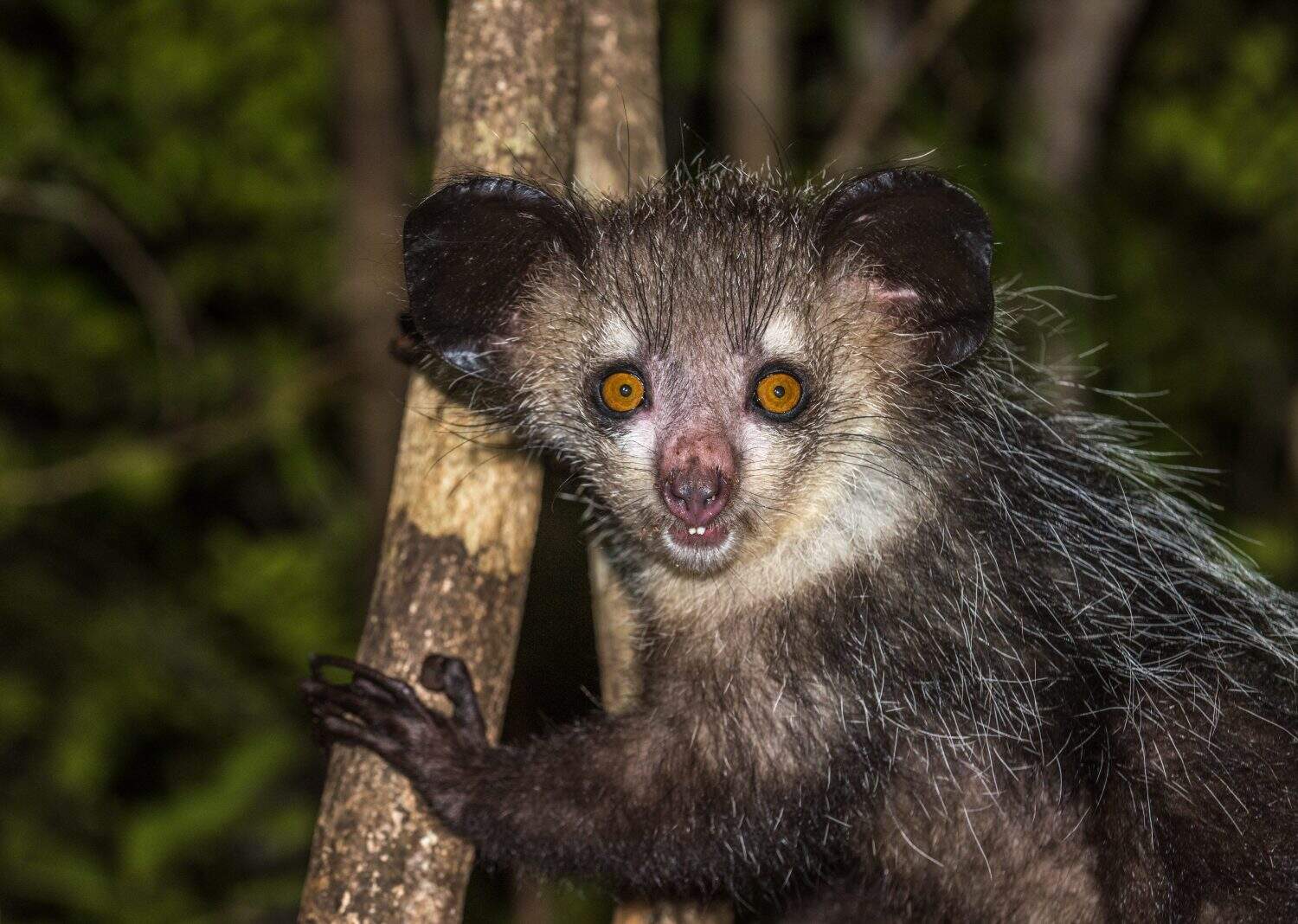
If you were to explore the island of Madagascar, the aye-aye is one of the strangest animals you’d come across. Found only on the island, the unusual lemur has mystified scientists for years. Before it was intentionally studied, it inspired eerie local legends. This odd primate has several startling features and bizarre adaptations. Its looks much more like a spooky creature a real primate. Yet every one of its unusual features helps the species in remarkable ways. Here are just a handful of the most fascinating things about the aye-aye.
It Has One of the Strangest Fingers in the Animal Kingdom
©Ant Lab (Dr. Adrian Smith) via YouTube — used under fair use – Original / License
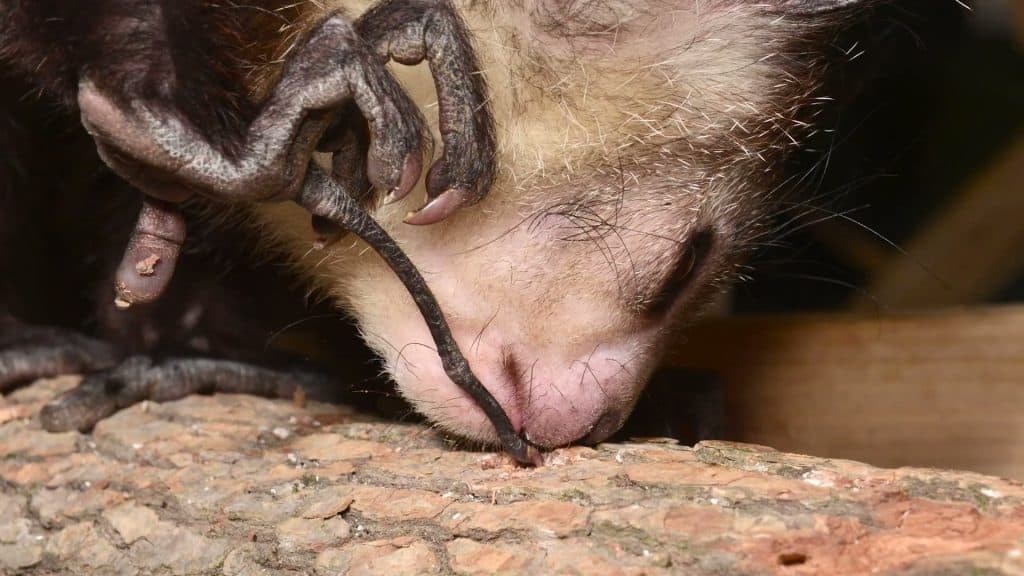
The aye-aye’s most famous feature is its insanely long middle finger. Not only does it measure several inches in length, but it is also skeletal, making it reminiscent of a witch’s finger. Unlike the other fingers on its hand, this one is flexible and capable of moving independently with a high level of precision. Ate-ayes use this finger like a tiny tool, reaching it into narrow crevices to pull out insect larvae. It also uses it to scoop up soft fruit like coconut flesh. Despite being incredibly creepy, it is a very versatile and effective feeding tool.
The Hunting Strategy It Shares with a Bird
©Daniel_Gauthier/Shutterstock.com
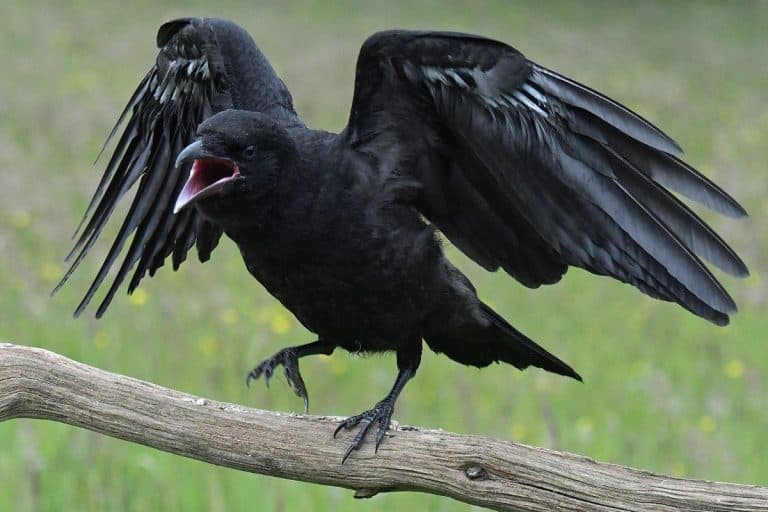
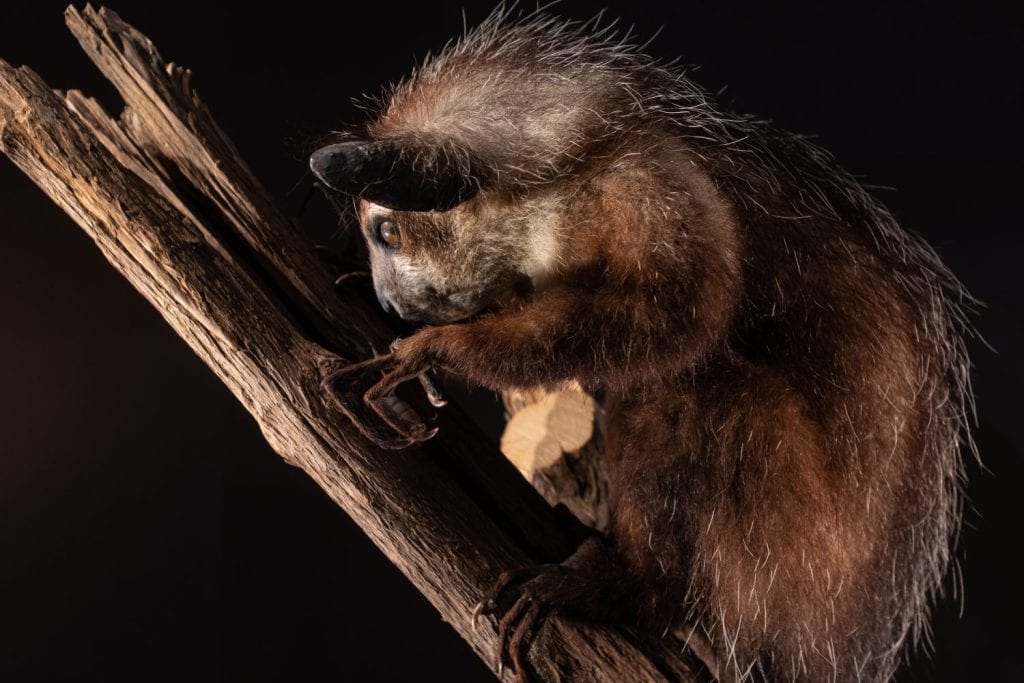
Although it is a primate, the aye-aye has evolved a strange feeding strategy that copies that of a woodpecker. As it climbs through the forest at night, it taps on branches incredibly rapidly, sometimes several times per second (and yes, it uses that long witchy middle finger to do the tapping). It then uses its sensitive hearing to detect hollow sections underneath the wood. If the wood sounds hollow, it is likely to contain insect larvae hidden inside. Madagascar has no native woodpeckers, so this behavior wasn’t literally copied. The aye-aye somehow evolved the unique hunting method all on its own.
Unstoppable Teeth
The aye-aye shares one specific trait with an animal it isn’t closely related to at all: the beaver. Like the tree gnawing rodent, the aye-aye has front teeth that grow continuously. Though its incisors are strong, the tooth material is constantly being worn away because it chews through wood daily in search of insects. This dental adaptation is commonly found in rodents, but extremely rare in primates. The unusual trait actually confused early scientists when the mammal was first studied.
Huge Eyes, Built for the Night
©Eugen Haag/Shutterstock.com
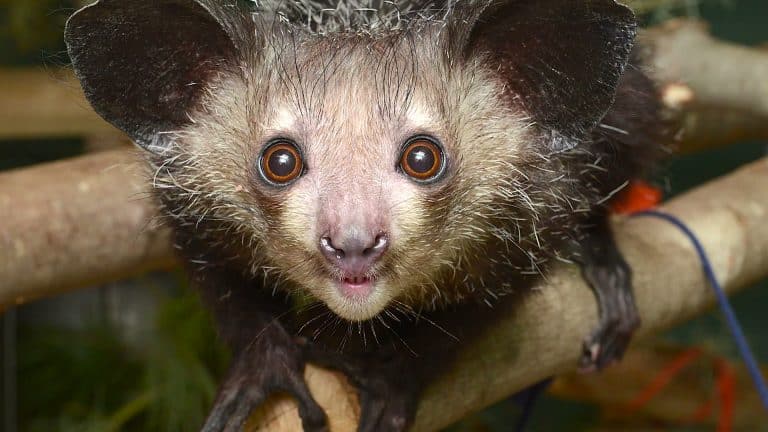
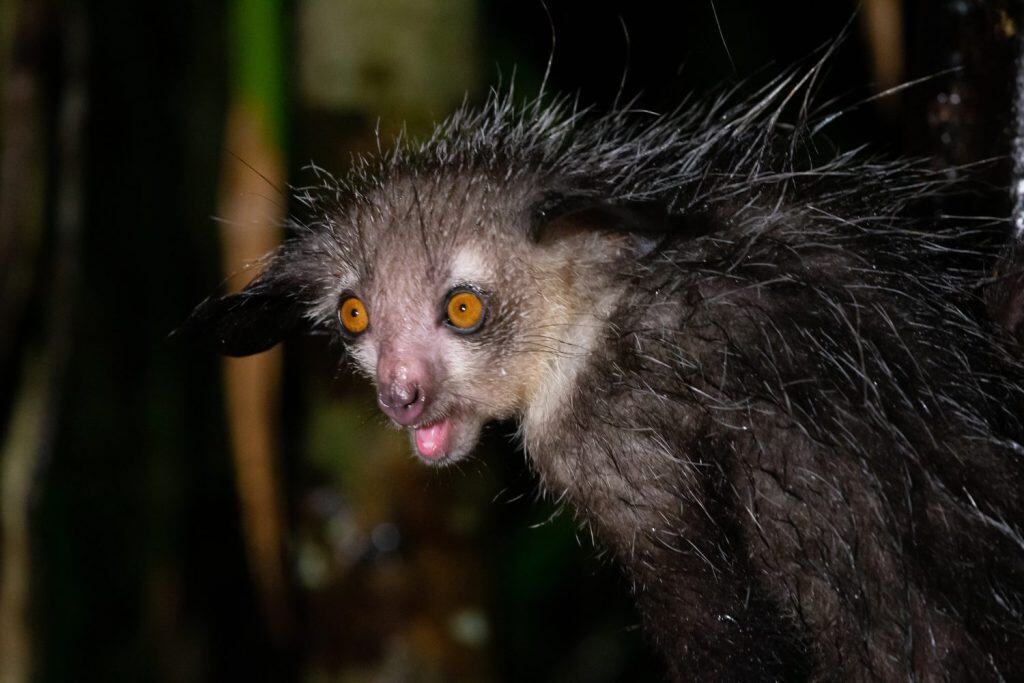
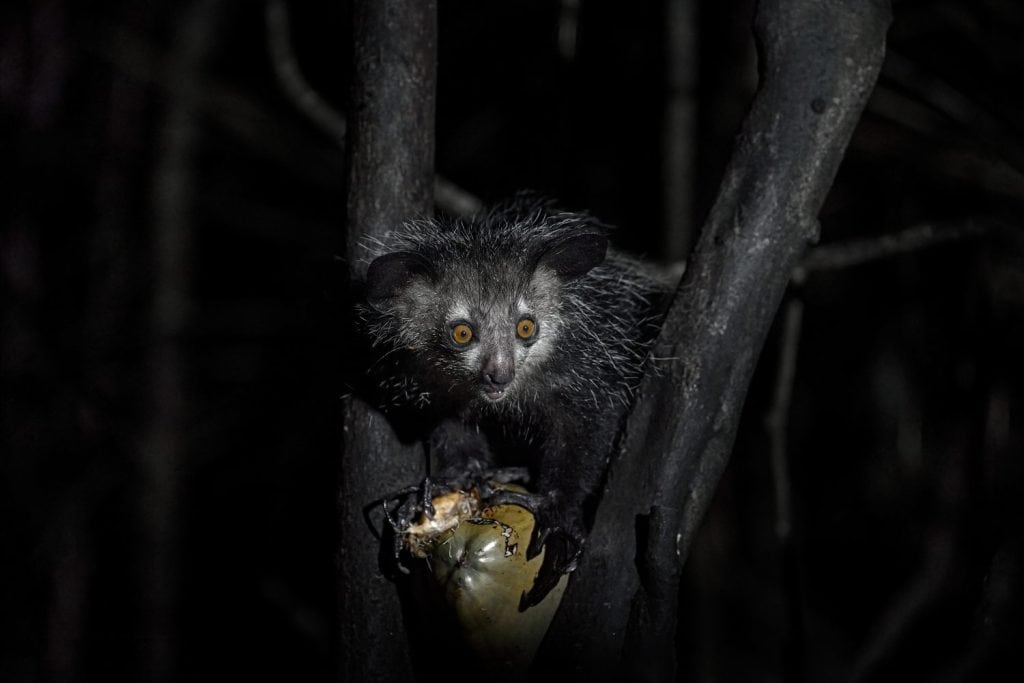
The aye-aye is almost entirely nocturnal. It spends its nights wide awake, searching for food in Madagascar’s treetops. Its enormous eyes serve a necessary purpose, pulling in as much light as possible in the dim forest. Thanks to these massive eyes, the aye-aye can accurately navigate its way through the darkness. During the day, the aye-aye sleeps in a nest built high in the trees. As it emerges after sunset, its eyes glow in the forest. The aye-aye’s haunting eyes are one reason these animals were feared for so many years, but they are just an adaptation for nocturnal forest life.
Subject of Superstition
©Ondrej Prosicky/Shutterstock.com
Unfortunately, the aye-aye’s bizarre appearance has led to locals misunderstanding these forest-dwelling creatures for centuries. In parts of Madagascar, ancient folklore teaches that the primate is an omen of bad luck. Some myths claim that whoever an aye-aye points its long skeletal finger at will soon suffer great misfortune. These longstanding beliefs from locals have made conservation efforts even more important.