
Who doesn’t love a good pop of green in their home? Houseplants of all shapes and species can provide a nice natural element to any home, but nothing provides a green, tropical feel quite like the pothos plant.
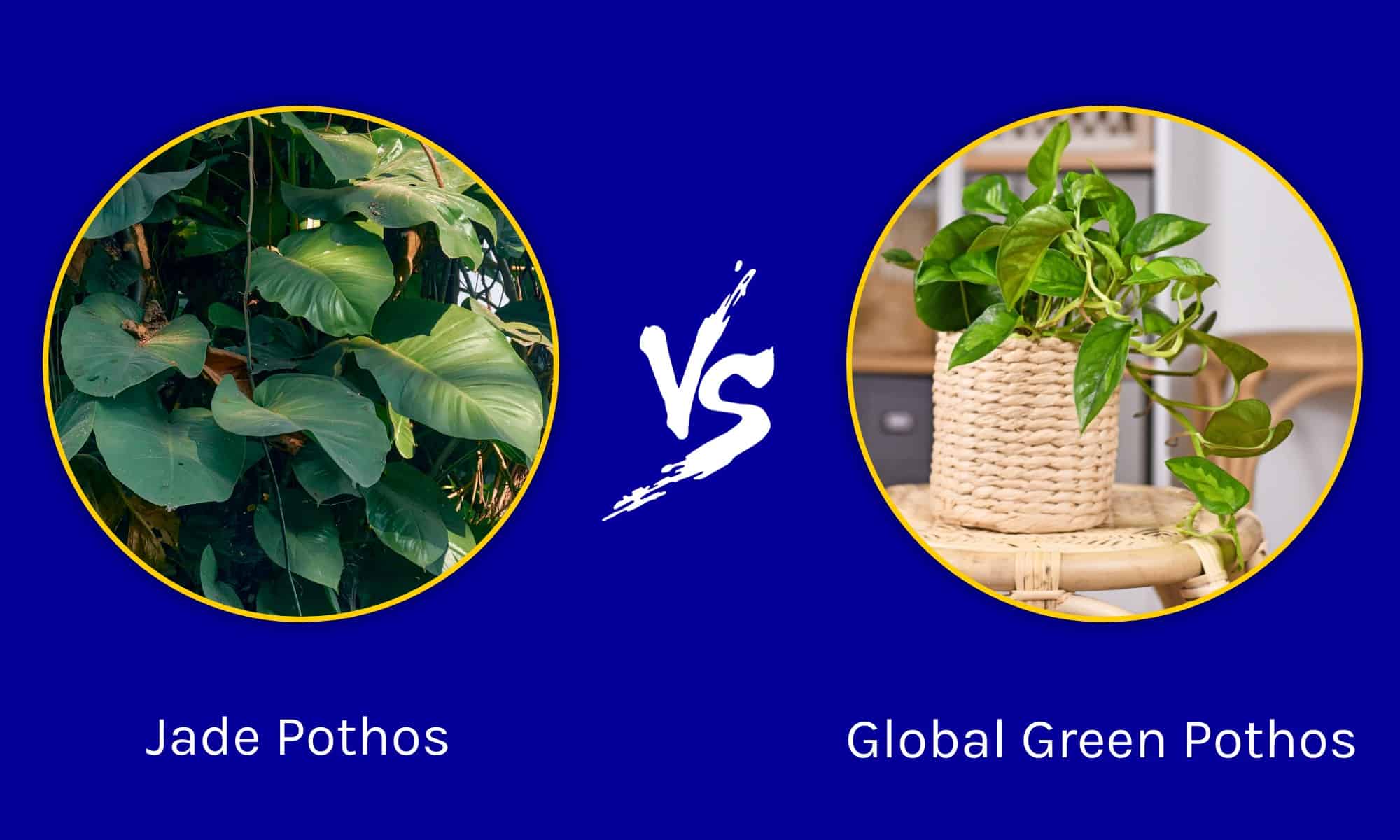
Two popular varieties of green pothos plants are the jade pothos and the global green pothos. While both of these varieties have deep green leaves, they also have some notable differences that make them stand out from one another. In this article, we’ll compare and contrast the jade pothos and global green pothos, as well as break down how to properly care for either cultivar at home.
Comparing Jade Pothos vs. Global Green Pothos
| Jade Pothos | Global Green Pothos | |
|---|---|---|
| Classification | Epipremnum aureum ‘Jade’ | Epipremnum aureum ‘Global Green’ |
| Alternative Names | Devil’s Vine, Centipede Vine | Devil’s Vine, Global Pothos |
| Origin | South Pacific Islands | |
| Description | A golden pothos variety that does not have any variegation but instead has very deep green and glossy leaves. Some specimens may have very slight yellow variegation. | A golden pothos variety that has subtle variegation of deep green and mid-green, and can also boast cream streaks. |
| Uses | Houseplant | Houseplant |
| Growth Tips | Keep this plant somewhere it can get around 50% humidity. Purchasing a humidifier to keep nearby may be a wise idea. | Despite this species being excellent in very low light, this variety needs some sun to maintain its variegation. |
| Interesting Features | This pothos variety is known for not being variegated and boasts large, moody, dark green leaves. | Global green pothos is known for having subtle pops of color on its leaves, making it a great focal point for a home. |
The Key Differences Between Jade Pothos and Global Green Pothos
There are a few key differences between the jade pothos and the global green pothos worth noting, though it is worth knowing that these plants are the same species, just different varieties.
The jade pothos has a deep, dark, vibrant green hue to it. It is not variegated, meaning its leaves are usually a solid green color without any color pattern. However, some jade pothos might have very slight yellow variegation and they also tend to look more like the typical golden pothos when they are young. They are basically known for having very deep and glossy green leaves.
The global green pothos, however, is a variegated variety of pothos. It does boast deep green leaves, but those leaves have splotches and brushstrokes of lighter, almost lime green. The variegation is subtle but noticeable.
The jade pothos can be found growing in the wild. The global green pothos is a man-made cultivar, though it is unclear exactly who bred this unique variety of pothos. The jade pothos can handle very low light, while the global green pothos requires bright, indirect light in order to keep up its colorful patterns.
Other than those differences, everything about these plants is the same from their care needs to their maximum size.
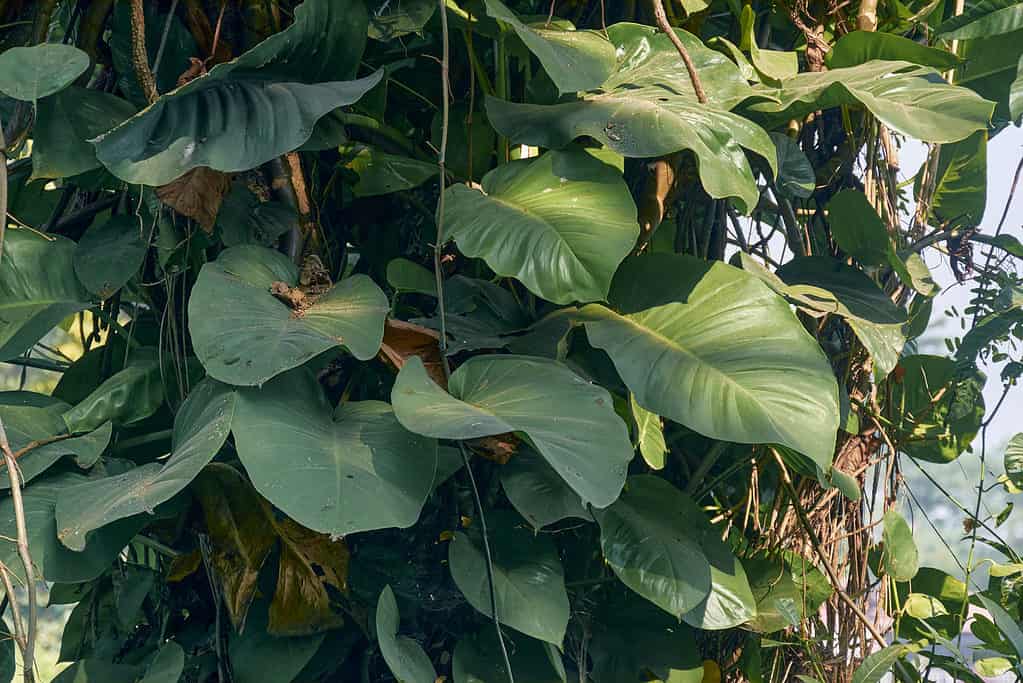
Jade pothos (pictured) are known for their deep-green leaves and massive size in the wild.
©iStock.com/Suprabhat Dutta
Jade Pothos vs. Global Green Pothos: Classification
The jade pothos’ botanical name is Epipremnum aureum ‘Jade’. The global green pothos’ botanical name is Epipremnum aureum ‘Global Green’. Both of these plants are part of the same flowering plant family, Araceae, and are closely related to philodendrons and peace lilies.
Jade Pothos vs. Global Green Pothos: Description
One of the more beloved varieties of pothos that have been welcomed into homes all across the world in the past decade or so is the jade pothos variety. This variety can handle less watering and lower light than other varieties. When compared to their foundation variety, the golden pothos or devil’s ivy, this variety has deeper forest-green leaves. With their purely dark green leaves and plenty of chlorophyll in their little plant veins, the jade pothos has a lot of energy. Since they have more chlorophyll than their variegated counterparts, such as the global green pothos, jade pothos are also better at photosynthesizing. This indicates that they are more tolerant to a range of light intensities.
The global green pothos is a stunning, exquisite variegated vining plant with vivid and dark green leaves. This special little plant is easy to grow and manage once it is established indoors. It thrives in indirect, bright light in order to keep up its aesthetic appeal and develop additional leaves. The global green pothos can trail up to 10 feet long as a houseplant under optimum conditions if it is trained to climb. Because it is a bit of a newbie to the plant business (Costa Farms started selling it around 2021), this cultivar is renowned for being hard to find at local garden centers.
Jade Pothos vs. Global Green Pothos: Uses
Both the jade pothos and the global green pothos are mainly used as houseplants. Because they are both pretty tolerant of neglect, they make great houseplants for newbie plant parents that lack a ton of experience. Just as well, pothos plants in general are used for their air-purifying properties; though it is worth noting you’ll need quite a few plants in order to notice any real difference in your indoor space’s air quality.
Jade Pothos vs. Global Green Pothos: Origin
All pothos are native to the South Pacific Islands and some parts of southeastern Asia. They have been naturalized around the globe in places like Australia and Hawaii.
The jade pothos likely originated in the wild. This deeper-green variety of the golden pothos can be seen growing massive leaves and vines around trees in the tropics. Some theorize that the jade pothos plant is one of the first Epipremnum aureum varieties to be domesticated and cultivars from its wild base variety in the South Pacific and southeastern Asia. Jade pothos plants are some the toughest varieties of pothos, with thicker leaves, strong stems, and excellent drought resistance.
The global green pothos’ origins are quite mysterious. There isn’t much information online about who invented the cultivar or first bred it. Costa Farms owns the patent to this variety, and that’s about all the reputable information you’ll find online about this rare beauty.
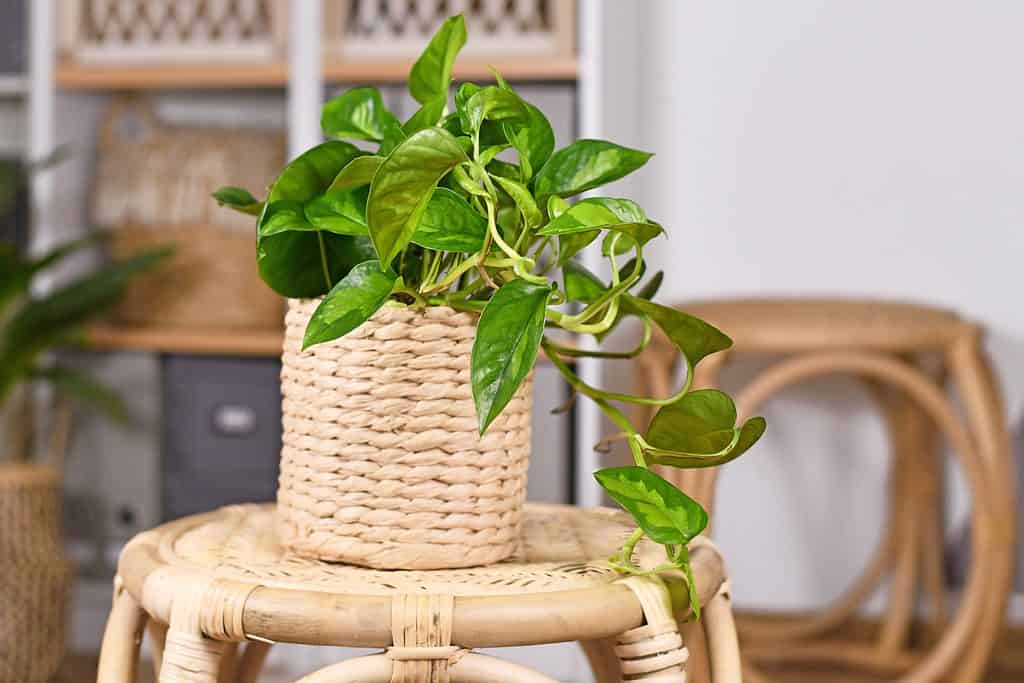
The global green pothos (pictured) is still relatively rare in the plant trade due to being a newer cultivar.
©Firn/Shutterstock.com
Jade Pothos vs. Global Green Pothos: How to Grow
The care needs for both the jade pothos and the global green pothos are the same. Just keep in mind that the jade pothos is hardier and more tolerant of drought and lack of light than the slightly delicate global green pothos. Other than that, their growing and care requirements are almost identical.
The jade pothos doesn’t need much upkeep when it comes to water. In acting, overwatering or flooding can actually kill this plant pretty fast. Hence, never allow your jade pothos to stand in water. Be careful to remove any remaining water from a run-off dish beneath the pot right away if there was any after irrigation. Particularly in low light, this drought-resistant cultivar requires the top two inches of soil to completely dry out in between waterings.
That being said, the global green pothos is less drought-resistant. But, it shouldn’t be let to soak in too much water. If you’re not sure when to water, watch for drooping leaves. You might only need to water once per week in the summer and much less in the winter.
The ideal temperature range for pothos plants is around 65 to 80 degrees F. Temperatures around the 60 to 64 degrees F range are acceptable during the wintertime, but anything below 50 degrees F is problematic. These beautiful tropical plants can survive very well in environments without much humidity, but they definitely prefer higher humidity levels long-term. Even if the rooms they are kept in don’t get a ton of sunlight, they are the perfect plants for a bathroom with a small window. Throughout the winter, just keep these cold-sensitive plants away from drafty windows and heating vents.
Pothos plants require indirect and bright light to really thrive. A healthy plant with lush foliage will be more likely to grow when placed on a north-facing window sill or in the center of a space with a south-facing window. If you put your jade or global green pothos near a bright area, keep an eye out for scorched or brown-tipped leaves.
Both of these varieties thrive in the majority of potting soils as long as they are well-drained. Wet roots are one thing that these plants won’t like, though. If you have any worries, adding perlite or peat moss might aid with drainage. If you plant these two pothos species in a healthy soil mixture, they won’t require much fertilizer to survive. But, you can give them a bimonthly feed of an organic fertilizer emulsion or a half-strength and balanced houseplant fertilizer to encourage the healthiest development and deepest green leaves.
These low-maintenance plants don’t require much in the way of trimming or pruning. If the vines grow too long for your living area, you will need to cut them back a bit in the spring. In order to focus energy on the strongest vines and to promote new development, fading leaves or less robust vines should be removed with clean scissors.
Jade Pothos vs. Global Green Pothos: Protections and Conservation
Neither of these varieties is extinct, endangered, or in danger of becoming endangered. However, the pothos species is an invasive species in many places around the world, such as Puerto Rice.
Jade Pothos vs. Global Green Pothos: Special Features
Both the jade pothos and the global green pothos contain calcium oxide throughout the entire body of either plant. As a result, it is considered mildly poisonous to both humans and pets. If you decide to keep either variety at home, make sure they are out of reach of wandering mouths.
The vines of any pothos variety can grow up to 30 feet long if left unchecked. That being said, please bear in mind that neither of these varieties will probably grow to be more than 10 feet long when grown inside.
The jade pothos is well-known for having particularly shiny foliage.m With this shiny foliage comes the attraction of dust. Too much dust buildup can make it hard for this variety to absorb sunlight, so periodically give your jade pothos a good dusting.
The jade pothos and global green pothos are really stunning varieties to keep as houseplants. If you need a pothos that can tolerate very low light without any concern for losing its color, we’d recommend the non-variegated jade pothos. For something with more interesting color patterns, the global green is the way to go.
Want to learn more about the eye-catching pothos houseplant? Check out our in-depth guide to everything you need to know about pothos!