Green careers — jobs that contribute to conservation and sustainability — can be challenging to break into. In 2024, the International Monetary Fund (IMF) found that women hold only one-third of green jobs. The same study found that green workers usually hold a STEM-related college degree, whereas Black and Hispanic/Latinx workers remain underrepresented. Bee University NYC (Bee U NYC) was founded to reduce these disparities. The non-profit organization allows urban communities to engage in the green economy and environmental stewardship through beekeeping.
Since its founding, Bee U NYC has done incredible advocacy and environmental work within Staten Island. As co-founder and Executive Director André Ware explains, “These communities have long lacked access to experiential learning opportunities. As the so-called ‘forgotten borough,’ Staten Island deserves more visibility, investment, and programming. Bee U NYC is helping to fill that void.”
The organization’s approach to urban beekeeping lessens inequality and empowers young people to become environmental advocates. Equally important, Bee U NYC’s offerings, such as Hive Experiences, have wider-reaching effects that benefit pollinators. Bee U NYC’s Leadership Team, which includes Ware; Co-Founder and Co-Director of Development Tavion Williams; Co-Founder and Director of Finance and Operations Renel Saint Jour; Co-Director of Development Umamah Masum; and Associate Executive Director Ateea Kazi, recently shared with A-Z Animals what makes Bee U NYC so unique.
How Bee University NYC Buzzes to Support the Community

Bee University NYC engages urban communities through environmental advocacy and beekeeping training.
©Bee University NYC
Bee University NYC’s founders are lifelong New Yorkers who came together during Ranti’s 2021 City Council campaign for Staten Island’s District 49. “[The founders were each shaped by] the power of hands-on education,” shares Ware.
Programs like Christodora and NOLS in high school led to college studies in varied tracks, including political science and economics. “We learned,” says Ware, “how climate change, democracy, and social justice are all globally interconnected, and how those global dynamics directly shape life in our neighborhoods.”
Their later careers, rooted in those same values of equity and access, have shown them what’s possible when young people are given real-world opportunities to learn, lead, and grow. “Bee U NYC was founded to make those same opportunities more accessible, especially to young people who have historically been excluded from conversations about environmental justice and green careers,” adds Ware. “We’re building a pipeline not just for jobs, but for confidence, connection, and community.”
Bee U NYC’s Origin Story
Bee U NYC’s story began during Ogunleye’s 2021 City Council campaign. At the time, Ware was managing the campaign and simultaneously exploring creative ways to engage the community. Investing in environmental education and support called to him. But where and how could he get started?
The answer was close to home. Saint Jour was managing hives through City Growers, a Brooklyn-based nonprofit that helps youth build connections to nature through urban agriculture. An idea struck Ware while visiting apiaries with Saint Jour. “What if we use honey bees as a tool for community engagement and environmental education?” he asked.
The campaign team began a small honey bee initiative, and the community response was stronger than they could have ever imagined. People were fascinated by honey bees and wanted to understand how to get involved in beekeeping.
“That momentum became the foundation of Bee U NYC,” says Ware. “Our initiative quickly transformed into a shared vision for a long-term, community-based organization that could provide real opportunities for young people through experiential learning.”
Why Bees?
People may be interested in beekeeping, but don’t know how to get involved. This is especially true in urban settings, where green spaces and farming aren’t as common. As Ware explains, “Bees provide an entry point into environmental advocacy, leadership and community connection.”

Bee U NYC’s immersive Hive Experiences are perfect for youth interested in learning more about beekeeping.
©Bee University NYC
Centering Bee U NYC in Staten Island communities like Stapleton and Park Hill paved the way for environmental education to become more relevant and accessible for communities typically excluded from these conversations.
“Urban beekeeping becomes a powerful and accessible way to teach environmental justice by directly connecting people to the land, their food systems, and the health of their communities,” says Saint Jour, co-founder and Director of Finance and Operations. “Environmental justice is about more than just protecting the environment. It’s about making sure that every community, especially low-income and historically marginalized communities, has access to clean air, clean water, green space, and opportunities to shape the future of their environment.”
The Necessity of Bee U NYC’s Mission

As Associate Director, Ateea Kazi explains that Bee U NYC’s mission hinges on addressing “the lack of access to environmental education, green job opportunities, and leadership development in historically underserved urban communities.”
©Bee University NYC
The challenge that Bee U NYC addresses is multifaceted. Students in urban communities may have less access to green areas and less connection with nature. This can be especially harmful, states an article in International Journal of Education Research Open, as a connection to nature provides benefits such as improved “socio-intellectual development, immune function, mental health, happiness and life satisfaction,” and reduced “stress, anxiety, aggressivity, risk of cardiovascular morbidity and mortality, obesity, and diabetes.”
The difference in access to environmental stewardship and leadership opportunities also leads to disparities in eventual career prospects. Bee U NYC is tackling this at the source: acting within these communities to provide the necessary education, guidance, and experiential learning to youth. The organization prioritizes underrepresented groups such as women, LGBTQIA+ youth, and Black and Brown youth.
“While many environmental education programs focus on classroom-based or nature-based learning, Bee U NYC brings these experiences directly into urban neighborhoods, places where access to green space, sustainability programs, and hands-on learning is often limited,” says Kazi. “We use bees to open doors. Urban beekeeping may be the hook, but the impact goes far beyond the hive.”
Bee-Lieving in the Community: Bee U NYC’s Programs

Bee U NYC uses hands-on training and experiences, and supplements that with educational opportunities, to provide an understanding of urban beekeeping and environmental justice.
©Bee University NYC
Urban beekeeping is a fantastic way to get youth involved in the community. “[At its core, it is] unique, hands-on, and inherently interdisciplinary,” Kazi explains.
Unlike more traditional environmental education that urban youth may feel disconnected from, beekeeping provides something more tangible. “It’s an entry point to environmental science, community leadership, and career pathways many of our Fellows never knew existed,” says Ware.
Bee U NYC offers several programs built around three distinct pillars:
- Environmental education rooted in justice and equity
- Workforce development through the Green Jobs Pipeline
- Empowering community engagement to help youth become local leaders/advocates
The Flagship Program: The Urban Beekeeping Fellowship

After the Fellowship program, 82.76% of Fellows shared that they could better explain pollination, an increase from 44.83% at the start of the program.
©Martin Pelanek/Shutterstock.com
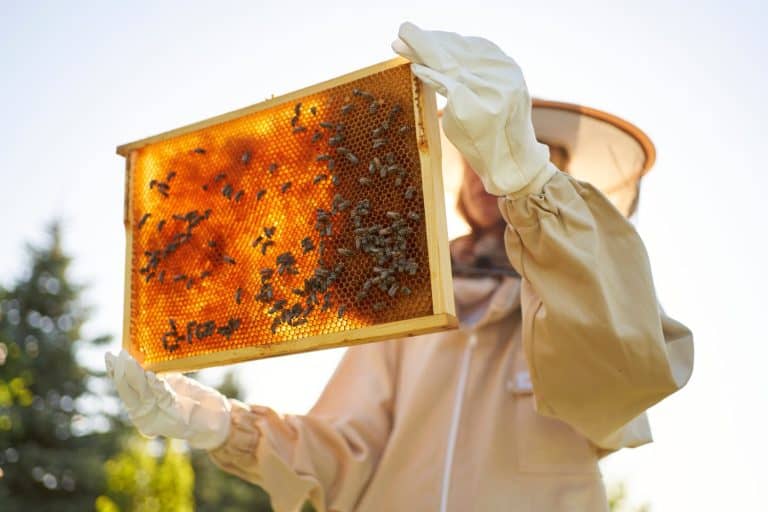
Bee U NYC’s Urban Beekeeping Fellowship is a months-long program for individuals ages 16 to 24. This program is specifically designed to introduce students to leadership, beekeeping, and environmental justice. Fellows, who receive a stipend for their participation, learn about sustainability and advocacy while also building valuable career skills. Fellows may also partake in optional sessions such as collecting honeybee swarms or assisting with community projects. At the end of the Fellowship, the Fellows graduate, harvest honey, and showcase what they’ve learned to their families and community members through live hive demonstrations.

Learning about the hive is a crucial part of beekeeping and a good first step for any beginner beekeeper.
©Bee University NYC
According to Bee U NYC’s 2024 Impact Report, 50% of Fellows in 2024 identified as female and 77% as BIPOC. These statistics are a direct representation of the organization’s mission. Beyond advancing equitable measures in the green career space, the Fellows came away inspired and excited about the future.
How Urban Beekeeping Supports Fellows
“I’ve developed a deeper relationship with the environment and with bees,” shares Judy W., a 2024 Fellow from Cohort One. “This fellowship made me realize, it is possible to make a difference with the right people sharing the same mission.”
The sentiment is shared by Kumare V.S., a 2024 Urban Beekeeping Fellow from Cohort Two, who says, “Being outside and handling bees for the first time had me nervous. But it was really an amazing time, and being with such good people helped alleviate that stress.”
Over the past few years, 70 Fellows have graduated through this program. “We expect to celebrate our 100th Fellow this summer,” says Masum. “Looking ahead, we will launch a $1 million fundraising campaign, supported by the Staten Island Foundation’s generous 2-for-1 matching program.” From this, Bee U NYC hopes to expand its offerings throughout every borough of New York City.
Workforce Development in Beekeeping
Bee U NYC also assists with workforce development. Graduates can apply for roles as Program Coordinator or Environmental Educator, connect with partner organizations like Beezy Bees or Astor Apiaries, or take on a year-long beekeeping apprenticeship with New York Bee Club.
“We’ve seen firsthand how this model makes an impact,” says Kazi. “We’ve hired five Urban Beekeeping Fellowship alums for well-paying part-time jobs. Youth who once had no exposure to environmental careers have gone on to become our Program Coordinators and Environmental Educators. For many of our Fellows, their time at Bee U NYC is just the beginning of a long-term journey into environmental stewardship and leadership.”
Additional Programs

Many students who join Bee U NYC may feel uncomfortable with bees at first, but develop a comfort level and awareness through program offerings.
©CL-Medien/Shutterstock.com
Beyond the flagship Fellowship, Bee U NYC has various programs and outreach to expand its community impact.
Hive Experiences
Another Bee U NYC offering is the Hive Experiences. These interactive, educational workshops run for 60 to 90 minutes at a time. During these sessions, which Ware says “include guided hive tours, beekeeping demonstrations, and discussions about pollinators, food systems, and climate,” participants of all ages can get up close and personal with honey bees.
In doing so, Kazi shares, “We engage students who may have never thought of themselves as environmentalists or future green job leaders.”
Community Partnerships
Because Bee U NYC is so deeply entrenched in the community, community events are close to their heart. Every spring, Bee U NYC hosts a free event in Maker Park called Opening Day. “We kick off the season with hive painting, candle-making, a presentation from New York Bee Club, and more,” Ware shares. Bee U NYC is also present at other local events, ready to share and inspire environmental change.

By teaching youth about urban beekeeping and environmental sustainability, Bee U NYC readies students to go out and participate in community education.
©Bee University NYC
Partnerships help Bee U NYC reach urban populations. More than that, says Ware, “Our collaborations provide our Fellows with opportunities to participate in habitat restoration, water quality monitoring, and community education initiatives.”
For the 2025 Urban Beekeeping Fellowship’s Environmental Action Project, the cohorts will partner with the Gowanus Canal Conservancy and Lower East Side (LES) Ecology Center.
Additional partners, Masum shares, include:
- DJ McManus Foundation
- Citizens Committee for NYC
- The Staten Island Foundation
“This backing has enabled us to expand the Urban Beekeeping Fellowship beyond Staten Island, launching a new cohort at Brooklyn’s Weeksville Heritage Center,” she says.
New York Harbor School Beekeeping Program
Bee U NYC is partnered with the New York Harbor School. This public high school’s Urban Agriculture Career and Technical Education (CTE) Program encourages students to “explore sustainable food systems and environmental stewardship,” says Ware.
Through this partnership, Bee U NYC runs a year-long urban beekeeping program for students. The program covers a variety of topics, including:
- Honey bee biology
- Hive management
- Pollination
- The vital role of pollinators in urban ecosystems
Exploring the Bee-autiful Impact on Pollinators and Community

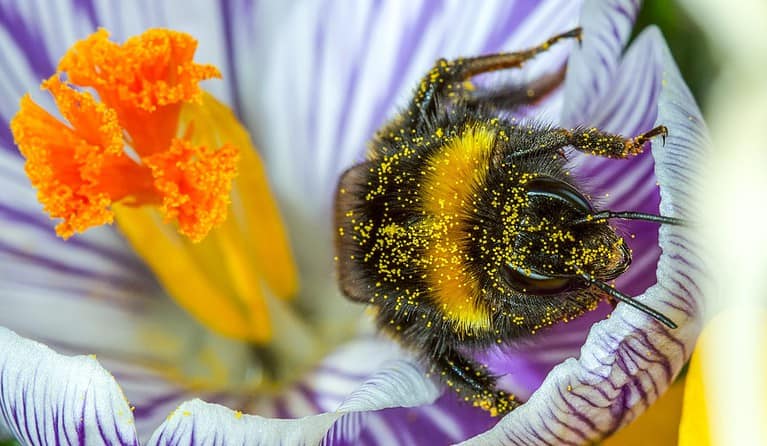
Honey bees are one of the top pollinators in the U.S., but populations have significantly declined over the years.
©MagicBloods/Shutterstock.com
Conservation is important. Many people tend to think of conservation efforts as centered around larger creatures. But this overlooks the impact of smaller creatures like honey bees. Bees play a huge role in environmental health.
Honey bees support pollination in community gardens, wild plants or natural spaces, and even rooftop settings. A 2018 study published in Sustainability found that anywhere from 30-50% of urban bees could pollinate nearby crops. Over 100 U.S.-grown crops depend on pollinators. If you like berries, squash, or almonds, honey bees help those grow. Honey bees are also the most common commercial pollinator. They forage for pollen up to two miles away from their hives.
By promoting urban beekeeping, Bee U NYC positions urban youth to improve pollination, protect increasingly vulnerable ecosystems, and support our environment. Pollinators are disappearing at a rapid rate. The mission to help pollinator populations is more important than ever.
Addressing a Misconception around Honey Bees
Did you know that honey bees are not native to North America? These bees were brought to the continent from Europe, where they are native, in the 17th century. Honey bees are also native to Africa and some areas in Asia.
Some people worry that protecting honey bees would harm native pollinators through competition. But, says Saint Jour, honey bees “play an important role in supporting ecosystems, especially in urban settings where pollinator habitats are fragmented.”
He continues, “In the right circumstances and with proper care, honeybees can support pollination for local gardens and green spaces without competing too heavily with native pollinators. We make sure to teach our students this nuance. Environmental work is rarely black and white, and it’s important to hold complexity.”
How Can You Support Pollinator Populations?

©Ivan Marjanovic/Shutterstock.com
If Bee U NYC’s mission inspires you, you might be wondering: What can I do locally to support pollinators like solitary bees, bumble bees, wasps, butterflies, and moths? The good news is that you can contribute to pollinator health regardless of your experience level or how much space you have. Here’s how:
- Plant pollinator-friendly plants such as milkweed, wild bergamot, black-eyed susans, and wild geraniums (just remember to look up native plants for your area of the country).
- Avoid using pesticides in your gardens that can harm or even destroy native pollinators.
- Offer nesting sites, brush piles, and loose leaf litter for pollinators.
- Consider leaving out small bowls of water so they have access to fresh, clean water.
Supporting Bee U NYC
Of course, the most important thing you can do to help pollinators is raise awareness around the importance of pollinators, pollinator-friendly practices, and organizations like the Xerces Society for Invertebrate Conservation or Bee U NYC that are making a difference.
“Ultimately, beekeeping is a tool, a gateway,” says Saint Jour. “Our programs are about helping young people stay engaged in learning, understand their connection to the environment, and believe that they can shape their communities for the better.” Even if students don’t want to become beekeepers, they walk away with a stronger sense of purpose or interest in science and public service. Ideally, this translates into future environmental advocacy.
Community support is core to this mission. As Masum puts it, “Every contribution helps us maintain our hives, develop new programs, and provide stipends to deserving fellows.”
If you would like to support Bee U NYC, consider donating to the organization.