

Quick Take
- The online service dog certifications people pay for are not just useless. They may also signal something worse about the seller. See why registries are worthless →
- A federal policy shift quietly dismantled a housing protection that ESA owners have depended on for years. See ESA housing protections →
- Service dogs can legally be denied entry to a public space, though this is only permitted under one narrow set of conditions that most people never consider. Learn when entry can be denied →
- Air travel is the one context where the usual rules around service dog documentation get flipped entirely. See air travel rules →
The concept of service dogs was established in 1916 in Germany, in response to the large numbers of soldiers who were disabled in WWI. The trend soon made its way to the United States, with the first American guide dog school founded in 1929 in New Jersey. n 1975, Dr. Bonnie Bergin pioneered the concept of the service dog by training dogs to assist people with mobility impairments, particularly wheelchair users. The use of service dogs for other disabilities, such as epilepsy and PTSD, developed in subsequent decades. The concept of the Emotional Support Animal (ESA) evolved primarily through housing and air travel legislation in the latter part of the 20th century. So, what are the key differences between service dogs and emotional support dogs?
Emotional Support Dogs Vs. Service Dogs
Service dogs and emotional support dogs serve entirely different roles under the law, primarily distinguished by specialized training and legal access. While service dogs are rigorously trained to mitigate a specific disability, emotional support animals provide comfort merely through their presence and are not legally recognized as service animals.
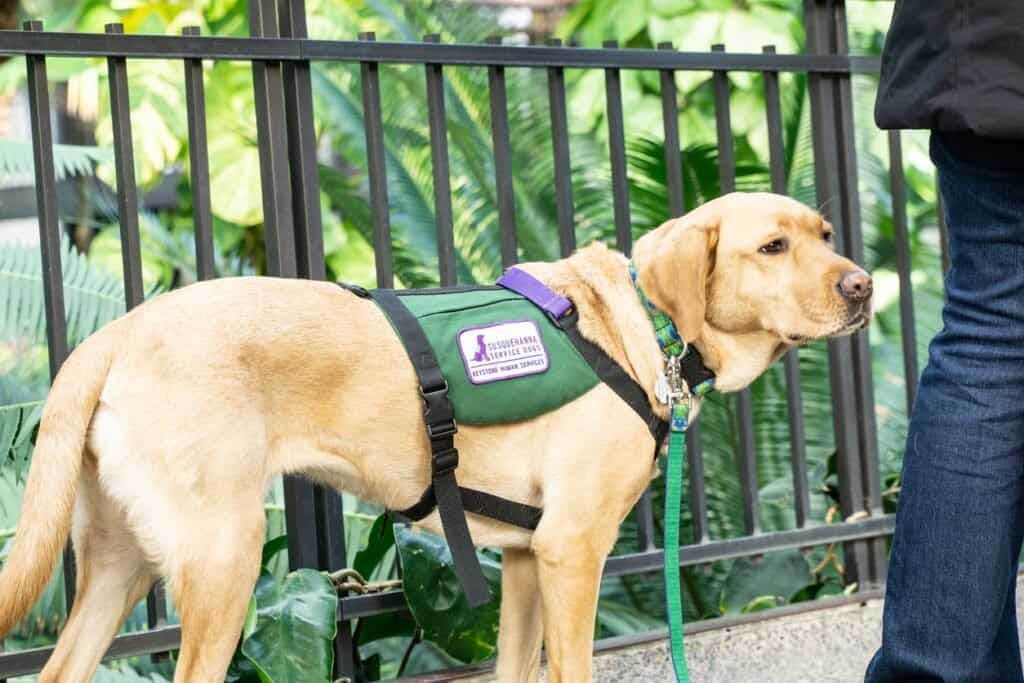
Service dogs are trained to perform tasks to help disabled people.
©iStock.com/arlutz73
Service dogs are trained to perform tasks to help a disabled person, and they’re protected under the Americans with Disabilities Act (ADA). Emotional support dogs help ease one or more symptoms of a disability, but they aren’t trained to perform specific tasks and aren’t protected under the ADA.
Landlords cannot deny housing to people with service dogs or charge pet fees. This protection applies even in buildings with no-pet policies, and service dogs do not count toward any pet limits. However, as of May 2026, landlords are no longer federally required to accommodate untrained ESAs. HUD no longer recognizes comfort, companionship, and emotional support alone as qualifiers for mandatory housing accommodations.
Are Service Dogs Registered?
In the United States, there is no government-mandated or legally recognized official registry for Service Dogs or Emotional Support Animals (ESAs). Furthermore, companies selling registrations or certificates are misleading.

Service dogs are covered under the Americans with Disabilities Act and have more protections under law than emotional support dogs.
©Africa Studio/Shutterstock.com
Retailers and landlords cannot ask for documentation for a service dog. They also cannot ask for details about the person’s disability or require the dog to demonstrate its tasks, although they can ask which tasks the dog is trained to perform.
The exception is air travel. To bring a service animal on a flight, the U.S. Department of Transportation (DOT) requires travelers to complete its own official, federally standardized self-attestation forms, certifying the dog’s health, training, and behavior.
This universal form is required by all major airlines for any domestic or international flight to or from the U.S. In most cases, you must submit the DOT Service Animal Air Transportation Form to your airline at least 48 hours in advance.
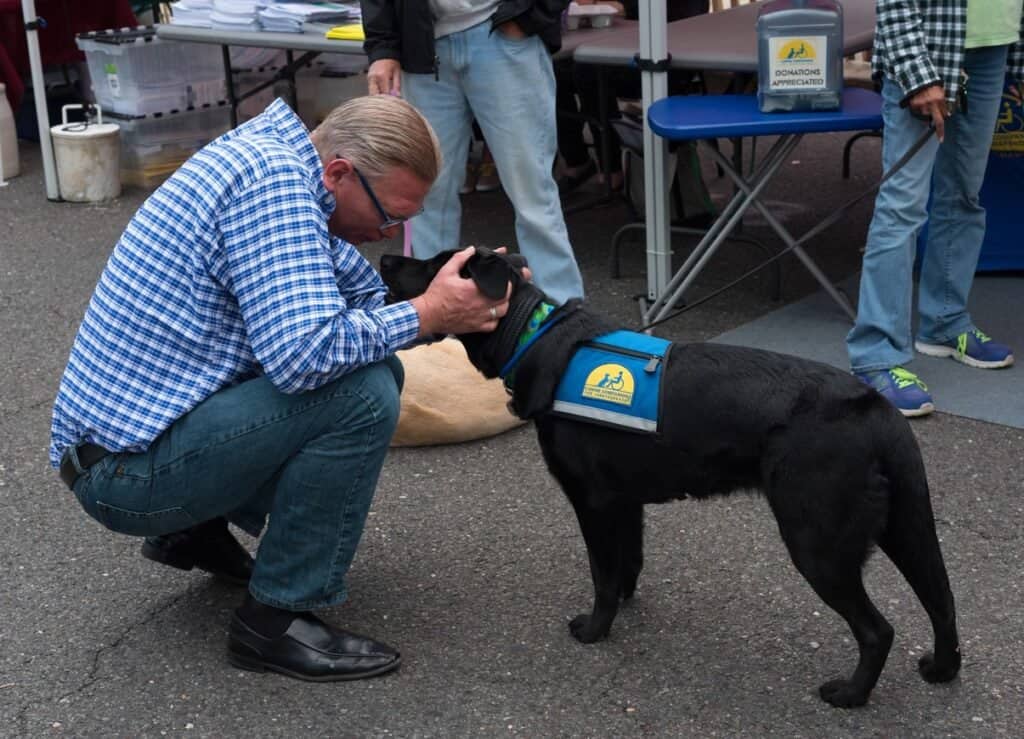
Service dogs are always allowed in public, while emotional support dogs can be denied entry into public spaces.
©iStock.com/jfbenning
Service dogs are allowed in all public spaces and cannot be denied entry by law. Under the Americans with Disabilities Act (ADA), private businesses and state or local governments must allow service dogs in all public areas. However, service dogs can be denied entry or removed if they are out of control, not housebroken, or pose a direct safety threat.
Unlike service dogs, Emotional Support Animals do not have public access rights under the Americans with Disabilities Act. This means businesses, restaurants, and public places can legally deny them entry.